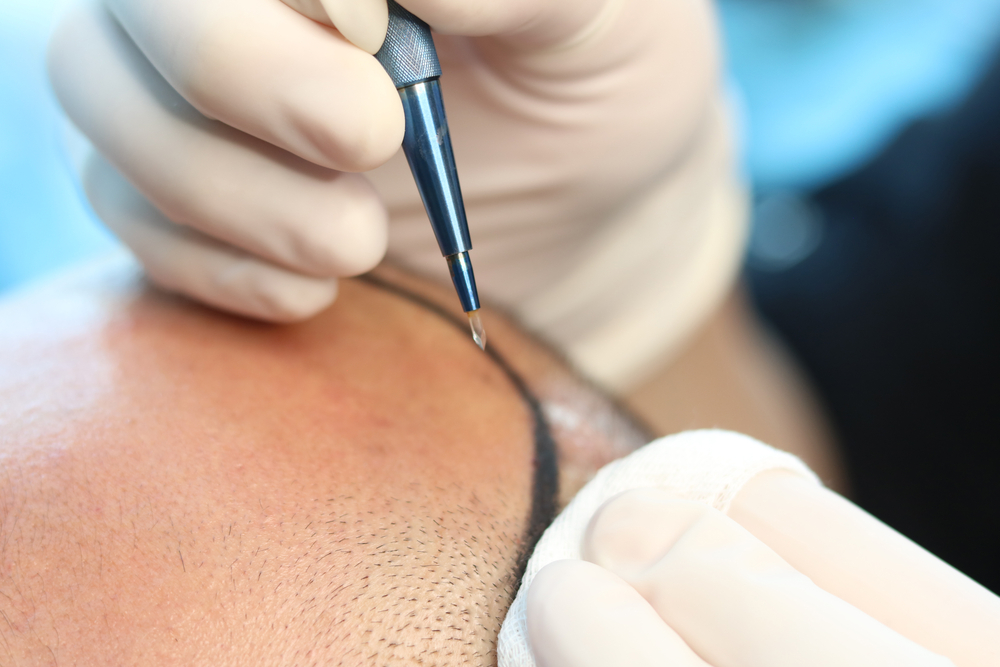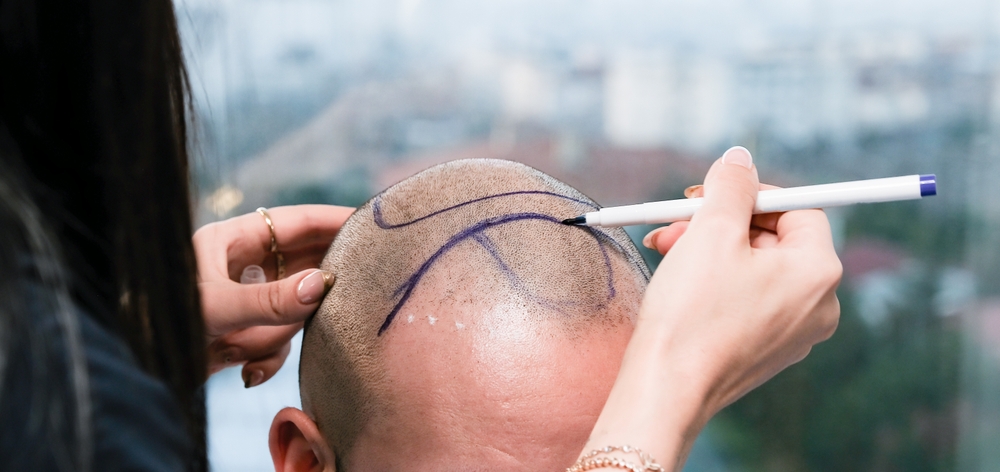
A hair transplant moves DHT-resistant follicles from a donor zone to balding areas. Surgeons extract grafts using follicular unit extraction. They create recipient channels and implant follicles. Transplanted hair grows permanently because donor follicles retain their genetic resistance to hair loss hormones.
Hair loss affects millions of men and women worldwide. Many people seek permanent solutions after trying medications, shampoos, and concealers. Hair transplantationHair transplantation is a surgical procedure that involves the extraction of hair follicles from a designated donor site, followed by... offers the only clinically proven method for permanent hair restoration. This article explains the biological principles, surgical techniques, and clinical outcomes of modern hair transplant procedures. Readers will learn exactly how surgeons move hair, why it survives, and what patients should expect during recovery.
What Is the Science Behind Hair Transplantation?
Hair transplantation relies on donor dominance. Surgeons move follicles from genetically permanent zones to bald areas. These follicles keep growing because they resist DHT, the hormone that causes pattern baldness.
What Does a Hair FollicleA hair follicle is a small, tube-like structure embedded in the scalp that produces and grows individual strands of hair.... Look Like?
A hair follicle is a tube-like skin structure. It contains the hair shaft, sebaceous gland, and dermal papilla. Follicles grow in natural groups called follicular units.
Each hair follicle extends from the skin surface down into the dermis. The follicle contains the hair bulb at its base. The dermal papilla sits inside the bulb. Blood vessels feed the papilla. The papilla controls hair growth and regeneration. Sebaceous glands attach to each follicle. These glands produce oil that conditions the hair and skin.
Hair does not grow alone. It grows in natural clusters called follicular units. Each unit contains one to four hair shafts. These units share blood supply and nerve connections. Surgeons respect these natural groupings during extraction. Keeping units intact improves graft survival and natural appearance.
Hair follows a growth cycle with three phases. Anagen is the active growth phase. It lasts two to seven years. Catagen is the transitional phase. It lasts two to three weeks. Telogen is the resting phase. It lasts three months. After telogen, the hair sheds and a new anagen phase begins. Surgeons prefer extracting grafts during anagen because follicles are robust and easier to handle.
Why Does Donor Hair Survive After Transplantation?
Donor hair survives because of donor dominance. Occipital and temporal follicles resist DHT. This genetic trait persists even after surgeons move the follicles to bald areas.
Dr. Norman Orentreich introduced the donor dominance theory in 1959. He discovered that hair from the back of the scalp keeps growing even after transplantation to bald areas. This happens because the follicles themselves determine growth behavior. The recipient site does not change the follicle’s genetic programming (Orentreich 1959).
DHT-resistant zones sit at the back and sides of the head. These areas contain occipital and temporal follicles. These follicles lack sufficient DHT receptors. DHT cannot miniaturize them. When surgeons transplant these follicles, they keep their resistance. They continue growing for a lifetime. This principle forms the foundation of all hair transplant surgery.
How Does Transplanted Hair Keep Growing?
New blood vessels connect to transplanted follicles within days. The follicles adapt to their new location. They enter normal growth cycles after a brief shedding phase.
Revascularization begins immediately after implantation. Blood vessels from the recipient scalp grow into the grafts. Oxygen and nutrients reach the follicles through these new connections. Studies show that grafts establish blood supply within four to seven days.
Follicles undergo temporary shock after transplantation. They often shed their shafts within two to eight weeks. The follicles remain alive beneath the skin. They re-enter anagen phase after three to four months. New hair emerges and continues growing permanently. Long-term studies confirm that transplanted follicles maintain their growth characteristics for decades (Unger and Shapiro 2013).
Who Qualifies for a Hair Transplant?
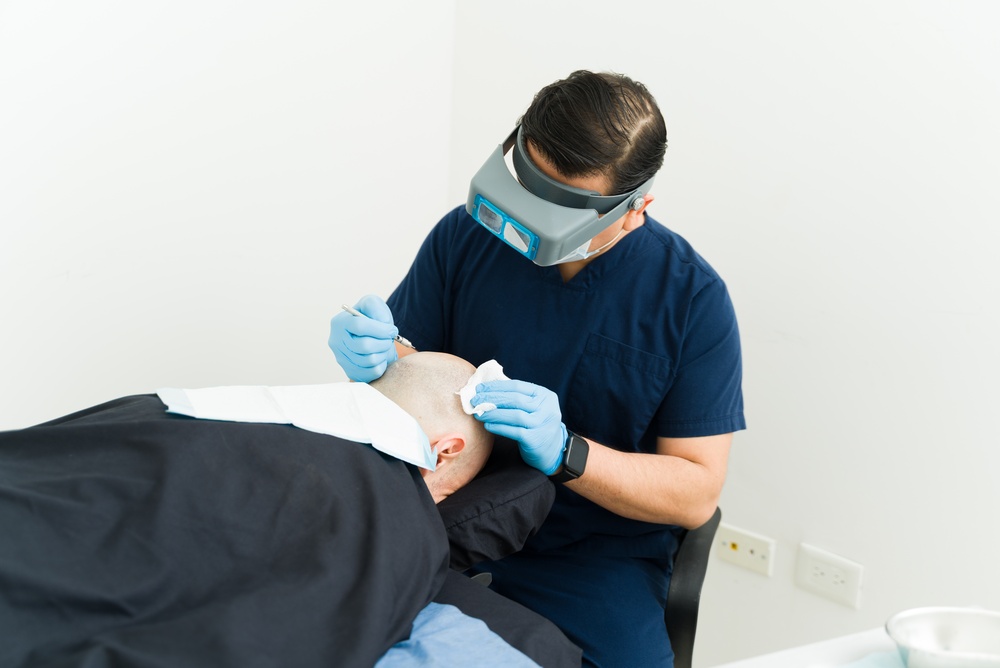
Good candidates have stable hair loss, adequate donor density, healthy scalps, and realistic expectations. Surgeons evaluate these factors during consultation.
What Causes Hair Loss?
Androgenetic alopecia causes most hair loss. Traction alopecia, trauma, burns, and scarring also destroy follicles. Women experience female pattern hair loss with different distribution patterns.
Androgenetic alopecia affects up to 80% of men and 40% of women by age 70. DHT binds to follicle receptors in genetically susceptible individuals. This binding shrinks follicles progressively. Hair becomes thinner and shorter until follicles stop producing visible hair.
Traction alopecia develops from constant pulling. Tight hairstyles, braids, and extensions damage follicles. Early intervention stops progression. Trauma, burns, and surgical scars destroy follicles permanently. These cases require transplantation to restore hair in damaged zones. Female pattern hair loss presents as diffuse thinning over the crown. It preserves the frontal hairline unlike male pattern baldness (Blume-Peytavi et al. 2011).
What Makes Someone Eligible?
Candidates need sufficient donor hair, stable loss patterns, healthy scalps, appropriate age, and realistic goals. Surgeons measure density and examine loss patterns carefully.
Adequate donor density matters most. Surgeons measure follicles per square centimeter in the occipital zone. Patients need at least 80 follicular units per square centimeter for good results. Lower densities limit coverage possibilities.
Stable hair loss pattern ensures lasting results. Young patients with rapidly progressing loss may need future procedures. Surgeons prefer operating on patients over 25 when patterns stabilize. Scalp health evaluation rules out active diseases. Psoriasis, seborrheic dermatitis, and infections require treatment first. Realistic expectations prevent disappointment. Surgeons cannot restore teenage density in advanced baldness. They create natural, age-appropriate coverage instead.
When Is Hair Transplantation Not Suitable?
Diffuse unpatterned alopecia, severe donor depletion, active scalp diseases, and unrealistic expectations disqualify patients. Surgeons must identify these contraindications early.
Diffuse unpatterned alopecia thins hair across the entire scalp including the donor zone. Transplanting weak donor hair produces poor growth. Severe donor depletion leaves insufficient grafts for meaningful coverage. Some patients have naturally low density or previous overharvesting. Active scalp diseases like lichen planopilaris cause inflammation that destroys grafts. These conditions require medical management first. Unrealistic cosmetic expectations lead to dissatisfaction regardless of surgical skill. Ethical surgeons decline patients seeking impossible density or celebrity hairlines (Avram and Rogers 2013).
What Happens During the Hair Transplant Procedure?
Surgeons follow five stages: consultation, hairline design, preparation, extraction, and implantation. Each stage requires precision and planning.
What Happens During Initial Consultation?
Surgeons review medical history, measure hair density, assess donor areas, plan hairlines, and classify baldness using standardized scales.
Medical history review identifies bleeding disorders, medications, and allergies. Surgeons ask about family hair loss patterns. They examine previous surgeries and scar locations. Hair density measurements use digital trichoscopy. This technology counts follicles per square centimeter accurately. Donor areaThe Source of Restoration The donor area plays a critical role in hair transplantation, as it serves as the source... assessment checks scalp laxityLaxity: Looseness or slackness in the skin or tissues, often referring to the loss of firmness and elasticity in aging..., density, and scar presence.
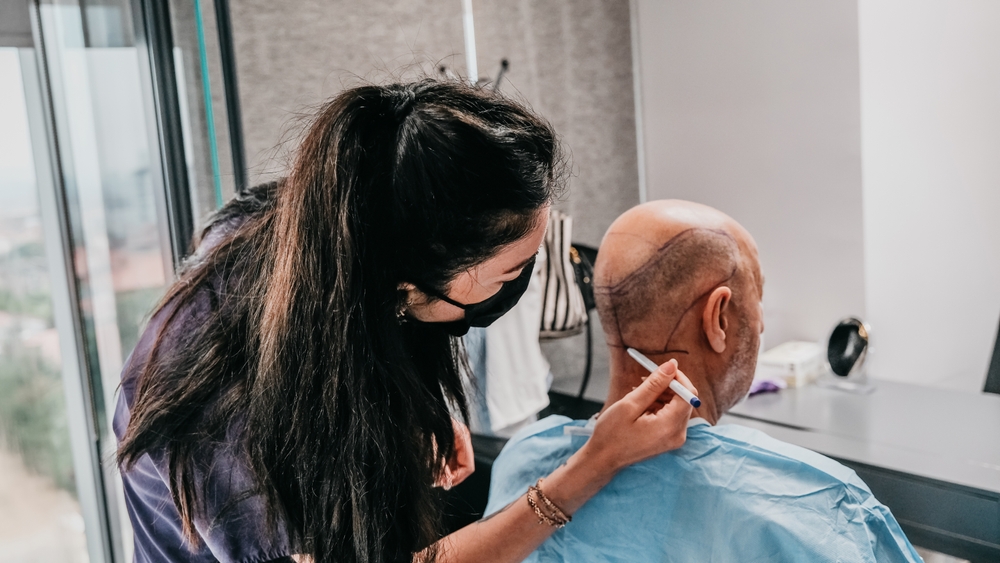
Hairline planning requires artistic and surgical skill. Surgeons mark proposed hairlines with surgical pens. They consider facial proportions, existing hair, and age. The Norwood scale classifies male pattern baldness from stage 1 to 7. The Ludwig scale classifies female pattern hair loss from stage 1 to 3. These scales help surgeons plan long-term strategies (Norwood 1975).
How Do Surgeons Design Natural Hairlines?
Surgeons use facial proportions, natural density patterns, age-appropriate positioning, and ethnic characteristics. They create irregular, feathered edges that mimic nature.
Facial proportions guide hairline placement. The hairline typically sits 7 to 8 centimeters above the glabella. This distance varies by forehead height and facial structure. Natural density planning places single-hair grafts at the front. Multi-hair grafts fill behind them. This creates soft, natural transitions.
Age-appropriate positioning prevents unnatural results. Young patients receive conservative, higher hairlines. Older patients need hairlines that match their age. Ethnic considerations affect hairline shape. Caucasian patients often have straight or slightly curved hairlines. African and Asian patients may require different angles and densities. Gender differences matter significantly. Women need lower, rounded hairlines with temple preservation. Men require stronger temporal recession patterns (Lam et al. 2020).
How Should Patients Prepare for Surgery?
Patients stop blood thinners, avoid alcohol and smoking, wash their scalps, and arrange post-operative transportation. Surgeons provide specific pre-operative instructions.
Pre-operative instructions vary by clinic. Most surgeons ask patients to stop aspirin and anti-inflammatory drugs one week before surgery. These medications increase bleeding risk. Patients continue essential medications like blood pressure drugs after consulting their physicians.
Smoking restricts blood flow. Surgeons require patients to stop smoking at least one week before and two weeks after surgery. Alcohol causes dehydration and bleeding. Patients avoid alcohol for three days pre-operatively. Scalp preparation includes washing with antibacterial shampoo the night before. Patients eat a light breakfast on surgery day. They wear button-up shirts to avoid pulling clothes over the head afterward.
How Do Surgeons Extract Hair GraftsA hair graft refers to a small unit of hair-bearing skin taken from the donor area—typically the back or sides...?
Surgeons use follicular unit extraction. This method removes individual follicles directly from the donor zone. Surgeons then implant these grafts into bald areas. FUE has become the standard approach in modern hair restoration.
What Is Follicular Unit Extraction?
FUE extracts individual follicular units using circular micropunches. Surgeons harvest grafts one by one from the donor zone. This method leaves tiny dot scars.
FUE stands for Follicular Unit Extraction. Surgeons use hollow needles called micropunches. These punches measure 0.8 to 1.0 millimeters in diameter. The surgeon centers each punch over a follicular unit. The punch cuts through the skin around the unit. The surgeon lifts the graft out with forceps.
Motorized extraction uses powered punches. These devices rotate rapidly and reduce physical strain. Manual extraction uses hand-held punches. Some surgeons prefer manual control for specific hair angles. FUE offers several advantages. It produces minimal scarring. Tiny dot scars scatter across the donor zone. Patients can wear short hairstyles without visible scars. Recovery proceeds faster because surgeons avoid large incisions.
FUE has limitations. The procedure takes longer than older methods. Large sessions may require two consecutive days. Donor overharvesting poses risks. Inexperienced surgeons can extract too many grafts from one zone. This creates moth-eaten appearances and depletes future donor reserves (Rassman et al. 2002).
How Do Surgeons Perform FUE Step by Step?
The surgical team shaves the donor area. They administer local anesthesiaEnsuring Comfort During Hair Transplants Sedation is used in hair transplantation to help patients remain calm and comfortable throughout the.... They map extraction points. They insert punches at precise angles. They remove grafts gently and store them in chilled solution.
The surgical team begins by preparing the donor zone. They often shave the extraction area to 1 to 2 millimeters. This allows clear visualization of follicular units. Some clinics offer long-hair FUE for patients wanting to conceal the donor zone immediately.
Local anesthesia numbs the donor area completely. Surgeons inject lidocaine with epinephrine. Epinephrine constricts blood vessels. This reduces bleeding during extraction. Patients feel pressure but no pain.
Surgeons map extraction points across the donor zone. They distribute harvest sites evenly. They avoid clustering extractions in small areas. Even spacing preserves natural donor appearance. It prevents visible thinning.
Punch insertion requires precise angle control. Surgeons align each punch with the natural hair exit angle. This angle varies across the scalp. It typically ranges from 30 to 45 degrees. Incorrect angles cut through follicles. This transection kills the graft.
Depth control matters equally. Surgeons set punches to cut approximately 3 to 4 millimeters deep. This depth captures the entire follicle without penetrating deeply into fat layers. Motorized systems allow precise depth adjustment.
Graft removal follows punch insertion. Technicians use fine forceps to grasp the graft below the skin surface. They apply gentle upward traction. They avoid crushing the bulb. They immediately place extracted grafts into chilled preservation solution. This solution maintains hydration and temperature. It keeps follicles viable during the implantation phase (Unger and Wesley 2013).
What Factors Affect FUE Outcomes?
Surgeon experience, punch quality, graft handling, and team coordination determine success. Low transection rates preserve more viable grafts.
Surgeon experience correlates directly with outcomes. Seasoned surgeons align punches accurately. They adjust for hair curl and angle variations. They maintain consistent depth across thousands of extractions.
Punch sharpness affects transection rates. Dull punches tear tissue rather than cutting cleanly. They increase follicle damage. High-quality punches maintain edges through thousands of uses. Some surgeons change punches mid-procedure to ensure sharpness.
Graft handling determines survival. Teams keep grafts in chilled saline or specialized solutions. They maintain temperatures between 4 and 8 degrees Celsius. They minimize air exposure. Dry grafts die within minutes. Experienced technicians inspect each graft under magnification. They discard transected or damaged units.
Team coordination speeds the process. One surgeon extracts while technicians sort and count grafts. Other technicians prepare the recipient area simultaneously. This parallel workflow reduces graft storage time. It improves overall survival rates.
Transection rates measure surgical quality. This rate indicates the percentage of follicles cut during extraction. Excellent surgeons achieve transection rates below 3%. Inexperienced teams may exceed 10%. Higher transection wastes donor hair. It reduces final density.
What Are the Advantages and Limitations of FUE?
FUE leaves minimal scarring and allows short hairstyles. It requires longer surgical times. Large sessions may need two days. Patients must choose experienced surgeons to avoid donor damage.
FUE provides significant advantages over older approaches. It eliminates linear scarring entirely. Tiny dot scars measure less than 1 millimeter. They scatter across the donor zone. They become invisible even with short buzz cuts. This benefits patients who prefer military-style or shaved hairstyles.
Recovery proceeds quickly. Patients experience less post-operative pain. They return to normal activities within five to seven days. Donor healing completes within two weeks.
FUE also has specific limitations. The procedure demands more time. Extracting individual grafts takes longer than older harvesting methods. Sessions exceeding 3,000 grafts may require two consecutive days. This extends the overall process.
Surgeon fatigue becomes a factor in long sessions. Tired surgeons make more errors. They increase transection rates. They may rush extractions. This explains why team-based approaches and robotic assistance have gained popularity.
Cost runs higher than older methods. FUE requires more staff time. It needs specialized equipment. Clinics charge premium rates for these resources. Patients should view this as an investment in natural appearance and donor preservation.
How Do Surgeons Create Recipient Sites and Implant Grafts?
Surgeons make tiny incisions in bald areas. They control angle, direction, and density. Then they place grafts into these channels using forceps or implanter pens.
What Are Channel Opening Techniques?
Surgeons use blades or needles to create recipient incisions. They match natural hair angles. They plan density carefully to ensure blood supply supports all grafts.
Recipient incision creation requires extreme precision. Surgeons use custom-cut blades or hypodermic needles. They make incisions 1.0 to 1.5 millimeters deep. Depth must reach the dermis where follicles anchor. Too shallow placement exposes grafts. Too deep placement damages underlying structures.
Angle and direction determine natural appearance. Hair emerges from the scalp at specific angles. Frontal hair points forward and slightly downward. Crown hair swirls in circular patterns. Temple hair angles backward. Surgeons study these patterns before making incisions.
Density planning prevents graft failure. Surgeons limit density to 30 to 40 grafts per square centimeter in single sessions. Higher densities risk poor blood supply. Grafts compete for limited oxygen and nutrients. Conservative density ensures higher survival rates. Surgeons can add density in future sessions after initial grafts establish blood supply (Limmer 1994).
What Implantation Methods Exist?
Surgeons use forceps or implanter pens. DHI uses a special pen that opens channels and implants grafts simultaneously. Each method offers specific advantages.
Forceps implantation remains the traditional method. Technicians hold grafts gently with jeweler’s forceps. They insert grafts into pre-made incisions. They position grafts at the correct depth. This method requires skilled technicians. Rough handling damages follicles.
Implanter pen techniques improve precision. These devices look like thick pens. Technicians load grafts into the pen tip. They press the pen into the scalp. The pen releases the graft at the proper depth. This method reduces handling trauma. It allows faster implantation.
DHI stands for Direct Hair Implantation. It uses the Choi implanter pen. This device opens the channel and implants the graft in one motion. It eliminates pre-making incisions. DHI may improve graft survival by reducing time outside the body. It allows higher density in specific zones. However, it requires extensive training and specialized equipment (Perez-Meza et al. 2018).
How Do Surgeons Achieve Natural Results?
They create irregular hairlines, place single hairs at the front, and build density gradients. They recreate natural temporal angles carefully.
Natural hairlines are never perfectly straight. Nature creates irregular, feathered edges. Surgeons mimic this by placing single-hair grafts in zigzag patterns. They avoid straight lines that look artificial.
Single vs multi-hair graft placement follows natural patterns. The very front hairline contains only single hairs. Behind this zone, double-hair grafts add density. Further back, triple and quadruple-hair grafts create fullness. This gradient matches natural scalp distribution.
Density gradients prevent uniform, pluggy appearances. Surgeons place grafts closer together in central zones. They space them slightly farther apart at edges. Temporal angle recreation requires special attention. Natural temples have sharp, defined angles. Surgeons must match these angles precisely. Incorrect placement creates unnatural, rounded temple areas that patients find disappointing (Lam et al. 2020).
What Modern Technologies Improve Hair Transplants?
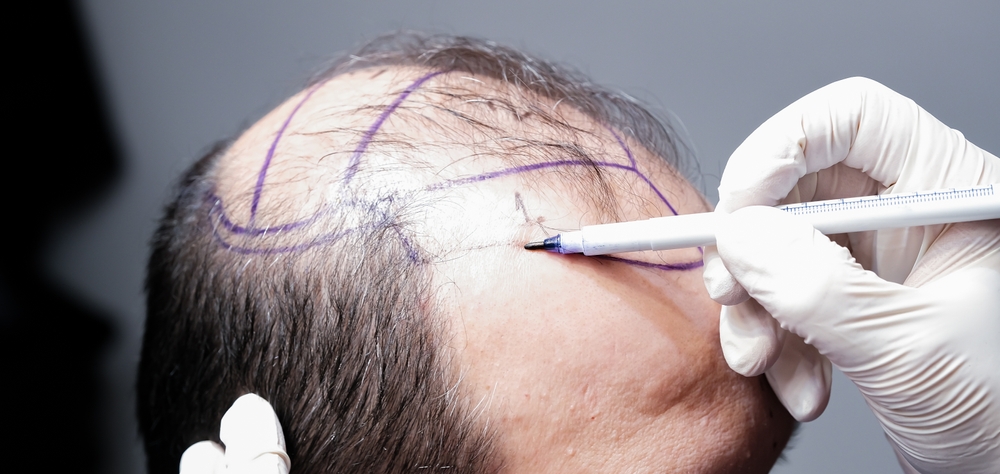
Sapphire FUE, DHI, robotic systems, and regenerative adjuncts improve precision, density, and healing. These technologies represent advances in surgical technique.
What Is Sapphire FUE?
Sapphire FUE uses blades made from synthetic sapphire. These blades make smaller, cleaner incisions. They may reduce tissue trauma and speed healing.
Sapphire bladeA Modern Innovation in Hair Transplants The sapphire blade is an advanced tool used to create precise incisions during hair... technology replaces steel blades in recipient site creation. Sapphire is harder and sharper than steel. It maintains its edge through thousands of incisions. The blades create V-shaped incisions rather than U-shaped slits.
Smaller incisions mean less tissue disruption. They reduce post-operative scabbing. They may decrease healing time by several days. Some surgeons report less post-operative redness. However, sapphire blades require careful handling. They can break if mishandled. The technique demands significant investment in equipment. Studies comparing sapphire to steel show mixed results. Some demonstrate faster healing. Others show equivalent outcomes with proper technique in both methods (Karaaltin et al. 2019).
What Is Direct Hair Implantation?
DHI uses a Choi implanter pen. It combines channel opening and graft insertion. This simultaneous approach may improve survival and allow denser packing.
The Choi implanter pen holds a single graft in its hollow needle tip. The surgeon presses the pen into the scalp. The needle opens a channel. The graft slides into place as the surgeon withdraws. This eliminates separate channel creation and graft placement steps.
Simultaneous channel opening and implantation reduce graft exposure time. Grafts stay hydrated and protected inside the pen. They spend less time in dry air outside the body. This may improve survival rates. Density advantages emerge in specific zones. Surgeons can place grafts closer together because they control each placement individually. DHI works well for beard transplants and eyebrow restoration. It allows precise angle control in small areas.
DHI requires more staff. Clinics need multiple trained technicians with multiple pens. Sessions may take longer. The learning curve is steep. Not all surgeons achieve equivalent results with this technique (Perez-Meza et al. 2018).
How Do Robotic Systems Assist?
Robotic FUE uses artificial intelligence. It identifies optimal grafts. It extracts them with precision. It reduces surgeon fatigue during long procedures.
AI-assisted extraction analyzes donor zones. Cameras map hair angles, density, and distribution. Software algorithms identify the best follicular units for extraction. The robotic arm positions the punch precisely.
Precision harvesting reduces transection rates. The robot maintains consistent angle and depth. It does not tire during thousand-graft sessions. It selects grafts strategically across the donor zone. This prevents overharvesting in specific areas.
Robotic FUE innovations continue advancing. Newer systems offer implantation capabilities. They assist with recipient site creation. They provide real-time density mapping. However, robots require significant capital investment. They need regular calibration. Human oversight remains essential. The surgeon plans the procedure and monitors outcomes. Current systems assist rather than replace surgical judgment (Rashid and Bicknell 2020).
What Regenerative Adjuncts Help?
PRP, exosomes, and stem cell therapies support healing. They may improve graft survival and speed recovery. Evidence varies by treatment type.
PRP therapy stands for Platelet-Rich Plasma. Technicians draw the patient’s blood. They spin it in centrifuges. They isolate plasma rich in growth factors. Surgeons inject PRP into the scalp before or after transplantation. PRP contains platelet-derived growth factor and vascular endothelial growth factor. These proteins stimulate blood vessel formation. They may accelerate graft revascularization. Some studies show improved graft survival with PRP. Others show no significant difference compared to saline placebo (Gentile et al. 2017).
Exosome treatments use cell-derived vesicles. These tiny particles carry proteins and genetic material. They communicate between cells. Early research suggests exosomes may stimulate follicle stem cells. They might prolong anagen phase. However, clinical evidence in hair transplantation remains preliminary.
Experimental stem cell applications explore follicle multiplication. Scientists culture dermal papilla cells in laboratories. They hope to create new follicles from small samples. Hair cloningHair cloning is an emerging technique in hair restoration that aims to multiply hair follicle cells in a laboratory before... remains experimental. No commercial clinic currently offers true follicle multiplication. Regenerative medicine holds promise for future decades (Takahashi and Kiso 2020).
What Should Patients Expect After a Hair Transplant?
Patients experience swelling, redness, and scabbing initially. Transplanted hair sheds within weeks. New growth starts at three to four months. Final results appear after twelve months.
What Happens Immediately After Surgery?
Swelling peaks at day three. Redness fades within a week. Scabs form around grafts. Mild discomfort lasts two to three days.
Swelling affects the forehead and around the eyes. It peaks 48 to 72 hours post-surgery. Patients sleep with heads elevated to reduce swelling. Cold compresses help during the first 24 hours. Redness covers the recipient zone. It looks similar to mild sunburn. This fades gradually over five to seven days.
Scab formation protects grafts. Tiny crusts form around each implanted follicle. Patients must not pick these scabs. Premature removal dislodges grafts. Scabs typically fall off naturally within ten to fourteen days. Mild discomfort feels like tightness or soreness. Surgeons prescribe pain medications for the first two days. Most patients switch to over-the-counter pain relievers by day three.
What Is Shock Loss?
Shock loss is temporary shedding. Transplanted hairs fall out within two to eight weeks. The follicles remain alive. New growth follows naturally.
Temporary shedding phase alarms many patients. They see hairs falling out and worry the procedure failed. This shedding is completely normal. Surgeons call it “shock loss” or “effluvium.”
Causes of post-transplant shedding include surgical trauma. Moving follicles interrupts their blood supply temporarily. The follicles enter a protective telogen phase. They shed their shafts to conserve energy. The follicles stay anchored in the scalp. They rebuild their strength internally.
Normal recovery timeline shows shedding from weeks two to eight. The scalp looks similar to pre-surgery during this phase. Patients must remain patient. New hair emergence begins around month three. Fine, thin hairs appear first. These thicken and darken over subsequent months.
What Is the Hair Growth Timeline?
First month shows no visible growth. Months three to six show new fine hairs. Months nine to twelve show maturation and density. Final density becomes clear at one year.
First month changes include scab resolution and redness fading. No new hair grows during this period. Some patients experience continued native hair shedding. This is temporary.
Three to six month growth phase brings visible change. New hairs emerge from transplanted follicles. They appear fine and colorless initially. They grow longer each month. Patients notice coverage improving steadily. Some hairs grow faster than others. This creates uneven appearance temporarily.
Nine to twelve month maturation produces final results. Hairs thicken in diameter. They gain pigment. They blend with native hair. Transplanted hair achieves 80% to 90% of final density by month nine. The remaining 10% to 20% matures by month twelve. Some patients see continued improvement through month fifteen.
Final density expectations vary by individual. Patients with good donor hair achieve natural, dense coverage. Those with limited donors achieve thinner but natural coverage. Surgeons explain these limits before surgery. Multiple sessions can increase density further if needed (Unger and Shapiro 2013).
How Do Patients Maintain Results Long-Term?
Medications like finasteride and minoxidil preserve native hair. Lifestyle changes support scalp health. Follow-up treatments optimize outcomes.
Finasteride blocks 5-alpha-reductase. This enzyme converts testosterone to DHT. Lower DHT levels slow native hair loss. Patients continue existing native hair longer. Finasteride works best for men. Women use it cautiously under medical supervision.
Minoxidil dilates blood vessels. It improves blood flow to follicles. It extends anagen phase. It thickens existing miniaturized hairs. Patients apply topical minoxidil daily. Some use oral minoxidil under physician guidance.
Lifestyle modifications include stress management. Chronic stress raises cortisol. Cortisol can trigger telogen effluvium. Regular exercise improves circulation. Balanced nutrition provides protein, iron, and vitamins for hair growth. Smoking cessation maintains blood vessel health.
Follow-up treatments include PRP sessions. Some patients receive PRP at three, six, and twelve months. These sessions may support graft maturation. They might slow continued native loss. Surgeons schedule follow-up appointments at regular intervals. They monitor progress and address concerns.
What Risks and Complications Exist?
Side effects include swelling, itching, and temporary numbness. Surgical risks include infection and poor graft survival. Psychological preparation prevents disappointment.
What Are Common Side Effects?
Swelling resolves within days. Itching indicates healing. Numbness fades within months. Folliculitis responds to antibiotics.
Swelling affects most patients. It moves downward due to gravity. Forehead and eyelid swelling looks dramatic but resolves quickly. Itching begins as wounds heal. Patients must not scratch. Scratching dislodges grafts and introduces bacteria.
Temporary numbness affects the donor and recipient zones. Nerves regenerate slowly. Sensation returns gradually over three to six months. Some patients feel mild tingling during recovery. This signals nerve regeneration.
Folliculitis causes small pimples around grafts. It develops when bacteria enter follicles. It responds to warm compresses and topical antibiotics. Severe cases require oral antibiotics. Proper post-operative hygiene prevents most infections.
What Surgical Risks Exist?
Infection is rare with proper care. Poor graft survival follows rough handling. Overharvesting damages donor zones. Bad hairline design creates unnatural results.
Infection occurs in less than 1% of cases. Surgeons prescribe preventive antibiotics. Patients follow cleaning protocols. Poor graft survival results from desiccation, crushing, or improper placement. Experienced teams minimize these issues through careful technique.
Overharvesting extracts too many grafts from limited zones. It creates visible thinning in donor areas. It depletes reserves for future procedures. Ethical surgeons limit extraction to safe percentages. They preserve donor appearance and future options.
Unnatural hairline design represents a serious complication. Straight, dense hairlines look artificial. Incorrect angles create hair that sticks up or lies unnaturally. Poor temple design feminizes male hairlines. These errors require corrective surgery. Prevention through careful planning remains essential.
What Psychological Factors Matter?
Realistic expectations prevent disappointment. Body image concerns require discussion. Counseling helps patients process changes.
Expectation management starts during consultation. Surgeons show previous results from similar cases. They explain what density means realistically. They clarify that transplantation redistributes hair rather than creating new hair.
Body image concerns affect many hair loss patients. Hair loss connects to self-esteem and identity. Some patients expect transplantation to transform their lives completely. Surgeons emphasize that surgery improves appearance. It does not solve relationship, career, or emotional issues.
Importance of counseling emerges for patients with body dysmorphic disorderBody Dysmorphic Disorder (BDD) A psychological condition involving obsessive focus on perceived flaws in appearance, affecting surgical candidacy.. These patients never feel satisfied with surgical results. They seek repeated procedures unnecessarily. Ethical surgeons screen for these tendencies. They refer appropriate patients to mental health professionals before considering surgery (Cash 2009).
How Successful Are Hair Transplant Results?
Success depends on surgeon skill, donor quality, graft handling, and patient compliance. Most patients achieve 90% to 95% graft survival. Results last permanently with proper care.
What Factors Affect Outcomes?
Experienced surgeons produce better results. Good donor hair grows reliably. Gentle handling preserves follicles. Patient compliance protects grafts during healing.
Surgeon experience correlates directly with outcomes. Seasoned surgeons plan efficient extractions. They create natural hairlines consistently. They manage complications effectively. They adjust techniques for individual hair characteristics.
Donor hair quality varies genetically. Thick, wavy hair provides better coverage than fine, straight hair. Curly hair covers more scalp per graft because curls occupy volume. Light hair on light skin requires fewer grafts for visual density than dark hair on light skin.
Graft handling techniques determine survival. Teams keep grafts chilled in preservation solution. They minimize time outside the body. They use magnification for precise placement. Rough handling crushes follicles and kills them.
Patient compliance affects healing. Patients must avoid touching grafts. They must sleep with elevated heads. They must follow medication schedules. Poor compliance increases infection and dislodgment risks.
What Density and Coverage Can Patients Expect?
Cosmetic density requires 30 to 50 grafts per square centimeter. Multiple sessions build density. Crown restoration needs more grafts than frontal restoration.
Cosmetic density concepts explain visual fullness. Patients do not need their original density to look natural. Half of original density often appears full because transplanted hair frames the face strategically.
Multiple-session requirements apply to advanced baldness. Surgeons cannot safely place all needed grafts in one session. They stage procedures six to twelve months apart. First sessions restore hairlines and frontal zones. Second sessions address crowns and add density.
Crown vs frontal restoration outcomes differ. Frontal zones show dramatic improvement with fewer grafts. Hairlines frame the face. They create the most visible change. Crown restoration requires more grafts. Hair grows in swirling patterns there. Lighting exposes crown thinning more readily. Some patients accept partial crown improvement to preserve grafts for frontal areas.
How Long Do Results Last?
Transplanted follicles last permanently. Native hair may continue thinning. Future touch-up procedures address ongoing loss.
Permanence of transplanted follicles follows from donor dominance. These follicles resist DHT. They continue growing for decades. Studies track patients for twenty years. Transplanted hair maintains characteristics and density long-term.
Ongoing native hair loss continues in genetically susceptible areas. Patients taking finasteride slow this process. Those not taking medication may see continued thinning around transplanted zones. This creates a patchy appearance over time.
Future maintenance procedures become necessary for some patients. They return for additional grafting after five to ten years. They add density to thinning areas. They refine hairlines that have receded further. Good surgical planning preserves donor hair for these future needs.
How Much Does a Hair Transplant Cost?
Costs depend on graft numbers, technique, surgeon skill, and location. Prices range from $4,000 to $15,000 in Western countries. Multiple sessions increase total investment.
What Factors Influence Price?
More grafts cost more. FUE requires specialized training and equipment. Expert surgeons charge premium rates. Geographic location affects overhead costs.
Number of grafts determines base pricing. Clinics charge per graft or per session. A 2,000-graft session costs less than a 4,000-graft session. Some clinics offer unlimited graft pricing. Others tier prices by graft ranges.
Technique used affects cost. FUE requires more time and specialized training. This increases costs compared to older approaches. Specialized techniques like DHI and robotic FUE add further premiums. Specialized equipment and advanced training justify higher prices.
Surgeon expertise commands higher fees. Board-certified surgeons with decades of experience charge more than general practitioners. Their results typically justify the investment. Patients pay for skill, judgment, and safety.
Geographic location influences overhead. Rent, staff salaries, and regulatory costs vary by country. These differences pass to patients through pricing structures.
How Do Costs Compare by Region?
The United States and United Kingdom charge the highest prices. Türkiye offers competitive rates. European prices fall between these extremes.
|
Region |
Average Cost for 2,500 Grafts |
|
United States |
$8,000 – $15,000 |
|
United Kingdom |
$6,000 – $12,000 |
|
Türkiye |
$2,000 – $4,000 |
|
Western Europe |
$5,000 – $10,000 |
United States clinics operate with high regulatory and insurance costs. They charge premium rates. United Kingdom prices reflect similar factors plus VAT. Türkiye has become a medical tourism hub. Lower operating costs allow competitive pricing. Many Turkish surgeons have extensive experience. They perform thousands of procedures annually. European prices vary by country. Germany and France charge more than Eastern European nations.
Why Are Cheap Hair Transplants Risky?
Low prices often mean unlicensed clinics, technician-led surgeries, and poor donor management. These risks produce bad results and permanent damage.
Unlicensed clinics operate outside medical regulations. They lack proper sterilization. They use unqualified staff. They perform procedures in hotel rooms or apartments. Infections and complications occur frequently.
Technician-led surgeries happen when doctors do not perform extractions or implantations. Unsupervised technicians handle grafts. They lack medical training. They produce high transection rates. They create unnatural placements. Some patients never meet the named surgeon.
Poor donor management depletes reserves permanently. Inexperienced teams overharvest. They leave visible scars. They destroy future transplantation possibilities. Patients cannot repair these mistakes easily. Corrective surgery costs more than original quality surgery.
What Ethical and Medical Standards Apply?
Surgeons need proper certification. Patients deserve informed consent. Transparency builds trust. Ethics protect patient safety.
Why Does Surgeon Qualification Matter?
Board certification ensures training. Hair restoration associations promote standards. Surgical ethics prevent exploitation.
Board certification verifies that surgeons completed accredited training. They passed rigorous examinations. They maintain continuing education. Certified surgeons understand facial anatomy. They manage complications. They follow safety protocols.
Hair restoration associations advance the field. The International Society of Hair Restoration Surgery (ISHRS) sets ethical guidelines. It provides educational resources. It certifies qualified practitioners. Members commit to ongoing training and ethical practice.
Surgical ethics require honest assessment. Surgeons must decline patients who will not benefit. They must not overpromise. They must prioritize patient welfare over profit. They must maintain confidentiality. They must provide adequate follow-up care.
What Should Informed Consent Include?
Patients must understand limitations. They need realistic outcome discussions. Surgeons must provide transparent graft estimates.
Understanding limitations prevents disappointment. Surgeons explain that transplantation moves existing hair. It does not create unlimited new hair. They discuss continued native loss possibilities. They outline need for future procedures.
Discussing realistic outcomes means showing representative results. Surgeons show patients with similar hair loss patterns. They explain density in measurable terms. They discuss scarring possibilities. They outline recovery timelines accurately.
Transparency in graft estimates builds trust. Surgeons count grafts during consultation. They explain why they recommend specific numbers. They do not inflate counts to justify higher prices. They document actual grafts transplanted. Patients receive records for their files (Harris 2018).
What Does the Future Hold for Hair Restoration?
Scientists research hair cloning. Artificial intelligence improves planning. Regenerative therapies advance rapidly. These innovations may transform treatment options.
Is Hair Cloning Possible?
Researchers work on follicular multiplication. They culture dermal papilla cells. Regenerative medicine may eventually create unlimited follicles.
Follicular multiplication remains the holy grail. Scientists extract a small donor sample. They isolate dermal papilla cells. They multiply these cells in laboratories. They hope to inject multiplied cells into bald scalps. These cells would induce new follicle formation.
Current challenges persist. Cultured dermal papilla cells lose their inductive properties after several divisions. Scientists search for methods to maintain these properties. Some research uses 3D spheroid cultures. These structures preserve cell signaling. Early animal studies show promise. Human applications remain years away.
Regenerative medicine possibilities extend beyond cloning. Tissue engineering creates skin constructs with hair follicles. Scientists grow these in labs. They might transplant them as grafts. This technology could help burn victims. It might eventually treat baldness. Commercial availability remains distant (Takahashi and Kiso 2020).
How Will Artificial Intelligence Help?
AI assists surgical planning. It models density outcomes. It improves graft selection precision.
AI-assisted planning analyzes patient photos. Software predicts future hair loss patterns. It recommends optimal hairline positions. It calculates graft requirements. It simulates results visually.
Predictive density modeling uses algorithms. These models consider donor characteristics. They factor in hair caliber and curl. They estimate coverage from specific graft numbers. Surgeons use these tools during consultation. They help patients visualize possibilities.
Robotic systems already use AI for extraction. Future systems may assist implantation. They might optimize angle and direction automatically. They could reduce human error further. However, artistic judgment remains uniquely human. AI assists rather than replaces surgical expertise.
What Regenerative Therapies Are Emerging?
Stem cell research advances. Growth factor therapies multiply. Tissue engineering progresses. These fields converge on better hair restoration.
Stem cell advancements focus on follicle stem cells. These cells reside in the bulge region of follicles. Scientists try to activate dormant stem cells in miniaturized follicles. Success would reverse thinning without surgery.
Growth factor therapies include proprietary formulations. Some combine multiple cytokines. These proteins signal follicles to grow. Topical applications might complement transplantation. They might improve graft survival. They might accelerate healing.
Tissue engineering creates biodegradable scaffolds. These structures support new tissue growth. Scientists seed them with follicle cells. They implant them into skin. Hair grows through these constructs. This technology could treat large bald areas. It could reduce need for extensive donor reserves. Research continues in laboratories worldwide (Gentile and Garcovich 2019).
Frequently Asked Questions About Hair Transplants?
Patients ask about permanence, pain, duration, candidacy, and technique comparisons. Clear answers reduce anxiety and improve decision-making.
Is a Hair Transplant Permanent?
Yes. Transplanted hair lasts permanently because donor follicles resist DHT. They retain genetic programming regardless of location.
Does Transplanted Hair Fall Out?
The shafts shed temporarily after surgery. This is normal shock loss. The follicles remain alive. New permanent hair grows within months.
How Painful Is the Procedure?
Surgeons use local anesthesia. Patients feel pressure but not pain during surgery. Post-operative discomfort feels like mild tightness. It resolves within days.
How Long Does Surgery Take?
Small sessions last four to six hours. Large sessions take eight to ten hours. Surgeons divide mega-sessions into two days.
Can Women Get Hair Transplants?
Yes. Women with stable donor hair and defined thinning patterns qualify. Female pattern hair loss requires careful evaluation. Not all women are candidates.
How Many Grafts Are Needed?
Hairline restoration needs 1,500 to 2,500 grafts. Full frontal coverage needs 2,500 to 3,500 grafts. Crown restoration adds 1,500 to 3,000 grafts. Total needs depend on baldness extent and goals.
Is FUE the Best Extraction Method?
FUE suits most modern patients. It leaves minimal scarring and allows short hairstyles. Patients with extensive baldness may need multiple sessions. Surgeons recommend the best approach based on donor density, hair characteristics, and patient goals.
When Will Final Results Appear?
New growth starts at three to four months. Significant improvement shows at six to nine months. Final density and appearance mature at twelve months. Some refinement continues to month fifteen.
Conclusion
Hair transplantation moves permanent follicles to bald areas. It relies on donor dominance. Modern FUE techniques minimize scarring and maximize natural results. Success requires skilled surgeons, proper planning, and realistic expectations. Future technologies promise even better outcomes.
Hair transplantation represents a mature, scientifically grounded solution for permanent hair loss. The procedure works because of donor dominance. Surgeons move DHT-resistant follicles from the back of the scalp. These follicles survive, revascularize, and grow permanently in new locations.
Modern follicular unit extraction offers patients significant advantages. It produces minimal scarring. It allows short hairstyles. It delivers natural results when surgeons possess adequate skill. Each graft receives individual attention during extraction. This preserves donor reserves and maximizes survival.
Results depend heavily on surgeon expertise and patient compliance. Board-certified specialists with extensive experience produce the most natural outcomes. Patients who follow post-operative instructions protect their investment. Medications like finasteride and minoxidil preserve native hair alongside transplanted zones.
The field continues advancing. Regenerative therapies, artificial intelligence, and cloning research expand possibilities. Today’s patients benefit from decades of scientific progress. Tomorrow’s patients may enjoy even more effective solutions. For now, careful selection of qualified surgeons and realistic expectation management remain the keys to successful hair restoration.
References
Avram, Marc R., and Nicole Rogers. “Controversies in Hair Transplantation.” Facial Plastic Surgery Clinics of North America, vol. 21, no. 3, 2013, pp. 469–74.
Blume-Peytavi, Ulrike, et al. “S1 Guideline for Diagnostic Evaluation in Androgenetic Alopecia in Men, Women and Adolescents.” British Journal of Dermatology, vol. 164, no. 1, 2011, pp. 5–15.
Cash, Thomas F. “Psychosocial Outcomes of Breast Reconstruction.” Body Image: A Handbook of Theory, Research, and Clinical Practice, edited by Thomas F. Cash and Thomas Pruzinsky, Guilford Press, 2009, pp. 293–302.
Gentile, Pietro, et al. “Platelet-Rich Plasma and Micrografts: Regenerative Medicine for the Treatment of Androgenetic Alopecia.” Stem Cells International, vol. 2017, 2017, pp. 1–12.
Gentile, Pietro, and Simone Garcovich. “Systematic Review of Platelet-Rich Plasma Use in Androgenetic Alopecia Compared with Minoxidil, Finasteride, and Adult Stem Cell-Based Therapy.” Journal of Cosmetic Dermatology, vol. 18, no. 5, 2019, pp. 1544–51.
Harris, James A. “The Ethics of Hair Restoration Surgery.” Facial Plastic Surgery Clinics of North America, vol. 26, no. 2, 2018, pp. 141–46.
Karaaltin, Mehmet Veli, et al. “Comparison of Sapphire Blade and Steel Blade for Recipient Site Incisions in Hair Transplantation.” Aesthetic Plastic Surgery, vol. 43, no. 5, 2019, pp. 1316–22.
Lam, Samuel M., et al. “Hairline Design in Hair Restoration Surgery.” Facial Plastic Surgery Clinics of North America, vol. 28, no. 2, 2020, pp. 125–32.
Limmer, Bob L. “Elliptical Donor Stereoscopically Assisted Micrografting as an Approach to Further Refinement in Hair Transplantation.” Dermatologic Surgery, vol. 20, no. 12, 1994, pp. 789–93.
Norwood, O’Tar T. “Male Pattern Baldness: Classification and Incidence.” Southern Medical Journal, vol. 68, no. 11, 1975, pp. 1359–65.
Orentreich, Norman. “Autografts in Alopecias and Other Selected Dermatological Conditions.” Annals of the New York Academy of Sciences, vol. 83, no. 3, 1959, pp. 463–79.
Perez-Meza, David, et al. “Direct Hair Implantation: A Novel Technique for Hair Restoration.” Journal of Cutaneous and Aesthetic Surgery, vol. 11, no. 3, 2018, pp. 153–58.
Rashid, Rashid M., and Lynne T. Bicknell. “Follicular Unit Extraction Hair Transplantation: A Review of the Current Literature.” Journal of Clinical and Aesthetic Dermatology, vol. 13, no. 4, 2020, pp. 42–48.
Rassman, William R., et al. “Follicular Unit Extraction: Minimally Invasive Surgery for Hair Transplantation.” Dermatologic Surgery, vol. 28, no. 8, 2002, pp. 720–28.
Takahashi, Kazutoshi, and Naomi Kiso. “Hair Regeneration Treatment Using Organ Culture Method.” Regenerative Therapy, vol. 15, 2020, pp. 87–92.
Unger, Walter P., and Ronald Shapiro. Hair Transplantation. 5th ed., Marcel Dekker, 2013.
Unger, Walter P., and Carlos K. Wesley. “Follicular Unit Extraction: The Evolution of a Standard.” Hair Transplant Forum International, vol. 23, no. 6, 2013, pp. 217–22.