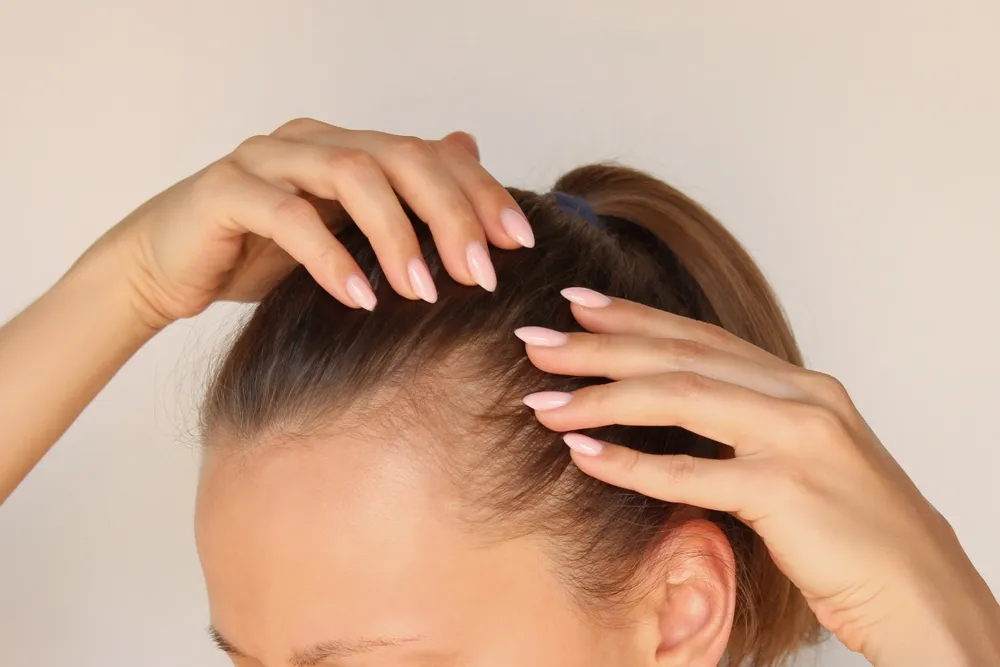
Hairline Lowering and Female Hair Restoration in Turkey
Turkey leads the world in female hair restoration. Thousands of women travel to Istanbul every year for hairline lowering and female hair transplant procedures. Turkish surgeons perform these operations with advanced techniques. Patients enjoy natural results at accessible costs. This article explains everything women need to know before choosing hairline lowering or female hair restoration in Turkey.
What Is Hairline Lowering and Female Hair Restoration in Turkey?
Hairline lowering and female hair restoration in Turkey involve surgical procedures that improve forehead proportions and restore hair density. Turkish clinics offer both forehead reduction surgery and hair transplantation for women.
Female hair restoration means rebuilding or enhancing hair density in women who experience thinning or hairline recession. Hairline lowering means surgically advancing the hair-bearing scalp forward to reduce forehead height. Women seek these procedures for cosmetic improvement and psychological wellbeing.
Turkey has become a global center for these treatments. Istanbul alone hosts hundreds of specialized clinics. Surgeons in Turkey perform more hair transplants annually than any other country. This high volume creates deep expertise in female-specific techniques.
Women from Europe, the Middle East, and North America travel to Turkey for these procedures. They receive comprehensive packages that include surgery, accommodation, and follow-up care. The combination of surgical skill and medical tourism infrastructure makes Turkey a leading destination.
Why Do Women Choose Hairline Lowering Instead of Accepting a Naturally High Forehead?
Women choose hairline lowering because a high forehead disrupts facial balance and causes emotional distress. Many women feel self-conscious about their forehead size from childhood.
A congenital high forehead means the hairline sits higher than average from birth. This trait runs in families. Some women inherit this feature from parents. A naturally receded female hairline can also develop after hair loss affects the frontal scalp.
Cosmetic concerns drive most decisions. Women want facial harmony. Farkas and Kolar explain that ideal female faces follow specific proportional rules (1987). A high forehead breaks these proportions. Women notice this imbalance in photos and mirrors.
Psychological impact matters too. Women with high foreheads often report lower self-esteem. They avoid certain hairstyles. They feel anxiety in social situations. Hairline lowering restores confidence by creating balanced facial thirds.
What Causes Hair Loss in Women?
Multiple factors cause hair loss in women. Doctors must identify the exact cause before recommending surgery.
Female Pattern Hair Loss (FPHL) tops the list. This condition causes gradual thinning at the crown. The frontal hairline usually stays intact. Genetics and hormones both play roles. Research shows that androgens trigger follicle miniaturization in susceptible women (2025).
Traction alopecia comes from tight hairstyles. Braids, ponytails, and extensions pull hair roots. Over time, this damages follicles. Women who wear these styles for years often develop permanent hair loss.
Hormonal disorders disrupt hair growth. Polycystic ovary syndrome raises androgen levels. Thyroid disease alters metabolism. Both conditions affect the hair cycle.
Pregnancy and postpartum shedding cause temporary loss. Hormone shifts during pregnancy keep hairs in the growth phase. After delivery, many hairs enter the resting phase simultaneously. This creates noticeable shedding.
Menopause reduces estrogen levels. This hormonal shift makes hair thinner. Many women notice widening part lines during this life stage.
Stress-induced hair loss occurs after major life events. Surgery, illness, or emotional trauma can trigger telogen effluvium. This condition pushes hairs into the resting phase prematurely.
Nutritional deficiencies weaken hair. Low iron, ferritin, zinc, or vitamin D levels reduce follicle health. Blood tests reveal these problems.
Autoimmune disorders attack hair follicles directly. Alopecia areata creates patchy bald spots. Scarring alopecia destroys follicles permanently.
Who Is a Good Candidate for Female Hair Restoration in Turkey?
Good candidates have stable donor hair and realistic expectations. Surgeons evaluate each patient carefully before approving surgery.
Patients with stable donor hair qualify. The back of the scalp usually provides healthy follicles. These follicles resist hormonal changes. Women need adequate density in this area.
Women with localized thinning make excellent candidates. Diffuse thinning requires different planning. Surgeons must work around existing hairs.
Women with congenital high foreheads benefit from hairline lowering. These patients have good scalp elasticity. Their hairlines have not receded from disease.
Hairline reconstruction candidates need strong donor reserves. Scar camouflage candidates want to hide old surgical scars or trauma marks. Eyebrow and temple restoration candidates seek comprehensive facial framing.
Doctors exclude women with active hair loss diseases. They also exclude women with unrealistic expectations. A thorough consultation determines candidacy.
What Is the Difference Between Hairline Lowering Surgery and Female Hair Transplantation?
These two procedures achieve similar goals through different methods. Women must understand both options before deciding.
Hairline lowering surgery advances the entire scalp forward. Surgeons remove a strip of forehead skin. They pull the hair-bearing scalp down. This creates immediate reduction in forehead height. The procedure suits women with good scalp elasticity. It does not add new hair follicles. It simply repositions existing ones.
Female hair transplantation moves individual follicles from donor areas to the hairline. Surgeons extract grafts one by one. They implant these grafts along the new hairline. This method gradually lowers the hairline. It increases density over time. It does not remove forehead skin.
Hairline lowering works best for women who need 1.5 to 2.5 centimeters of advancement. Hair transplantation works for any amount of lowering. Hairline lowering leaves a linear scar at the hairline. Hair transplantation leaves tiny dot scars in the donor area.
|
Feature |
Hairline Lowering |
Female Hair Transplant |
|
Surgical technique |
Scalp advancement |
Follicular unit extraction |
|
Recovery time |
2-3 weeks |
7-10 days for initial healing |
|
Scarring |
Linear scar at hairline |
Tiny dot scars in donor area |
|
Hair density |
Immediate, same density |
Gradual, depends on graft count |
|
Best candidates |
Women with good scalp laxity |
Women with adequate donor hair |
|
Longevity |
Permanent |
Permanent |
|
Main advantage |
Immediate result |
No forehead skin removal |
|
Main limitation |
Scar visibility |
Requires months for full growth |
Can Hairline Lowering and Hair Transplant Be Combined?
Yes, surgeons often combine both procedures. This approach maximizes results for women with complex needs.
Combination treatment helps when women need more advancement than scalp elasticity allows. Surgeons first perform forehead reduction. Then they transplant hair along the scar line. This hides the surgical scar. It also adds density to the frontal zone.
The combination improves scar camouflage. Hair grafts grow through and around the scar. This makes the incision line nearly invisible.
Increasing frontal density creates a fuller look. Some women have thin hair at the temples. Transplantation restores these areas.
Refining the hairline shape requires artistic placement. Surgeons design irregular, natural-looking borders. They avoid straight lines.
Long-term aesthetic outcomes improve with combination therapy. Women see immediate forehead reduction. They also see gradual hairline thickening. This dual approach satisfies women who want both speed and naturalness.
Which Hair Transplant Techniques Are Used for Women?
Turkish clinics use three main techniques for women. Each method offers specific advantages.
Direct Hair Implantation (DHI) uses a Choi Implanter Pen. Surgeons load grafts into this pen. They implant hairs directly into the scalp. This technique allows precise control over angle and depth. It creates dense packing. It requires minimal shaving. Women prefer DHI because they keep their existing hairstyle.
Sapphire FUE uses sapphire-tipped blades. Surgeons open tiny channels with these blades. The V-shaped cuts heal faster. They cause less tissue trauma. Sapphire blades create smaller incisions than steel blades. This reduces scarring. It speeds up recovery.
Long Hair (No-Shave) Transplant preserves existing hair. Surgeons extract and implant grafts without cutting surrounding hairs. This suits professional women. They return to work without obvious signs of surgery.
|
Technique |
Best For |
Key Advantage |
Consideration |
|
DHI |
Diffuse thinning, hairline work |
No full shaving needed |
Longer procedure time |
|
Sapphire FUE |
Large areas, precise channels |
Faster healing, less trauma |
May require partial shaving |
|
Long Hair Transplant |
Professional women |
Immediate cosmetic concealment |
Limited graft numbers per session |
How Is Hairline Design Different in Women?
Women need hairline designs that preserve femininity. Surgeons follow different rules for female patients.
Female facial proportions differ from male proportions. Women have softer, more rounded hairlines. Men have more angular, M-shaped hairlines. Surgeons must respect these differences.
Natural curvature matters. A female hairline should have gentle irregularities. Straight lines look artificial. Experienced surgeons create micro-irregularities. These mimic natural hair patterns.
Age-appropriate design prevents obvious results. Young women need conservative hairlines. Older women need designs that suit their facial maturity. A hairline that looks good at 25 might look strange at 55.
Ethnic differences influence design. East Asian women often have wider foreheads. Wu et al. found that customized FUE designs improve mid-upper facial contours significantly (2025). African women may need different density patterns. European women often seek subtle lowering.
Density planning requires careful calculation. Surgeons measure existing hair per square centimeter. They plan graft placement to match natural density. Temple angle restoration frames the face properly.
Preservation of feminine appearance guides every decision. The goal is balance, not dramatic change.
What Preoperative Evaluation Is Required Before Female Hair Restoration?
Doctors perform thorough evaluations before surgery. These tests ensure safety and predict success.
Medical history reveals previous conditions. Doctors ask about family hair loss patterns. They review past surgeries and medications.
Hormonal assessment identifies underlying problems. Blood tests measure thyroid function. They check androgen levels. They evaluate estrogen and progesterone.
Blood tests screen for anemia and nutritional deficiencies. Low ferritin levels correlate with hair loss. Doctors often require ferritin levels above 70 ng/mL before surgery.
Thyroid evaluation rules out hypothyroidism or hyperthyroidism. Both conditions affect hair quality.
Iron and ferritin levels directly impact follicle health. Women with low iron stores heal poorly. They may continue losing hair after transplantation.
Scalp examination identifies skin diseases. Doctors look for psoriasis, seborrheic dermatitis, or infections. These conditions require treatment first.
Donor area assessment measures available grafts. Surgeons calculate how many follicles they can safely extract.
Hair density analysis uses trichoscopy. This digital magnified imaging shows follicle health. It reveals miniaturization patterns.
The hair pull test checks for active shedding. Doctors gently pull hair strands. Excessive shedding indicates unstable conditions.
How Is Female Hair Restoration Performed?
The procedure follows a clear sequence. Each step requires precision and care.
Consultation begins the process. The surgeon examines the patient. They discuss goals and expectations. They create a surgical plan.
Hairline planning uses surgical markers. The surgeon draws the new hairline. The patient approves this design before anesthesia.
Local anesthesia numbs the scalp. Patients stay awake during surgery. They feel no pain.
Donor harvesting extracts individual follicles. Surgeons use micro-punches for FUE. They carefully remove grafts from the back of the scalp.
Graft preparation occurs under microscopes. Technicians sort follicles by size. They count single, double, and triple hair units.
Recipient site creation opens tiny channels. Surgeons use blades or needles. They control angle and direction.
Graft implantation places follicles into channels. For DHI, surgeons use the Choi pen. For FUE, they insert grafts manually.
Final assessment checks all grafts. The surgeon reviews placement and density. They apply a protective dressing.
What Happens During Forehead Reduction Surgery?
Forehead reduction surgery requires different steps. Surgeons lower the hairline by advancing the scalp.
Surgical markings define the new hairline. The surgeon measures forehead height. They plan the exact amount of skin removal.
Hairline incision follows a zigzag pattern. This trichophytic incision hides the scar within hair follicles. Hair grows through the scar line.
Scalp mobilization frees the tissue. Surgeons dissect beneath the scalp. They release tension across the forehead.
Hair-bearing scalp advancement pulls the scalp forward. Surgeons measure the exact distance. They advance the scalp to the marked position.
Tissue closure removes excess forehead skin. Surgeons suture the incision carefully. They minimize tension.
Postoperative dressing protects the wound. Patients receive antibiotics and pain medication. They return home the same day.
What Is Recovery Like After Female Hair Restoration?
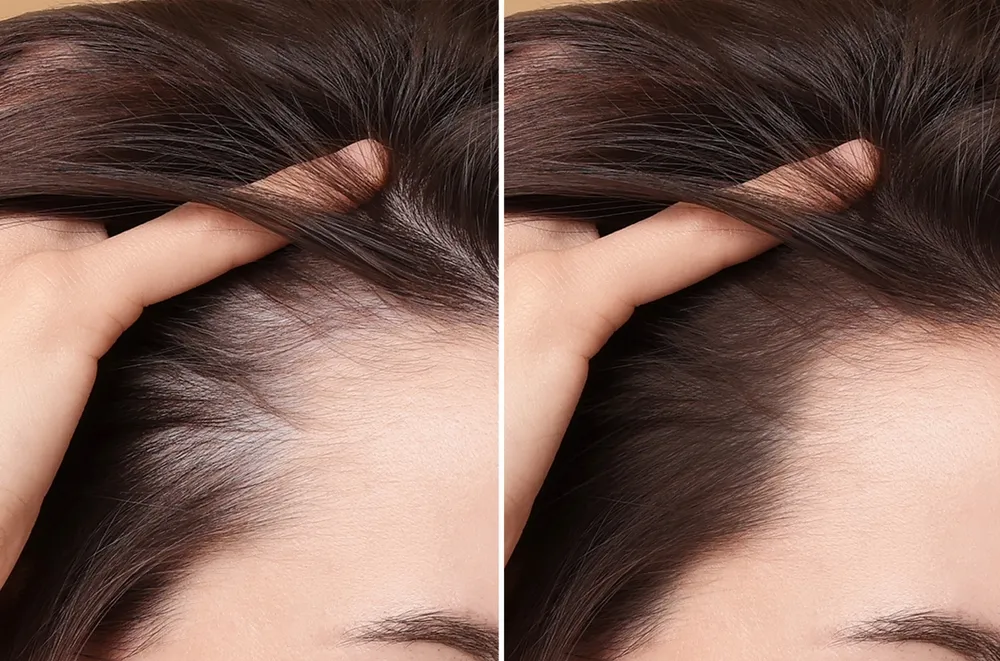
Recovery occurs in distinct phases. Patients must understand each stage.
First week brings swelling and mild discomfort. The scalp feels tight. Patients sleep with their head elevated. They avoid touching the grafts. Initial washing starts around day three. Scabs form and begin falling off.
First month includes the shedding phase. Transplanted hairs fall out. This shock loss surprises many women. The follicles remain alive beneath the skin. Scalp healing continues. Redness fades.
Three to six months bring new hair growth. Fine hairs emerge from transplanted follicles. These first hairs look thin and soft. Density increases gradually.
Nine to twelve months reveal the final cosmetic outcome. Hair thickens and matures. Women can style their new hairline freely. The results look natural and permanent.
What Is Recovery Like After Hairline Lowering Surgery?
Hairline lowering recovery follows a different pattern. Patients heal from surgical incision rather than graft implantation.
Scar maturation takes twelve months. The scar starts red and raised. It gradually fades to skin color. Hair grows through the trichophytic incision.
Temporary numbness affects the forehead. Nerves stretch during scalp advancement. Sensation returns over three to six months.
Swelling peaks at day three. It resolves within two weeks. Most patients look presentable after ten days.
Return to work occurs after seven to ten days. Office workers resume sooner. Physical jobs require longer breaks.
Physical activity restrictions last one month. Patients avoid heavy lifting and strenuous exercise. This prevents wound tension.
When Can Final Results Be Seen?
Patience is essential. Neither procedure shows immediate final results.
Hair transplant growth timeline spans twelve to eighteen months. Grafts enter a dormant phase after implantation. New growth starts around month three. Significant density appears by month six. Full maturity requires one year.
Hairline lowering healing timeline shows faster initial results. The forehead looks smaller immediately. However, scar maturation takes one year. Hair growth through the scar improves camouflage during this time.
Scar maturation period lasts twelve to eighteen months. The incision line softens and fades. Final assessment should wait until this completes.
Long-term stability characterizes both procedures. Transplanted hairs remain permanent. Surgically advanced scalps stay in position. Women enjoy lifelong improvements.
What Are the Benefits of Female Hair Restoration in Turkey?
Turkey offers unique advantages for women seeking hair restoration.
Natural-looking hairlines result from high surgical volume. Turkish surgeons perform thousands of female procedures annually. They understand diverse hair types and facial structures.
Permanent follicle survival occurs when surgeons extract DHT-resistant grafts. These grafts maintain their growth characteristics in new locations.
Improved facial balance enhances overall appearance. A well-designed hairline frames the eyes and cheeks. It creates proportional facial thirds.
Enhanced confidence changes how women feel. Many patients report improved social interactions. They feel more comfortable in photographs.
High-volume surgical expertise means surgeons encounter every variation. They manage complex cases routinely. This experience reduces complications.
Comprehensive medical tourism services simplify travel. Clinics arrange airport transfers, hotels, and translators. Patients focus on recovery rather than logistics.
Are There Risks or Complications?
All surgeries carry risks. Women must understand these before proceeding.
Infection remains rare but possible. Antibiotics prevent most infections. Proper wound care reduces risk further.
Bleeding occurs during and after surgery. Surgeons control bleeding with pressure and medications. Patients should avoid blood thinners before surgery.
Temporary numbness affects the scalp. Nerves heal over weeks or months. Permanent numbness is uncommon.
Shock loss means temporary shedding of native hairs. This occurs near the transplant site. Hairs usually regrow within months.
Poor graft survival happens in some cases. Smoking, poor nutrition, or technical errors cause this. Experienced surgeons achieve 90-95% survival rates.
Unnatural hairline results from poor design. Straight lines or wrong angles look artificial. Skilled surgeons avoid these mistakes.
Wide scar can develop after forehead reduction. Tension or poor healing causes this. Scar revision surgery fixes problematic scars.
Need for revision surgery arises occasionally. Some women need touch-up procedures. These refine density or hairline shape.
How Can Patients Minimize Surgical Risks?
Smart choices reduce complications significantly.
Choosing experienced surgeons matters most. Surgeons who perform hundreds of female procedures yearly deliver better outcomes. They handle unexpected situations calmly.
Proper diagnosis prevents treating the wrong condition. Women with active FPHL need medical management first. Surgery alone cannot stop progressive hair loss.
Following aftercare instructions protects grafts. Patients must avoid touching the scalp. They must sleep properly. They must use prescribed shampoos and medications.
Avoiding smoking improves healing. Nicotine constricts blood vessels. This reduces oxygen delivery to grafts. Smokers face higher failure rates.
Optimizing nutrition supports follicle health. Protein, iron, and vitamins strengthen hair. Patients should eat well before and after surgery.
Regular postoperative follow-up catches problems early. Surgeons monitor healing at scheduled intervals. They address concerns promptly.
How Much Does Hairline Lowering and Female Hair Restoration Cost in Turkey?
Turkey offers significant cost advantages. International patients save thousands compared to home countries.
Factors affecting cost include surgical technique, graft count, and surgeon reputation. DHI typically costs more than standard FUE. More grafts require more time and resources.
Surgical technique influences pricing. Sapphire FUE and DHI use specialized tools. These advanced methods command higher fees.
Number of grafts directly affects cost. Women needing 2000 grafts pay less than those needing 4000 grafts.
Surgeon expertise adds value. Top surgeons charge premium rates. Their experience justifies the investment.
Clinic accreditation ensures safety standards. JCI-accredited facilities maintain rigorous protocols. This oversight adds to operational costs.
Combination procedures cost more than single procedures. Forehead reduction plus transplantation requires longer operating time.
Typical packages include multiple services. Most clinics offer all-inclusive deals. These packages cover initial consultation, preoperative blood tests, the surgical procedure, postoperative medications, hotel accommodation, VIP airport transfers, and follow-up consultations.
Prices range from $2,500 to $6,000 for comprehensive packages. Comparable procedures in the UK or US cost $10,000 to $25,000.
Why Is Turkey a Leading Destination for Female Hair Restoration?
Turkey dominates global hair restoration for several reasons.
Experienced surgical teams perform more procedures than any other country. This volume creates unmatched expertise. Turkish surgeons innovate constantly.
Advanced technology reaches Turkish clinics quickly. Sapphire blades, DHI pens, and robotic systems appear early. Clinics invest in cutting-edge equipment.
International patient services cater to global visitors. English-speaking coordinators assist patients. Translators handle Arabic, French, and Russian.
Modern facilities rival top hospitals worldwide. Many clinics hold JCI accreditation. Operating rooms meet strict sterility standards.
Cost-effectiveness attracts budget-conscious patients. Lower operational costs and currency advantages create savings. Patients receive premium care at accessible prices.
High procedural volume drives continuous improvement. Surgeons refine techniques through repetition. They share knowledge at international conferences.
Medical tourism infrastructure supports seamless experiences. Hotels, transport, and tourism services integrate with healthcare. Patients combine treatment with vacation.
How Should International Patients Prepare for Treatment in Turkey?
Preparation ensures smooth treatment and recovery.
Before traveling, patients research thoroughly. They verify surgeon credentials. They read independent reviews. They request video consultations.
During consultation, patients discuss goals honestly. They share medical history. They ask about technique selection. They review before-and-after photos.
Length of stay typically spans three to five days. Arrival day allows consultation and tests. Surgery day requires rest. Follow-up day checks healing before departure.
Postoperative care begins immediately. Clinics provide written instructions. They supply medications and special shampoos. They schedule telemedicine follow-ups.
Flying after surgery is generally safe after two days. Short flights pose minimal risk. Long flights require walking and hydration. Patients should avoid pressure on the grafts.
Returning home safely requires planning. Patients arrange time off work. They prepare a recovery space. They stock recommended hair care products.
Frequently Asked Questions About Hairline Lowering and Female Hair Restoration in Turkey
Is Female Hair Transplantation Permanent?
Yes, female hair transplantation offers permanent results. Surgeons transplant DHT-resistant follicles from the donor area. These follicles maintain their genetic resistance in new locations. They continue growing for a lifetime.
Can Women Undergo Hairline Lowering Surgery?
Yes, women make excellent candidates for hairline lowering. Berenguer et al. reported high satisfaction among female patients undergoing aesthetic forehead reduction (2022). Women comprise over 95% of forehead reduction patients in many studies.
Does Hair Need to Be Completely Shaved?
No, many women avoid complete shaving. DHI and long hair transplant techniques allow partial or no shaving. Surgeons work around existing hairs. This preserves hairstyle during recovery.
Which Is Better: DHI or Sapphire FUE?
Neither technique is universally better. DHI suits women who need density between existing hairs. Sapphire FUE works well for larger areas. Surgeons recommend the best option after examination.
How Many Grafts Are Usually Required?
Women typically need 1500 to 3500 grafts for hairline work. Forehead size and desired density determine exact numbers. Some women need additional grafts for temple restoration.
Will the Transplanted Hair Fall Out?
Transplanted hairs shed temporarily during weeks two to four. This shock loss is normal. New growth begins around month three. The follicles remain alive and productive.
Can Female Pattern Hair Loss Continue After Transplantation?
Yes, FPHL can progress after transplantation. Surgeons recommend medical therapy alongside surgery. Minoxidil and anti-androgen treatments protect native hairs. Patients need ongoing management.
Is Forehead Reduction Surgery Painful?
Patients experience mild discomfort rather than severe pain. Local anesthesia numbs the scalp during surgery. Postoperative pain responds to standard medications. Most patients describe tightness more than pain.
Can Hair Transplantation Hide Forehead Reduction Scars?
Yes, hair transplantation effectively camouflages forehead reduction scars. Surgeons place grafts along the incision line. Hair grows through and around the scar. This makes the scar nearly invisible.
How Long Should International Patients Stay in Turkey?
Patients should stay three to five days. This allows consultation, surgery, and initial follow-up. Some clinics offer one-day surgery for local patients. International visitors need extra time for travel recovery.
Can Women with Hormonal Hair Loss Undergo Transplantation?
Women with controlled hormonal hair loss can undergo transplantation. Doctors must stabilize underlying conditions first. Thyroid disorders and PCOS require medical management. Stable patients achieve good results.
What Age Is Ideal for Female Hair Restoration?
Women over 25 make ideal candidates. Hair loss patterns stabilize by this age. Younger women may experience continued thinning. Older women heal well and achieve excellent results.
How Natural Will the New Hairline Look?
A natural hairline requires artistic design and precise placement. Skilled surgeons create irregular, soft hairlines. They match hair direction and angle. Results should look indistinguishable from natural growth.
Can Eyebrow or Temple Restoration Be Performed at the Same Time?
Yes, surgeons often combine procedures. Temple restoration frames the face properly. Eyebrow transplantation enhances facial expression. Combined procedures save travel costs and recovery time.
What Should Patients Remember Before Choosing Hairline Lowering and Female Hair Restoration in Turkey?
Accurate diagnosis comes first. Women must identify the true cause of their hair concerns. Medical conditions require treatment before surgery.
Individualized treatment planning matters. No single approach suits every woman. Surgeons must tailor techniques to facial structure, hair type, and goals.
Differences between forehead reduction and hair transplantation are significant. Women must choose the right procedure for their needs. Some women benefit from combination therapy.
Realistic expectations regarding density and growth timeline prevent disappointment. Hair transplantation requires patience. Final results need twelve months.
Surgeon experience, donor hair quality, and long-term follow-up determine optimal outcomes. Women should research credentials carefully. They should ask about complication rates. They should verify follow-up protocols.
Choosing hairline lowering or female hair restoration in Turkey represents a life-changing decision. Proper preparation leads to satisfying, natural results.
References
Abrahamson, C. W., et al. "Stability of Hairline Lowering Using Small Footprint Soft Tissue Anchoring Devices." The Laryngoscope, vol. 136, no. 4, 2026, pp. 1734-1740.
Berenguer, B., et al. "Aesthetic Forehead Reduction in Female Patients." Journal of Plastic, Reconstructive & Aesthetic Surgery, vol. 75, no. 1, 2022, pp. 407-414.
de Azevedo Marques, Patricia. "Forehead Reduction Surgery: Outcomes and Complications of 650 Cases in a Multiracial Population." Aesthetic Plastic Surgery, 2025, doi:10.1007/s00266-025-04830-y.
Farkas, L. G., and J. C. Kolar. "Anthropometrics and Art in the Aesthetics of Women's Faces." Clinics in Plastic Surgery, vol. 14, no. 4, 1987, pp. 599-616.
Jimenez, F., et al. "Hair Transplantation: Basic Overview." Journal of the American Academy of Dermatology, vol. 85, no. 4, 2021, pp. 803-814.
Kabaker, S. S., and J. P. Champagne. "Hairline Lowering." Facial Plastic Surgery Clinics of North America, vol. 21, no. 3, 2013, pp. 479-486.
Lee, S. H., et al. "Forehead Reduction Surgery via an Anterior Hairline Pretrichial Incision in Asians: A Review of 641 Cases." Aesthetic Plastic Surgery, vol. 45, no. 4, 2021, pp. 1551-1560.
Park, J. H. "Novel Principles and Techniques to Create a Natural Design in Female Hairline Correction Surgery." Plastic and Reconstructive Surgery. Global Open, vol. 3, no. 12, 2015, e589.
Rassman, W. R., et al. "Phenotype of Normal Hairline Maturation." Facial Plastic Surgery Clinics of North America, vol. 21, no. 3, 2013, pp. 317-324.
Shapiro, R. "Principles and Techniques Used to Create a Natural Hairline in Surgical Hair Restoration." Facial Plastic Surgery Clinics of North America, vol. 12, no. 2, 2004, pp. 201-217.
Vila, P. M., et al. "Forehead Reduction: A Systematic Review and Meta-Analysis of Outcomes." Facial Plastic Surgery & Aesthetic Medicine, vol. 24, no. 1, 2022, pp. 34-40.
Wu, W., et al. "Enhancing Mid-Upper Facial Contours: Hairline Transplant Solutions for East Asian Women With High and Wide Foreheads." Journal of Cosmetic Dermatology, vol. 24, no. 8, 2025, e70374.