How to Tell the Difference Between Gynecomastia and Chest Fat
Gynecomastia involves firm glandular tissue beneath the nipple, while chest fat (pseudogynecomastia) consists of soft, evenly distributed fat. You can tell them apart by texture, location, and response to weight loss.
Many men notice their chest looks larger than they want. This change can hurt confidence. It can make you avoid the gym or the beach. Some men worry about their health. Others just want to know what is going on. The truth is, not all chest enlargement is the same. Two main conditions cause this problem. One is gynecomastia. The other is chest fat, also called pseudogynecomastia. These two conditions look similar. But they have different causes. They also need different treatments. Knowing how to tell the difference between gynecomastia and chest fat matters. It helps you pick the right path forward. This article explains both conditions in detail. It covers causes, symptoms, diagnosis, and treatment. It uses real science and simple language. Always talk to a doctor for a proper diagnosis.
What Is Gynecomastia?
Gynecomastia is the benign enlargement of glandular breast tissue in men, caused by a hormonal imbalance between estrogen and testosterone.
Gynecomastia happens when glandular breast tissue grows in a male chest. This is not fat. It is real breast tissue. The word comes from Greek roots meaning "woman-like breasts." Doctors define it as a palpable mass of tissue that sits behind the nipple and areola. This tissue feels firm or rubbery. It can affect one breast or both. Sometimes one side grows more than the other.
The main driver of gynecomastia is a hormonal imbalance. Estrogen promotes breast tissue growth. Testosterone suppresses it. When estrogen levels rise or testosterone levels drop, breast tissue can grow. This imbalance can happen at any age. It is very common during puberty. Up to 60% of adolescent boys develop some degree of gynecomastia (Niewoehner and Schorer, 2008). Most cases resolve on their own within one to three years. But some persist into adulthood.
Adult gynecomastia affects about 32% to 65% of men, depending on age and health status (Suh and Oh, 2022). The prevalence increases with age. Men over 50 show higher rates due to natural testosterone decline. Some men develop gynecomastia because of medications. Others get it from underlying medical conditions. In rare cases, tumors drive the hormonal shift.
Gynecomastia is usually benign. It does not turn into cancer. But it can cause pain, tenderness, and emotional distress. Men with gynecomastia often feel self-conscious. They may avoid tight clothing or physical intimacy. Understanding the condition is the first step toward relief.
What Are the Different Types of Gynecomastia?
Gynecomastia falls into physiological (pubertal, adult, age-related) and pathological (medication-induced, disease-related) categories.
Doctors classify gynecomastia by cause and timing. Here are the main types:
Physiological gynecomastia occurs during normal life stages. Pubertal gynecomastia hits boys between 10 and 16 years old. It peaks around age 13 or 14. Hormone levels swing wildly during puberty. Estrogen can spike temporarily. This triggers breast tissue growth. Most cases fade within 6 to 24 months. No treatment is usually needed.
Adult gynecomastia develops in men between 20 and 50 years old. It often links to weight gain, medication use, or subtle hormone changes. This type may persist without intervention.
Age-related gynecomastia appears in men over 50. Testosterone naturally drops with age. Body fat increases. Fat tissue converts testosterone into estrogen through an enzyme called aromatase. This shift promotes breast tissue growth. Studies show prevalence rises to 65% in men over 50 (Suh and Oh, 2022).
Medication-induced gynecomastia results from drugs that alter hormone levels. Common culprits include spironolactone, cimetidine, ketoconazole, anabolic steroids, and some antidepressants. The tissue often regresses if the patient stops the drug.
Pathological gynecomastia stems from diseases. Liver cirrhosis, kidney failure, hyperthyroidism, and testicular tumors can all disrupt hormone balance. This type needs medical workup to find the root cause.
What Is Chest Fat (Pseudogynecomastia)?
Chest fat, or pseudogynecomastia, is the accumulation of adipose tissue in the chest area without true glandular enlargement, usually linked to overall weight gain.
Pseudogynecomastia looks like gynecomastia but has a different cause. It involves only fat. No glandular tissue grows. The chest enlarges because fat cells expand. This fat spreads evenly across the chest. It does not form a firm lump under the nipple.
Doctors call this condition pseudogynecomastia. The prefix "pseudo" means false. It looks like gynecomastia, but it is not. The distinction matters because treatment differs completely.
Chest fat usually ties to overall obesity. When you gain weight, fat deposits everywhere. Some men store more fat in the chest. Genetics control where fat goes. Your body shape and hormone profile influence this pattern. Men with higher body mass index (BMI) often show more chest fat.
Unlike gynecomastia, chest fat feels soft. It lacks the firm, disc-like gland beneath the nipple. It also responds well to weight loss. Diet and exercise can shrink chest fat significantly. In some cases, it disappears entirely.
Many men have both conditions. They carry excess chest fat and have some glandular growth. A doctor can tell the difference during an exam.
How Can You Physically Tell the Difference Between Gynecomastia and Chest Fat?
Gynecomastia presents as a firm, rubbery, disc-shaped lump directly behind the nipple, often with tenderness; chest fat feels soft, spreads evenly, and lacks a discrete lump.
The physical exam reveals the truth. Here is what to look for:
Gynecomastia creates a firm or rubbery mass. This mass sits right behind the nipple and areola. It often feels like a disc or a button. You can move it slightly under the skin. The tissue may feel tender or sore. The nipple may protrude or look puffy. One breast may grow larger than the other. The enlargement does not shrink much with weight loss. The gland stays put.
Chest fat feels completely different. It spreads across the chest in a soft, even layer. You cannot find a hard lump under the nipple. The tissue feels like fat anywhere else on the body. It usually causes no pain. When you lose weight, the chest shrinks along with the rest of the body. The contour improves as overall fat drops.
Here is a side-by-side comparison:
|
Feature |
Gynecomastia |
Chest Fat (Pseudogynecomastia) |
|
Tissue type |
Glandular tissue |
Adipose (fat) tissue |
|
Consistency |
Firm, rubbery, disc-like |
Soft, pliable, diffuse |
|
Pain or tenderness |
Often present |
Rarely present |
|
Lump under nipple |
Yes, discrete and mobile |
No, no discrete lump |
|
Response to weight loss |
Minimal change |
Significant improvement |
|
Nipple appearance |
May protrude or look puffy |
Usually normal |
|
Symmetry |
Often asymmetric |
Usually symmetric |
|
Surgery needed |
Often required for persistent cases |
Rarely needed |
This table helps you understand the core differences. But only a doctor can confirm the diagnosis.
What Causes Gynecomastia?
Gynecomastia stems from hormonal imbalance, medications, medical diseases, and lifestyle factors that raise estrogen or lower testosterone.
How Does Hormonal Imbalance Trigger Gynecomastia?
When estrogen rises or testosterone falls, breast tissue growth signals activate in men.
Hormones control everything. Estrogen stimulates breast tissue. Testosterone blocks it. In healthy men, testosterone dominates. But several things can tip the balance.
Some men produce too much estrogen. Adipose tissue contains aromatase. This enzyme converts testosterone into estradiol, a form of estrogen. More body fat means more conversion. This explains why obese men face higher gynecomastia risk.
Other men make too little testosterone. Aging reduces testicular output. Injury or disease can also lower production. When testosterone drops, estrogen's effects grow stronger.
Hormone receptor sensitivity also plays a role. Some men have breast tissue that overreacts to normal estrogen levels. Even small amounts trigger growth.
Which Medications Can Cause Gynecomastia?
Drugs like spironolactone, cimetidine, ketoconazole, anabolic steroids, and some antipsychotics disrupt hormone balance and trigger breast tissue growth.
Many prescription and recreational drugs cause gynecomastia. Here are the main groups:
Anti-androgens block testosterone action. Spironolactone, used for heart failure and blood pressure, is a common offender. Finasteride, used for hair loss, can also cause it.
Hormones and anabolic steroids create direct imbalance. Bodybuilders who abuse testosterone or synthetic steroids often develop gynecomastia. Their bodies convert excess testosterone into estrogen.
Antidepressants and antipsychotics alter dopamine and prolactin levels. Drugs like risperidone raise prolactin. High prolactin suppresses testosterone and promotes breast growth.
Heart and ulcer medications also contribute. Cimetidine (Tagamet) blocks androgen receptors. Digoxin has estrogen-like effects. Calcium channel blockers may play a role too.
Antibiotics and antifungals like ketoconazole and isoniazid can disrupt steroid synthesis.
If you suspect a drug causes your chest enlargement, talk to your doctor. Never stop medication on your own.
What Medical Conditions Lead to Gynecomastia?
Liver disease, kidney failure, hyperthyroidism, testicular disorders, and pituitary tumors can all disrupt the estrogen-testosterone balance.
Diseases that affect hormone production or clearance often cause gynecomastia:
Liver disease reduces the organ's ability to break down estrogen. Cirrhosis and chronic hepatitis raise circulating estrogen levels.
Kidney failure alters hormone metabolism. Dialysis patients show high gynecomastia rates. Uremia affects the hypothalamic-pituitary-gonadal axis.
Hyperthyroidism increases sex hormone-binding globulin (SHBG). This binds testosterone and leaves more free estrogen.
Testicular disorders like Klinefelter syndrome, trauma, or tumors reduce testosterone output. Leydig cell tumors can even produce estrogen directly.
Pituitary disorders affect the master gland that controls the testes. Prolactinomas raise prolactin and lower testosterone.
Adrenal and lung tumors can secrete estrogen or hCG, a hormone that stimulates estrogen production.
Any man with sudden or one-sided gynecomastia needs evaluation for tumors.
How Do Lifestyle Factors Contribute?
Alcohol, marijuana, anabolic steroids, and some supplements raise estrogen or lower testosterone.
What you put in your body matters. Alcohol damages the liver. It also increases aromatase activity. Heavy drinkers face higher gynecomastia risk.
Marijuana contains compounds that may mimic estrogen. Chronic use links to breast tissue growth in some studies.
Anabolic steroids flood the body with androgens. The body fights back by converting excess into estrogen. This rebound effect causes gynecomastia in many steroid users.
Some herbal supplements and teas contain phytoestrogens. These plant compounds act like weak estrogen. High intake might contribute in sensitive individuals.
What Causes Chest Fat?
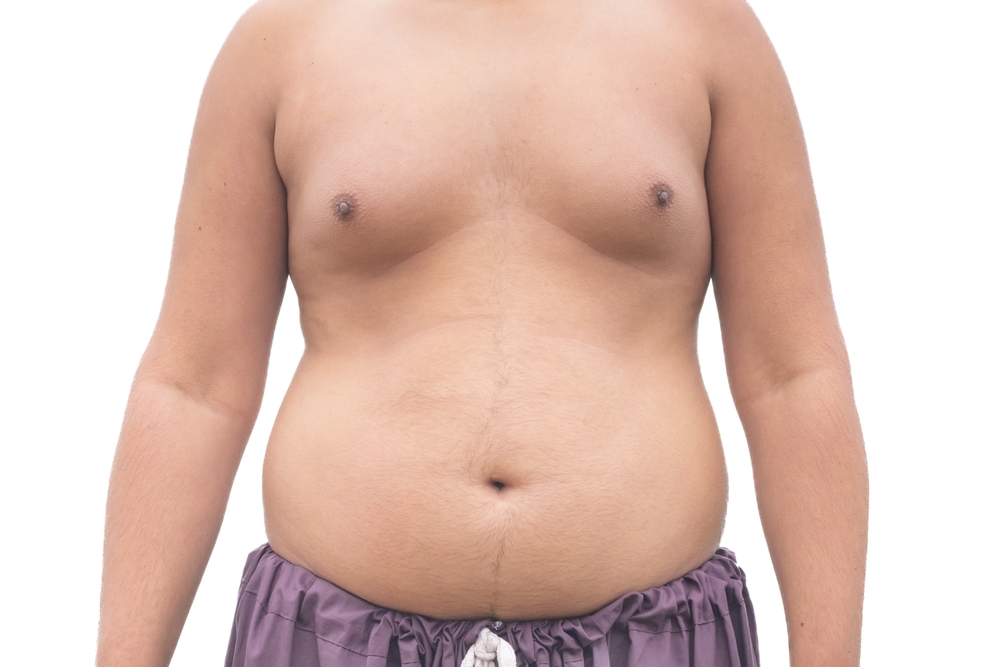
Chest fat results from excess body fat, poor muscle development, and genetic fat distribution patterns.
How Does Excess Body Fat Build Up in the Chest?
A high-calorie diet, sedentary habits, and obesity deposit fat evenly across the chest.
Chest fat follows the same rules as belly fat or thigh fat. When you eat more calories than you burn, your body stores the extra as fat. Fat cells expand. They can also multiply. The chest is one common storage site.
A diet high in processed foods, sugar, and refined carbs promotes fat gain. Liquid calories from soda, juice, and alcohol add up fast. Portion sizes have grown over decades. Many men eat more than they realize.
A sedentary lifestyle makes things worse. Desk jobs, long commutes, and screen time reduce daily calorie burn. Muscle mass declines. Metabolism slows. Fat accumulates.
Obesity is the end result. Men with BMI over 30 often show significant chest fat. The chest looks rounded and soft. This is pseudogynecomastia in its classic form.
Why Does Poor Muscle Development Matter?
Weak pectoral muscles let the chest sag and look fatty, even with moderate fat levels.
Muscle shapes the chest. Strong pectoral muscles create a flat, defined look. When these muscles are underdeveloped, the chest appears softer. Fat sits on top of weak muscle. The overall contour looks worse.
Men who skip chest exercises may notice this effect. Push-ups, bench presses, and flyes build pectoral mass. Without this foundation, even small amounts of fat look prominent.
Overall body composition matters too. Low muscle mass across the whole body reduces metabolic rate. This makes fat gain easier. Resistance training fixes both problems.
How Do Genetics Influence Chest Fat?
Your genes determine where your body stores fat, including whether the chest is a primary deposit site.
You cannot choose where fat goes. Genetics decides. Some men store fat in the belly first. Others store it in the chest, hips, or thighs. This pattern runs in families.
Hormone profiles also have genetic roots. Some men naturally have higher estrogen-to-testosterone ratios. This promotes chest fat storage. Others have more alpha-adrenergic receptors in chest fat cells. These receptors resist fat breakdown.
Body shape differences play a role too. Endomorphs gain fat easily. Ectomorphs stay lean. Mesomorphs build muscle. Knowing your type helps set realistic expectations.
What Symptoms Suggest Gynecomastia?
Look for breast tenderness, a firm disc beneath the areola, puffy nipples, and possible one-sided enlargement.
Gynecomastia announces itself with specific signs:
Tenderness is common. The breast tissue feels sore. Clothing rubbing against the nipple may hurt. This tenderness often appears early in the condition.
Breast pain ranges from mild ache to sharp discomfort. It usually centers behind the nipple.
A swollen gland creates a visible mound. You can see it and feel it. The disc-shaped mass sits directly under the areola.
Puffy nipples protrude more than usual. The areola may look dome-shaped. This happens because the gland pushes the nipple outward.
One-sided enlargement is a red flag. True gynecomastia often affects one breast more than the other. Chest fat usually looks symmetric.
A firm disc beneath the areola is the hallmark finding. You can feel it during self-exam. It feels different from the soft fat around it.
If you notice these signs, see a doctor. They can confirm whether the tissue is glandular.
What Symptoms Suggest Chest Fat?
Symmetric, soft chest enlargement with no tenderness, no lump, and changes that track with overall weight fluctuation points to chest fat.
Chest fat shows different patterns:
Symmetrical chest enlargement means both sides look the same. Fat deposits evenly. You do not see one breast bigger than the other.
Soft texture is the key. The chest feels squishy. You can pinch it easily. There is no hard core beneath the nipple.
No tenderness is typical. Chest fat rarely hurts. You can press on it without discomfort.
Fat deposits elsewhere on the body support the diagnosis. If you carry belly fat, love handles, and thigh fat, chest fat fits the pattern.
Changes with weight fluctuation confirm the nature of the tissue. When you gain weight, the chest grows. When you lose weight, it shrinks. This responsive behavior defines chest fat.
Can You Tell the Difference at Home?
Self-exams like the pinch test and mirror assessment offer clues, but they cannot replace a doctor's evaluation.
How Does the Pinch Test Work?
Pinch the tissue around your nipple. If you feel a firm, rubbery disc, gynecomastia is likely. If you feel only soft fat, it is probably chest fat.
The pinch test is simple. Stand in front of a mirror. Use your thumb and forefinger to pinch the tissue around your nipple. Move outward in a circle.
If you feel a firm, rubbery, disc-shaped lump directly behind the nipple, you likely have gynecomastia. The lump may feel tender. It does not feel like the surrounding fat.
If you feel only soft, pliable tissue with no discrete lump, you likely have chest fat. The texture matches fat on your belly or thighs.
Limitations exist. The pinch test is not perfect. Small glands can be hard to feel. Large amounts of chest fat can hide a gland beneath. Some men have both conditions. The test cannot measure hormone levels or rule out tumors. It is a screening tool, not a diagnosis.
What Should You Look for in a Mirror Assessment?
Check chest contour, nipple projection, and skin changes for clues about glandular vs. fatty tissue.
Stand shirtless in good light. Look straight ahead. Then turn to the side.
Chest contour tells a story. Gynecomastia often creates a pointed or cone-shaped projection centered on the nipple. Chest fat creates a rounded, even slope across the whole chest.
Nipple appearance differs too. Gynecomastia may push the nipple outward. The areola looks puffy. Chest fat usually leaves the nipple flat.
Skin changes are rare but important. Dimpling, redness, or nipple inversion can signal other problems. These need immediate medical attention.
Why Is Self-Diagnosis Not Enough?
Gynecomastia and chest fat can look identical on the surface, and only a doctor can rule out dangerous conditions like male breast cancer.
The two conditions often look the same. A man with chest fat might think he has gynecomastia. A man with gynecomastia might blame diet. Self-diagnosis leads to wrong treatment choices.
More importantly, some dangerous conditions mimic gynecomastia. Male breast cancer is rare but real. It usually appears as a hard, fixed, irregular mass. It may cause nipple discharge or skin changes. Only a doctor can distinguish this from benign enlargement.
Hormonal disorders also need lab testing. You cannot feel low testosterone or high prolactin. These require blood work.
See a healthcare provider for any persistent chest enlargement. They bring objectivity and tools you lack.
How Do Doctors Diagnose Gynecomastia?
Doctors use medical history, physical examination, imaging tests like ultrasound, and laboratory hormone panels to confirm gynecomastia and rule out other conditions.
What Does the Medical History Reveal?
Your doctor asks about medications, family history, hormone disorders, and lifestyle habits to identify triggers.
The doctor starts with questions. They ask when you first noticed the enlargement. They want to know if it happened suddenly or gradually. Rapid growth raises more concern.
Medications come next. The doctor reviews every drug you take. Prescriptions, over-the-counter meds, and supplements all matter. They look for known gynecomastia triggers.
Family history helps. Some genetic conditions run in families. Klinefelter syndrome and certain tumors have hereditary links.
Hormonal disorders in your past matter too. Thyroid disease, pituitary problems, or prior testosterone therapy all provide clues.
Lifestyle habits round out the picture. The doctor asks about alcohol, drug use, and exercise. This builds a complete story.
What Happens During the Physical Examination?
The doctor palpates the chest to feel for glandular tissue, evaluates symmetry, and checks for warning signs like hard fixed masses.
The exam is thorough. The doctor inspects both breasts. They look for symmetry, skin changes, and nipple position.
Palpation is the key step. The doctor uses their fingers to press around the nipple and areola. They feel for a firm, rubbery, mobile disc. This disc defines true gynecomastia. They note its size, shape, and tenderness.
The doctor also checks the testes. Testicular tumors can cause gynecomastia. They look for lumps or size differences.
They examine the rest of the body too. Thyroid enlargement, liver abnormalities, or signs of chronic disease may appear.
Which Imaging Tests Help?
Ultrasound is the first-line imaging tool. Mammography helps when cancer is a concern.
Ultrasound is the go-to test. It uses sound waves to create images. It distinguishes glandular tissue from fat. It also shows cysts, abscesses, or tumors. Ultrasound is cheap, safe, and accurate. Studies show it effectively rules out male breast cancer (Suh and Oh, 2022).
Mammography helps in select cases. Doctors use it when they suspect cancer. It works best for men over 50 or those with hard, fixed masses. Mammography can find calcifications or irregular shapes that suggest malignancy.
MRI is rarely needed. It provides detailed images for complex cases. It helps plan surgery in severe gynecomastia.
What Laboratory Tests Are Needed?
Blood tests measure testosterone, estrogen, LH, FSH, prolactin, thyroid hormones, and liver and kidney function.
Blood work finds the root cause. Here is what doctors typically order:
|
Test |
Purpose |
|
Testosterone |
Checks for low male hormone levels |
|
Estradiol |
Measures estrogen activity |
|
LH and FSH |
Evaluates pituitary and testicular function |
|
Prolactin |
Screens for pituitary tumors |
|
TSH and free T4 |
Rules out thyroid disorders |
|
Liver function tests |
Detects liver disease |
|
Kidney function tests |
Identifies renal failure |
|
hCG |
Screens for testicular or other tumors |
|
SHBG |
Assesses hormone binding capacity |
These tests paint a full hormonal picture. They guide treatment decisions. They also catch serious conditions early.
Can Weight Loss Eliminate Chest Enlargement?
Weight loss significantly reduces chest fat but rarely eliminates true gynecomastia, since glandular tissue persists even after fat shrinks.
How Does Weight Loss Affect Chest Fat?
Diet, cardio, and resistance training shrink fat cells throughout the body, including the chest.
Chest fat responds well to weight loss. When you create a calorie deficit, your body burns stored fat. The chest is one of many areas that slim down.
Nutrition drives the process. Cut processed foods, sugary drinks, and excess alcohol. Eat lean protein, vegetables, whole grains, and healthy fats. Track your calories. Aim for a modest deficit of 300 to 500 calories per day.
Cardio accelerates fat burning. Walking, running, swimming, and cycling all work. Aim for 150 minutes of moderate activity per week. High-intensity interval training (HIIT) can boost results.
Resistance training reshapes the chest. Bench presses, push-ups, dumbbell flyes, and cable crossovers build pectoral muscle. More muscle raises metabolism. It also creates a firmer, flatter chest contour.
Consistency matters. Men who lose 10% to 20% of body weight often see dramatic chest improvement. In pure pseudogynecomastia, the chest may return to normal.
How Does Weight Loss Affect Gynecomastia?
Weight loss reduces surrounding fat and may make the gland less noticeable, but the glandular tissue itself usually stays.
True gynecomastia behaves differently. The glandular tissue does not melt away with diet. It is not fat. It is breast tissue. It has its own blood supply and cellular structure.
Weight loss can still help. It reduces the fat that sits around the gland. This may make the chest look better. The overall contour improves. But the firm disc behind the nipple remains.
In some cases, weight loss makes the gland more obvious. As fat shrinks, the gland stands out more. This can actually increase self-consciousness.
Men with gynecomastia should still pursue a healthy weight. It improves overall health. It may reduce estrogen conversion from fat. But they should not expect the gland to vanish without medical treatment.
What Non-Surgical Treatment Options Exist?
Lifestyle changes, hormonal management, and observation can help some cases, but surgery remains the only definitive cure for persistent glandular gynecomastia.
How Can Lifestyle Modification Help?
Healthy diet, regular exercise, and weight management improve chest fat and may reduce mild gynecomastia.
Every man with chest enlargement should start with lifestyle changes. These improve health regardless of the underlying cause.
Healthy diet lowers body fat. It also reduces inflammation. Some foods may affect hormones. Cruciferous vegetables like broccoli contain compounds that help estrogen metabolism. Limiting alcohol protects the liver and reduces aromatase activity.
Exercise builds muscle and burns fat. Combine cardio with strength training. Target the chest with specific movements. But remember: spot reduction is a myth. You cannot burn chest fat alone. You must lose fat everywhere.
Weight management keeps results stable. Yo-yo dieting worsens the problem. Maintain a steady, healthy weight long-term.
What Is Hormonal Management?
Doctors treat underlying hormonal disorders and review medications to restore the estrogen-testosterone balance.
If blood tests show a hormone problem, treatment targets the root cause:
Testosterone replacement therapy helps men with true hypogonadism. It restores normal levels. But doctors must monitor carefully. Excess testosterone can convert to estrogen and worsen gynecomastia.
Medication review is essential. If a drug causes the problem, the doctor may switch to an alternative. Never stop medication without medical guidance.
Treating thyroid disease resolves hormone-related gynecomastia. Hyperthyroidism treatment often leads to breast tissue regression.
Anti-estrogen medications like tamoxifen and raloxifene show promise. Studies report 80% to 90% response rates (Dickson, 2012). These drugs block estrogen receptors in breast tissue. They work best for recent-onset gynecomastia. The FDA has not approved them specifically for this use. But doctors prescribe them off-label.
Aromatase inhibitors like anastrozole reduce estrogen production. They help men with high aromatase activity, often from obesity.
When Is Observation the Right Choice?
Doctors often watch and wait for pubertal gynecomastia and mild adult cases, since many resolve on their own.
Not every case needs immediate treatment. Pubertal gynecomastia resolves in 90% of boys within three years (Niewoehner and Schorer, 2008). Active treatment may cause more harm than good.
Mild adult gynecomastia that causes no pain or distress can also be observed. Some men accept the appearance. Others prefer to wait and see if it changes.
Observation includes regular checkups. The doctor monitors for growth, pain, or new symptoms. If things worsen, they move to treatment.
What Surgical Treatments Work for Gynecomastia?
Liposuction removes fatty tissue, gland excision removes glandular tissue, and a combined approach addresses both components for the best cosmetic result.
How Does Liposuction Help?
Liposuction suctions out excess fat through small incisions, best for men with fatty chest tissue and good skin elasticity.
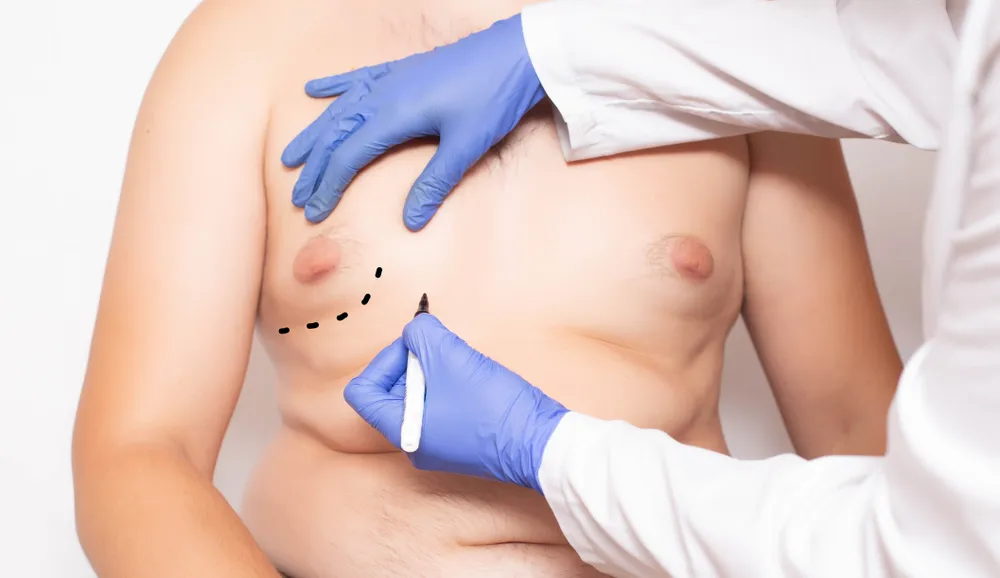
Liposuction targets fat. The surgeon makes tiny incisions around the chest. They insert a thin tube called a cannula. The cannula breaks up fat and suctions it out.
This works best when fat dominates the problem. Men with pseudogynecomastia or mixed-type enlargement benefit most. Liposuction alone cannot remove glandular tissue. The gland is too dense.
Modern techniques use power-assisted or ultrasound-assisted liposuction. These methods liquefy fat before removal. They cause less trauma. Recovery is faster.
What Is Gland Excision?
Gland excision surgically removes the firm glandular disc through an incision, usually around the areola.
Gland excision cuts out the breast tissue. The surgeon makes an incision, often along the lower edge of the areola. This hides the scar. They remove the glandular disc in one piece.
This procedure is necessary for true gynecomastia. Liposuction cannot remove the gland. The gland must come out surgically.
In severe cases, the surgeon may need to remove excess skin too. This happens when the chest has stretched significantly. Skin removal leaves larger scars. But it creates a flatter contour.
Why Is the Combined Procedure Most Common?
Most men have both fat and gland tissue, so surgeons combine liposuction with gland excision for optimal chest contouring.
Real-world gynecomastia rarely involves pure gland or pure fat. Most men have a mix. The combined approach addresses everything.
The surgeon starts with liposuction. They remove fat from the chest and sides. This creates a smooth foundation. Then they perform gland excision through the same or a separate incision. They remove the glandular disc.
This dual approach prevents contour problems. Removing only the gland can leave a depression. Removing only fat leaves the gland prominent. Together, they create a natural, flat chest.
What Does Recovery Look Like?
Most men wear compression garments for several weeks, return to desk work within days, resume light exercise in 2-3 weeks, and see final results in 3-6 months.
Recovery follows a predictable path:
Compression garments reduce swelling and support healing. Patients wear them for 4 to 6 weeks. These tight vests apply even pressure. They help the skin contract to the new contour.
Return to work happens quickly. Desk jobs allow return in 2 to 5 days. Physical jobs need 1 to 2 weeks. The chest will be sore but manageable.
Exercise restrictions protect healing tissue. Avoid chest workouts for 4 to 6 weeks. Light cardio can resume in 2 weeks. Gradually increase intensity.
Final results take time. Swelling hides the true contour for weeks. Most swelling fades in 1 month. The final shape emerges at 3 to 6 months. Scars mature and fade over a year.
Complications are rare. Infection, bleeding, and contour irregularities occur in a small percentage of cases. Choosing a board-certified surgeon minimizes risk.
Can Chest Fat Return After Treatment?
Yes, weight gain can bring chest fat back, and hormonal shifts can trigger recurrent gynecomastia, but maintenance strategies help preserve results.
Does Weight Gain Cause Recurrence?
Regaining body fat deposits fat back into the chest, reversing the improvements from diet, exercise, or surgery.
Fat cells shrink but do not disappear with weight loss. They can expand again. If you gain weight after liposuction or diet, fat returns. The chest is a common storage site.
Surgery removes fat cells from the treated area. But remaining cells can still grow. And fat can deposit in new areas. Weight gain after surgery may create unusual contours.
Maintain a stable weight to protect your results. This is the most important long-term factor.
Can Hormonal Changes Bring Gynecomastia Back?
New medication use, aging, or endocrine disorders can restart glandular growth even after successful treatment.
Gland excision removes existing tissue. But it does not change your hormones. If the underlying imbalance persists, new tissue can grow.
Aging naturally lowers testosterone. This raises estrogen's relative effect. Men who had surgery in their 20s may see recurrence in their 50s.
New medications can trigger regrowth. Always tell doctors about your history when they prescribe drugs.
Recurrent gynecomastia may need repeat surgery. But addressing the hormone problem first is crucial.
How Do You Maintain Long-Term Results?
Keep a stable weight, follow a healthy lifestyle, and monitor hormone levels with your doctor.
Success requires ongoing effort:
Stable weight prevents fat recurrence. Weigh yourself weekly. Adjust diet and exercise before small gains become big problems.
Healthy lifestyle supports hormone balance. Limit alcohol. Avoid anabolic steroids. Eat whole foods. Exercise regularly.
Hormonal monitoring catches problems early. Men with a history of gynecomastia should check testosterone and estrogen levels annually. Treat imbalances promptly.
What Is the Psychological Impact of Male Breast Enlargement?
Gynecomastia and chest fat significantly harm body image, self-esteem, and emotional well-being, often causing social anxiety and exercise avoidance.
Chest enlargement affects more than the body. It hits the mind too.
Body image suffers. Men feel their chest looks feminine. They avoid mirrors and photos. Shirtless situations cause panic. The beach, the pool, and locker rooms become sources of dread.
Self-esteem drops. Men blame themselves. They feel less masculine. This affects relationships, work performance, and overall happiness.
Social anxiety grows. Men withdraw from social events. They fear judgment. They wear baggy clothes to hide their chest. Some avoid dating entirely.
Exercise avoidance is ironic but common. Men feel too embarrassed to go to the gym. They worry others will stare. This creates a vicious cycle. Less exercise means more fat. More fat means worse chest appearance.
Emotional well-being declines over time. Chronic embarrassment leads to depression. Studies show men with gynecomastia report lower quality of life scores. They experience more psychological distress than men without the condition.
Treatment helps. Studies demonstrate significant improvement in body image and mental health after gynecomastia surgery (Kasielska-Trojan et al., 2017). Even non-surgical interventions that improve appearance boost confidence.
If chest enlargement affects your mental health, seek support. Talk to a therapist. Join online communities. Address the physical and emotional sides together.
When Should You See a Doctor?
Seek immediate medical evaluation for sudden enlargement, severe pain, bloody nipple discharge, a hard immobile mass, one-sided growth, rapid enlargement, or persistent swelling.
Some symptoms demand prompt attention. Do not wait if you notice:
Sudden enlargement over weeks or months. This is not normal. It suggests a hormone shift or medication effect.
Severe pain that limits daily activities. Pain may signal infection, inflammation, or other problems.
Bloody nipple discharge is never normal. It requires urgent evaluation to rule out cancer.
A hard, immobile mass that feels fixed to the skin or chest wall. Benign gynecomastia is usually mobile. Fixed masses raise cancer concern.
One-sided growth that appears without explanation. Asymmetric enlargement needs imaging.
Rapid enlargement that outpaces normal changes. This suggests an aggressive process.
Persistent swelling beyond the typical timeline. Pubertal cases should fade within a few years. Adult cases that do not improve with lifestyle changes need workup.
Early evaluation leads to better outcomes. It catches serious conditions. It also opens the door to treatment that improves your life.
Frequently Asked Questions
Is Gynecomastia the Same as Chest Fat?
No. Gynecomastia is glandular breast tissue growth. Chest fat is adipose tissue accumulation. They have different causes and treatments.
Can Exercise Cure Gynecomastia?
Exercise cannot remove glandular tissue. It only reduces surrounding fat. True gynecomastia needs medical or surgical treatment.
How Does Gynecomastia Feel?
Gynecomastia often feels like a firm, rubbery, tender disc behind the nipple. It may ache or feel sore to touch.
Can Weight Loss Remove Gynecomastia?
Weight loss shrinks chest fat but rarely removes the gland. The glandular tissue stays in place.
Can Teenagers Develop Gynecomastia?
Yes. Up to 60% of boys develop gynecomastia during puberty. Most cases resolve naturally within a few years.
Is Gynecomastia Dangerous?
Gynecomastia itself is benign and not dangerous. But it can signal underlying hormone problems or, rarely, tumors that need attention.
Does Gynecomastia Always Require Surgery?
No. Mild or pubertal cases often resolve without surgery. Medication and observation work for many men. Surgery is for persistent, bothersome cases.
How Long Does Gynecomastia Last?
Pubertal gynecomastia lasts 6 months to 3 years. Adult gynecomastia may persist indefinitely without treatment.
Can Obesity Cause Gynecomastia?
Obesity raises estrogen levels through aromatase activity in fat tissue. This can trigger true gynecomastia, not just chest fat.
What Is Pseudogynecomastia?
Pseudogynecomastia is chest fat without glandular enlargement. It results from overall weight gain and improves with weight loss.
Conclusion
Gynecomastia and chest fat both enlarge the male chest. But they are not the same condition. Gynecomastia involves firm glandular tissue driven by hormonal imbalance. Chest fat involves soft adipose tissue driven by excess weight. You can tell them apart by texture, location, tenderness, and response to weight loss. But self-diagnosis has limits. A doctor confirms the diagnosis through history, physical exam, imaging, and lab tests.
Chest fat often improves with diet, exercise, and weight loss. Gynecomastia usually needs more. Observation works for mild or pubertal cases. Medications can help recent-onset glandular growth. Surgery provides a definitive solution for persistent, bothersome gynecomastia. Liposuction removes fat. Gland excision removes tissue. Combined surgery delivers the best cosmetic results.
Both conditions affect mental health. They hurt confidence and quality of life. Seeking help is not weakness. It is the smart path to feeling better in your own skin.
If you have persistent, painful, or one-sided chest enlargement, see a qualified healthcare professional. They will find the cause. They will build a plan that fits your body and your goals. Accurate diagnosis is the foundation of effective treatment. Do not guess. Get checked. Take control of your health and your appearance.
References
Dickson, Gerald. "Gynecomastia." American Family Physician, vol. 85, no. 7, 2012, pp. 716-722.
Kasielska-Trojan, Anna, et al. "Risk Factors of Gynecomastia in Adolescents and Men: A Systematic Review and Meta-Analysis." Frontiers in Endocrinology, vol. 12, 2021, doi:10.3389/fendo.2021.699207.
Niewoehner, C. B., and Schorer, A. E. "Gynaecomastia and Breast Cancer in Men." BMJ, vol. 336, no. 7639, 2008, pp. 334-335.
Suh, Yooseok, and Oh, Kyung Taek. "Gynecomastia: A Systematic Review and Meta-Analysis." Journal of Clinical Medicine, vol. 11, no. 3, 2022, p. 638, doi:10.3390/jcm11030638.
Velloso, Fernanda, and de Souza, Fabio. "Gynecomastia: A Systematic Review and Meta-Analysis." Journal of Clinical Medicine, vol. 11, no. 3, 2022, p. 638, doi:10.3390/jcm11030638.
Wang, Zheng, et al. "A Meta-Analysis of Tamoxifen for Treating Pubertal Gynecomastia." Journal of Pediatric Endocrinology and Metabolism, vol. 34, no. 2, 2021, pp. 179-186, doi:10.1515/jpem-2020-0362.