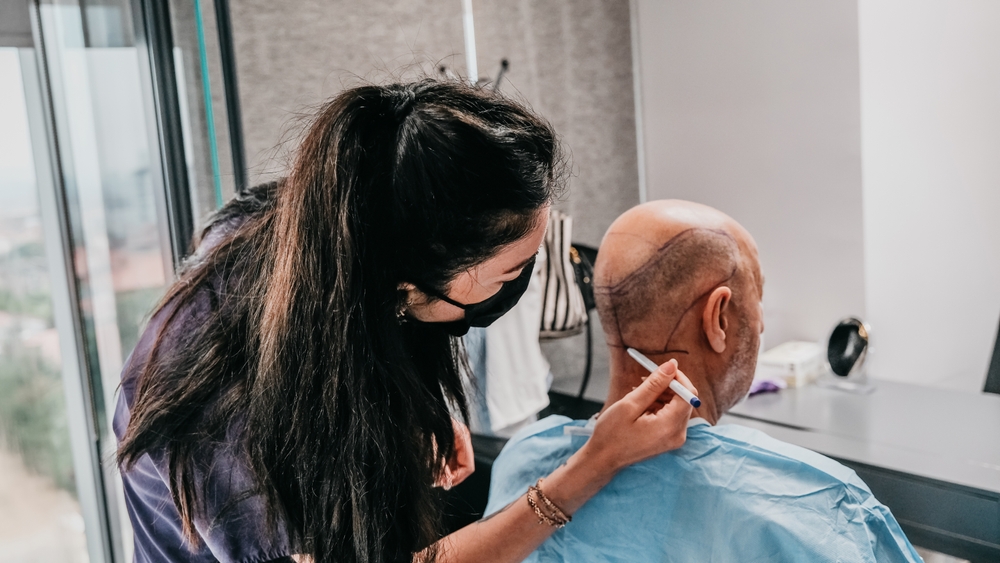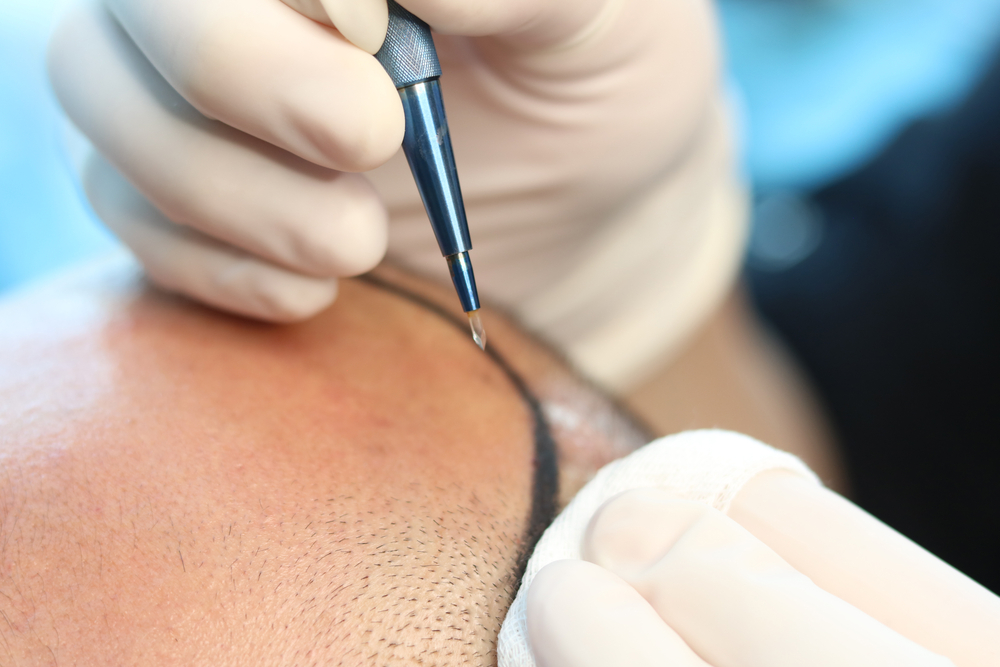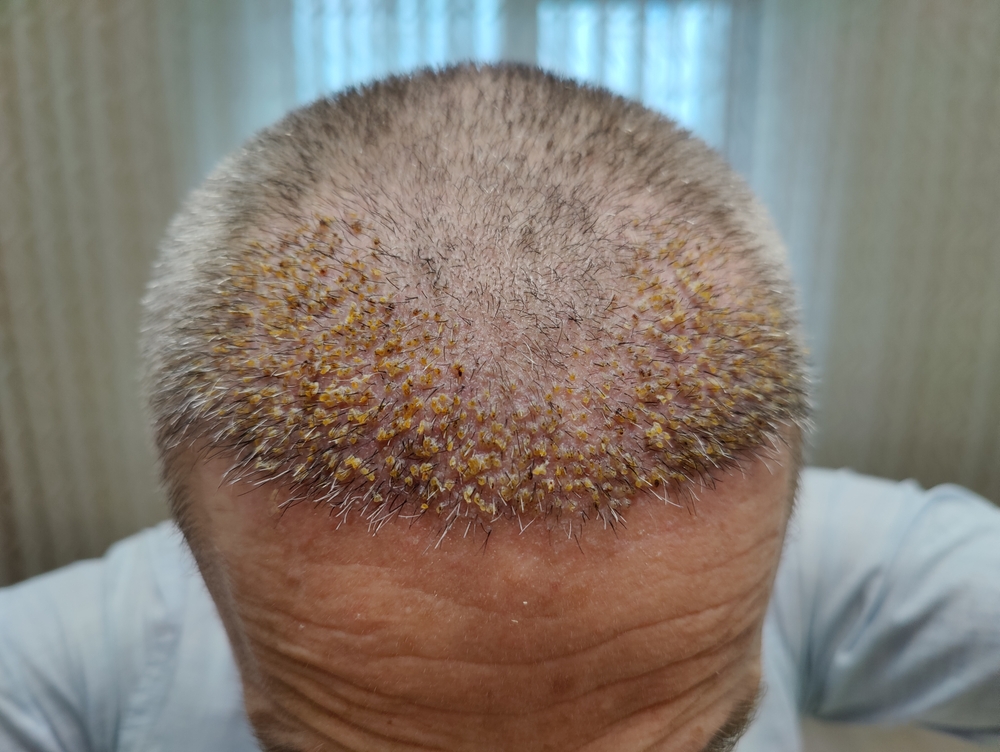
Hair transplant scabs are small crusts of dried blood, plasma, and skin cells that form around new grafts. They protect wounds and support healing after FUE, Sapphire FUE, or DHI surgery.
Hair transplant scabs confuse many patients. People worry when they see crusts forming on their scalp after surgery. These scabs are not a sign of trouble. They are a normal part of wound healing. The body creates them to shield tiny incisions and protect new hair graftsA hair graft refers to a small unit of hair-bearing skin taken from the donor area—typically the back or sides....
Scabs form after surgeons make micro-incisions in the recipient area. Blood and lymphatic fluid leak from these tiny wounds. The fluid dries and hardens. Dead skin cells mix with this dried fluid. The result is a small brown or reddish crust around each graft. This crust acts like a natural bandage. It keeps bacteria out and holds the graft in place during early healing.
Different techniques produce slightly different scab patterns. FUE leaves small round scabs at each graft site. Sapphire FUE uses sharper blades. This creates cleaner cuts. Patients often see less crusting with Sapphire FUE. DHI uses a Choi implanter pen. This technique implants grafts directly. DHI may produce fewer visible scabs because the tool seals the incision as it places the graft.
Patients often ask three questions. Are hair transplant scabs normal? Yes, they are. When do scabs fall off after hair transplant? Most fall off between day seven and day fourteen. Can removing scabs damage grafts? Yes, early removal can dislodge grafts and cause infection. Proper aftercare keeps grafts alive and speeds healing.
What Are Hair Transplant Scabs Exactly?
Scabs are dried crusts made of blood, plasma, lymph fluid, and dead skin cells that cover micro-wounds from graft implantation.
How Do Hair Transplant Scabs Form?
Scabs form when blood and tissue fluid dry around micro-incisions, creating a protective biological barrier.
The surgeon creates hundreds or thousands of tiny recipient sites. Each site bleeds slightly. The blood clots within minutes. Plasma and lymphatic fluid join the clot. These fluids carry proteins and immune cells. They fight bacteria and start repair. As the fluid dries, it traps dead skin cells on the surface. This mixture hardens into a scab.
The scab covers the wound like a shield. It prevents dirt and bacteria from entering. It also keeps the graft anchored. The graft sits in a fragile state for the first few days. The scab holds it in place until tissue bonds form underneath. Shichang et al. note that proper washing starts once the scalp forms these early crusts, usually around day three (Shichang et al. 2024).
Why Do Scabs Appear After Every Hair Transplant Surgery?
Scabs appear because micro-incisions trigger the body’s natural inflammatory response and tissue repair system.
The body treats each graft site as a small wound. It sends white blood cells to the area. These cells release chemicals that start inflammation. Inflammation is not bad here. It brings nutrients and oxygen. It also removes damaged tissue. The blood vessels widen. Fluid leaks into the tissue. This fluid dries on the scalp surface. Scabs are the visible result of this healthy process.
Scabs also stop bacteria from contaminating the wound. The hard surface blocks germs. Underneath the scab, new skin cells grow. The scab falls off once the skin closes. This process takes time. Patients must not rush it.
Do FUE, Sapphire FUE, and DHI Produce Different Types of Scabs?
Yes, incision size and implantation technique affect scab thickness, density, and visibility.
FUE uses a punch to extract grafts. The surgeon then makes small slits for placement. These slits produce standard scabs. Sapphire FUE uses a V-shaped sapphire bladeA Modern Innovation in Hair Transplants The sapphire blade is an advanced tool used to create precise incisions during hair.... The blade makes sharper, narrower cuts. Less tissue trauma occurs. Patients often notice thinner scabs and faster crust shedding. DHI uses an implanter pen. The pen inserts the graft directly. It does not require pre-made channels. This reduces bleeding and crust formation. DHI patients may see fewer scabs overall.
A comparison table shows the differences clearly.
|
Technique |
Incision Type |
Typical Scab Size |
Scab Density |
Healing Speed |
|
FUE |
Small slits or needles |
Small dots |
Moderate |
Standard |
|
Sapphire FUE |
Sapphire blade cuts |
Very tiny crusts |
Lower |
Faster |
|
DHI |
Choi implanter pen |
Minimal crusts |
Lowest |
Fastest |
Sapphire FUE and DHI do not eliminate scabs. They reduce them. All patients still need proper washing and aftercare.
What Do Normal Hair Transplant Scabs Look Like?
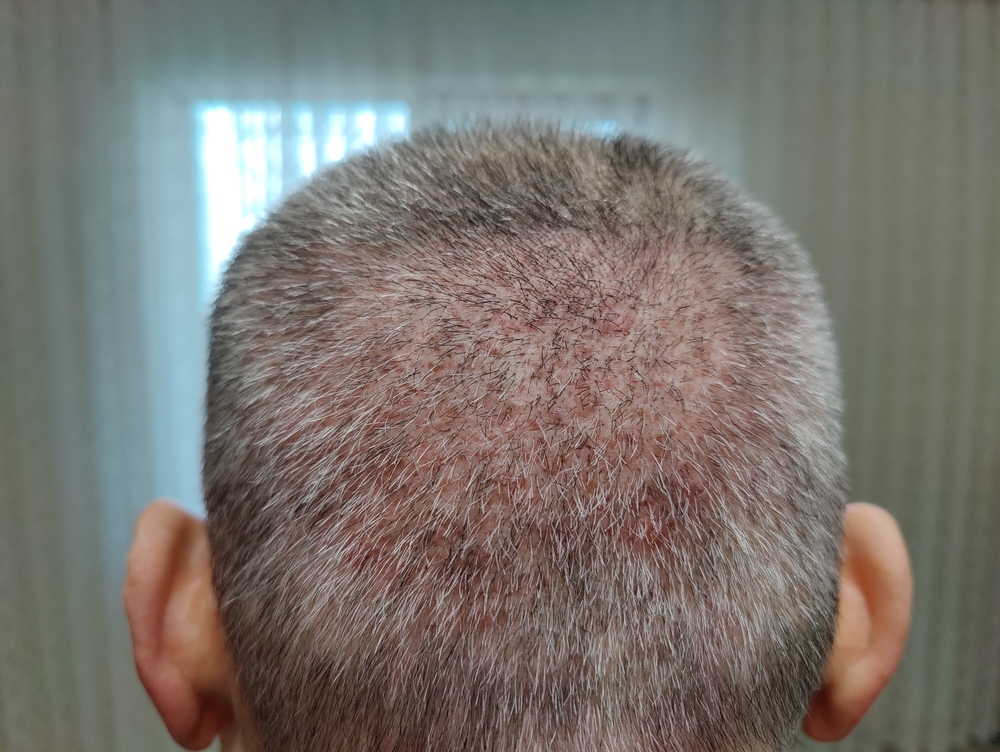
Normal scabs are small brown or reddish dots around grafts. They cluster in the recipient area and feel slightly tight.
What Is the Typical Appearance of Hair Transplant Scabs?
They look like tiny brown or red crusts surrounding each implanted hair shaft.
Patients see hundreds of small dots. Each dot centers on a graft. The dots may cluster together. This gives a patchy look. The color ranges from dark red to brown. As days pass, the color fades. The scabs shrink. They may lift at the edges. This is normal. The scalp underneath looks pink. The pinkness shows new tissue forming.
How Can You Tell Normal Scabs from Abnormal Ones?
Normal scabs show mild itching and light redness. Abnormal scabs show pus, severe pain, foul odor, or persistent bleeding.
Normal signs include mild tightness. The scalp feels slightly itchy. The skin looks pink or light red. Scabs shed gradually. No pus appears. Pain stays mild and manageable.
Warning signs demand attention. Excessive swelling suggests inflammation. Yellow or green pus means infection. Severe pain indicates nerve irritation or infection. A foul odor signals bacterial growth. Persistent bleeding shows the wound has reopened. If you see these signs, contact your surgeon immediately.
A quick comparison helps patients spot problems.
|
Normal Scabs |
Abnormal Scabs |
|
Mild itching |
Severe pain |
|
Light redness |
Excessive swelling |
|
Brown or red color |
Yellow or green pus |
|
Gradual shedding |
Foul odor |
|
No bleeding |
Persistent bleeding |
What Is the Exact Hair Transplant Scabs Timeline?
Scabs form in the first two days, harden by day five, soften by day seven, and fall off by day ten to fourteen.
What Happens to Scabs in the First 24 to 48 Hours?
Blood clots form around grafts. The scabs are fresh and fragile. You must not touch them.
The first two days are critical. The body sends clotting factors to each incision. Fibrin threads weave through the blood. They trap platelets. This creates a seal. The seal holds the graft. Grafts are not firmly anchored yet. Any friction can dislodge them. Patients must not wash the recipient area. They must not scratch. They must sleep with their head elevated. This reduces swelling and protects the new scabs.
What Changes Occur Between Days 3 and 5?
Scabs become visible and firm. Mild itching starts. You may begin gentle washing if your surgeon approves.
Days three to five mark a transition. The initial clot dries fully. Scabs turn darker. They feel crusty. The scalp may feel tight. Itching often begins. This itching signals healing. Nerve endings wake up. Patients must resist the urge to scratch. Some clinics allow the first gentle wash on day three. Others wait until day five. The wash uses saline spray or mild foam. The goal is to soften crusts, not remove them. A 2026 pilot study found that starting a gentle keratolytic shampoo at forty-eight to seventy-two hours reduced scab severity effectively without harming grafts (“Early Removal of Post-Operative Scabs” 2026).
What Happens to Scabs Between Days 7 and 10?
Scabs soften and start shedding naturally. Grafts become more stable.
This is the main shedding window. Daily gentle washing loosens the crusts. Water and shampoo penetrate the edges. The scabs lift away. Patients see small flakes in the shower. Some hairs fall with the scabs. This alarms many people. It is normal. The hair shaft sheds. The follicle stays in place. The follicle is the living root. It will grow a new shaft later. By day ten, most scabs have fallen. The scalp looks cleaner. Pinkness remains. This pinkness fades over the next weeks.
What Should You Expect Between Days 10 and 14?
Most scabs disappear. The scalp enters the shock loss phase. Some redness lingers.
By day fourteen, the surface looks nearly normal. Any remaining scabs are thin and small. They detach with normal washing. The skin closes fully under the surface. The grafts anchor firmly. Blood supply reconnects. This process is called neovascularization. New capillaries reach the follicles. The grafts now have their own blood flow. The risk of dislodgement drops to nearly zero.
What Occurs After Two to Three Weeks?
Residual dryness or redness may stay. Persistent scabs need a dermatological check.
Some patients see dryness. Others notice faint redness for a month. This is common. The skin is still remodeling. CollagenA structural protein found in the skin and other connective tissues, which is responsible for skin firmness and elasticity.... forms beneath the surface. If scabs remain after three weeks, something is wrong. Thick crusts may block hair growth. They may trap bacteria. A dermatologist or surgeon should evaluate this. They may use saline soaks or special softening agents to remove stubborn crusts.
Why Does Proper Scab Management Protect Your Grafts?
Scabs shield grafts during the anchoring period. Removing them too early risks dislodgement, infection, and scarring.
How Do Scabs Protect Hair Grafts During Healing?
Scabs act as a biological anchor. They hold grafts in place until tissue bonds form.
New grafts sit in shallow incisions. They rely on clotting and early tissue glue. The scab forms a dome over each graft. This dome protects against friction. It blocks bacteria. It keeps the graft moist underneath. Moisture helps cells migrate. New skin cells move across the wound. They seal the graft in place. This anchoring takes four to six days. By day seven, the graft is secure. The scab has done its job. It can fall away safely.
What Happens If You Pick Scabs Too Early?
Picking causes follicle trauma, infection, delayed healing, and potential scarring.
Fingers and nails carry bacteria. They also apply force. When you pick a scab, you tear the underlying tissue. You may pull the graft out with it. Even if the graft stays, you damage the follicle. This reduces survival rates. Picking also reopens the wound. Bacteria enter. Infection sets in. Infected grafts die. The skin heals poorly. Scars form. These scars are permanent. They can destroy the hair follicleA hair follicle is a small, tube-like structure embedded in the scalp that produces and grows individual strands of hair.... completely.
A 2024 qualitative study confirms that improper handling of scabs leads to transplant loss and complications. The authors state that difficult-to-remove scabs should be managed in a clinical setting to prevent graft loss (Shichang et al. 2024).
Can Scab Removal Pull Out Hair Grafts?
Yes, early removal can dislodge grafts. But shedding hair shafts with scabs is normal and does not mean graft loss.
Patients panic when they see hairs in the shower. They think they lost the graft. Most of the time, they only lost the hair shaft. The shaft is the dead protein strand above the skin. The follicle lives below. The follicle sheds the old shaft. It grows a new one later. True graft loss involves the whole follicle. This causes bleeding and pain. If you see a hair with a white bulb and no bleeding, the follicle likely stayed. If you see bleeding or a hollow pit, the graft may be gone.
How Can You Remove Hair Transplant Scabs Safely?
Start softening scabs on day three to five. Use gentle washing with lukewarm water and mild shampoo. Massage with fingertips only. Let scabs fall naturally.
When Should You Start Scab Removal?
Most surgeons recommend softening scabs on day three to five. Gentle massage can start on day seven or later.
Timing depends on your clinic’s protocol. Some clinics allow saline sprays on day two. Others start foam washing on day three. The key is patience. You cannot rush scab removal. Early forced removal harms grafts. Late removal causes thick crust buildup. Most protocols follow a phased approach. Days zero to two require no washing. Days three to seven allow gentle foam placement. Days eight to fourteen permit soft circular massage. After two weeks, normal washing resumes.
A structured protocol from a 2026 pilot study used twice-daily washing from forty-eight to seventy-two hours post-surgery. Mean scab severity dropped from 2.67 to 1.76 on a five-point scale by day ten. No adverse events occurred (“Early Removal of Post-Operative Scabs” 2026).
What Is the Step-by-Step Washing Routine?
Apply saline or foam to soften crusts. Use lukewarm water and diluted shampoo. Pat dry. Do not rub.
Pre-wash preparation matters. Gather your supplies. You need saline spray or softening foam. You need mild shampoo. You need a clean cup for rinsing. You need a soft towel.
First, spray saline or apply foam to the recipient area. Let it sit for fifteen to thirty minutes. This softens the scabs. Next, mix shampoo with water in your hands. Create a light foam. Place the foam on the scalp. Do not rub it in aggressively. Use your fingertips. Make small circles. Apply almost no pressure. Let the water flow over the scalp. Do not blast the grafts with shower pressure. Rinse with lukewarm water. Repeat daily. After the wash, pat the scalp dry. Do not rub with a towel. Let air finish the drying.
|
Step |
Action |
Mistake to Avoid |
|
Pre-wash |
Apply saline or foam, wait 15–30 min |
Skipping the softening step |
|
Shampoo |
Dilute shampoo, place foam gently |
Rubbing vigorously |
|
Rinse |
Use cup or low-pressure stream |
High-pressure direct spray |
|
Massage |
Fingertip circles, no pressure |
Using nails or scrubbing |
|
Dry |
Pat with soft towel or air dry |
Rubbing with rough towel |
Which Products Help Soften Scabs?
pH-balanced shampoos, saline solutions, panthenol lotions, and moisturizing sprays support safe scab removal.
Clinics often provide a post-transplant kit. This kit contains medical-grade shampoo. The shampoo is free of sulfates and fragrances. It cleans without irritation. Saline solution keeps the scalp moist. It prevents crusts from hardening too much. Panthenol-based lotions soothe the skin. They reduce itching. Some protocols use 0.75% hydrogen peroxide or 0.9% saline to clean persistent scabs (Shichang et al. 2024). A 2026 study tested a 2% salicylic acid keratolytic shampoo. The shampoo reduced scab severity safely when used from day two or three onward (“Early Removal of Post-Operative Scabs” 2026).
What Common Problems Occur With Hair Transplant Scabs?
Scabs may linger, itch excessively, bleed, or become infected. Each problem has a specific cause and solution.
What If Scabs Do Not Fall Off After Two Weeks?
Persistent scabs signal thick crust accumulation or inadequate washing. Increase gentle massage or see your surgeon.
Some patients still see scabs at day fourteen. This is not always dangerous. Slow healing happens. However, thick crusts can block new hair growth. They can trap bacteria. First, review your washing technique. Are you softening long enough? Are you using enough fingertip massage? Increase the soak time to thirty minutes. Use slightly more pressure with fingertips. If scabs remain after day eighteen, contact your clinic. A professional can remove them safely. They may use saline soaks or special solutions. They will not force the scabs off.
How Do You Handle Excessive Itching?
Itching means healing. Do not scratch. Use moisturizer, saline spray, or cool compresses for relief.
Itching peaks between days five and ten. Nerve regeneration causes it. Dry scalp makes it worse. Scratching damages grafts. It also introduces bacteria. Safe relief methods exist. Spray saline on the area. This hydrates the skin. Apply a clinic-approved moisturizer. Use a cool compress on the forehead. Never place ice directly on grafts. Take antihistamines if your surgeon approves. These steps reduce the urge to scratch.
What Causes Bleeding After Scab Removal?
Bleeding means trauma. You rubbed too hard or removed a scab too early.
A little blood during washing on day ten is not always bad. The scab may have adhered to a tiny vessel. But fresh bleeding on day three is serious. It means the graft site reopened. Stop washing immediately. Apply gentle pressure with a clean gauze. Call your surgeon. Bleeding risks infection. It also washes out the graft.
How Do You Recognize Infection Risks?
Infection shows yellow discharge, increasing redness, heat, and tenderness.
Infection is rare but serious. It usually starts around day five to seven. Bacteria enter through dirty hands or poor hygiene. Signs include yellow or green pus. The skin feels hot. Redness spreads beyond the graft area. Pain increases instead of decreasing. Fever may occur. Treatment requires antibiotics. Your surgeon may also drain pus. Early detection saves grafts. A 2023 study on FUE for cicatricial alopecia reported an infection rate of 11.1% in a small case series, highlighting the need for strict hygiene (Wiley 2023).
|
Infection Sign |
What It Means |
Action |
|
Yellow discharge |
Bacterial growth |
Contact surgeon, start antibiotics |
|
Spreading redness |
Inflammation extending |
Medical evaluation needed |
|
Heat and tenderness |
Local infection |
Do not massage, seek care |
|
Fever |
Systemic response |
Urgent medical attention |
Which Factors Affect Scab Formation and Healing Speed?
Surgical technique, patient health, and aftercare compliance all change how fast scabs form and fall off.
How Does Surgical Technique Influence Scabbing?
DHI produces fewer scabs than FUE. Sapphire FUE creates cleaner cuts than standard FUE. Graft density affects crust amount.
Incision size matters. Smaller cuts bleed less. Less blood means smaller scabs. DHI uses a pen that implants and seals simultaneously. This reduces exudate. Sapphire blades make precise V-shaped cuts. They cause less tissue crush. Standard steel blades may cause slightly more trauma. Higher density also means more incisions per square centimeter. More incisions create more total crust. Patients with four thousand grafts see more scabs than patients with two thousand grafts.
Which Patient Factors Slow Down Healing?
Smoking, diabetes, poor circulation, and certain skin types delay scab shedding.
Smoking narrows blood vessels. Less oxygen reaches the scalp. This slows cell repair. Diabetics heal slower. High blood sugar damages blood vessels. It also feeds bacteria. Patients with oily skin may form thicker crusts. Patients with dry skin may form tight, stubborn scabs. Poor circulation from age or disease also delays healing.
How Does Post-Operative Care Change Healing?
Consistent washing, proper sleep position, sun avoidance, and good hygiene speed up scab resolution.
Patients who wash daily soften scabs faster. They remove crusts before they harden. Patients who sleep on their back with head elevated reduce swelling. Less swelling means better blood flow. Sun exposure damages new skin. UV rays darken scars. They slow collagen remodeling. Dirty environments introduce bacteria. Clean, calm routines produce the best results.
How Are Scabs Related to Shock Loss?
Scabs and shock loss are separate events. Scabs fall off during healing. Shock loss happens when follicles enter a resting phase weeks later.
What Is Shock Loss After Hair Transplant?
Shock loss is temporary shedding of transplanted hair shafts. The follicles stay alive beneath the scalp.
After surgery, grafts experience trauma. They react by entering telogen. Telogen is the resting phase. The hair shaft falls out. This is shock loss. It starts around week two. It peaks by week six. The follicle is not dead. It resets. It will re-enter anagen, the growth phase, around month three to four. Studies report shock loss affects ninety-five to one hundred percent of grafts to some degree.
Does Scab Removal Cause Shock Loss?
No, scab removal does not cause shock loss. Shock loss is a programmed biological response to implantation stress.
Patients link the two events because they happen close together. Scabs fall off by day ten. Shock loss starts by day fourteen. They see hairs in the shower. They blame the washing. This is wrong. The follicle sheds the shaft because of surgical stress. It is not because the scab fell off. Gentle washing never causes shock loss. Aggressive pulling can damage grafts. But normal scab shedding is harmless.
When Should You Contact Your Surgeon About Scabs?
Call your surgeon if scabs persist beyond three weeks, if you see severe redness, painful crusting, folliculitis, or unusual hair loss patterns.
What Signs Mean You Need Medical Help?
Persistent thick scabs, severe pain, pus-filled bumps, patchy bald spots, or fever all require professional evaluation.
Most scabs resolve on schedule. Some problems need a doctor. Scabs that stay beyond twenty-one days may block growth. They may indicate slow healing. Severe redness suggests inflammation. Painful crusting signals nerve irritation or infection. Folliculitis looks like red pimples with white heads. It forms when bacteria infect the follicle. Unusual hair loss patterns mean some areas shed more than others. This may show uneven graft placement or poor survival. A 2022 study on FUE donor healing notes that early postoperative wound care prevents folliculitis and infection (Arencibia Pérez and Guerrero Roldán 2025). Your surgeon can treat these issues early. Do not wait.
What Clinical Recommendations Speed Up Healing?
Hydration, protein intake, avoiding smoking and alcohol, sleeping elevated, and sun protection all support faster scab resolution.
How Does Hydration Help?
Water supports blood flow, cell repair, and nutrient delivery to healing grafts.
The scalp needs fluid to heal. Blood carries oxygen and nutrients. Water makes up most of that blood. Dehydration thickens blood. Thick blood moves slowly. Cells receive less support. Drink eight glasses of water daily. This keeps circulation strong.
What Nutrition Supports Recovery?
Protein, iron, zinc, and vitamins A, C, and D fuel tissue repair and follicle health.
Hair is protein. Skin repair needs protein. Eat lean meat, fish, eggs, or beans. Iron carries oxygen in blood. Zinc builds new cells. Vitamin C makes collagen. Collagen closes wounds. Vitamin D regulates the immune response. These nutrients speed up scab shedding and graft growth.
Why Should You Avoid Smoking and Alcohol?
Smoking reduces oxygen. Alcohol thins blood and dehydrates tissue. Both delay healing.
Nicotine constricts blood vessels. Less blood reaches the scalp. Alcohol interferes with clotting. It also dehydrates the body. Dehydrated skin forms tighter, more stubborn scabs. Avoid both for at least two weeks after surgery.
What Sleeping Position Protects Grafts?
Sleep on your back with your head elevated at thirty to forty-five degrees.
Elevation reduces swelling. It also prevents the grafts from rubbing against the pillow. Side sleeping presses the ear and temple against the pillow. This creates friction. Friction dislodges grafts. Back sleeping keeps the recipient area free.
How Does Sun Protection Help?
UV rays damage new skin, prolong redness, and increase pigmentation risks.
New skin is thin. It has little melanin protection. Sunburn damages cells. It delays collagen remodeling. Wear a loose hat after day ten. Avoid direct sun for a month. This keeps the scalp healthy.
What Do Patients Frequently Ask About Hair Transplant Scabs?
Patients ask about normality, timing, hair shedding, scratching risks, softening methods, and technique differences.
Are Scabs After Hair Transplant Normal?
Yes, scabs are a normal and necessary part of wound healing after every hair transplant.
When Do Hair Transplant Scabs Fall Off?
Most scabs fall off between day seven and day fourteen with proper daily washing.
Is It Normal for Hair to Fall With Scabs?
Yes, the hair shaft often sheds with the scab. The follicle remains alive beneath the skin.
Can Scratching Damage Grafts?
Yes, scratching with nails can dislodge grafts, cause infection, and create scars.
How Can You Soften Thick Scabs?
Apply saline spray or softening foam for twenty to thirty minutes before washing.
What Happens If Scabs Stay Too Long?
Persistent scabs block hair growth, trap bacteria, and may cause infection or poor graft survival.
Can You Speed Up Scab Removal?
You cannot safely speed up removal. Daily gentle washing allows natural shedding. Forced removal causes damage.
Do DHI and Sapphire FUE Produce Fewer Scabs?
Yes, both techniques typically produce fewer and smaller scabs than standard FUE due to reduced tissue trauma.
Final Word on Hair Transplant Scabs
Scabs are natural shields that protect grafts. Gentle washing, patience, and proper aftercare ensure they fall off safely within two weeks.
Scabs are not the enemy. They are the body’s repair crew. They cover wounds. They block bacteria. They hold grafts in place. Most scabs leave within ten to fourteen days. You must not pick them. You must wash gently. You must follow your surgeon’s instructions. Good aftercare protects graft survival. It prevents infection. It sets the stage for healthy hair growth. Trust the timeline. Trust the process. Your grafts will thank you.
References
Arencibia Pérez, Ney, and María José Guerrero Roldán. “Donor Site Healing in Follicular Unit Extraction Hair TransplantationHair transplantation is a surgical procedure that involves the extraction of hair follicles from a designated donor site, followed by...: Current Evidence, Cellular Mechanisms, and Future Research Directions.” Cellular and Molecular Biology, vol. 71, no. 8, 2025, pp. 14. PMC, https://pmc.ncbi.nlm.nih.gov/articles/PMC6795649/.
“Early Removal of Post-Operative Scabs After Follicular Unit Extraction Using a 2% Salicylic Acid Keratolytic Shampoo: A Multicentre Descriptive Pilot Study.” Frontiers in Medicine, vol. 13, 2026, p. 1741064. https://www.frontiersin.org/journals/medicine/articles/10.3389/fmed.2026.1741064/full.
Okochi, Hiromi, et al. “The Treatment of Linear and Narrow Scar after Craniotomy Using the Follicular Unit Excision.” Archives of Plastic Surgery, vol. 49, no. 6, 2022, pp. 704–709. https://www.thieme-connect.com/products/ejournals/abstract/10.1055/s-0042-1756286.
Shichang, L., et al. “Self-Management in the Post-Hair Transplantation Recovery Period Among Patients with Androgenetic Alopecia: A Qualitative Study.” International Journal of Nursing Studies Advances, vol. 7, 2024, p. 100234. PMC, https://pmc.ncbi.nlm.nih.gov/articles/PMC11401157/.
Wiley. “Clinical Effects of Autologous Follicular Unit Extraction Transplantation in the Treatment of Secondary Cicatricial Alopecia After Infections.” Journal of Cosmetic Dermatology, 2023, https://onlinelibrary.wiley.com/doi/10.1111/jocd.15996.
“Review of Factors Affecting the Growth and Survival of Follicular Unit Grafts.” Journal of Cutaneous and Aesthetic Surgery, vol. 3, no. 2, 2010, pp. 69–75. PMC, https://pmc.ncbi.nlm.nih.gov/articles/PMC2956960/.