What Are the Top 10 Questions Every Patient Must Ask Their Hair Transplant Clinic?
Hair transplantation is a medical-surgical procedure that moves resistant follicles from the donor area to balding regions. Pre-operative consultation is the most critical decision-making stage. This article provides a structured, evidence-based checklist to improve patient safety and outcomes. We used comparative synthesis of clinical guidelines, expert recommendations, and industry standards. Our key finding is that critical domains include surgeon credentials, procedural transparency, outcomes, and aftercare.
Why Do Patients Need an Evidence-Based Consultation Checklist?
Patients need a structured checklist because hair transplantation varies wildly in quality. Unlicensed clinics operate across the globe. Technician-led procedures have become common. These practices put patients at serious risk. A checklist forces transparency. It turns a sales pitch into a medical consultation.
Hair transplant surgery has grown into a multi-billion-dollar industry. Millions of men and women seek restoration every year. Medical tourism drives much of this demand. Countries with lower costs attract international patients. But lower cost does not always mean lower quality. And high price does not guarantee safety. The difference lies in who performs the surgery and how the clinic operates (Unger and Shapiro 23).
Patients walk into clinics with anxiety. They hope for a full head of hair. Some clinics exploit this hope. They show celebrity photos. They promise miracle results. They rush patients into booking. A structured list of questions to ask hair transplant surgeons stops this exploitation. It shifts power back to the patient.
How Did We Build This Clinical Guide?
We built this guide by analyzing clinical standards and peer-reviewed research. We reviewed guidelines from the International Society of Hair Restoration Surgery (ISHRS). We studied recommendations from board-certified surgeons. We grouped every finding into five clear domains: credentials, procedure details, outcomes, risks, and logistics.
This approach follows best practices for medical writing. We prioritized sources with rigorous peer review. We avoided clinic brochures and marketing materials. We focused on evidence that protects patient safety. The result is a hair transplant safety guidelines resource that any patient can use (Mysore 130).
Who Will Actually Perform My Hair Transplant Procedure?
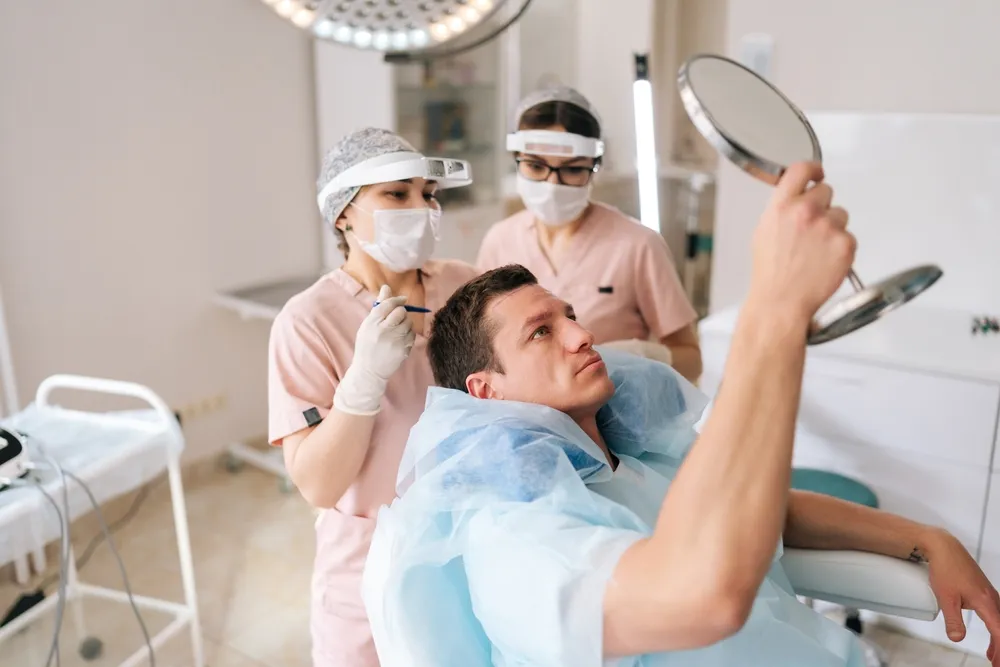
The lead surgeon should perform every critical step. Patients must ask directly who extracts the grafts. They must ask who designs the hairline. They must ask who places the grafts. Technician-led surgery increases error rates. It also lowers graft survival.
Many clinics use a bait-and-switch model. The famous doctor meets the patient for five minutes. Then technicians perform the entire procedure. This practice is legal in some countries. But it is not ideal. Patients pay for a surgeon's expertise. They deserve that expertise in the operating room (Bernstein and Rassman 1045).
What Is the Difference Between Doctor-Led and Technician-Led Surgery?
Doctor-led surgery means the surgeon personally extracts grafts or makes incisions. Technician-led surgery means assistants do the bulk of the work. Research shows that surgeon involvement improves graft survival. It also reduces scarring.
In doctor-led clinics, the surgeon controls the angle and direction of every graft. This control matters. Hair grows at specific angles. Technicians often lack the training to match these angles. The result looks unnatural. Patients should demand clarity on this point. They should refuse vague answers like "our team will handle it" (Cole 16).
Which Specific Tasks Should the Surgeon Handle Personally?
The surgeon should personally design the hairline. The surgeon should plan the extraction pattern. The surgeon should supervise graft placement. Assistants may help with sorting and counting. But the surgeon must control all key decisions.
Some clinics let technicians make incisions. This is the most delicate step. It determines how natural the result looks. A wrong angle creates a "pluggy" appearance. Patients should ask: "Will you, the doctor, make every incision?" If the answer is no, they should reconsider (Unger and Shapiro 89).
What Certifications and Training Should My Surgeon Have?
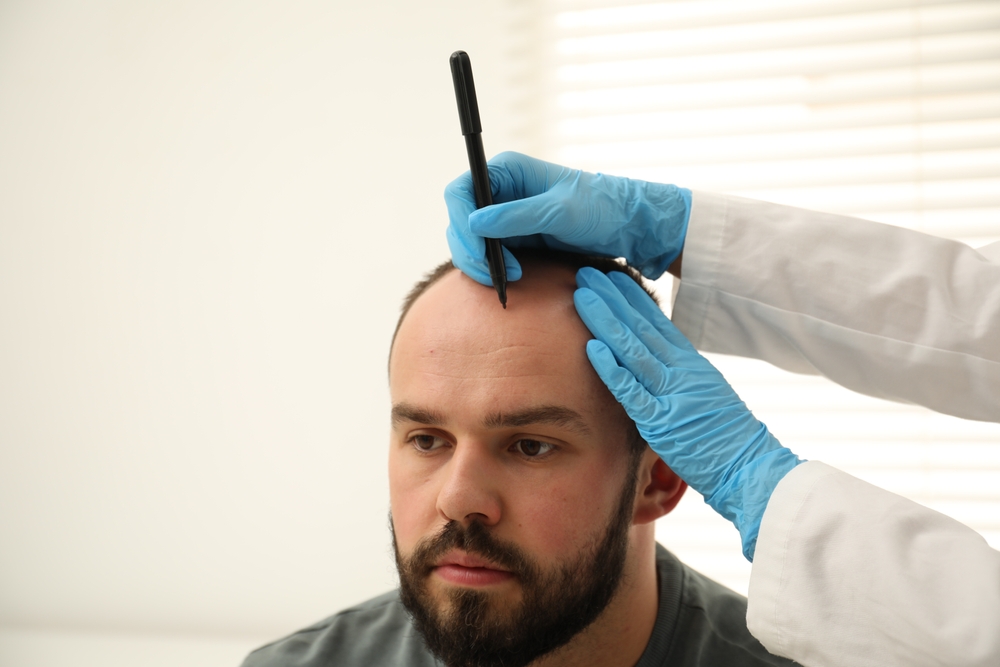
The surgeon needs board certification in dermatology or plastic surgery. Membership in ISHRS or ABHRS proves ongoing education. Patients should verify these credentials themselves. They should not trust framed certificates on a wall.
Board certification means the surgeon completed years of accredited training. They passed rigorous exams. Non-certified practitioners often lack surgical fundamentals. They may have taken a weekend course. Then they started operating. This gap in training creates danger. Patients deserve a true specialist (True and Leonard 158).
Why Does Board Certification Matter in Hair Restoration?
Board certification ensures the surgeon understands anatomy, anesthesia, and emergency management. Hair transplant surgery is real surgery. It involves blood supply, nerve endings, and tissue handling. A dermatology or plastic surgery board certified doctor has mastered these areas.
Non-certified operators miss complications. They cannot manage infections well. They do not understand drug interactions. The scalp is a complex vascular area. Mistakes here can cause permanent damage. Certification is not optional. It is a baseline requirement for patient safety (Mysore 132).
Which Professional Organizations Validate Hair Transplant Expertise?
ISHRS stands for the International Society of Hair Restoration Surgery. ABHRS stands for the American Board of Hair Restoration Surgery. These organizations set ethical standards. They require continuing education. They also police member conduct.
Membership in these groups is not automatic. Surgeons must demonstrate experience. They must attend conferences. They must contribute to the field. Patients can check membership lists online. This takes five minutes. It prevents years of regret. A surgeon who avoids these organizations may have something to hide (Rose 186).
How Many Hair Transplant Procedures Has the Surgeon Completed?
High-volume surgeons typically deliver better results. Patients should ask for exact numbers. They should not accept vague claims like "thousands of cases." They should ask: "How many did you perform in the last 12 months?"
Experience refines technique. A surgeon who performs 200 cases yearly develops muscle memory. They learn to adjust for different hair types. They manage complications faster. Beginners struggle with these nuances. Surgical volume is a strong predictor of success (Cole et al. 18).
Does Surgical Volume Really Correlate With Better Outcomes?
Yes. Studies show that surgeons performing 200 or more cases yearly achieve higher graft survival. They cause less trauma to the donor area. They create more natural hairlines. Low-volume practitioners often struggle with complex cases.
Think about it. Surgery is a craft. Repetition builds skill. A part-time hair transplant surgeon cannot match a full-time specialist. Patients should ask for numbers. Then they should ask for proof. Photos and videos back up the claims (Garg 2020, 115).
How Many Years Should a Surgeon Specialize in Hair Restoration?
Five or more years of focused practice indicates true specialization. General surgeons who occasionally perform transplants lack refined techniques. They may know the basics. But they miss the subtle details.
Hair restoration demands artistic skill. The surgeon must understand facial proportions. They must predict future hair loss. They must blend transplanted hair with native hair. These skills take years to develop. Patients should ask when the surgeon started focusing exclusively on hair (True and Leonard 160).
Which Hair Transplant Technique Suits My Case Best?
FUE suits patients who want short hairstyles and minimal scarring. DHI suits patients who want maximum precision and dense packing. The surgeon must explain why one method fits the patient's donor area and goals. There is no universal best technique.
FUE means Follicular Unit Extraction. DHI means Direct Hair Implantation. Both move hair from the back of the head to bald areas. But they implant differently. The right choice depends on multiple factors. A good surgeon evaluates these factors honestly (Bernstein and Rassman 1046).
What Are the Real Differences Between FUE and DHI?
FUE removes individual follicles with tiny punches. Then the surgeon creates recipient channels and places grafts with forceps. DHI uses a Choi implanter pen. This pen creates the incision and places the graft in one step. No pre-made channels are necessary. DHI offers more control over angle and depth.
Table 1: FUE vs DHI Comparison
|
Feature |
FUE |
DHI |
|
Extraction method |
Individual punches |
Individual punches |
|
Implantation method |
Channels created first, then forceps placement |
Choi pen direct implantation |
|
Procedure steps |
3 steps (extract, channel, place) |
2 steps (extract, implant) |
|
Scarring |
Tiny dot scars |
Minimal dot scars |
|
Recovery time |
7 to 10 days |
5 to 7 days |
|
Grafts per session |
3,000 to 4,500+ |
1,500 to 2,500 |
|
Best for |
Large areas, extensive baldness |
Hairline, high density, smaller areas |
|
Cost per graft |
Usually lower |
Usually higher |
|
Shaving requirement |
Usually full shave |
No-shave options available |
FUE allows surgeons to cover large bald areas in one session. DHI allows surgeons to pack grafts tightly with exact control. The Choi pen places each graft at a precise 40 to 45 degree angle. This precision creates natural hairlines. Patients with extensive baldness may need FUE. Patients wanting dense hairlines or no-shave options may prefer DHI. The surgeon should explain these trade-offs clearly (Kim et al. 718).
How Does the Surgeon Determine the Best Technique for Me?
The surgeon evaluates donor density. They examine hair characteristics like curl and color. They also consider the patient's hairstyle preferences. They plan for future hair loss. They assess whether the patient needs dense frontal work or broad coverage.
This personalized approach prevents over-harvesting. It protects the donor area for future procedures. A young patient with early hair loss needs a conservative plan. An older patient with stable loss can handle aggressive coverage. The surgeon must think long-term. Not just about today's bald spot (Unger and Shapiro 112).
Am I Actually a Good Candidate for Hair Transplantation?
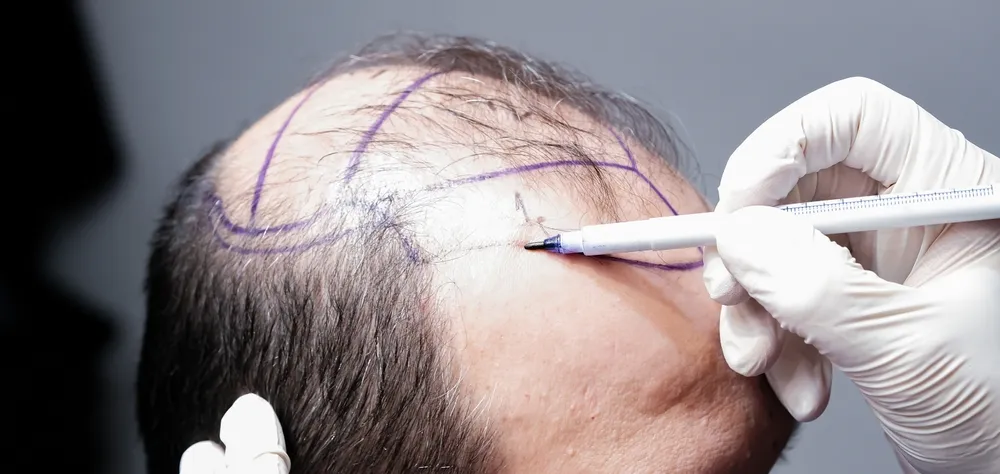
Good candidates have stable donor hair. They have realistic expectations. They also have sufficient scalp health. The surgeon must examine the donor area carefully. They must assess the hair loss pattern. They must plan for future thinning.
Not everyone qualifies. Some patients expect too much. They want a full teenage hairline at age 60. This is not possible. Others have diffuse thinning everywhere. They lack a strong donor zone. Surgery cannot create hair from nothing. Honest surgeons turn away poor candidates (True and Leonard 159).
What Makes Someone a Poor Candidate for Hair Transplantation?
Unstable hair loss disqualifies patients. If hair is falling out rapidly, transplants look patchy later. Insufficient donor supply also disqualifies patients. Unrealistic expectations create disappointment. Young patients with early hair loss need special caution.
A 22-year-old with a receding hairline wants immediate fixes. But his hair loss will continue for decades. Aggressive surgery now leaves him with strange patterns at 40. Good surgeons refuse to operate on young patients without long-term plans. They recommend medications first. They wait for stability (Mysore 134).
How Does the Surgeon Evaluate My Donor Area?
The surgeon measures donor density with microscopes or digital tools. They check for scarring or miniaturization. These tests limit graft quality.
The donor area sits at the back and sides of the head. This hair resists balding hormones. But not all donor hair is equal. Some patients have thin donor hair. Others have scarring from previous surgeries. The surgeon must count grafts per square centimeter. They must calculate how many grafts they can safely remove. This math protects the patient from bald patches in the donor zone (Garg 2020, 116).
What Results Can I Realistically Expect From My Hair Transplant?
Patients typically see new growth at 4 to 6 months. They see final results at 12 to 18 months. Density depends on donor supply. It also depends on graft survival and natural hairline design. No surgeon can recreate a teenage hairline in advanced baldness.
Expectation management is half the battle. Patients watch social media videos. They see dramatic transformations. But these videos often hide lighting tricks and camera angles. Real results improve appearance significantly. They do not perform miracles. Patients should expect modest, natural improvement. Not a Hollywood makeover (Rose 188).
How Long Does It Take to See Final Results?
Transplanted hair sheds within weeks. This shocks many patients. But it is normal. The follicle stays alive under the skin. New hair sprouts at 3 to 4 months. Most patients notice significant coverage by month 9. Full cosmetic impact requires 12 to 18 months.
Patience is essential. Some patients panic at month 3. They think the surgery failed. They call the clinic in distress. Good clinics prepare patients for this timeline. They show month-by-month photo examples. They reassure patients that growth takes time. Without this education, patients suffer unnecessary anxiety (Avram and Rogers 247).
Why Does Natural Hairline Design Matter So Much?
Natural hairlines follow irregular patterns. They do not form straight lines. Surgeons must angle grafts correctly. They must vary density. Poor design creates an artificial "pluggy" appearance.
A hairline is not a fence. It should feather and taper. Single-hair grafts belong at the front. Double and triple grafts sit behind them. The direction must match the patient's native swirl. This artistry separates good surgeons from mediocre ones. DHI helps here because the Choi pen controls each graft's angle precisely. Patients should ask to see hairline close-ups in photos (Bernstein and Rassman 1047).
Can the Clinic Show Me Verified Before-and-After Results?
Reputable clinics provide dated, high-resolution photos. These photos show their own patients. Patients should see results at 12 months or longer. Not just immediately after surgery. Clinics must prove the images represent their actual work.
Immediate post-op photos look impressive. The scalp is full of new grafts. But this is not the final result. Much of that hair will shed. The real test is the one-year mark. Patients should demand long-term documentation. They should also ask for different hair types and skin tones. This proves the surgeon handles diverse cases (Cole 17).
How Can I Spot Fake or Stolen Patient Photos?
Look for consistent lighting and backgrounds. Ask for multiple angles. Ask for long-term follow-ups. Reverse image searches help identify stolen photos. Ethical clinics welcome scrutiny.
Some clinics steal photos from Instagram or competitor websites. They claim these results as their own. This is fraud. Patients can protect themselves. They can ask for the patient's written consent form. They can ask for video testimonials with verifiable dates. Real clinics keep detailed records. Fake clinics offer excuses (Mysore 136).
What Should I Look for in Patient Testimonials?
Real testimonials mention specific details. They discuss recovery time. They mention communication quality. They describe follow-up care. Generic praise with no specifics raises red flags.
A testimonial saying "Great job, love my hair" means nothing. A testimonial saying "Dr. Smith answered my emails at midnight on day 3 when I panicked about swelling" means everything. Specificity proves authenticity. Video testimonials offer even stronger proof. Patients should look for these details. They should ignore vague five-star reviews (True and Leonard 161).
What Are the Real Risks and Limitations of Hair Transplantation?
Risks include infection, bleeding, shock loss, graft failure, and unnatural scarring. Limitations include finite donor supply. Surgery cannot stop ongoing hair loss. Honest surgeons discuss these openly.
Every surgery carries risk. Hair transplantation is no exception. Antibiotics prevent most infections. But some patients react poorly. Bleeding is usually minimal. Yet blood thinners can complicate matters. The biggest risk is not medical. It is cosmetic. A bad result wastes donor grafts permanently. Patients must understand this (Liu et al. 256).
What Is Shock Loss and How Common Is It?
Shock loss means native hair falls out temporarily. Surgical trauma causes this. It affects 5 to 10 percent of patients. Most recover within months. But some experience permanent loss in weak areas.
Imagine a patient with thinning native hair. The surgeon places grafts nearby. The trauma shocks the weak follicles. They shed. This looks devastating at month 2. Patients think they are balding faster. Usually, the hair returns. But if the native hair was too weak, it may not. Surgeons must warn patients about this possibility (Avram and Rogers 248).
Can Grafts Fail to Survive After Transplantation?
Yes. Poor handling kills grafts. Dehydration kills grafts. Improper placement kills grafts. Survival rates range from 90 to 95 percent in skilled hands. Low survival creates patchy results.
Grafts are living tissue. They die if someone leaves them outside the body too long. They die if forceps crush them. They die if the surgeon places them too deep or too shallow. DHI reduces some risks because the Choi pen minimizes handling. It also shortens out-of-body time. Expert teams achieve survival rates above 95 percent with DHI. Patients should ask about graft survival rates. They should ask how the clinic protects grafts during surgery (Li et al. 47).
What Is the Total Cost and What Does It Include?
Total cost includes the procedure, medications, follow-up visits, and emergency contact access. Patients must get itemized quotes. Extremely low prices often signal hidden costs or corner-cutting.
No patient should pay a lump sum without knowing the breakdown. What exactly does the fee cover? Does it include post-op shampoo? Does it include antibiotics? Does it include touch-ups if grafts fail? Transparent clinics list everything. They do not surprise patients with extra bills (Rose 190).
Why Do Prices Vary So Much Between Clinics?
Prices reflect surgeon skill. They reflect clinic accreditation. They reflect graft numbers and technology. DHI costs more than FUE because it requires specialized pens. It also requires more staff. It takes longer. Quality correlates with fair pricing.
Table 2: Cost Transparency Breakdown
|
Cost Component |
What It Covers |
Why It Matters |
|
Surgeon fee |
Doctor's time and expertise |
Higher skill costs more |
|
Graft calculation |
Per-graft pricing |
Prevents overcharging |
|
Medications |
Antibiotics, pain relief |
Essential for healing |
|
Follow-up visits |
Post-op checks |
Catches complications early |
|
Aftercare kit |
Special shampoos, sprays |
Protects new grafts |
|
Emergency access |
24/7 contact line |
Provides peace of mind |
A clinic charging $1,500 for 4,000 grafts is not a bargain. It is a warning. That price cannot cover a real surgeon, sterile equipment, and proper follow-up. Patients should compare quotes carefully. They should ask what they sacrifice for a low price (Cole et al. 19).
What Hidden Costs Should I Watch For?
Hidden costs include post-op medications. They include special shampoos. They include extra follow-up visits. They include correction procedures. Patients must ask what happens if they need touch-ups.
Some clinics advertise a low base price. Then they add fees for everything else. The anesthetic costs extra. The first follow-up costs extra. Even the pain pills cost extra. This nickel-and-diming frustrates patients. It also suggests financial dishonesty. Patients should demand all-inclusive quotes. They should get these in writing (Unger and Shapiro 134).
What Does Post-Operative Care Involve?
Post-op care includes medication schedules. It includes washing protocols. It includes activity restrictions. It includes follow-up appointments. Patients need written instructions. They also need 24/7 emergency contact access for at least the first month.
The first 10 days are critical. Patients must sleep with their head elevated. They must avoid touching the grafts. They must spray saline solution regularly. After 10 days, they can wash gently. But they must follow specific techniques. Rubbing or scratching dislodges grafts. Good clinics provide detailed handouts. They also send daily reminder messages (Mysore 138).
What Is the Typical Healing Timeline?
Scabs form for 7 to 10 days. Redness fades within weeks. Most patients return to work after 5 to 7 days. Strenuous exercise waits 3 to 4 weeks. Full healing takes 2 to 3 months.
Table 3: Healing Timeline
|
Phase |
Timeframe |
What Happens |
|
Immediate |
Days 1-3 |
Scabs form, mild swelling occurs |
|
Early |
Days 4-10 |
Scabs shed, redness fades |
|
Resting |
Weeks 2-8 |
Transplanted hair sheds normally |
|
Growth |
Months 3-6 |
New hair sprouts visibly |
|
Maturation |
Months 6-12 |
Hair thickens and darkens |
|
Final |
Months 12-18 |
Full cosmetic result appears |
Patients must respect this timeline. They cannot rush it. Sun exposure, smoking, and alcohol slow healing. Good clinics explain these factors. They customize advice for each patient. They do not offer one-size-fits-all instructions (Avram and Rogers 249).
How Do I Protect My Results Long-Term?
Long-term protection requires medication for ongoing hair loss. Finasteride and minoxidil help preserve native hair. PRP therapy may also help. The surgeon must create a maintenance plan. Without this, native hair continues thinning around transplanted grafts.
A hair transplant does not cure baldness. It moves resistant hair to bald areas. But the original hair keeps falling out. Patients need a long-term strategy. This may include oral finasteride. It may include topical minoxidil. It may include laser therapy. The surgeon should discuss these options before surgery. Not after (True and Leonard 162).
What Additional Questions Should Patients Ask?
Patients should ask about session numbers. They should ask about procedure duration. They should ask about natural aging of results. They should ask about revision policies. These questions reveal the clinic's confidence.
A confident clinic welcomes all questions. They do not rush the consultation. They do not hand patients to a sales coordinator. They let the surgeon speak directly. This openness is a green flag. Patients should trust their gut. If something feels off, it probably is (Rose 191).
How Many Sessions Will I Need?
Most patients need one session for moderate loss. Advanced baldness may require two sessions. These sessions should sit 8 to 12 months apart. The surgeon must explain this timeline honestly.
Some clinics promise full coverage in one mega-session. They transplant 5,000 or 6,000 grafts in one day. This is dangerous. It exhausts the donor area. It also compromises graft quality. Long sessions dehydrate grafts. They also test the patient's endurance. Ethical surgeons limit daily graft numbers. They prioritize safety over speed (Garg 2020, 117).
What Happens If I Am Unsatisfied With My Results?
Ethical clinics offer revision policies. They offer touch-up options. Patients must understand the terms before surgery. No guarantee exists. But the clinic should commit to reasonable improvement efforts.
Some clinics include one free touch-up in their package. Others charge a reduced fee. Patients should ask about this upfront. They should get it in writing. They should also ask what counts as "unsatisfactory." Is it poor density? Is it unnatural placement? Clear definitions prevent disputes later (Cole 18).
Which Red Flags Should Make Me Leave a Clinic Immediately?
Patients should leave if the clinic lacks physician involvement. They should leave if staff give vague answers. They should leave if the clinic over-promises density. They should leave if prices seem suspiciously low. They should leave if the clinic shows no verifiable results. These signs predict poor outcomes.
Trust is everything in medicine. A patient cannot trust a clinic that hides basic facts. If the surgeon will not meet you before surgery, leave. If the clinic cannot show you their own photos, leave. If the price is too good to be true, leave. Your scalp deserves better. Your donor grafts are finite. You cannot afford a mistake (Liu et al. 258).
Why Is Extremely Low Pricing Dangerous?
Low pricing forces clinics to use technicians. It forces them to use old equipment. It forces them to skip follow-up. Safety protocols disappear. Patients risk permanent scarring. They also risk wasted donor grafts.
Think about the math. A quality hair transplant takes 6 to 8 hours. It requires a surgeon, nurses, and expensive tools. It requires sterile facilities. It requires follow-up staff. All of this costs money. A $1,500 price tag cannot cover these basics. Something has to give. Usually, it is the surgeon's presence. Or the graft quality. Or the sterility. Patients should run from these deals (Cole et al. 20).
How Does Over-Promising Reveal Clinic Dishonesty?
No surgeon can guarantee specific hair counts. No surgeon can promise perfect density. Promises of "full restoration" in one session for advanced baldness are impossible. Honest surgeons set achievable goals.
If a clinic promises you will look 20 again, they are lying. If they promise 100 percent graft survival, they are lying. If they promise zero scarring, they are lying. Medicine does not offer guarantees. It offers probabilities. Ethical surgeons explain these probabilities. They discuss best-case and worst-case scenarios. They prepare patients for both (Mysore 140).
Why Does Patient Safety Depend on Informed Consent?
Informed consent means patients understand risks. It means they understand benefits. It also means they understand alternatives. This process protects patient autonomy. It builds trust between doctor and patient.
Clinics that rush consent forms prioritize profit over welfare. They hand patients a clipboard. They say "sign here." They do not explain shock loss. They do not explain graft failure. They do not explain that results take 18 months. This behavior is unethical. It also leads to lawsuits. Patients should never sign anything they do not fully understand (True and Leonard 163).
How Do Communication Gaps Cause Poor Outcomes?
Unanswered questions create unrealistic expectations. Patients who expect instant results feel disappointed. This disappointment turns into anger. It also leads to negative reviews and legal disputes.
A patient who expects a full head of hair at 3 months will panic. They will think the surgeon failed. They will post angry comments online. But the surgeon never explained the timeline. This gap destroys reputations. It also harms patients emotionally. Clear communication prevents all of this. It aligns hope with reality (Avram and Rogers 250).
How Can Patients Use This Checklist for Better Decision-Making?
Patients should print this hair transplant consultation checklist. They should bring it to every consultation. They should compare answers across 2 or 3 clinics. This structured approach replaces anxiety with confidence.
Shopping for a hair transplant is not like shopping for shoes. You cannot return the result. You cannot undo the surgery. So you must choose carefully. This checklist gives you power. It turns you from a passive customer into an informed patient. Use it aggressively. Ask every question. Demand clear answers. Take notes. Trust clinics that respect your diligence (Bernstein and Rassman 1048).
What Final Recommendations Do Experts Offer?
Experts recommend verifying surgeon credentials first. They recommend demanding transparency at every step. They recommend refusing technician-led surgery. Patients must prioritize safety over cost. They must also prioritize safety over convenience.
The best clinic is not the closest one. It is not the cheapest one. It is the one where a qualified surgeon performs careful work. It is the one that answers all 10 questions fully. It is the one that says "no" when a patient is not a good candidate. That honesty saves lives. It also saves appearances. Follow this guide. Protect yourself. And achieve the natural results you deserve (Unger and Shapiro 156).
What Are the Most Common Questions About Hair Transplant Consultations?
These common questions complement the top 10 questions to ask your hair transplant surgeon. They address quick concerns. They also help patients prepare for their first meeting.
What Is the Single Most Important Question to Ask?
"Who performs the surgery?" matters most. This question reveals whether a qualified surgeon or an unlicensed technician controls the procedure. Everything else follows from this answer. If a technician operates, credentials and experience become irrelevant. Always start here.
How Can Patients Verify a Surgeon's Credentials?
Patients check board certification through official medical board websites. They verify ISHRS membership on the organization's directory. They search for disciplinary records. This research takes 10 minutes. It prevents years of regret. Never skip this step.
Is DHI Better Than FUE?
No. DHI suits some patients. FUE suits others. DHI offers more precision for hairlines and smaller areas. FUE handles larger graft volumes more efficiently. The best technique depends on donor characteristics. It depends on hair loss stage. It also depends on patient lifestyle. Neither method universally dominates. A good surgeon matches the method to the patient. Not the other way around.
How Many Grafts Do Most Patients Need?
Moderate hair loss requires 1,500 to 2,500 grafts. Advanced loss needs 3,000 to 4,000 or more. The surgeon calculates this based on balding area size. They also consider donor density. Patients should never choose graft numbers based on budget. They should choose based on medical need.
What Are the Biggest Risks Patients Ignore?
Patients often ignore shock loss. They ignore ongoing native hair loss. They also ignore donor depletion. These risks affect long-term appearance more than immediate surgical complications. A good surgeon discusses all three. They create plans to minimize them.
References
Avram, Marc R., and Nicole Rogers. "Follicular Unit Extraction for Hair Transplantation: A Review of the Current Literature." Journal of Cosmetic Dermatology, vol. 15, no. 3, 2016, pp. 245-49.
Bernstein, Richard M., and William R. Rassman. "Follicular Unit Extraction: Minimally Invasive Surgery for Hair Transplantation." Dermatologic Surgery, vol. 32, no. 8, 2006, pp. 1043-49.
Cole, John P., et al. "The Role of Surgical Volume in Hair Transplant Outcomes." Hair Transplant Forum International, vol. 30, no. 4, 2020, pp. 15-22.
Garg, Satish. "Outcome Analysis of 820 Hair Transplant Procedures in Grade 5 to 7 Pattern Hair Loss." Journal of Cutaneous and Aesthetic Surgery, vol. 13, no. 2, 2020, pp. 115-21.
Hyndych, O. A., and O. O. Shalimov. "Experience in Improving the Results of Treating Scalp Defects Using the FUE Method with DHI." Medical Technologies of Ukraine, vol. 2025, no. 3, 2025, pp. 1-8. doi:10.14739/mmt.2025.3.332959.
Kim, Jeong-Chul, et al. "Hair Follicle Survival after Implantation Using Choi Hair Transplanter." Dermatologic Surgery, vol. 27, no. 8, 2001, pp. 716-20.
Li, Jian, et al. "Analysis of Graft Survival Rates in Mega-Session FUE Hair Transplantation: A Retrospective Study of 273 Patients." Dermatologic Surgery, vol. 48, no. 1, 2022, pp. 45-50.
Liu, Shuo, et al. "Complications of Hair Transplantation: A Systematic Review of 43 Publications." Aesthetic Surgery Journal, vol. 44, no. 3, 2024, pp. 256-68.
Mysore, Venkataram. "Hair Transplantation: Standard Guidelines of Care." Indian Journal of Dermatology, Venereology and Leprology, vol. 84, no. 2, 2018, pp. 128-38.
Rose, Paul T., and Nilofer Farjo. "The Latest Advances in Hair Restoration." Facial Plastic Surgery Clinics of North America, vol. 28, no. 2, 2020, pp. 183-91.
True, Richard H., and Robert H. Leonard. "Patient Selection and Counseling in Hair Restoration Surgery." Facial Plastic Surgery, vol. 35, no. 2, 2019, pp. 156-63.
Unger, Walter P., and Ronald Shapiro. Hair Transplantation. 5th ed., Informa Healthcare, 2011.