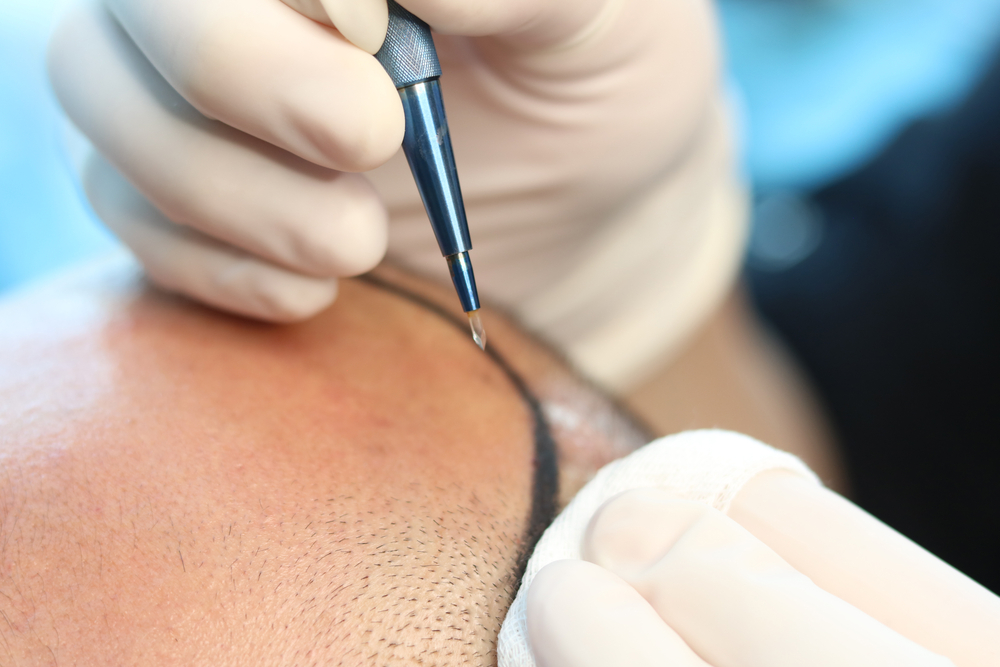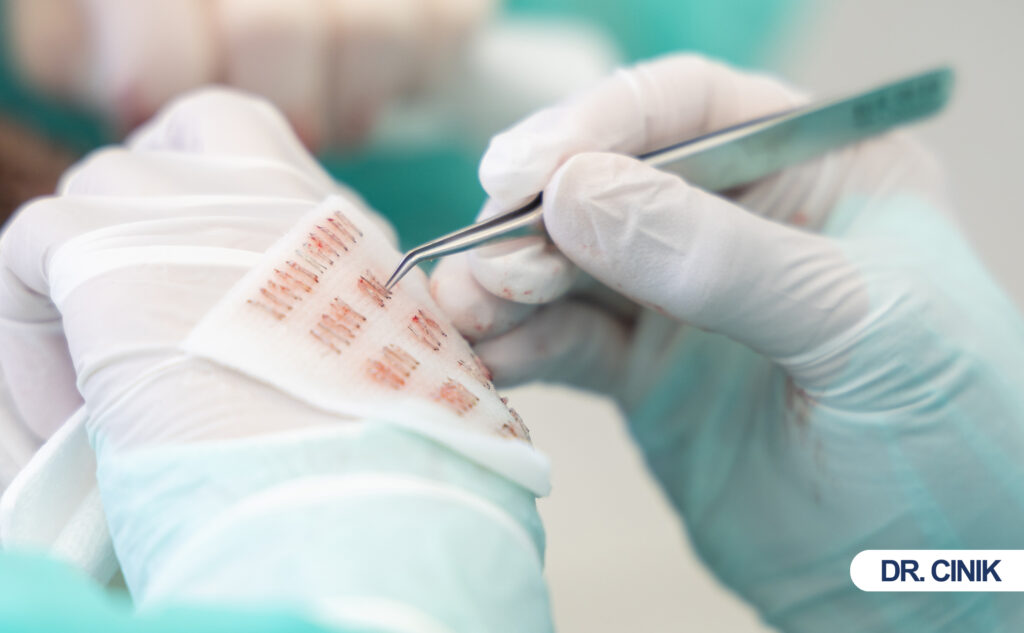
A hair graft is a small piece of living tissue that contains one or more hair follicles. Surgeons transplant this tissue from a donor areaThe Source of Restoration The donor area plays a critical role in hair transplantation, as it serves as the source... to a balding area during hair restoration surgery. Understanding hair graftsA hair graft refers to a small unit of hair-bearing skin taken from the donor area—typically the back or sides... matters because every successful transplant depends on graft quality, handling, and placement. Many patients confuse grafts with individual hairs or follicles, but these terms describe different things. A single graft often holds multiple hairs. Modern hair transplantationHair transplantation is a surgical procedure that involves the extraction of hair follicles from a designated donor site, followed by... relies on advanced techniques like Follicular Unit Extraction (FUE), Sapphire FUE, and Direct Hair Implantation (DHI). These methods harvest and implant grafts with precision and minimal trauma. This article explains everything patients need to know about hair grafts before choosing hair restoration surgery.
What Is A Hair Graft?
A hair graft is a surgically removed piece of scalp tissue that contains one or more hair follicles ready for transplantation.
What Is The Medical Definition Of A Hair Graft?
A hair graft is a transplanted piece of living tissue that contains complete follicular units. Each graft includes not just hair follicles but also surrounding structures that support hair growth. The follicular unit concept defines how hair grows naturally in small groups on the scalp. Each group contains 1 to 4 hair follicles that share blood supply and nerve connections. Surgeons preserve these natural groupings during extraction because keeping follicles together improves survival rates and creates natural-looking results (Bernstein & Rassman, 2005).
Each hair graft contains several important components. Hair follicles sit at the center of every graft. These are the biological structures that produce hair shafts. Sebaceous glands attach to each follicle and produce oil that keeps hair and scalp healthy. Connective tissue surrounds the follicles and provides structural support. Tiny blood vessels within the graft maintain circulation during and after transplantation. Small nerves also run through the tissue, though these reconnect gradually after implantation. Surgeons must protect all these components during extraction and placement to ensure graft survival.
How Many Hairs Are In One Hair Graft?
One hair graft can contain 1, 2, 3, or even 4 hairs depending on the natural follicular unit size.
Single-hair grafts contain exactly one follicle. Surgeons use these grafts primarily along the frontal hairline because single hairs create the softest, most natural edge. Double-hair grafts contain two follicles growing closely together. These grafts provide good density while maintaining a natural appearance. Triple and quadruple follicular units contain 3 or 4 hairs in one graft. Surgeons place these multi-hair grafts behind the hairline to build volume and coverage.
The average human scalp produces approximately 1.8 to 2.2 hairs per graft (Unger & Shapiro, 2004). This average varies between individuals based on genetics and ethnicity. Some patients naturally have more single-hair grafts, while others have abundant multi-hair grafts. Surgeons evaluate graft composition during consultation because it affects the total number of grafts needed and the final density achievable.
What Is The Difference Between A Hair Graft And A Hair FollicleA hair follicle is a small, tube-like structure embedded in the scalp that produces and grows individual strands of hair....?
A hair follicle is the biological structure that produces hair, while a hair graft is the surgical unit containing that follicle plus surrounding tissue.
The follicle is the living organ beneath the skin that generates the hair shaft. It cycles through growth phases throughout life. The graft is what surgeons actually move from donor area to recipient area. It includes the follicle plus protective tissue, glands, and connective structures. Patients often confuse these terms because clinics sometimes use them interchangeably in marketing materials. However, the distinction carries clinical importance. Treatment planning requires knowing both the number of grafts available and the number of hairs those grafts contain. A patient with 2,000 grafts averaging 2.5 hairs each gets more coverage than a patient with 2,000 grafts averaging 1.5 hairs each.
What Is The Anatomy Of A Follicular Unit?
A follicular unit is a naturally occurring bundle of 1 to 4 hair follicles that share a common blood supply and exit the scalp through a single pore.
What Are Natural Hair Growth Patterns?
Hair does not grow as isolated single strands across the scalp. Instead, it emerges in small groups called follicular units. Each unit contains 1 to 4 terminal hairs that exit the skin through one visible opening. Between these groups, fine vellus hairs and sebaceous glands fill the spaces. The scalp contains approximately 80 to 100 follicular units per square centimeter in healthy donor areas (Jimenez & Ruifernandez, 2012). This density varies by scalp region, with the back and sides of the head typically showing the highest concentration.
What Types Of Hair Grafts Exist?
Surgeons classify grafts by the number of follicles they contain. Single grafts hold one follicle. Double grafts hold two. Multi-hair grafts contain three or four follicles. Multiple follicular unit grafts (MFU) contain more than one natural follicular unit grouped together. Surgeons rarely use MFU grafts today because they create an unnatural, “pluggy” appearance. Modern techniques favor keeping natural follicular units intact rather than combining them artificially.
Table 1: Types of Hair Grafts and Their Clinical Uses
|
Graft Type |
Hairs Per Graft |
Primary Use |
Placement Area |
|
Single graft |
1 hair |
Hairline refinement |
Frontal hairline edge |
|
Double graft |
2 hairs |
Natural density building |
Behind hairline |
|
Triple graft |
3 hairs |
Volume creation |
Mid-scalp |
|
Quadruple graft |
4 hairs |
Maximum density |
Crown and mid-scalp |
|
MFU graft |
5+ hairs |
Rarely used today |
Avoided in modern surgery |
Why Do Follicular Units Create Natural Results?
Follicular unit transplantation creates natural results because it mimics how hair actually grows on the scalp. Old punch graft methods from the 1980s and 1990s used large grafts containing 10 to 20 hairs. These created a “doll’s hair” or “pluggy” look that looked obviously artificial. Modern grafting keeps natural groupings intact. Surgeons place single-hair grafts at the front, then transition to multi-hair grafts behind. This graduated approach replicates natural hair density patterns. The evolution from punch grafts to follicular units represents the most important advance in hair transplant history (Bernstein & Rassman, 2005).
How Are Hair Grafts Harvested?
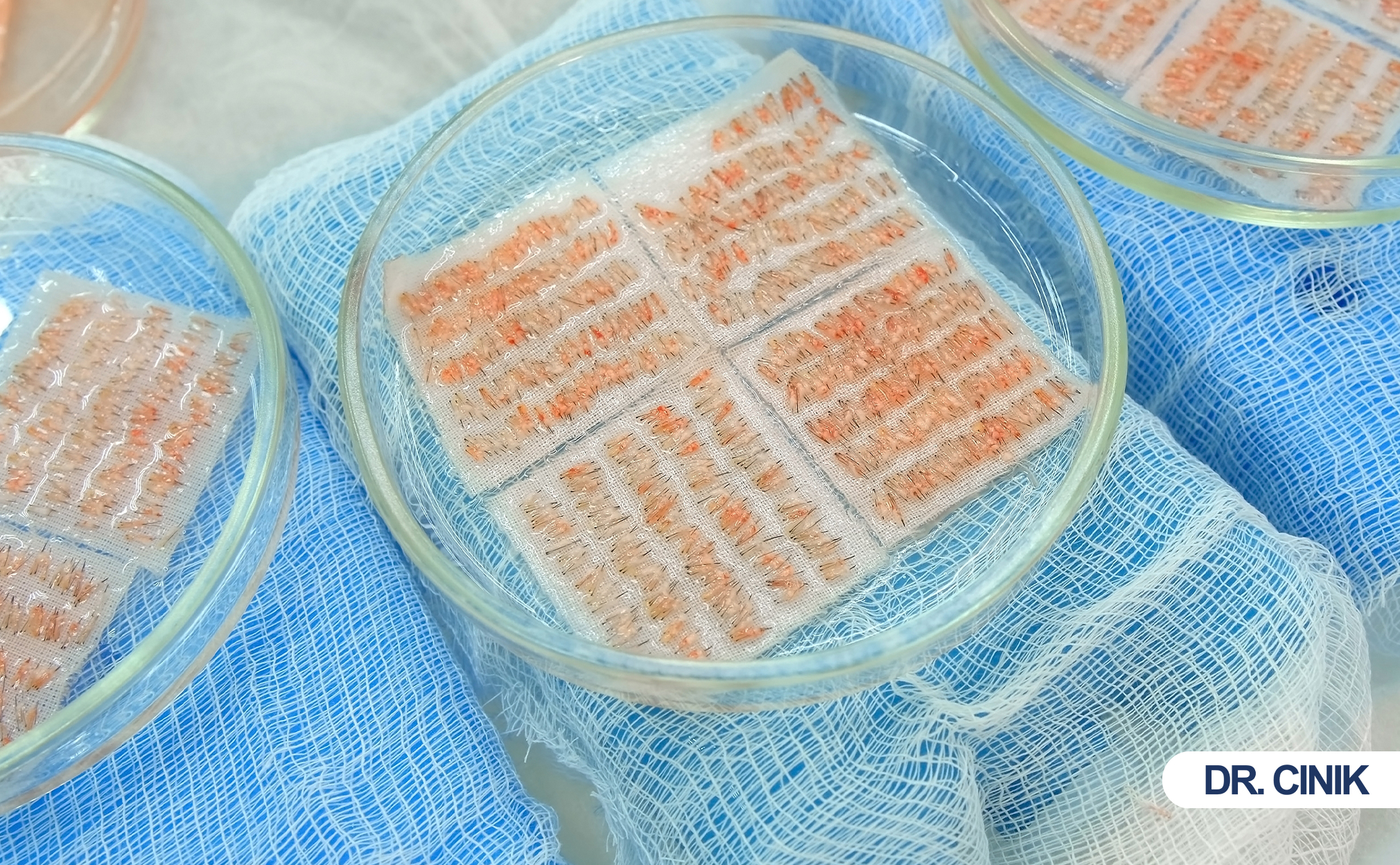
Surgeons harvest hair grafts using advanced techniques like Follicular Unit Extraction (FUE)A Breakthrough in Hair Transplantation Follicular Unit Extraction (FUE) has revolutionized the field of hair transplantation, offering a minimally invasive..., Sapphire FUE, and Direct Hair Implantation (DHI) for precise, minimally invasive extraction.
How Does Hair Graft Extraction Work In FUE?
Follicular Unit Extraction removes individual grafts directly from the donor scalp using a small circular punch tool. The micropunch measures between 0.7 and 1.0 millimeters in diameter. The surgeon aligns the punch around a follicular unit, then rotates or oscillates it to cut through skin and tissue. The graft separates from surrounding tissue, and the surgeon extracts it with forceps. This process repeats thousands of times to harvest the desired graft count.
FUE offers several advantages. It leaves no linear scar in the donor area. Patients can wear very short hairstyles without visible scarring. Recovery time is shorter than older methods. However, FUE also has limitations. The procedure takes longer because each graft requires individual extraction. The total graft yield may be lower in a single session compared to strip methods. Overharvesting risks increase if surgeons extract too many grafts from one area, creating a moth-eaten appearance.
What Is Sapphire FUE?
Sapphire FUE uses blades made from synthetic sapphire instead of steel. These blades create sharper, more precise recipient sites. The precision allows denser packing and faster healing. Sapphire blades make smaller, cleaner incisions that reduce tissue trauma. Patients experience less swelling and faster recovery. The technique also enables surgeons to place grafts closer together, improving density in a single session. Sapphire FUE represents an evolution of standard FUE, offering enhanced precision for demanding cases.
What Is DHI?
Direct Hair Implantation (DHI) uses a specialized implanter pen that places grafts directly without pre-making recipient sites. Technicians load grafts into the pen and implant immediately. This reduces graft handling time because grafts move directly from extraction to placement. DHI minimizes out-of-body time, which improves graft survival. The implanter pen also controls depth, angle, and direction precisely. Surgeons can achieve high density with excellent control over hairline design. DHI requires significant surgeon skill and experience for optimal results.
Table 2: FUE vs Sapphire FUE vs DHI Comparison
|
Feature |
Standard FUE |
Sapphire FUE |
DHI Method |
|
Extraction technique |
Individual punch extraction |
Individual punch extraction |
Individual punch extraction |
|
Recipient site creation |
Steel blade incisions |
Sapphire bladeA Modern Innovation in Hair Transplants The sapphire blade is an advanced tool used to create precise incisions during hair... incisions |
No pre-made sites; direct implantation |
|
Incision precision |
Good |
Excellent |
Excellent |
|
Graft handling time |
Moderate |
Moderate |
Minimal |
|
Density achievable |
Good |
Very good |
Excellent |
|
Recovery time |
5–7 days |
4–6 days |
4–6 days |
|
Best for |
General cases |
High density, fast healing |
Maximum precision, hairline work |
|
Scar type |
Multiple tiny dot scars |
Multiple tiny dot scars |
Multiple tiny dot scars |
How Do Surgeons Ensure Graft Survival And Preservation?
Graft survival depends heavily on how surgeons handle grafts outside the body. Once extracted, grafts lose their blood supply. They become vulnerable to dehydration, temperature changes, and physical trauma. Surgeons must keep grafts hydrated in special holding solutions. These solutions often contain nutrients, electrolytes, and temperature stabilizers. Temperature control matters significantly. Grafts survive best at cool temperatures between 4 and 8 degrees Celsius. Higher temperatures increase metabolic demand while the graft has no blood supply, causing cell death. Lower temperatures risk freezing damage.
Minimizing graft trauma requires gentle handling. Forceps must grip grafts by surrounding tissue, never by the bulb itself. Technicians should not squeeze or crush follicles. Out-of-body time should stay as short as possible. Most surgeons aim to implant grafts within 4 to 6 hours of extraction. Some advanced clinics use hypothermic storage systems that extend safe preservation time. Surgical handling protocols include strict quality checks. Technicians examine each graft under magnification before placement. They discard damaged or transected grafts rather than implanting them.
How Does Hair Graft Placement Work During Hair Transplantation?
Surgeons place hair grafts into tiny incisions in the recipient area, with angle, direction, and density determining the final aesthetic outcome.
How Do Surgeons Create Recipient Sites?
Surgeons create recipient sites using blades or needles before placing grafts. Incision angles must match natural hair growth direction. Hair on the crown swirls in a spiral pattern. Hair at the temples angles backward. Hair at the hairline points forward and downward. Surgeons must replicate these angles precisely for natural results. Direction and orientation matter just as much as angle. Each incision channels the graft to grow in the correct direction. Density planning determines how many grafts go into each square centimeter. The frontal hairline typically receives 30 to 40 grafts per square centimeter for soft definition. The mid-scalp may receive 20 to 25 grafts per square centimeter for balanced coverage (Limmer, 1992).
Hairline artistry separates skilled surgeons from average ones. A natural hairline is not straight. It has irregularities, macro-irregularities (large undulations), and micro-irregularities (small variations). Single-hair grafts create a soft, feathered edge. Surgeons place them with slight variations in density and direction to avoid a “line” appearance. This artistic component takes years of experience to master.
How Do Surgeons Place Different Graft Types Strategically?
Single grafts belong at the frontal hairline edge. These create the softest, most natural transition from forehead to hair. Double and triple grafts sit behind the hairline to build density without looking artificial. Multi-hair grafts work best in the mid-scalp and crown where maximum coverage matters more than fine detail. Crown restoration presents unique challenges because hair grows in a circular pattern. Surgeons must follow this swirl pattern exactly or the result looks wrong. Temple reconstruction requires careful angle changes as hair transitions from frontal to temporal direction.
What Factors Affect Graft Survival Rate?
Graft survival depends on multiple factors beyond surgical technique. Surgeon experience ranks first. Experienced surgeons handle grafts more gently, create better recipient sites, and place grafts with less trauma. Implantation technique affects outcomes. Forceps insertion, implanter pen use, or stick-and-place methods each have advantages. Blood circulation in the recipient area matters. Poor circulation from scarring or previous surgery reduces graft survival. Smoking damages blood vessels and significantly lowers survival rates. Studies show smokers experience 20 to 30 percent lower graft survival compared to non-smokers (Mayer & Perez-Meza, 2001). Post-operative care also influences results. Patients must follow washing instructions, avoid touching grafts, and protect the scalp from sun and trauma during healing.
How Many Hair Grafts Are Needed?
The number of grafts needed depends on hair loss stage, desired density, and individual characteristics like hair caliber and curl pattern.
What Are Graft Requirements By Hair Loss Stage?
Mild hair loss (Norwood 2 or 3) typically requires 1,000 to 1,500 grafts for hairline restoration. Moderate hair loss (Norwood 3 to 4) needs 2,000 to 2,500 grafts for frontal and mid-scalp coverage. Advanced baldness (Norwood 5 to 6) demands 3,000 to 4,000 grafts or more for significant coverage. Crown restoration alone usually requires 1,500 to 2,000 grafts because the area is large and requires good density. Full scalp restoration for advanced baldness may need 4,000 to 6,000 grafts total, often achieved across multiple sessions.
Table 3: Estimated Hair Counts by Graft Number
|
Graft Count |
Estimated Hair Count |
Coverage Area |
Best For |
|
1,000 grafts |
1,800–2,200 hairs |
Hairline only |
Mild recession |
|
2,000 grafts |
3,600–4,400 hairs |
Frontal third |
Moderate loss |
|
3,000 grafts |
5,400–6,600 hairs |
Frontal half |
Significant thinning |
|
4,000 grafts |
7,200–8,800 hairs |
Most of scalp |
Advanced baldness |
|
5,000+ grafts |
9,000+ hairs |
Full scalp |
Extensive restoration |
What Variables Influence Graft Requirements?
Hair caliber makes a major difference. Thick, coarse hair provides better coverage per graft than fine hair. A patient with thick hair may need 2,000 grafts where a fine-haired patient needs 3,000 for similar visual density. Donor density determines how many grafts are available. Patients with high donor density (100+ grafts per cm²) can supply more grafts than those with low density (60 grafts per cm²). Hair color contrast affects perceived density. Dark hair on light skin shows more contrast and requires more grafts for the same visual effect. Light hair on light skin or dark hair on dark skin hides thinning better. Curl pattern influences coverage. Curly and wavy hair covers more scalp per hair because the shaft spreads out. Straight hair lies flat and requires more grafts for equivalent coverage. Scalp laxityLaxity: Looseness or slackness in the skin or tissues, often referring to the loss of firmness and elasticity in aging... matters for some techniques because tight scalps limit graft yield.
What Determines Hair Graft Quality?
Graft quality depends on donor area health, extraction technique precision, and microscopic handling during preparation.
What Are Donor Area Characteristics?
The permanent donor zone sits at the back and sides of the head. This area contains DHT-resistant follicles that continue growing even when hair on top falls out. DHT (dihydrotestosterone) is the hormone that causes male pattern baldness. Follicles in the donor zone resist DHT influence, which is why transplanted grafts remain permanent. Donor density evaluation measures how many grafts per square centimeter the donor area contains. Higher density means more grafts available for transplantation. Surgeons use trichoscopy or densitometry to measure donor density accurately.
What Is The Difference Between Healthy And Damaged Grafts?
Transection occurs when the extraction tool cuts through a follicle. A transected graft may contain only part of the follicle, reducing or eliminating its growth potential. Transection rates should stay below 5 percent for optimal results. Dehydration damages grafts quickly. A graft left dry for even a few minutes may not survive. Overharvesting from the donor area damages remaining follicles and creates visible thinning. Graft integrity evaluation happens under magnification before implantation. Technicians check for intact bulbs, proper tissue surrounds, and absence of transection.
What Is The Role Of Microscopic Dissection?
Microscopic dissection allows technicians to separate grafts with extreme precision. They can see exactly where one follicular unit ends and another begins. This precision reduces follicle damage during separation. Improved survival rates result from careful, magnified handling. Grafts prepared under microscope show higher growth rates than those prepared with loupe magnification or naked eye. The difference can be 10 to 15 percent higher survival, which significantly impacts final results (Harris, 2018).
How Are Hair Grafts Used In Different Hair Restoration Procedures?
Hair grafts serve different purposes depending on the transplant location, with scalp, beard, eyebrow, and body hair transplants each requiring specific graft selection and placement strategies.
How Do Grafts Work In Scalp Hair Transplant?
Male pattern baldness represents the most common application for hair grafts. Surgeons move DHT-resistant grafts from the back to the balding top. Female hair loss follows different patterns, often showing diffuse thinning rather than distinct bald areas. Women may need grafts distributed across the top rather than concentrated in one zone. The graft handling principles remain the same regardless of gender.
How Do Grafts Work In Beard Hair Transplant?
Facial hair grafts come from the scalp donor area. These grafts retain their scalp characteristics, meaning they grow longer than natural beard hair if not trimmed. Beard density planning requires understanding that facial skin differs from scalp skin. It is thinner and more vascular. Surgeons must adjust incision depth accordingly. Beard transplants typically need 2,000 to 3,000 grafts for full coverage.
How Do Grafts Work In Eyebrow Hair Transplant?
Single-hair grafts are absolutely essential for eyebrows. Multi-hair grafts would look obviously artificial in this area. Surgeons must create very shallow recipient sites because eyebrow skin is thin. Natural angle creation matters enormously. Eyebrow hairs exit the skin at sharp angles and lie flat against the face. Scalp hairs naturally stand more upright. Surgeons must angle recipient sites almost parallel to the skin surface to achieve natural eyebrow direction.
How Do Grafts Work In Body Hair Transplant?
Chest and beard donor grafts can supplement scalp donor supply when scalp grafts are insufficient. However, body hair differs from scalp hair in several ways. Body hair is often thinner, shorter, and has different growth cycles. These grafts may not match scalp hair perfectly in caliber or texture. Surgeons use body hair primarily for adding coverage rather than hairline detail. The extraction technique is similar but requires careful angle adjustment because body hair grows at different angles than scalp hair.
What Are Common Misconceptions About Hair Grafts?
Many patients hold incorrect beliefs about hair grafts that lead to unrealistic expectations or poor decision-making.
Is It True That One Graft Equals One Hair?
This belief is inaccurate and causes major confusion. One graft frequently contains 2, 3, or 4 hairs. A patient who receives 2,000 grafts may actually get 4,000 to 5,000 hairs. Clinics should always clarify both graft count and estimated hair count. Average follicle count per graft ranges from 1.8 to 2.2 across most populations. Some ethnic groups average higher, with certain Asian populations showing 2.5 to 2.8 hairs per graft (Lee et al., 2013).
Does More Grafts Always Mean Better Density?
More grafts do not automatically create better results. Donor management matters more than raw numbers. A surgeon who implants 4,000 grafts poorly may create worse results than one who places 2,500 grafts optimally. Scalp coverage and density must balance. Using too many grafts in one area depletes the donor supply for future needs. Young patients with progressive hair loss must plan for decades, not just immediate results. Overharvesting the donor area creates permanent damage that no future surgery can fix.
Do All Grafts Survive?
Typical survival rates range from 85 to 95 percent, not 100 percent. Some grafts inevitably fail due to trauma, poor handling, or biological factors. Factors causing graft loss include dehydration, transection, improper placement, infection, and poor blood supply. Patients should expect some loss and plan graft numbers accordingly. A surgeon who promises 100 percent survival is either inexperienced or dishonest.
What Are Advances In Hair Graft Technology?
Modern technology continues improving how surgeons harvest, handle, and implant hair grafts.
How Do Sapphire FUE And DHI Improve Results?
Sapphire FUE uses blades made from synthetic sapphire instead of steel. These blades create sharper, more precise recipient sites. The precision allows denser packing and faster healing. DHI uses a specialized implanter pen that places grafts directly without pre-making recipient sites. This reduces graft handling time because technicians load grafts into the pen and implant immediately. Both methods improve precision over traditional techniques. They require significant surgeon skill and experience for optimal results.
What Is Robotic Hair Transplantation?
AI-assisted graft harvesting uses robotic systems to identify and extract follicular units. The ARTAS robot maps the donor area, selects optimal grafts, and performs extraction with consistent precision. Automated extraction systems reduce human error in punch alignment. However, robots still require surgeon supervision for recipient site creation and overall planning. Current technology assists rather than replaces surgeon expertise.
What Is The Future Of Hair Grafting?
Stem cell research explores ways to multiply hair follicles in the laboratory. Scientists hope to take one donor follicle and create many cloned follicles for transplantation. Hair cloningHair cloning is an emerging technique in hair restoration that aims to multiply hair follicle cells in a laboratory before... remains in experimental stages but shows promise for unlimited donor supply. Regenerative medicine applications include platelet-rich plasma (PRP) injections that may improve graft survival and stimulate native hair growth. These advances could transform hair restoration within the next decade (Gentile et al., 2020).
What Happens During Recovery After Hair Graft Implantation?
Recovery follows a predictable timeline, with specific care requirements at each stage to protect newly implanted grafts.
What Is The Healing Timeline?
The first 72 hours are critical. Grafts are loose in the recipient sites and can dislodge easily. Scab formation begins around day 3 to 5 as tiny crusts form around each graft. These scabs protect grafts during initial healing. The shedding phase starts at 2 to 4 weeks post-surgery. Patients often panic when transplanted hairs fall out, but this is normal. The hair shaft sheds while the follicle remains alive beneath the skin. Regrowth timeline begins around 3 to 4 months when new hairs emerge. Visible improvement appears at 6 months. Final maturation takes 12 to 18 months.
Table 4: Hair Transplant Recovery Timeline
|
Time Period |
What Happens |
Patient Care |
|
Days 1–3 |
Grafts settle into sites |
No touching, sleeping elevated |
|
Days 3–7 |
Scab formation |
Gentle washing begins |
|
Weeks 2–4 |
Shedding phase starts |
Normal activity resumes |
|
Months 3–4 |
Early regrowth begins |
Patience required |
|
Months 6–8 |
Visible density improves |
Styling options expand |
|
Months 12–18 |
Final results mature |
Evaluate outcome |
How Do Patients Protect Newly Implanted Grafts?
Washing instructions start around day 3 post-surgery. Patients must use gentle, clinic-approved shampoo and avoid rubbing or scratching. They should pat the scalp dry rather than rubbing with a towel. Sleeping position requires keeping the head elevated at 30 to 45 degrees for the first week. This reduces swelling and prevents grafts from touching pillows. Physical activity restrictions include no heavy lifting, no strenuous exercise, and no swimming for at least 2 weeks. Sweating increases infection risk and can dislodge grafts.
What Are Signs Of Successful Graft Growth?
Shock loss affects some native hairs around transplant sites. This temporary shedding occurs because surgery stresses nearby follicles. Native hairs typically regrow within a few months. Early growth indicators include fine, thin hairs emerging at 3 to 4 months. These gradually thicken and darken over time. Final maturation shows fully thick, pigmented hairs that match native hair in caliber and texture. Patients should document progress with monthly photos because daily mirror checks make gradual changes hard to notice.
Are Hair Grafts Permanent?
Transplanted hair grafts are generally permanent because they come from DHT-resistant donor areas, though surrounding native hair may continue thinning.
What Is Donor Dominance Theory?
Donor dominance explains why transplanted grafts survive permanently. The theory states that grafts maintain their donor area characteristics after transplantation. Since donor area follicles resist DHT, they continue growing even when moved to balding areas. This principle, first observed by Dr. Norman Orentreich in the 1950s, forms the scientific basis for all hair transplantation (Orentreich, 1959). Long-term growth behavior shows that properly transplanted grafts continue cycling through anagen (growth), catagen (transition), and telogen (resting) phases indefinitely.
What Factors Affect Long-Term Results?
Progressive hair loss continues in non-transplanted native hairs. A patient who gets a hairline transplant at age 30 may see further thinning behind the transplanted area by age 40. This possibility requires planning for future procedures. Aging affects all hair, including transplanted grafts. Hairs may gradually thin with age even if they do not fall out. Medical treatments like finasteride and minoxidil can slow further loss and protect native hair. Lifestyle influences include smoking, poor nutrition, and stress, which may negatively affect hair quality over time.
How Do Patients Choose The Right Clinic For Hair Graft Procedures?
Selecting a qualified clinic directly impacts graft survival, natural appearance, and long-term satisfaction.
Why Does Surgeon Expertise Matter?
Graft handling skill separates excellent results from mediocre ones. Experienced surgeons extract grafts with minimal transection, prepare them properly, and place them with artistic precision. Natural design principles require understanding facial proportions, hairline architecture, and density gradients. A technically skilled surgeon without artistic sense may create dense but unnatural results. Patients should review before-and-after photos showing consistent quality across many cases.
What Questions Should Patients Ask Before Surgery?
Patients should ask specific questions about graft survival rate. Honest clinics report 85 to 95 percent rather than claiming perfection. Extraction technique matters because FUE, Sapphire FUE, and DHI suit different needs. Patients should ask which method the surgeon recommends and why. Maximum safe graft count depends on donor density and scalp characteristics. Clinics promising 5,000 grafts in one session for everyone are suspect. Realistic assessment requires individual evaluation.
What Are Red Flags In Hair Transplant Clinics?
Unrealistic graft promises signal marketing over medicine. No ethical clinic guarantees specific results. Overharvesting the donor area causes permanent damage. Clinics that push maximum graft counts without considering donor limits endanger patients. Unqualified technicians performing surgery illegally in some countries is a serious concern. Patients should verify that a licensed physician performs or directly supervises all surgical steps.
What Are Frequently Asked Questions About Hair Grafts?
How Many Hairs Are In 3000 Grafts?
3,000 grafts typically contain 5,400 to 6,600 hairs based on the average of 1.8 to 2.2 hairs per graft.
What Is The Difference Between FUE And DHI?
FUE extracts grafts individually and places them into pre-made recipient sites. DHI uses an implanter pen to place grafts directly without pre-making sites, reducing handling time and improving precision.
Are Hair Grafts Permanent?
Yes, hair grafts from the permanent donor zone are generally permanent because they resist DHT, the hormone that causes pattern baldness.
Can Transplanted Grafts Fall Out?
Transplanted hairs shed during the normal shedding phase at 2 to 4 weeks, but the follicles remain and regrow new hairs starting at 3 to 4 months.
How Many Grafts Do I Need For A Full Head?
Full scalp restoration typically requires 4,000 to 6,000 grafts, often achieved across multiple sessions depending on baldness stage and donor supply.
Does Graft Quality Affect Density?
Yes, high-quality grafts with intact follicles and good tissue support survive better and produce thicker hair, directly impacting final density.
Can Body Hair Grafts Be Used On The Scalp?
Yes, body hair grafts from chest or beard can supplement scalp grafts, though they may differ in caliber, texture, and growth characteristics.
What Happens If Grafts Are Damaged?
Damaged grafts may produce weak hair, no hair, or ingrown hairs. Severely damaged grafts fail entirely, which is why gentle handling is essential.
Conclusion
A hair graft is a small piece of living tissue containing one or more hair follicles that surgeons transplant from donor areas to balding areas. Graft quality and surgical technique determine every aspect of hair transplant success. Understanding graft science helps patients set realistic expectations and make informed decisions. The number of hairs per graft, the extraction method, the placement strategy, and post-operative care all influence final results. Patients who understand these concepts can evaluate clinics more critically and participate actively in their treatment planning. Natural and permanent hair restoration is achievable when skilled surgeons handle grafts with precision, artistry, and respect for biological principles.
References
Bernstein, Robert M., and William R. Rassman. “Follicular Unit Transplantation: 2005.” Dermatologic Clinics, vol. 23, no. 3, 2005, pp. 393–414.
Gentile, Pietro, et al. “Stem Cells from Human Hair Follicles: First Mechanical Isolation for Immediate Autologous Clinical Use in Androgenetic Alopecia and Hair Loss.” Stem Cell Investigation, vol. 7, no. 4, 2020, pp. 1–14.
Harris, James A. “Microscopic Dissection in Hair Transplantation: Impact on Graft Survival.” Hair Transplant Forum International, vol. 28, no. 2, 2018, pp. 45–49.
Jimenez, Joaquin J., and Maria M. Ruifernandez. “Distribution of Human Hair in Follicular Units: A Mathematical Model for Estimation of Donor Harvest.” Dermatologic Surgery, vol. 38, no. 4, 2012, pp. 583–589.
Lee, Seung-Chul, et al. “Follicular Unit Characteristics in Asian Populations: Implications for Hair Restoration Surgery.” Archives of Plastic Surgery, vol. 40, no. 5, 2013, pp. 549–553.
Limmer, Bob L. “The Density Issue in Hair Transplantation.” Dermatologic Clinics, vol. 10, no. 4, 1992, pp. 749–753.
Mayer, Martin L., and David Perez-Meza. “The Effect of Smoking on Graft Survival in Hair Transplantation.” International Journal of Cosmetic Surgery and Aesthetic Dermatology, vol. 3, no. 2, 2001, pp. 153–157.
Orentreich, Norman. “Autografts in Alopecias and Other Selected Dermatological Conditions.” Annals of the New York Academy of Sciences, vol. 83, no. 3, 1959, pp. 463–479.
Unger, Walter P., and Ronald Shapiro. Hair Transplantation. 4th ed., Marcel Dekker, 2004.