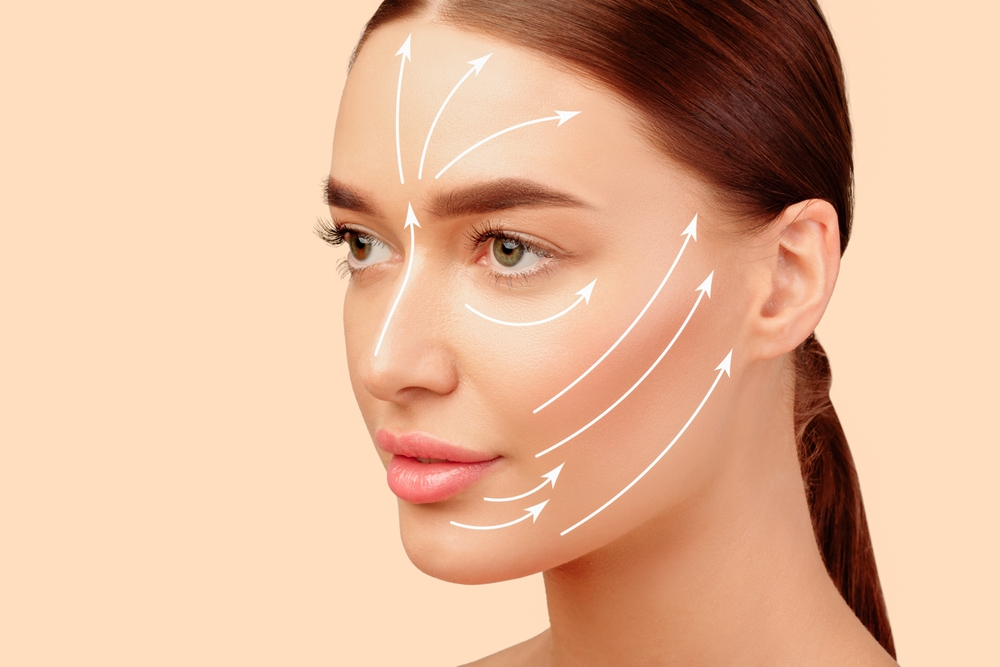
A combined facelift and neck lift treats the face and neck as one connected unit. Surgeons perform both procedures in one session. This approach corrects sagging skin, jowls, and neck bands together. Patients achieve balanced, natural-looking results. The combined method has become the gold standard in modern facial plastic surgery. Surgeons address aging where it actually occurs. They restore harmony from the cheekbone to the collarbone. This produces seamless, believable rejuvenation that isolated procedures cannot match.
What Causes Facial Aging and How Does It Affect Appearance?
Facial aging involves multiple changes at once. Skin loses elasticity. Fat pads shift downward. Ligaments weaken and stretch. These changes create jowls along the jawline. They deepen nasolabial foldsNasolabial folds: The deep creases running from each side of the nose to the corners of the mouth, commonly known.... They cause hollows in the cheeks. The skin produces less collagenA structural protein found in the skin and other connective tissues, which is responsible for skin firmness and elasticity.... after age 30. ElastinElastin A protein in connective tissue that allows tissues to resume their shape after stretching or contracting, contributing to skin... fibers break down. The superficial musculoaponeurotic system (SMASSMAS (Superficial Musculoaponeurotic System): A layer of tissue in the face comprising muscle and fibrous tissue, manipulation of which during...) layer loosens. This deep tissue layer gives the face its structure. When the SMAS sags, the overlying skin follows. Volume loss compounds the problem. Fat that once sat high in the cheeks descends toward the mouth and jaw. This creates a tired, aged appearance. Bone resorption also occurs. The jawline and cheekbones lose their sharp definition.
How Does Skin Lose Elasticity Over Time?
Skin loses elasticity because collagen production drops. The dermis thins. Elastin fibers fragment. Sun exposure accelerates this damage. UV rays break down collagen strands. The skin cannot snap back after stretching. Gravity pulls the weakened skin downward. This creates folds and wrinkles. The neck skin suffers more because it is thinner. Patients often neglect sunscreen on the neck. This leads to premature wrinkling and discoloration.
Why Does Facial Volume Shift with Age?
Facial volume shifts because fat pads detach from their moorings. The retaining ligaments stretch. The buccal fat pad descends toward the mouth. The malar fat pad slides down from the cheekbone. This downward migration creates heaviness around the jaw. It hollows the upper cheeks. It deepens the lines from the nose to the mouth. Rohrich and Pessa (2007) mapped these fat compartments. Their research showed that understanding fat compartment behavior guides modern facelift techniques.
How Does Neck Aging Develop and What Are the Signs?
Neck aging mirrors facial aging but shows distinct features. The platysma muscle separates into visible bands. These vertical cords run from the chin to the chest. Submental fat accumulates beneath the chin. This creates the “double chin” effect. Skin laxityLaxity: Looseness or slackness in the skin or tissues, often referring to the loss of firmness and elasticity in aging... worsens in the neck. Horizontal wrinkles form. The cervicomental angle blunts. This angle defines the transition between the chin and the neck. A sharp angle signals youth. A blunted angle signals age. Sun damage accelerates neck aging. The neck skin is thinner than facial skin. It receives less care and protection.
What Is Platysma Banding and How Does It Form?
Platysma banding forms when the platysma muscle separates. This thin sheet of muscle covers the neck. With age, its edges pull apart. The medial edges create two vertical cords. These bands become visible when the patient talks or strains. The muscle loses tone. It no longer supports the neck skin. This allows the skin to drape loosely over the underlying structure. Surgeons must tighten this muscle during neck lift surgery. They suture the edges together. This restores a smooth neck contour.
Why Does Submental Fat Accumulate Beneath the Chin?
Submental fat accumulates because fat cells expand and ligaments weaken. The fat sits in a pocket beneath the chin. Genetics determine the size of this fat pad. Some patients develop fullness even at a normal weight. Age allows this fat to bulge forward. It blunts the neck angle. It creates the appearance of a double chin. Surgeons remove or suction this fat during neck lift surgery. This restores definition between the chin and the neck.
Why Do Surgeons Treat the Face and Neck as One Unit?
Surgeons treat the face and neck as one unit because they share continuous anatomy. The SMAS extends from the temple into the neck. The platysma muscle connects to facial muscles. Ligaments in the face anchor into neck structures. Treating only the face creates a mismatch. A tight, youthful face paired with a wrinkled neck looks unnatural. The jawline forms the border between these regions. If the surgeon tightens the face but ignores the neck, the jawline appears pulled and artificial. Combined treatment respects this anatomical unity. Surgeons restore harmony from the cheekbone to the collarbone.
How Does Jawline Continuity Affect Surgical Planning?
Jawline continuity affects planning because it defines the transition zone. The jowl sits at the jawline border. It represents descended facial fat and skin. The neck begins just below this point. Surgeons must create a smooth transition. They cannot leave a step-off between the tightened face and the untreated neck. The SMAS layer continues across this boundary. Surgeons must reposition it continuously. This creates a natural flow from the cheek to the neck.
What Happens When Surgeons Only Treat the Face?
When surgeons only treat the face, the neck reveals the patient’s true age. The jawline looks tight. The skin below it looks loose. This mismatch alerts observers that surgery occurred. It creates an operated appearance. Patients may feel self-conscious about the disparity. They may need a second surgery to correct the imbalance. Staged procedures cost more overall. They require additional recovery time.
What Is a Facelift and Which Areas Does It Target?

A facelift, or rhytidectomyThe medical term for a facelift, derived from Greek words meaning 'wrinkle' (rhytis) and 'excision' (ektome). It refers to a..., targets the midface and lower face. Surgeons lift and reposition deeper tissues. They remove excess skin. They restore the jawline and cheek contours. Modern facelifts do not simply pull skin tight. This outdated approach created the “windblown” look. Today, surgeons manipulate the SMAS layer. They reposition fat pads. They restore volume where needed. The procedure addresses jowls, marionette lines, and cheek sagging. Incisions hide within the hairline and around the ear. Scars remain virtually invisible after healing.
How Does the SMAS Layer Create Structural Support?
The SMAS layer creates structural support because it surrounds the facial muscles. It is a fibrous network. It attaches to the skin above and the deeper tissues below. When surgeons tighten the SMAS, they lift the skin with it. This distributes tension evenly. It prevents the skin from stretching too tight. Stuzin et al. (1992) demonstrated that SMAS fixation to the facial skeleton creates durable results. Their work established the SMAS as the key to natural facelift outcomes.
What Modern Techniques Do Surgeons Use for Facelifts?
Surgeons use several modern techniques. The SMAS plication folds the layer upon itself. The SMASectomy removes a strip of tissue. The deep plane release frees the SMAS from ligaments. Each technique suits different anatomy. Surgeons choose based on skin quality and the degree of sagging. Deep plane techniques work best for moderate to severe aging. SMAS plication works well for mild to moderate cases.
What Is a Neck Lift and How Does It Restore Neck Contours?
A neck lift corrects sagging skin, muscle bands, and excess fat in the neck. Surgeons tighten the platysma muscle. They remove or reposition submental fat. They trim loose skin. The procedure restores a defined jawline and smooth neck contour. Surgeons often place a small incision beneath the chin. This allows direct access to the platysma and fat pads. Neck lifts work well for patients with good skin elasticity. Older patients with severe laxity may need more extensive skin removal.
How Do Surgeons Tighten the Platysma Muscle?
Surgeons tighten the platysma muscle by suturing its edges together. This is called platysmaplasty. They make a small incision under the chin. They expose the muscle edges. They place sutures to create a smooth midline. This eliminates the vertical bands. Warren et al. (2018) described the extended supraplatysmal plane dissection. This technique allows comprehensive tightening while preserving blood supply.
What Role Does Submental Fat Removal Play?
Submental fat removal plays a critical role in neck contouring. Surgeons use liposuction or direct excision. They thin the fat pad beneath the chin. This reveals the underlying muscle and bone structure. It sharpens the cervicomental angle. Without fat removal, the neck remains full. Even tight skin cannot hide excess volume.
How Does the Combined Procedure Work in One Session?
The combined facelift and neck lift merges both surgeries into one operation. Surgeons address the face and neck through shared incisions. They create a unified plan for tissue repositioning. This approach often uses deep plane techniques. The surgeon releases ligaments and repositions the SMAS as one continuous layer. The face and neck lift together as a single structure. The combined procedure takes longer than either surgery alone. However, patients avoid a second anesthesiaEnsuring Comfort During Hair Transplants Sedation is used in hair transplantation to help patients remain calm and comfortable throughout the... session. They endure only one recovery period.
What Is Deep Plane Facelift with Neck Lift?
Deep plane facelift with neck lift repositions deeper tissues as one unit. The surgeon releases the facial ligaments. They free the SMAS and skin together. They move this composite flap upward and backward. This technique avoids tension on the skin. It preserves natural movement and expression. The surgeon can extend the dissection into the neck. This treats the face and neck as one continuous plane. Jacono and Parikh (2019) showed that deep plane techniques produce more natural outcomes than superficial approaches.
How Do Surgeons Plan Incisions for Combined Surgery?
Surgeons plan incisions to maximize access and minimize visibility. The facelift incision starts at the temple. It follows the front of the ear. It curves behind the earlobe and into the scalp. The neck lift uses a small incision under the chin. Surgeons may extend the facelift incision slightly to access neck tissues. Shared dissection zones increase efficiency. Surgeons minimize total incision length. Proper planning prevents visible scars. It preserves natural hair patterns.
What Surgical Techniques Define Modern Combined Procedures?
Surgeons choose techniques based on patient anatomy and goals. The two main approaches are the SMAS facelift and the deep plane facelift. The SMAS facelift tightens the superficial musculoaponeurotic system. Surgeons fold or trim this layer. They lift it upward and backward. This creates durable results with a lower risk profile. The deep plane facelift releases deeper attachments. Surgeons move the SMAS and skin together as one unit. Skin-only facelifts rarely occur today. Structural repositioning delivers better, longer-lasting outcomes.
How Does SMAS Facelift Differ from Deep Plane Facelift?
SMAS facelift differs from deep plane facelift in the depth of dissection. SMAS surgery works on the superficial layer. The surgeon plicates or excises the SMAS. They leave the skin attached to the SMAS. Deep plane surgery releases the SMAS from the underlying muscles. The surgeon moves the skin and SMAS as one block. This allows greater lifting. It reduces skin tension. However, it requires more technical skill. It carries a higher risk of nerve injury in inexperienced hands.
Why Do Surgeons Avoid Skin-Only Lifting?
Surgeons avoid skin-only lifting because it fails quickly. Skin stretches under tension. It relaxes within months. The pulled appearance looks unnatural. It distorts the earlobe. It creates visible scars. Modern techniques address the cause of sagging. They lift the deeper structures. The skin simply follows along without tension.
Who Qualifies as an Ideal Candidate for Combined Surgery?

Ideal candidates show moderate to severe aging in the lower face and neck. They have visible jowls. They see vertical neck bands. Their skin has lost significant elasticity. Candidates should enjoy good general health. They need realistic expectations. They understand that surgery improves but does not stop aging. Age alone does not determine candidacy. A 50-year-old with severe sagging may benefit more than a 70-year-old with minimal changes. Surgeons evaluate anatomy, not birthdays.
What Health Conditions Contraindicate This Surgery?
Several conditions make surgery unsafe. Uncontrolled diabetes increases infection risk. Blood clotting disorders cause bleeding complications. Poor cardiovascular health threatens anesthesia safety. Smokers face higher risks. Nicotine constricts blood vessels. This impairs wound healing. It increases skin necrosis risk. Surgeons require smoking cessation for at least four weeks before and after surgery. Patients with unrealistic expectations require counseling. Surgery cannot recreate a 20-year-old face.
How Do Surgeons Create Personalized Surgical Plans?
Surgeons examine facial anatomy carefully. They assess skin quality, fat distribution, and muscle tone. They photograph the face from multiple angles. Some patients need more emphasis on the neck. Others need more midface lifting. The surgeon tailors the procedure. They may add fat grafting to restore volume. They may include chin augmentation to improve jawline definition. The plan depends on the individual, not a template. Mendelson and Wong (2012) emphasized that anatomy-based planning produces superior results.
What Benefits Does the Combined Approach Offer?
Combined facelift and neck lift offers comprehensive rejuvenation. It corrects multiple aging signs in one operation. Patients see improved jawline definition. They enjoy smooth neck contours. They look refreshed, not pulled. The results appear natural and harmonious. The face and neck match in their youthfulness. No one region looks out of place. Efficiency stands as another major benefit. Patients undergo anesthesia once. They recover once. They pay for one facility fee and one anesthesia fee. Staged surgeries double these costs and recovery periods.
How Does Combined Surgery Improve Facial Harmony?
Combined surgery improves facial harmony by treating the transition zones. The jawline looks sharp and continuous. The neck looks smooth and tight. The cheek looks lifted and full. These regions flow together naturally. Observers see a youthful person. They do not detect surgical intervention. This harmony creates psychological comfort. Patients feel their appearance matches their self-image.
Why Is Single-Session Surgery More Efficient?
Single-session surgery saves time and money. Patients schedule one preoperative visit. They undergo one anesthesia induction. They pay one facility fee. They take time off work once. The total downtime is shorter than two separate recoveries. Most patients return to social activities within 10 to 14 days. Staged procedures would require two such periods. This efficiency appeals to busy professionals and parents.
How Long Do Combined Procedure Results Last?
Results typically last 10 to 15 years. The deep plane facelift shows particular durability. Studies demonstrate lasting improvement in jawline contour at 10-year follow-up. The aging process continues, but from a younger starting point. Patients maintain a significant advantage over their natural aging trajectory. Skin quality, sun protection, and lifestyle choices affect longevity. Patients who avoid smoking and use sunscreen preserve results longer.
What Risks Should Patients Consider Before Surgery?
All surgery carries risks. Infection occurs in less than 2% of cases. Bleeding may require drainage. Anesthesia reactions remain rare but possible. Nerve injury concerns many patients. The facial nerve runs through the surgical area. Temporary weakness affects 5-10% of patients. Permanent weakness occurs in less than 1% of cases when experienced surgeons operate. Scarring is inevitable but manageable. Proper incision placement hides scars. Scar care protocols minimize visibility.
What Are the Main Surgical Complications?
The main complications include hematomaHematoma: A localized collection of blood outside the blood vessels, often causing swelling and discoloration, which can occur as a..., infection, and nerve injury. Hematoma is a blood collection beneath the skin. It occurs in 1-3% of facelift patients. Surgeons drain it promptly. Infection is rare but treatable with antibiotics. Nerve injury usually involves the greater auricular nerve or facial nerve branches. Most injuries are temporary. They resolve within weeks to months. Baker (1997) reported low complication rates with minimal dissection techniques.
What Limitations Does Combined Surgery Have?
Surgery does not halt aging. It does not change skin texture. It does not eliminate fine wrinkles. Laser treatments or skincare address these issues. Results depend on skin quality. Thin, damaged skin limits improvement. Lifestyle factors like weight fluctuations and sun exposure degrade results over time. Patients must maintain stable weight. They must protect their skin from UV damage.
What Does the Recovery Timeline Look Like?
Immediate recovery spans one to two weeks. Swelling peaks at day three. Bruising fades by day seven to ten. Patients wear a compression garment to reduce swelling. Most patients resume light activities after five to seven days. They return to work between day ten and fourteen. Strenuous exercise waits for four to six weeks. Long-term healing continues for months. Final results emerge between three and six months. Scars mature and fade over one year.
How Long Does Initial Healing Take?
Initial healing takes 10 to 14 days. Sutures come out around day seven. Bruising turns from purple to yellow. Makeup can cover residual discoloration. Patients feel comfortable in public after two weeks. However, they must avoid heavy lifting and bending. These activities increase blood pressure. They can trigger bleeding.
What Postoperative Care Ensures Best Results?
Postoperative care includes scar management and sun protection. Silicone sheets or gel reduce scar thickness. Massage therapy breaks down scar tissue. Sun protection is non-negotiable. UV rays darken scars and age skin. Patients should wear SPF 50 daily. They should wear hats outdoors. Weight stability matters. Significant weight gain or loss alters facial contours. Patients should maintain a stable weight. Proper hydration and nutrition support healing.
What Outcomes and Satisfaction Rates Do Studies Show?
Aesthetic outcomes include sharper jawlines, smoother necks, and lifted cheeks. The face appears balanced. Youthful proportions return. Patients report dramatic psychological benefits. They feel more confident. They engage more socially. They report higher quality of life scores. Research shows consistent psychological benefits. Patients report increased self-esteem. They feel their appearance matches their energy level. They experience less social anxiety.
How Does Surgery Affect Psychological Well-Being?
Surgery improves psychological well-being measurably. A 2019 study in Aesthetic Surgery Journal found that 87% of facelift patients reported improved quality of life at one year (Swanson, 2019). Patients feel more competitive at work. They feel more attractive in relationships. They stop avoiding mirrors and photographs. This emotional benefit often exceeds the physical improvement.
What Aesthetic Improvements Do Patients See?
Patients see specific aesthetic improvements. The jawline regains its sharp angle. The neck looks long and elegant. The jowls disappear. The marionette lines soften. The cheek returns to its proper position. These changes look natural because surgeons address deep structures. The skin drapes naturally over the repositioned framework.
How Do Combined and Staged Procedures Compare?
|
Feature |
Combined Procedure |
Staged Procedures |
|
Anesthesia sessions |
One |
Two |
|
Total recovery time |
10–14 days |
20–28 days |
|
Cost |
Lower overall |
Higher overall |
|
Facial harmony |
Seamless |
Risk of mismatch |
|
Surgical duration |
Longer |
Shorter per session |
|
Patient convenience |
Single time off |
Multiple absences |
|
Revision likelihood |
Lower |
Higher |
The combined approach wins for most patients with moderate to severe aging. It delivers better harmony. It costs less overall. It requires less total downtime. Staged procedures suit patients who cannot tolerate long surgery. They also work for patients who want to test results gradually.
Why Do Evidence-Based Guidelines Favor Combined Surgery?
Evidence-based guidelines favor combined surgery because studies support it. Patients report higher satisfaction when face and neck match. Revision rates drop when surgeons treat both areas together. Narasimhan et al. (2021) found that combined procedures scored higher on facial harmony metrics than isolated facelifts. Rohrich and Pessa (2021) confirmed that treating the face and neck as a unit produces more natural outcomes.
What Future Innovations Will Shape Facial Rejuvenation?
Advances in deep plane techniques continue. Surgeons better understand facial ligaments. They refine release points. They preserve more natural tissue. Minimally invasive adjuncts grow popular. Fat grafting restores volume without implants. Energy devices tighten skin with less downtime. Thread lifts offer temporary improvement for younger patients. Personalized planning uses 3D imaging. Surgeons simulate outcomes. They tailor procedures to individual bone structure.
How Will Technology Improve Surgical Precision?
Technology improves precision through computer-assisted planning. Surgeons use 3D photography to analyze facial proportions. They predict tissue behavior after lifting. They optimize incision placement. This reduces guesswork. Regenerative medicine enters the field. Stem cell therapies may improve healing. Platelet-rich plasma (PRP) already speeds recovery in many practices. Hamra (1992) pioneered the composite rhytidectomy. His work laid the groundwork for modern integrated approaches.
What Should Patients Know Before Choosing a Surgeon?
Patients should research their surgeon’s credentials. They should verify board certification. They should review before-and-after photos. They should ask about complication rates. Consultation should feel thorough. The surgeon should examine the face and neck together. They should explain the surgical plan clearly. They should discuss realistic outcomes honestly. Second opinions help. Patients should feel confident, not pressured.
Frequently Asked Questions
Is It Better to Combine Facelift and Neck Lift?
Yes. The face and neck age as one unit. Combining the procedures creates harmony. It reduces total cost. It requires only one recovery period.
How Long Do Combined Facelift and Neck Lift Results Last?
Results typically last 10 to 15 years. Deep plane techniques show particular durability. Lifestyle choices and skincare affect longevity.
What Is Recovery Like After a Combined Procedure?
Patients experience swelling and bruising for one to two weeks. Most return to work after 10 to 14 days. Final results appear within three to six months.
Are Combined Surgery Results Natural-Looking?
Yes, when surgeons use modern techniques. Deep plane and SMAS approaches avoid the pulled look. The key is treating deep tissues, not just skin.
What Is the Cost Difference Between Combined and Separate Procedures?
Combined surgery costs less than two separate operations. Patients pay one anesthesia fee. They take time off work once. Total savings often reach 30-40%.
References
Rohrich, Rod J., and Joel E. Pessa. “The Fat Compartments of the Face: Anatomy and Clinical Implications for Cosmetic Surgery.” Plastic and Reconstructive Surgery, vol. 119, no. 7, 2007, pp. 2219–27.
Stuzin, James M., et al. “SMAS Fixation to the Facial Skeleton: Rationale and Long-Term Results.” Plastic and Reconstructive Surgery, vol. 89, no. 3, 1992, pp. 441–49.
Mendelson, Bryan C., and Chin-Ho Wong. “Anatomy of the Aging Face.” Aesthetic Surgery Journal, vol. 32, no. 6, 2012, pp. 705–12.
Swanson, Eric. “Prospective Outcome Study of 360 Facelifts with Implications for Business and Healthcare.” Aesthetic Surgery Journal, vol. 39, no. 5, 2019, pp. 515–27.
Baker, Daniel C. “Minimal Dissection Rhytidectomy with Suture Suspension of the SMAS.” Plastic and Reconstructive Surgery, vol. 100, no. 6, 1997, pp. 1514–17.
Warren, Robert J., et al. “The Extended Supraplatysmal Plane (ESP) Dissection for Neck Rejuvenation.” Aesthetic Surgery Journal, vol. 38, no. 2, 2018, pp. 126–34.
Narasimhan, Kailash, et al. “Combined Face and Neck Lifting: Optimizing Outcomes through Anatomy-Based Approaches.” Plastic and Reconstructive Surgery Global Open, vol. 9, no. 4, 2021, pp. e3521.
Jacono, Andrew A., and Andrew T. Parikh. “The Deep Plane Facelift: An Advancement in Facial Rejuvenation.” Facial Plastic Surgery Clinics of North America, vol. 27, no. 3, 2019, pp. 291–301.
Gonzalez, Ulises, et al. “Quality of Life after Aesthetic Surgery: A Prospective Study of 200 Patients.” Aesthetic Plastic Surgery, vol. 43, no. 2, 2019, pp. 456–63.
Hamra, Sam T. “The Composite Rhytidectomy.” Plastic and Reconstructive Surgery, vol. 90, no. 1, 1992, pp. 1–13.