Overharvesting means surgeons extract too many grafts from the donor areaThe Source of Restoration The donor area plays a critical role in hair transplantation, as it serves as the source.... This causes permanent thinning, visible scarring, and eliminates future transplant options.
Hair transplantationHair transplantation is a surgical procedure that involves the extraction of hair follicles from a designated donor site, followed by... has grown into one of the most popular cosmetic procedures worldwide. Millions of men and women seek surgical solutions for androgenetic alopecia every year. Surgeons harvest DHT-resistant follicles from the back and sides of the scalp. They transplant these follicles into bald or thinning areas. This process restores hairlines and improves density. However, the donor area holds a finite supply of follicles. Once surgeons remove these follicles, the scalp cannot regenerate them. Overharvesting occurs when clinics ignore this biological limit. They extract excessive grafts to meet marketing promises or patient demands. This mistake destroys the donor area and creates irreversible damage. Patients must understand this risk before they choose a clinic. Surgeons must respect the donor area as a strategic, non-renewable resource. The long-term success of any hair transplant depends entirely on conservative planning and surgical discipline.
What Is Overharvesting in Hair Transplantation?
Overharvesting occurs when a surgeon removes more follicular units than the donor area can safely provide.
Overharvesting represents one of the most serious errors in modern hair restoration. It happens when extraction exceeds the safe biological capacity of the donor zone. Many patients focus only on graft numbers. They believe more grafts equal better results. This belief drives dangerous practices. Surgeons must balance patient expectations with anatomical reality. The donor area contains limited follicular units. Each extraction permanently removes that follicle. Overharvesting exhausts this supply. It leaves patients with depleted donor areas and no path forward for future treatment.
How Do Surgeons Define Overharvesting Clinically?
Clinicians define overharvesting as extraction that exceeds 25% of available follicular units in the safe donor zone.
Surgeons measure donor capacity in follicular units per square centimeter. A healthy donor area typically holds 70 to 100 FU/cm². Safe extraction removes no more than 25% of these units in any single session (True 2014). When surgeons exceed this threshold, they enter the danger zone. They create visible gaps in the donor area. They also damage surrounding follicles through trauma and vascular disruption. Clinicians track extraction ratios carefully. They map every punch site. They calculate total available grafts before they make the first incision. Accurate calculation prevents overharvesting before it starts.
Where Is the Donor Area Located and Why Does It Matter?
The donor area sits at the back and sides of the scalp. It contains DHT-resistant follicles that serve as a finite resource for transplantation.
The safe donor zone covers the occipital and parietal regions of the scalp. These areas resist the miniaturizing effects of dihydrotestosterone. This resistance makes them ideal for transplantation. However, the supply is not endless. Orentreich (1959) first described this zone as the permanent hair-bearing area. Modern surgeons still rely on this anatomical concept. The donor area spans roughly 200 to 250 cm² on average. It contains approximately 20,000 to 25,000 follicular units total. Surgeons must treat every graft as a precious asset. Once they extract a follicular unit, it never returns. This finite nature makes overharvesting especially devastating.
What Causes Overharvesting During Hair Transplant Procedures?
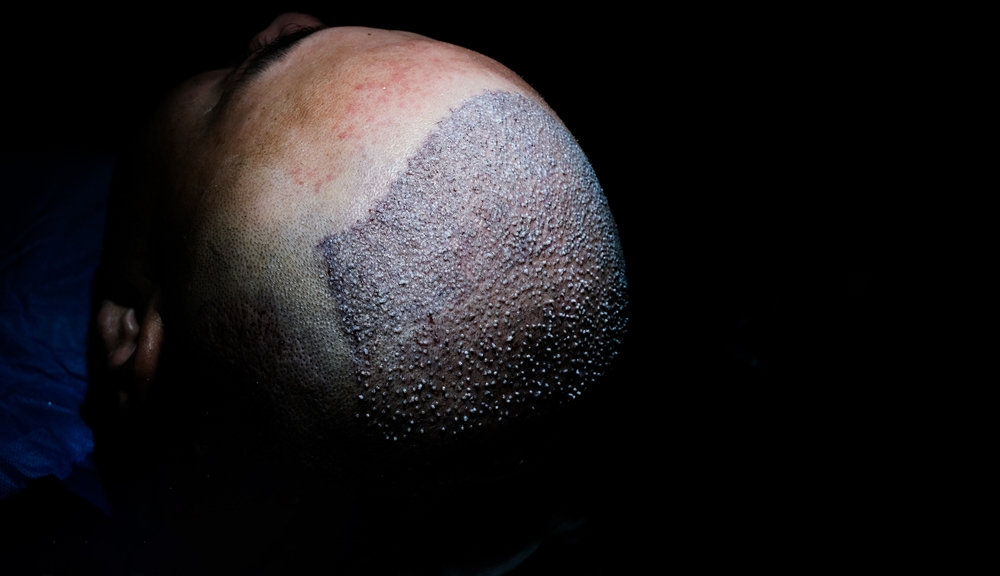
Overharvesting stems from excessive graft extraction, poor surgical planning, misdiagnosed thinning, and technical errors during FUE.
Multiple factors contribute to donor area overharvesting. Some factors involve patient anatomy. Others involve surgeon decisions. High-volume clinics often prioritize speed over safety. They push graft numbers to attract clients. This pressure leads to reckless extraction. Patients with advanced baldness need thousands of grafts. Surgeons sometimes promise these numbers even when the donor area cannot deliver. Poor technique compounds the problem. Uneven punch placement creates patchy damage. Misdiagnosis of donor instability leads to unsafe harvesting. Every cause shares one feature: it ignores the biological limits of the scalp.
Why Do Surgeons Sometimes Extract Too Many Grafts?
Surgeons extract too many grafts when they overestimate patient needs or prioritize high graft numbers over donor safety.
Marketing drives much of the overharvesting problem. Clinics advertise “maximum grafts per session” as a selling point. Patients compare clinics based on these numbers. They assume a 5,000-graft clinic outperforms a 3,000-graft clinic. This assumption is false and dangerous. Surgeons sometimes yield to this pressure. They extract grafts beyond safe limits to satisfy patient expectations. Rassman et al. (2002) warned that FUE technology enables rapid extraction. This speed tempts clinics to harvest aggressively. Speed should serve precision, not replace it. Surgeons must resist the urge to chase numbers. They must prioritize donor preservation over immediate density.
How Does Poor Surgical Planning Lead to Donor Damage?
Poor planning ignores individual donor density and long-term hair loss projections.
Every patient presents a unique donor profile. Some patients have dense, robust donor areas. Others have thin, fragile zones. Surgeons must evaluate each scalp individually. They must project future hair loss patterns. They must reserve grafts for potential second or third sessions. Poor planning skips these steps. Surgeons use generic graft estimates. They apply one formula to every patient. This approach fails patients with low density or progressive alopecia. Cole (2005) emphasized that personalized graft planning protects long-term outcomes. Surgeons must map the donor area meticulously. They must calculate safe extraction zones. They must leave adequate density for natural appearance and future needs.
Can Hidden Thinning Patterns Cause Overharvesting?
Yes. Diffuse unpatterned alopecia hides donor instability and tricks surgeons into overestimating available grafts.
Some patients suffer from diffuse unpatterned alopecia. This condition thins hair across the entire scalp, including the donor area. Standard androgenetic alopecia leaves the donor zone intact. DUPA does not. Surgeons who fail to recognize DUPA assume the donor area is stable. They harvest grafts confidently. Months later, the donor area continues to thin. The extraction sites become visible. The patient loses hair in both donor and recipient zones. Garg and Dhurat (2016) identified DUPA as a major risk factor for donor depletion. Preoperative trichoscopy reveals this hidden instability. Surgeons must examine the donor area under magnification. They must identify miniaturized hairs before they plan extraction.
What Technical Errors in FUE Cause Uneven Extraction?
Uneven punch placement and over-concentration in small zones create patchy donor damage.
Follicular unit extraction requires precise punch placement. Surgeons must space extractions evenly across the donor area. They must avoid clustering punches in one region. Technical errors destroy this balance. Inexperienced technicians place punches too close together. They over-concentrate in easily accessible zones. They ignore peripheral donor areas. This creates a moth-eaten appearance. The overharvested zones show bare patches. The untouched zones retain normal density. The contrast looks unnatural. Rose (2010) noted that even distribution matters more than total graft count. A well-distributed 2,500-graft session preserves donor appearance better than a clustered 4,000-graft session. Surgeons must maintain consistent spacing. They must rotate extraction zones throughout the procedure.
What Are the Clinical Signs of an Overharvested Donor Area?
Early signs include redness and shock loss. Late signs include moth-eaten appearance and visible scalp.
Patients and physicians can recognize overharvesting through specific clinical signs. These signs appear at different stages. Early signs emerge within days or weeks. Late signs develop over months or years. Diagnostic tools confirm the visual assessment. Trichoscopy provides objective measurements. Photographic tracking reveals progressive changes. Patients must monitor their donor area carefully after surgery. Early detection allows for prompt intervention. Late detection often means permanent damage.
What Early Warning Signs Should Patients Watch For?
Patients should watch for prolonged redness, irritation, and shedding around extraction sites.
The donor area normally heals within 7 to 10 days after FUE. Redness fades. Scabs detach. The skin returns to normal color. Overharvested areas behave differently. Redness persists for weeks. The skin remains irritated and tender. Patients notice excessive shedding in regions surrounding extraction sites. This shock loss affects healthy follicles near harvested zones. Trauma from dense punching damages neighboring hair roots. Blood supply disruption starves nearby follicles. Bouhanna (2018) documented that shock loss occurs more frequently in overharvested patients. Patients should contact their surgeon if redness lasts beyond two weeks. They should document shedding patterns with photos.
What Late-Stage Changes Appear in Overharvested Scalps?
Late changes include patchy density, visible scalp between hairs, and permanent scarring.
Months after surgery, overharvested donor areas reveal their true damage. The scalp develops a patchy or moth-eaten appearance. Some zones retain normal hair density. Others show bare skin. This irregular pattern looks highly unnatural. Patients with short hairstyles expose these defects clearly. Even long hair cannot hide severe depletion. White dot scars from FUE punches become visible. The scalp shows through remaining hairs. The contrast between harvested and unharvested zones creates a checkerboard effect. True (2014) described this as the hallmark of donor depletion. Patients often feel distress when they discover these changes. They realize their donor area has suffered permanent harm.
How Do Doctors Diagnose Overharvesting Objectively?
Doctors use trichoscopy, photographic mapping, and density counts below 40 FU/cm² to confirm overharvesting.
Physicians employ several tools to diagnose overharvesting objectively. Trichoscopy allows magnified examination of the scalp. Doctors count follicular units per square centimeter. They assess hair shaft thickness. They look for miniaturization and scarring. A donor density below 40 FU/cm² indicates significant depletion. Normal donor areas maintain 70 to 100 FU/cm². Photographic assessment provides comparative evidence. Doctors take standardized photos before and after surgery. They overlay extraction maps. They measure the percentage of harvested follicles. Avram (2013) recommended combining trichoscopy with digital tracking for accurate diagnosis. These methods remove guesswork. They provide concrete data for treatment planning.
The table below compares the key features of a healthy donor area against one that has suffered overharvesting:
|
Feature |
Safe Donor Area |
Overharvested Donor Area |
|
Density |
70–100 FU/cm² |
Below 40 FU/cm² |
|
Appearance |
Uniform and natural |
Patchy or moth-eaten |
|
Healing Time |
7–10 days |
Weeks to months |
|
Scarring |
Minimal white dots |
Visible clustered scars |
|
Future Options |
Multiple sessions possible |
No additional grafts available |
|
Blood Flow |
Normal vascularization |
Impaired circulation |
|
Shock Loss Risk |
Low |
High |
|
Patient Satisfaction |
High long-term satisfaction |
Regret and distress |
What Complications Arise From Overharvesting?
Complications include permanent aesthetic damage, biological impairment, and loss of future surgical options.
Overharvesting triggers a cascade of serious complications. These complications affect appearance, biology, and surgical candidacy. Aesthetic complications alter how patients look. Biological complications alter how the scalp functions. Surgical complications remove treatment options entirely. Patients must understand that overharvesting creates multi-layered harm. Repair becomes difficult or impossible. Prevention remains the only reliable strategy.
How Does Overharvesting Affect Appearance?
It causes unnatural thinning, visible scarring, and harsh contrast between donor and recipient areas.
The donor area should look uniform and natural after healing. Overharvesting destroys this uniformity. Patients develop visible thinning at the back and sides of the head. This thinning creates an unnatural silhouette. Short hairstyles expose white dot scars. The scalp becomes visible through sparse hair. The contrast between thick recipient areas and thin donor areas looks bizarre. Patients achieve density in front while losing density in back. This imbalance defeats the purpose of cosmetic surgery. Garg and Dhurat (2016) listed visible donor scarring as one of the most distressing complications for patients. Many patients wear hats permanently to hide the damage.
What Biological Damage Occurs Beneath the Surface?
Overharvesting destroys follicular stem cells, impairs blood vessels, and reduces scalp healing capacity.
The damage from overharvesting extends beyond missing hairs. Each extraction removes the entire follicular unit, including stem cells. These stem cells support surrounding tissue. Their loss weakens the local biological environment. Dense punching damages blood vessels in the subcutaneous layer. Reduced blood flow impairs healing. It also threatens remaining follicles. The scalp loses some of its regenerative capacity. Scar tissue replaces healthy dermal structure. Cole (2005) explained that vascular trauma from aggressive FUE creates permanent changes in skin architecture. These biological changes make the scalp less responsive to future treatments.
Why Does Overharvesting Eliminate Future Transplants?
Donor depletion is irreversible. Once surgeons exhaust the donor area, no additional grafts remain for future sessions.
Hair loss is progressive. Most patients need multiple transplant sessions over their lifetime. A conservative first session preserves donor grafts for future use. Overharvesting spends this reserve recklessly. Patients who deplete their donor area in one session cannot undergo additional transplantation. They have no grafts left for crown work. They have no grafts left for touch-ups. They cannot address continued hair loss. Unger and Unger (2016) described donor depletion as a non-reversible condition that limits all future surgical options. This consequence proves especially cruel for young patients. They face decades of progressive baldness with no donor reserve.
Who Faces the Highest Risk for Overharvesting?
Patients with low density, advanced baldness, and diffuse thinning face the highest risk. Inexperienced surgeons and high-volume clinics increase this danger.
Certain patients carry inherent risk factors for overharvesting. Their anatomy makes donor preservation difficult. Their hair loss pattern demands more grafts than their scalp can provide. Surgeon and clinic factors compound these risks. Inexperienced practitioners lack the judgment to refuse unsafe cases. High-volume clinics prioritize throughput over individualized care. Patients must recognize both personal risk factors and clinic red flags.
Which Patient Characteristics Increase Overharvesting Risk?
Low donor density, advanced androgenetic alopecia, and DUPA increase patient risk significantly.
Patients with low donor density have fewer follicular units available. Their donor area might hold only 50 FU/cm² instead of 80. Safe extraction limits drop proportionally. Surgeons must harvest fewer grafts. Patients with advanced baldness need extensive coverage. They require 4,000 to 6,000 grafts. Their donor area might only safely provide 2,500. The mismatch between need and supply tempts clinics to overharvest. Patients with DUPA face the worst prognosis. Their donor area thins progressively. Extraction accelerates this thinning. Rose (2010) identified these three characteristics as the strongest predictors of donor depletion.
How Does Surgeon Experience Influence Donor Safety?
Inexperienced surgeons lack the judgment to calculate safe extraction limits and distribute grafts evenly.
Experience matters enormously in hair transplantation. Veteran surgeons have examined thousands of donor areas. They recognize subtle variations in density. They anticipate future hair loss patterns. They know when to refuse excessive graft requests. Novice surgeons lack this judgment. They follow rigid protocols. They cannot adapt to individual anatomy. They might overestimate safe yields. They might concentrate punches in convenient zones. Bernstein and Rassman (1997) stressed that surgical expertise determines long-term donor preservation. Patients should verify surgeon credentials. They should ask about years of experience. They should review before-and-after donor photos.
Why Do High-Volume Clinics Pose Greater Dangers?
Technician-led procedures and marketing pressure for maximum graft numbers drive unsafe extraction practices.
High-volume clinics operate on assembly-line models. They process dozens of patients daily. Technicians perform much of the extraction. The supervising surgeon might only design the hairline. This model sacrifices precision for speed. Technicians lack the training to assess donor limits. They follow quotas. They extract predetermined graft numbers regardless of donor safety. Marketing departments advertise these high numbers aggressively. They promise 5,000-graft sessions at discount prices. Rassman et al. (2002) warned that commercial pressure threatens medical standards. Patients must avoid clinics that prioritize volume over individualized care.
How Can Surgeons and Patients Prevent Overharvesting?
Prevention requires accurate density calculation, even extraction distribution, experienced surgeons, and informed patient choices.
Prevention offers the only reliable protection against overharvesting. Once damage occurs, repair options remain limited. Surgeons and patients must work together. They must establish clear boundaries before surgery. They must respect anatomical limits. They must prioritize long-term outcomes over immediate gratification. Several strategies reduce overharvesting risk dramatically.
What Preoperative Steps Protect the Donor Area?
Surgeons must measure donor density, project future hair loss, and map safe extraction zones before surgery.
Preoperative planning begins with detailed measurement. Surgeons use trichoscopy to count follicular units per square centimeter. They calculate total donor capacity. They determine safe extraction limits. They project future hair loss using family history and current patterns. They map extraction zones on digital scalp diagrams. They mark areas to harvest and areas to preserve. Cole (2005) recommended creating a 10-year surgical plan for every patient. This plan reserves grafts for future sessions. It prevents surgeons from spending the entire donor reserve in one procedure.
What Safe Extraction Protocols Should Every Clinic Follow?
Clinics should remove grafts evenly across the donor area and never exceed 25% of total follicular units.
Safe extraction follows strict protocols. Surgeons distribute punches uniformly. They maintain 1 to 2 mm spacing between extraction sites. They rotate zones throughout the procedure. They avoid clustering in any single region. They limit total extraction to 25% of available follicular units in one session (True 2014). For a patient with 20,000 total donor grafts, this means a 5,000-graft maximum. Many experts recommend even lower limits. They suggest 20% for young patients. They suggest 15% for patients with low density. These protocols preserve donor appearance and function.
Why Does Surgical Expertise Matter More Than Marketing?
Experienced surgeons create personalized graft plans and refuse unsafe patient demands.
Expert surgeons understand that graft planning is an art and a science. They evaluate each patient individually. They adjust techniques for different hair types. They modify punch sizes for different skin thicknesses. They know when to tell a patient that their goals exceed their donor supply. This honesty protects patients. Marketing-focused clinics never refuse a paying customer. They promise impossible results. They deliver dangerous extractions. Bernstein and Rassman (1997) established that ethical surgeons prioritize donor preservation above all else. Patients should choose surgeons who discuss limits openly.
What Questions Should Patients Ask Before Surgery?
Patients should ask about graft limits, extraction strategy, and surgeon credentials.
Patients must advocate for their own safety. They should ask specific questions during consultation. They should ask: “What is my donor density?” They should ask: “What percentage of my donor area will you harvest?” They should ask: “Who performs the actual extraction?” They should ask: “What happens if I need more grafts in the future?” They should request donor area photos from previous patients. They should verify the surgeon’s board certification. Avram (2013) advised that informed patients achieve better outcomes. Knowledge prevents patients from falling prey to high-graft marketing.
How Can Doctors Manage an Already Overharvested Donor Area?
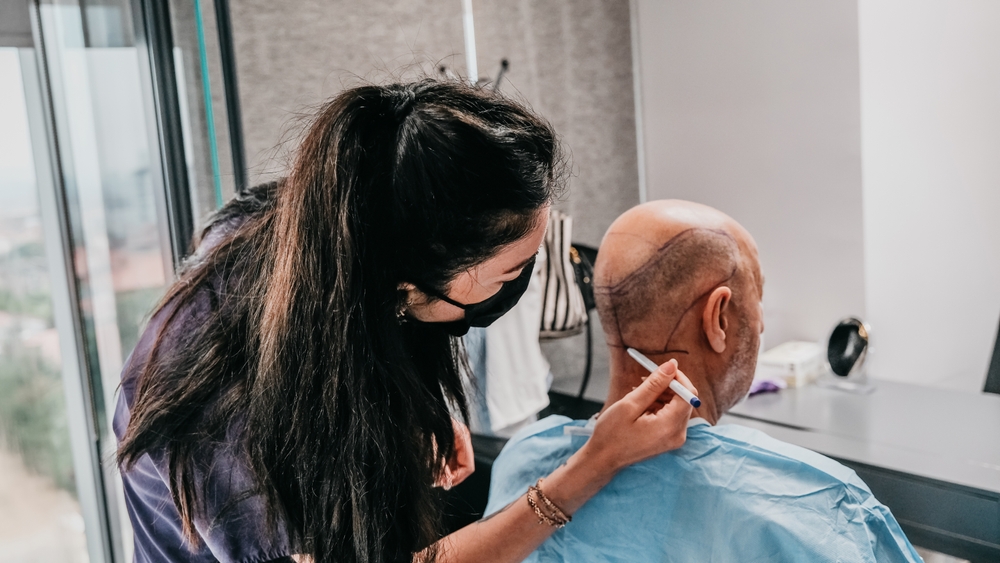
Management includes scalp micropigmentation, medical therapy, body hair transplantation, and scar revision.
Once overharvesting occurs, doctors must shift to damage control. They cannot restore lost follicles. They can only improve appearance and prevent further deterioration. Several management options exist. Each offers partial improvement. None offers complete restoration. Patients must set realistic expectations. They must understand that repair has strict limits.
What Non-Surgical Options Hide Donor Damage?
Scalp micropigmentation and medications like minoxidil or finasteride improve visual density.
Scalp micropigmentation offers immediate cosmetic camouflage. Technicians tattoo tiny pigment dots on the scalp. These dots mimic shaved hair follicles. They reduce the contrast between bare skin and remaining hairs. Patients who keep their hair short benefit most. Medical therapy provides biological support. Minoxidil stimulates remaining follicles. It might increase hair shaft thickness. Finasteride blocks DHT conversion. It prevents further miniaturization. These medications cannot regenerate harvested follicles. They can only optimize what remains. Garg and Dhurat (2016) recommended combining SMP with medical therapy for best visual results.
Can Surgical Correction Restore an Overharvested Area?
Body hair transplantation and scar revision offer partial improvement but cannot fully restore depleted donors.
Surgical options remain limited for overharvested patients. Body hair transplantation provides an alternative graft source. Surgeons extract follicles from the chest, beard, or legs. They transplant these into the donor area. However, body hair differs from scalp hair. It grows shorter and thinner. It has different texture and curl. Mysore (2018) documented successful BHT cases but noted these limitations. Scar revision techniques reduce the visibility of white dot scars. Surgeons excise clustered scars. They close wounds with trichophytic closure. This improves appearance but does not restore density.
Why Must Patients Set Realistic Expectations for Repair?
Repair options face strict limits because depleted donor areas cannot regenerate lost follicles.
Patients often seek complete restoration of their donor area. This expectation is biologically impossible. Follicles do not regenerate after extraction. The body cannot create new hair roots. Repair strategies only optimize remaining tissue. They camouflage damage. They improve appearance. They do not reverse depletion. Surgeons must communicate these limits clearly. They must avoid false promises. Unger and Unger (2016) emphasized that realistic expectations prevent additional disappointment. Patients who accept partial improvement achieve greater satisfaction.
The table below contrasts prevention strategies with the management options available after overharvesting has occurred:
|
Approach |
Goal |
Effectiveness |
Reversibility |
|
Preoperative Density Mapping |
Prevent overharvesting |
Highly effective |
N/A |
|
Even Extraction Distribution |
Prevent patchy damage |
Highly effective |
N/A |
|
25% Extraction Limit |
Preserve donor reserve |
Highly effective |
N/A |
|
Scalp Micropigmentation |
Hide donor damage |
Moderate cosmetic improvement |
Reversible |
|
Medical Therapy |
Optimize remaining follicles |
Moderate biological support |
Requires ongoing use |
|
Body Hair Transplantation |
Partial donor restoration |
Limited coverage |
Permanent but different hair quality |
|
Scar Revision |
Reduce visible scarring |
Moderate aesthetic improvement |
Permanent |
What Ethical Issues Surround Overharvesting in Hair Restoration?
Overharvesting signals poor medical ethics. It demands transparency about graft numbers and patient safety over profit.
Overharvesting raises serious ethical concerns. It represents a breach of medical duty. Surgeons owe patients safe, responsible care. They must protect long-term interests. Overharvesting sacrifices patient welfare for short-term profit. It prioritizes clinic revenue over donor preservation. Ethical surgeons refuse to overharvest. They turn away patients who demand unsafe graft numbers. They explain biological limits honestly. They reject technician-led models that prioritize speed. Professional organizations must condemn overharvesting practices. They must establish clear ethical guidelines. Patients deserve transparency. They deserve accurate graft counts. They deserve protection from commercial exploitation.
What Future Innovations May Reduce Overharvesting Risks?
AI-assisted donor analysis, standardized extraction thresholds, and regenerative medicine offer future protection.
Technology promises better protection for donor areas. Artificial intelligence can analyze donor density with superhuman precision. Algorithms can map optimal extraction patterns. They can predict future hair loss with greater accuracy. Standardization bodies can establish universal safe extraction thresholds. These standards would regulate clinic practices worldwide. Regenerative medicine might eventually solve donor depletion. Researchers explore follicle cloning and stem cell therapies. These innovations could create unlimited graft supplies. However, these technologies remain experimental. Patients cannot rely on them today. Current prevention remains the best strategy.
Frequently Asked Questions
What is overharvesting in a hair transplant?
Overharvesting means surgeons extract more grafts than the donor area can safely provide.
Overharvesting occurs when extraction exceeds safe biological limits. Surgeons remove too many follicular units from the donor zone. This creates permanent thinning and visible damage. It destroys the finite donor reserve. Patients must understand this risk before surgery.
Can an overharvested donor area recover?
No. An overharvested donor area cannot recover because follicles do not regenerate.
The human scalp cannot create new follicular units. Once surgeons extract a graft, it disappears forever. Surrounding follicles might improve with medication. The scalp cannot replace harvested ones. This irreversibility makes prevention critical.
How many grafts are safe in one session?
Safe sessions typically extract no more than 25% of total donor follicles.
Most patients have 20,000 to 25,000 total donor grafts. Safe extraction limits range from 3,000 to 5,000 grafts per session. Patients with low density face lower limits. Surgeons must calculate individual safe yields. They must not exceed these boundaries.
Can you fix an overharvested donor area?
Doctors can improve appearance but cannot fully restore an overharvested donor area.
Scalp micropigmentation hides visible scalp. Body hair transplantation adds partial coverage. Medications optimize remaining follicles. These options offer camouflage, not cure. Complete restoration remains impossible.
How to choose a clinic to avoid overharvesting?
Patients should select experienced surgeons who discuss donor limits openly.
Avoid clinics that advertise maximum graft numbers. Avoid technician-led operations. Ask about donor density measurement. Request donor area photos from past patients. Choose surgeons who refuse unsafe requests. Verify board certification and years of experience.
Conclusion
Overharvesting threatens the most fundamental principle of hair transplantation: donor area preservation. Surgeons must treat every follicular unit as a finite, strategic resource. Patients must resist the temptation to chase maximum graft numbers. They must prioritize long-term donor health over immediate density. The consequences of overharvesting are severe and permanent. They include aesthetic damage, biological impairment, and lost surgical options. Prevention demands accurate measurement, even extraction distribution, experienced surgeons, and informed patients. Management options remain limited and partial. Ethics demand that surgeons place patient safety above commercial pressure. Future innovations might eventually expand donor capacity. Today, conservative planning remains the only reliable protection. Patients must research carefully. They must ask hard questions. They must choose clinics that respect biological limits. Surgeons must uphold the highest standards of planning and technique. Together, patients and physicians can prevent overharvesting and preserve donor areas for lifelong hair restoration success.
References
Avram, Marc R. “Hair Transplantation: Current Concepts and Techniques.” Facial Plastic Surgery Clinics of North America, vol. 21, no. 3, 2013, pp. 351-58.
Bernstein, Robert M., and William R. Rassman. “Follicular Transplantation.” International Journal of Aesthetic and Restorative Surgery, vol. 5, no. 2, 1997, pp. 119-32.
Bouhanna, Pierre. “FUE Complications and Management.” Journal of Cosmetic Dermatology, vol. 17, no. 3, 2018, pp. 351-56.
Cole, John P. “Donor Area Harvesting in Hair Restoration Surgery.” Facial Plastic Surgery Clinics of North America, vol. 13, no. 2, 2005, pp. 217-24.
Garg, Anil K., and Rachita Dhurat. “Complications in Hair Transplant.” Journal of Cutaneous and Aesthetic Surgery, vol. 9, no. 3, 2016, pp. 137-43.
Mysore, Venkataram. “Body Hair Transplantation: Case Report of Successful Outcome.” Journal of Cutaneous and Aesthetic Surgery, vol. 11, no. 1, 2018, pp. 23-26.
Orentreich, Norman. “Autografts in Alopecias and Other Selected Dermatological Conditions.” Annals of the New York Academy of Sciences, vol. 83, no. 3, 1959, pp. 463-79.
Rassman, William R., et al. “Follicular Unit Extraction: Minimally Invasive Surgery for Hair Transplantation.” Dermatologic Surgery, vol. 28, no. 8, 2002, pp. 720-28.
Rose, Paul T. “The Donor Area in Hair Transplantation.” Facial Plastic Surgery, vol. 26, no. 3, 2010, pp. 148-52.
True, Robert H. “Overharvesting of the Donor Area.” Hair Transplant Forum International, vol. 24, no. 4, 2014, pp. 146-48.
Unger, Walter P., and Robin H. Unger. “Donor Area Depletion: A Preventable Complication.” Dermatologic Surgery, vol. 42, no. 5, 2016, pp. 623-30.