Androgenetic alopecia troubles millions of people across the globe. It drains confidence. It limits styling choices. It sparks anxiety in social settings. For decades, patients have relied on daily topical foams or oral pills that merely slow down hair loss. These options do not reverse the damage. They do not wake up sleeping follicles. They simply delay the inevitable.
Now, a new investigational therapy called AMP-303 enters the conversation. Amplifica Holdings Group developed this injectable treatment. It targets dormant hair follicles with biological signaling molecules. At the heart of this approach sits osteopontin, a glycoprotein that researchers recently linked to hair follicle reactivation. The discovery emerged from an unlikely source: hairy skin moles. Scientists at the University of California, Irvine noticed that certain nevi grow unusually thick hair. They traced this phenomenon to senescent melanocytes secreting osteopontin. This molecule binds to CD44 receptors on hair follicle stem cells. It flips the growth switch back on.
This article explores the science behind AMP-303 and osteopontin. It breaks down how androgenetic alopecia develops. It compares AMP-303 to existing treatments. It reviews early clinical data. It also looks at future directions in regenerative hair medicine. Every section answers a specific question. Every answer arrives right after the heading. The goal is simple: give you clear facts so you can understand this emerging field.
What Is Androgenetic Alopecia and How Does It Develop?
Androgenetic alopecia is a progressive, non-scarring hair loss condition driven by genetic susceptibility and dihydrotestosterone. It affects up to 50% of men and roughly 40% of women during their lifetime.
Doctors call this pattern hair loss the most common form of alopecia worldwide. It respects no borders. It appears in all ethnic groups, though Caucasian populations show higher rates. By age 50, approximately 50% of men display visible thinning. By age 70, that number climbs to 80%. Women suffer too. Many notice diffuse thinning after menopause. The condition creates real psychological weight. Studies link it to depression, anxiety, and reduced quality of life.
What Happens During Hair Follicle Miniaturization?
DHT shrinks genetically vulnerable follicles, shortens the active growth phase, and transforms thick terminal hairs into thin vellus hairs.
The process starts with testosterone. The body converts this hormone into dihydrotestosterone through the enzyme 5-alpha-reductase. Type 2 isoforms of this enzyme concentrate in the outer root sheath of hair follicles. DHT binds to androgen receptors in dermal papilla cells. This binding triggers a cascade of cellular signals. The anagen phase shortens dramatically. The normal ratio of anagen to telogen hairs drops from 12:1 to 5:1. Follicles produce thinner and shorter shafts. Terminal hairs gradually become vellus hairs. These tiny, colorless strands barely penetrate the skin surface. Over time, the scalp becomes visible. The forehead recedes. The crown thins. The part widens. This miniaturization defines androgenetic alopecia at the cellular level (Wang et al. 2023).
What Are the Limits of Current Hair Loss Treatments?
Minoxidil, finasteride, PRP, and hair transplants each help patients, but none reactivate dormant follicles at the biological signaling level.
Topical minoxidil remains the only FDA-approved treatment for both men and women. It acts as a potassium channel opener and vasodilator. It increases blood flow to the scalp. It prolongs the anagen phase. However, it demands twice-daily application. Results take four to six months to appear. Many patients experience initial shedding. Compliance remains a major hurdle.
Oral finasteride blocks 5-alpha-reductase type 2. It lowers DHT levels by approximately 70%. Clinical trials show that 83% of men maintain or improve hair counts after two years (McClellan and Markham 1999). Yet sexual side effects worry some patients. Decreased libido, erectile dysfunction, and ejaculation disorders occur in a small percentage. Women cannot use finasteride during pregnancy. Post-finasteride syndrome remains controversial.
PRP injections offer a regenerative option. Doctors draw the patient's blood, spin it down, and inject platelet-rich plasma into the scalp. Growth factors like VEGF and PDGF may stimulate follicles. Meta-analyses suggest PRP increases hair density by roughly 14 hairs per square centimeter (Suchonwanit et al. 2019). But protocols vary wildly. Concentrations differ. Activation methods lack standardization. Results remain inconsistent.
Hair transplantation moves healthy follicles from the back of the scalp to bald areas. FUE and DHI techniques achieve 90% to 97% graft survival in skilled hands. However, surgery redistributes existing hair. It does not create new follicles. It also costs more and requires recovery time.
None of these options directly target the stem cell signaling that keeps follicles dormant. That gap inspired the creation of AMP-303.
What Is AMP-303 and How Did Scientists Create It?

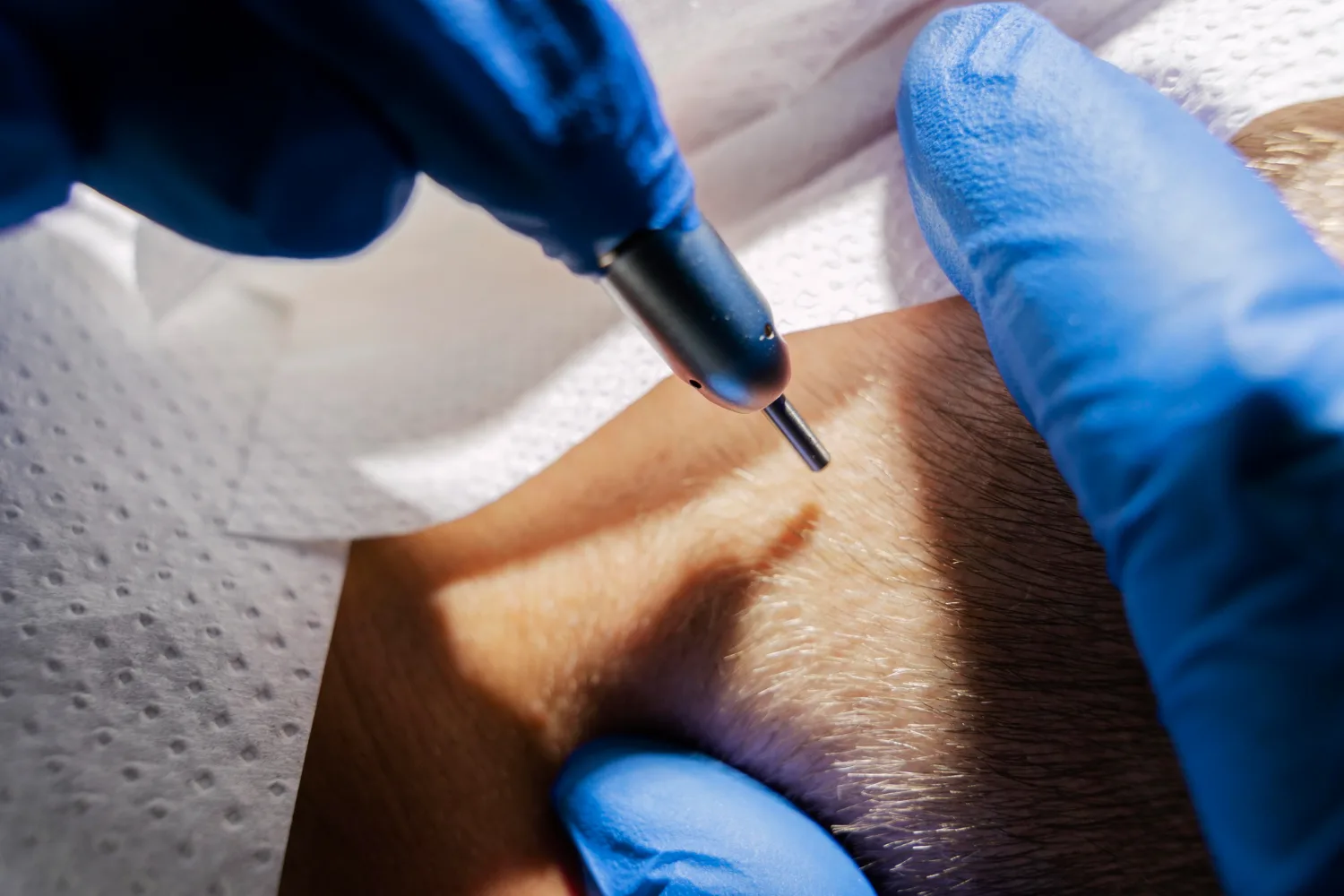
AMP-303 is an investigational intradermal injectable developed by Amplifica. It delivers biological signaling molecules to reactivate dormant hair follicles and convert vellus hairs back to terminal hairs.
Amplifica Holdings Group stands at the forefront of this research. Dr. Maksim Plikus, Chief Scientific Officer, co-founded the company. Dr. William Rassman, a pioneer in hair restoration, serves as Chief Medical Officer. Frank Fazio leads as President and CEO. Together, they translated laboratory discoveries into a clinical candidate. AMP-303 represents their lead compound. It remains in early human trials. No regulatory agency has approved it yet. But the underlying biology has already changed how scientists view hair loss.
Where Did AMP-303 Research Begin?
Researchers studied hairy nevi, or "hairy moles," and discovered that senescent melanocytes in these lesions secrete osteopontin, which hyperactivates nearby hair stem cells.
Dr. Plikus and his team at UC Irvine published their landmark findings in Nature in 2023. They examined mouse models carrying the same mutations seen in human nevi. These mice grew excessive hair from pigmented skin lesions. The team tracked follicle activity over time. They found that hair stem cells in these nevi exited quiescence much faster than normal. The growth cycles shortened. The stem cells became hyperactive.
Next, the researchers analyzed the secretome of senescent melanocytes. They identified osteopontin as the dominant signaling factor. Mice lacking osteopontin or its receptor CD44 showed normal hair growth. The hyperactivity disappeared. Human hairy nevi samples confirmed the finding. They contained elevated osteopontin levels compared to adjacent skin. When the team applied small doses of osteopontin to human follicles in culture, new hair growth began. This discovery flipped the script on cellular senescence. Scientists once viewed senescent cells as purely harmful. Now they recognized that localized clusters of these cells could actively stimulate tissue renewal (Wang et al. 2023).
How Does AMP-303 Differ from Traditional Therapies?
AMP-303 uses intradermal injections of signaling molecules to reactivate follicles, while minoxidil requires daily topical application and finasteride alters hormones systemically.
The differences are stark. Traditional therapies manage symptoms. AMP-303 aims to reverse the biological dormancy of follicles. The table below makes the comparison clear.
|
Feature
|
AMP-303
|
Minoxidil
|
Finasteride
|
|
How doctors give it
|
Intradermal injection
|
Topical foam or solution
|
Oral tablet
|
|
How often patients need it
|
Potentially once per cycle
|
Twice daily
|
Once daily
|
|
How it works
|
Follicular signaling activation
|
Vasodilation and blood flow
|
DHT inhibition
|
|
Does it affect hormones?
|
No
|
No
|
Yes
|
|
What it targets
|
Dormant follicle reactivation
|
Existing follicle maintenance
|
Androgen pathway suppression
|
|
Regulatory status
|
Investigational / clinical trials
|
FDA-approved
|
FDA-approved
|
This table reveals a fundamental shift. AMP-303 does not rely on blood flow enhancement or hormone blocking. It speaks directly to the stem cells. It tells them to wake up.
What Is Osteopontin and How Does It Affect Hair Follicles?
Osteopontin is a naturally occurring glycoprotein that regulates tissue remodeling, wound healing, and stem cell communication. In hair biology, it acts as a potent activator of follicle stem cells through the CD44 receptor.
Scientists have studied osteopontin for years. They first noticed it in bone tissue. They linked it to immune responses. They associated it with cancer biology and inflammation. For hair research, osteopontin remained under the radar until the hairy nevus studies changed everything.
How Did Researchers Discover Osteopontin's Role in Hair Growth?
UC Irvine researchers compared hairy nevi to normal skin, found excess osteopontin in senescent melanocytes, and proved that deleting osteopontin or CD44 eliminated the excessive hair growth.
The Plikus team used single-cell analysis and genetic mouse models. They showed that nevus melanocytes activate a distinct secretome. Osteopontin topped the list of signaling factors. The researchers then ran loss-of-function experiments. They removed the osteopontin gene. They removed the CD44 gene. Both interventions rescued normal hair cycling. The hyperactivation vanished.
The team moved to human tissue. They collected samples from hairy nevi. They found osteopontin overexpression. They applied recombinant osteopontin to human scalp follicles in ex vivo culture. The follicles entered anagen. They produced new hair shafts. This proved that the mechanism is conserved across species. It also proved that external osteopontin application can trigger growth in human tissue (Wang et al. 2023).
How Does Osteopontin Trigger Hair Regeneration?
Osteopontin binds to CD44 receptors on epithelial hair follicle stem cells. This interaction activates intracellular pathways that push stem cells from quiescence into the growth phase.
The signaling cascade starts simple. Osteopontin leaves senescent melanocytes. It diffuses through the dermal microenvironment. It reaches the bulge region of the hair follicle. There, CD44 receptors sit on the surface of stem cells. Osteopontin latches on. The receptor complex changes shape. It initiates downstream signaling. Transcription factors activate. Genes related to proliferation and differentiation turn on. The stem cells divide. They generate new matrix cells. These matrix cells produce keratin. The follicle enters anagen. A new hair shaft emerges.
This pathway is non-hormonal. It does not require blocking DHT. It does not depend on androgen receptor modulation. It bypasses the entire androgen axis. That makes it attractive for patients who cannot tolerate finasteride. It also makes it attractive for women, whose hair loss often involves different hormonal complexities.
Can Osteopontin Reactivate Dormant Stem Cells?
Yes, osteopontin can reactivate dormant stem cells in miniaturized follicles, but it cannot revive follicles that have already disappeared entirely.
This distinction matters. Androgenetic alopecia leaves many follicles in a dormant state. They remain alive. They retain stem cells. They simply sit in extended telogen or early miniaturization. Osteopontin signaling can potentially rouse these follicles. It can restart their cycles. It can convert vellus hairs back toward terminal status.
However, decades of advanced baldness may destroy follicular structures completely. Scar tissue may replace the niche. In these cases, no signaling molecule can recreate what no longer exists. That is why early intervention remains critical. Patients with recent-onset thinning stand to benefit most. Patients with long-standing, shiny bald areas may still need transplantation for full restoration.
What Is the Science Behind AMP-303?
AMP-303 delivers isolated biological signaling molecules intradermally into scalp tissue. These molecules modulate the follicular microenvironment and promote conversion of vellus hairs to terminal hairs.
The formulation uses a polysaccharide-based carrier. Doctors inject it into the deep dermis via microinjection. The frontotemporal scalp serves as the primary target area. This region historically resists treatment. Minoxidil struggles here. Finasteride slows loss but rarely produces dense regrowth. AMP-303 specifically targets this challenging zone.
How Do Biological Signals Control Hair Growth?
Hair follicles cycle through anagen, catagen, and telogen phases based on signals from dermal papilla cells, stem cell niches, and surrounding skin cells.
The follicle operates like a mini-organ. It contains epithelial stem cells in the bulge. It houses dermal papilla fibroblasts at the base. These two populations talk constantly. Dermal papilla cells release growth factors. They modulate Wnt, BMP, Hedgehog, and TGF-beta pathways. Stem cells respond by either staying quiet or dividing.
In 2022, the Plikus lab identified another key signal: SCUBE3. This protein, secreted by dermal papilla fibroblasts during anagen, also activates hair growth. Hedgehog signaling upregulates SCUBE3 expression. Microinjection of SCUBE3 protein induces new hair growth in mice. Human scalp follicles partially conserve this mechanism (Liu et al. 2022). Amplifica now develops AMP-601 as a SCUBE3-based candidate. But AMP-303 remains the lead program. It focuses on osteopontin-driven activation rather than Hedgehog-SCUBE3 modulation.
What Mechanism Does AMP-303 Use?
AMP-303 mimics natural osteopontin signaling. It reactivates miniaturized follicles and encourages them to produce thicker, pigmented terminal hairs.
The exact molecular composition remains proprietary. Amplifica has not published the full formula in peer-reviewed journals. However, the company states that AMP-303 contains isolated signaling molecules. These molecules replicate the biological activity observed in hairy nevi. They do not introduce foreign genes. They do not use cultured cells. They represent a cell-free, acellular approach.
Doctors administer the treatment in a single session. They inject 20 frontotemporal sites on one side of the scalp. Early data suggest that one treatment cycle produces measurable changes. This infrequent dosing model contrasts sharply with daily minoxidil or repeated PRP sessions.
How Does AMP-303 Affect the Hair Growth Cycle?
AMP-303 appears to induce anagen entry, prolong the growth phase, and increase non-vellus hair counts within 60 to 150 days.
The hair growth cycle determines visible outcomes. Anagen lasts two to six years in healthy scalp hair. Catagen lasts weeks. Telogen lasts months. In androgenetic alopecia, anagen collapses. Telogen expands. AMP-303 aims to reverse this imbalance.
In the first-in-human trial, researchers measured non-vellus hair counts. These are the thick, pigmented hairs that patients want. At day 60, treated sides showed statistically significant increases compared to placebo. At day 150, improvements persisted. This suggests that AMP-303 does not merely trigger a temporary growth spurt. It may fundamentally reset the cycle clock. More research must confirm this. But the early signal is promising (Green et al. 2025).
What Do Clinical Trials Show About AMP-303?
A first-in-human, randomized, double-blind, placebo-controlled, multicenter trial showed that AMP-303 increased non-vellus hair counts in men with recent-onset androgenetic alopecia, with mild side effects.
Amplifica completed its initial clinical study in 2024. The company announced results in September 2024. Researchers presented updated data at the Society for Investigative Dermatology Annual Meeting in San Diego in May 2025. The study design followed rigorous standards. It was randomized. It was double-blind. It used placebo control. It ran across multiple centers in the United States.
Who Participated in the AMP-303 Trials?
Sixty-one men aged 18 to 45 with mild-to-moderate androgenetic alopecia joined the study. Researchers split them into two groups based on hair loss duration.
Group 1 contained 32 men. These participants had recent-onset hair loss lasting three to five years. Group 2 contained 29 men. These participants had long-standing hair loss lasting ten years or more. Each man received AMP-303 injections on one side of the scalp and saline placebo injections on the other side. This within-subject design controlled for genetic and hormonal variability. It provided a powerful direct comparison.
What Outcomes Did the Trials Report?
At 60 days, a statistically significant percentage of participants showed over 15% increases in non-vellus hair count on the treated side compared to placebo. At 150 days, over 10% increases remained visible.
For Group 1, the recent-onset cohort, mean non-vellus hair count increased by 14.5% at peak response. The treatment also promoted vellus-to-terminal conversion. This terminalization effect addresses the root pathology of androgenetic alopecia. It does not just maintain existing hairs. It attempts to restore hair quality.
The frontotemporal region responded well. This area typically frustrates patients and clinicians. Minoxidil produces modest results here. Transplantation risks unnatural patterns if not performed artistically. AMP-303 generated objective improvements in this difficult zone. Dr. William Rassman noted that such changes in frontotemporal density are rarely seen with current therapies (Green et al. 2025).
Is AMP-303 Safe for Patients?
Yes, early data suggest AMP-303 carries a favorable safety profile. Most adverse events were mild, local injection-site reactions. No severe safety concerns emerged.
Participants reported temporary redness, swelling, or tenderness at injection sites. These resolved without intervention. No systemic side effects appeared. No sexual dysfunction occurred. No hormonal disruptions surfaced. Because AMP-303 acts locally and avoids systemic hormone modulation, its risk profile differs from finasteride. This local action may appeal to patients worried about body-wide drug effects.
What Gaps Remain in the Clinical Evidence?
The existing trial is small, lacks published peer-reviewed full data, excludes women, and tracks patients for only 150 days.
Several limitations temper enthusiasm. First, the total sample size is 61. Larger trials must replicate these findings. Second, Group 2 results remain undisclosed. We do not know if AMP-303 helps men with decade-long baldness. Third, no peer-reviewed journal has published the complete dataset. All public information derives from press releases and a conference abstract. Fourth, the study excludes women. Female pattern hair loss involves different mechanisms. AMP-303 may or may not translate. Fifth, follow-up stops at 150 days. We lack one-year, two-year, and five-year data. We do not know if repeat treatments are necessary. We do not know if hair gains persist or regress.
How Does AMP-303 Compare to Other Emerging Therapies?
AMP-303, SCUBE3-based drugs, and PRP each target follicular signaling, but they differ in composition, standardization, and evidence level.
The regenerative hair medicine landscape is crowded. Multiple biotech companies pursue parallel paths. Patients need clear comparisons to understand their options.
How Does AMP-303 Differ from SCUBE3-Based Therapies?
AMP-303 relies on osteopontin-CD44 signaling, while SCUBE3-based therapies like AMP-601 target the Hedgehog-TGF-beta pathway through dermal papilla fibroblasts.
Both approaches activate dormant follicles. Both are non-hormonal. Both use injectable formats. But their molecular targets differ. Osteopontin acts on epithelial stem cells in the bulge. SCUBE3 acts on dermal papilla fibroblasts and surrounding niche cells. The two pathways may complement each other. Future combination studies could explore sequential or simultaneous administration. Amplifica already lists AMP-601 in its pipeline alongside AMP-303. The company may eventually test cocktails that hit multiple signaling nodes.
How Does AMP-303 Compare to PRP Therapy?
AMP-303 offers a standardized, proprietary formulation, while PRP uses variable autologous plasma with inconsistent concentrations.
PRP remains popular in clinics worldwide. It is accessible. It uses the patient's own blood. It avoids allergic reactions. But it suffers from batch-to-batch variation. One patient's platelet count differs from another's. Centrifuge protocols vary between offices. Activation methods lack uniformity. Some preparations contain leukocytes. Others do not. These variables cloud clinical outcomes.
AMP-303, by contrast, is a manufactured product. Every vial contains the same concentration. Every batch meets quality control standards. This standardization supports reproducible results. The table below highlights key differences.
|
Parameter
|
AMP-303
|
PRP
|
|
Composition
|
Proprietary signaling molecules
|
Autologous plasma
|
|
Standardization
|
Controlled formulation
|
Highly variable
|
|
Evidence level
|
Early clinical trials
|
Moderate clinical use, mixed trials
|
|
Treatment frequency
|
Potentially infrequent
|
Repeated sessions every 1-3 months
|
|
Side effect profile
|
Mild local reactions
|
Mild pain, swelling, headache
|
Can Doctors Combine AMP-303 with Other Treatments?
Yes, future protocols may combine AMP-303 with minoxidil, microneedling, or hair transplantation to enhance and maintain results.
Combination therapy makes biological sense. AMP-303 could reactivate dormant follicles. Minoxidil could support blood flow to these newly awakened follicles. Microneedling could create controlled micro-injury and release additional growth factors. Hair transplantation could fill areas where follicles no longer exist. A 2025 review of regenerative strategies for androgenetic alopecia emphasized that multimodal approaches will likely define future standard of care (Laufer Britva and Gilhar 2026). No published studies have yet tested AMP-303 combinations. But the rationale is strong.
What Does the Future Hold for Regenerative Hair Medicine?
Precision medicine, stem cell therapies, and exosome-based treatments will likely expand treatment options, while AMP-303 advances through regulatory pathways toward potential commercialization.
The field is evolving rapidly. Machine learning now helps score hair loss severity. Robotic FUE platforms improve graft precision. Three-dimensional follicle organoid cultures move toward transplantable units. These advances converge on one goal: true follicular regeneration rather than symptom management.
Will Precision Medicine Change Hair Loss Treatment?
Yes, biomarker-guided therapy selection could match patients to the most effective signaling molecules based on their individual follicle biology.
Not all follicles are equal. Some patients retain robust stem cell niches. Others have exhausted their reserves. Genetic testing may soon identify who will respond to osteopontin-based therapy. Who needs SCUBE3? Who requires both? Who needs transplantation regardless? Biomarkers like CD44 expression levels, stem cell density, or dermal papilla health scores could guide these decisions. This precision approach would replace the current trial-and-error model.
How Will Stem Cell Therapies Evolve?
Researchers are exploring adipose-derived stem cells, hair follicle-derived stem cells, and exosome-based delivery systems to activate Wnt signaling and enhance follicular survival.
Exosomes carry cargo between cells. They transport proteins, lipids, and RNA. Adipose-derived stem cell exosomes activate Wnt-beta-catenin signaling. They enhance angiogenesis. They modulate inflammation. Clinical trials show improved hair density and shaft thickness. Autologous cell-based therapies, including dermal sheath cup cells, demonstrate potential to rescue miniaturized follicles. Durability and standardization remain challenges. But the trajectory is clear: cell-free and cell-based regenerative tools will multiply (Laufer Britva and Gilhar 2026).
What Regulatory Steps Must AMP-303 Complete?
AMP-303 must complete Phase 2 and Phase 3 trials, submit a Biologics License Application or New Drug Application to the FDA, and demonstrate long-term safety and efficacy before commercial release.
Amplifica has completed Phase 1. The company must now run larger Phase 2 trials. These studies will refine dosing. They will confirm efficacy in broader populations. They will include women. They will test different injection patterns. If Phase 2 succeeds, Phase 3 pivotal trials will follow. These require hundreds of participants. They run for at least one year. The FDA will review the complete package. If approved, manufacturing scale-up begins. Cost and accessibility questions will then arise. Analysts estimate a three-to-five-year timeline before potential commercial availability, assuming no delays.
What Challenges and Controversies Surround AMP-303?
Scientists debate whether chronic miniaturization is fully reversible, whether single treatments last long term, and whether independent peer review will confirm Amplifica's claims.
New therapies always face skepticism. Healthy skepticism protects patients. It also drives better science.
Can Dormant Follicles Truly Reactivate?
Early evidence suggests yes for recently miniaturized follicles, but chronic dormancy may cause irreversible structural loss.
The central premise of AMP-303 is that follicles are sleeping, not dead. This is true for many patients in early stages. However, decades of DHT exposure may destroy the dermal papilla. It may deplete the stem cell pool. It may replace the follicular unit with fibrous tissue. In these cases, no signaling molecule can rebuild the architecture. The "sleeping versus dead" debate will continue until long-term histology studies show what happens inside treated scalps at the microscopic level.
Will AMP-303 Results Last Long Term?
No one knows yet. The existing trial only tracks patients for 150 days. Durability beyond five months remains unproven.
Hair loss is a chronic condition. Androgenetic alopecia progresses for decades. A single treatment that works for six months may not suffice for a lifetime. Patients might need annual booster injections. They might need maintenance minoxidil. They might see gradual regression after initial gains. Only multi-year data can answer these questions. Until then, clinicians and patients should view AMP-303 as a promising but unproven option.
Does AMP-303 Need More Independent Validation?
Yes, the field urgently needs independent replication, transparent raw data, and peer-reviewed publication of full clinical trial results.
Amplifica's scientists discovered osteopontin's role. They developed the therapy. They ran the first trial. This concentration of discovery and testing in one group is normal for early-stage biotech. But it creates potential bias. Independent academic centers must reproduce the findings. They must publish their own data. Journals must scrutinize the methodology. Regulators must audit the results. The absence of published photographs, individual patient data, and long-term follow-up limits objective assessment today.
What Is the Final Verdict on AMP-303 and Osteopontin?
AMP-303 and osteopontin represent a genuine paradigm shift toward regenerative, non-hormonal hair medicine, but they remain investigational and require more evidence.
The story of AMP-303 is exciting. It began with a curious observation about hairy moles. It led to a Nature paper. It spawned a biotech company. It entered human trials. It produced statistically significant hair count increases. This trajectory is rare in dermatology. Most hair loss drugs fail early. AMP-303 has cleared important hurdles.
What Should Patients and Doctors Remember?
AMP-303 shows early promise, but patients should not abandon proven treatments while waiting for FDA approval and long-term data.
Doctors should stay informed. They should follow peer-reviewed publications. They should counsel patients realistically. AMP-303 is not available today. It may not be available for several years. Patients with active hair loss should continue minoxidil, finasteride, or PRP as appropriate. They should consider transplantation for advanced cases. They should view AMP-303 as a potential future addition to the toolkit, not a current cure.
Frequently Asked Questions About AMP-303
Patients want to know what AMP-303 is, how it works, when it will be available, and whether it can replace existing treatments.
What is AMP-303?
AMP-303 is an investigational intradermal injectable therapy developed by Amplifica to reactivate dormant hair follicles using biological signaling molecules.
How does osteopontin stimulate hair growth?
Osteopontin binds to CD44 receptors on hair follicle stem cells and activates signaling pathways that push follicles from dormancy into active growth.
Is AMP-303 FDA approved?
No, AMP-303 remains investigational. It has completed Phase 1 trials but lacks FDA approval.
Are AMP-303 injections safe?
Early data suggest yes. Mild local reactions occurred, but no severe adverse events appeared in the first trial.
How long do AMP-303 results last?
Unknown. Current data only cover 150 days. Long-term durability remains under investigation.
Can AMP-303 replace hair transplants?
Probably not entirely. AMP-303 may reactivate dormant follicles, but it cannot create new follicles in completely bald areas where scar tissue has replaced follicles.
What makes AMP-303 different from minoxidil?
AMP-303 uses biological signaling to reactivate follicles, while minoxidil increases blood flow and requires daily use.
Is osteopontin effective for severe baldness?
Unknown. The first trial excluded men with advanced hair loss. Long-standing baldness may involve destroyed follicles that osteopontin cannot revive.
When will AMP-303 become commercially available?
Estimates suggest three to five years, assuming successful Phase 2 and Phase 3 trials and FDA approval.
Can women use AMP-303 treatments?
The first trial included only men. Future studies must test AMP-303 in women with female pattern hair loss.
References
Green, Jeffrey B., et al. "LB1139 AMP-303 Injectable Treatment for Androgenetic Alopecia: A Multicenter, Randomized, Double-Blind, Placebo-Controlled, First-in-Human Study." Journal of Investigative Dermatology, vol. 145, no. 5, 2025, pp. S113.
Laufer Britva, Rimma, and Amos Gilhar. "Regenerative Strategies for Androgenetic Alopecia." Cosmetics, vol. 13, no. 1, 2026, pp. 19.
Liu, Yingzi, et al. "Hedgehog Signaling Reprograms Hair Follicle Niche Fibroblasts to a Hyper-Activated State." Developmental Cell, vol. 57, no. 14, 2022, pp. 1758-1775.
McClellan, K. J., and A. Markham. "Finasteride: A Review of Its Use in Male Pattern Hair Loss." Drugs, vol. 57, no. 1, 1999, pp. 111-126.
Messenger, A. G., and J. Rundegren. "Minoxidil: Mechanisms of Action on Hair Growth." British Journal of Dermatology, vol. 150, no. 2, 2004, pp. 186-194.
NIAMS. "Research Into Naturally Occurring Hair Growth in Skin Nevi May Inform New Regenerative Therapies." National Institute of Arthritis and Musculoskeletal and Skin Diseases, 22 June 2023, www.niams.nih.gov/newsroom/spotlight-on-research/research-naturally-occurring-hair-growth-skin-nevi-may-inform-new.
Suchonwanit, Poonkiat, et al. "Platelet-Rich Plasma for Treatment of Androgenetic Alopecia: A Meta-Analysis." Journal of Cosmetic Dermatology, vol. 18, no. 3, 2019, pp. 789-796.
Wang, Xiaojie, et al. "Signalling by Senescent Melanocytes Hyperactivates Hair Growth." Nature, vol. 618, 2023, pp. 808-817.