The best age depends on your hair loss stability, not your birthday. Most surgeons agree that patients between 25 and 45 years old achieve the most predictable results.
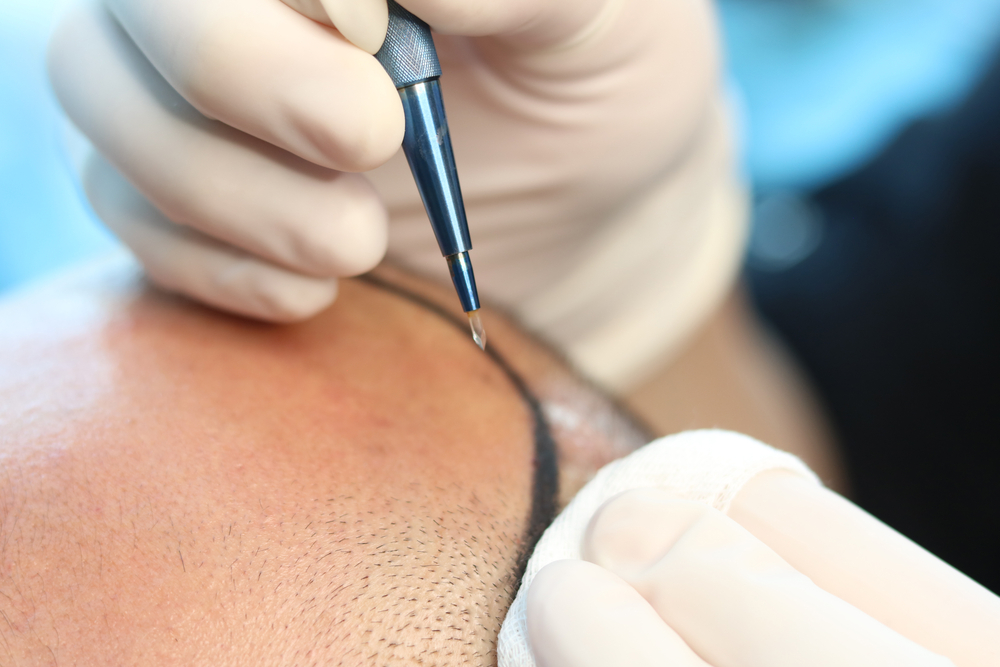
Hair transplantationHair transplantation is a surgical procedure that involves the extraction of hair follicles from a designated donor site, followed by... moves healthy follicles from a donor areaThe Source of Restoration The donor area plays a critical role in hair transplantation, as it serves as the source... to thinning or bald areas. Surgeons use two main techniques. Follicular Unit Extraction (FUE)A Breakthrough in Hair Transplantation Follicular Unit Extraction (FUE) has revolutionized the field of hair transplantation, offering a minimally invasive... removes individual follicles directly from the scalp. Rassman et al. (2002) introduced this minimally invasive approach. Follicular Unit Transplantation (FUT) removes a thin strip of scalp. Surgeons then dissect this strip into grafts. Both methods treat androgenetic alopecia. This condition causes progressive hair loss. Dihydrotestosterone (DHT) shrinks sensitive follicles. Kaufman et al. (1998) proved that DHT drives this process. Prager et al. (2002) confirmed that blocking 5-alpha-reductase slows this miniaturization. Because hair loss moves forward over decades, timing shapes every outcome. This article answers one question directly. There is no universal perfect age. However, a clear optimal window exists for most candidates.
Why Does Age Matter in Hair Transplantation?
Age predicts donor area stability, healing speed, and psychological readiness.
Age acts as a proxy for biological stability and surgical predictability. Younger patients face moving targets. Their hair loss patterns still evolve. Older patients face reduced donor density and slower recovery. Surgeons weigh these variables before they approve any procedure.
What Biological Factors Link Age to Surgical Success?
Donor area DHT resistance, skin elasticity, and healing capacity peak in your 30s and 40s.
The donor area sits at the back and sides of the scalp. These follicles resist DHT better than crown or frontal follicles. However, this resistance fully declares itself only after the mid-twenties. Surgeons avoid harvesting grafts from zones that might later succumb to miniaturization. Ghimire (2018) documented FUE outcomes across age groups. Patients aged 21 to 30 showed higher rates of future progression than patients over 30. Skin elasticity also peaks in the third and fourth decades. Elastic skin allows precise graft placement. Wound closure happens faster. Blood flow to the scalp stays strong. These factors push survival rates above 95 percent in healthy middle-aged adults. Li et al. (2020) reported graft survival between 93.5 and 96.6 percent in patients with a mean age of 42 years.
What Psychological Factors Influence Timing?
Older patients usually hold realistic expectations, while younger patients often demand immediate fixes.
Psychology shapes timing because expectations must match reality. Younger patients often seek immediate fixes for social pressure. They may demand dense hairlines that look unnatural as they age. Surgeons report that patients under 25 show higher rates of dissatisfaction. Older patients usually carry calmer expectations. They understand that surgery restores coverage, not teenage density. Baser et al. (2006) evaluated 120 patients aged 21 to 75. They found that mature patients accepted gradual results better. The ideal patient thinks in decades, not months.
How Does Hair Loss Progress with Age?

Androgenetic alopecia starts after puberty and advances through follicle miniaturization until it stabilizes in your late 20s or 30s.
Hair loss follows a biological script. The pace varies by genetics. Androgenetic alopecia begins with follicle miniaturization. It ends with permanent thinning unless treatment interrupts the cycle.
What Is the Natural History of Androgenetic Alopecia?
DHT shrinks sensitive follicles over years. Terminal hairs become thin vellus hairs.
Androgenetic alopecia starts after puberty. DHT binds to sensitive follicles. The anagen phase shortens. Hairs grow thinner and shorter. Over years, terminal hairs become vellus-like. Kaufman et al. (1998) tracked this process in men. Untreated patients lost hair progressively across the frontal scalp and vertex. The Norwood scale maps male progression. Stage 1 shows minimal recession. Stage 7 shows extensive loss. Most men enter Stage 2 or 3 in their twenties. By age 50, about half of all men show moderate to advanced thinning. Women follow the Ludwig scale. Diffuse central thinning dominates. Uebel et al. (2021) noted that female pattern hair loss presents later than male pattern loss. Their average surgical patient was 48 years old. Genetics, not age alone, dictates speed.
When Does Hair Loss Stabilize?
Most men see stabilization between ages 25 and 35.
Stabilization means the pattern stops advancing rapidly. It remains visually consistent for at least 12 to 18 months. Most men reach this point between the late twenties and mid-thirties. About 70 percent of patients show enough stability by age 25. This figure climbs to 85 percent by age 30. It reaches 95 percent by age 35. Surgeons demand photographic proof of this pause. They measure frontal recession annually. If the hairline retreats less than 3 millimeters per year, the pattern qualifies as stable. Avram (2022) developed the Progressive Loss Risk Scale. This tool communicates uncertainty to patients. Younger patients earn higher risk scores. Future loss threatens their results. Stabilization matters more than age. A 28-year-old with a frozen pattern makes a better candidate than a 35-year-old with active thinning.
What Is the Minimum Age for Hair Transplantation?
Surgeons rarely approve patients under 20. They prefer candidates to reach at least 23 to 25.
The practical minimum age sits between 20 and 25 years old. Legal adulthood begins at 18 in most countries. However, ethical surgeons rarely operate on patients under 20 for pattern baldness. They prefer to wait until the patient shows a clear and stable trajectory.
What Do Guidelines Recommend for Young Patients?
Guidelines advise medical therapy first. Surgeons should delay transplantation until the pattern stabilizes.
Clinical guidelines urge caution below age 25. Male pattern hair loss in young individuals often progresses rapidly. Surgeons should defer transplantation. They should initiate medical therapy for at least one year. Ideally, candidates should reach 25 before surgery. Baser et al. (2006) performed FUT on patients as young as 21. However, they emphasized careful hairline design and long-term planning even in that cohort. Fu et al. (2024) found that 68 percent of hair transplant patients in their multicenter study fell into the 20-to-30 age bracket. Yet these cases involved hairline correction after laser removal. They did not involve progressive genetic loss. For genetic androgenetic alopecia, restraint protects the patient.
What Risks Do Early Transplants Carry?
Early transplants risk donor depletion, the island effect, and multiple revision surgeries.
Early transplants carry four major risks. First, unpredictable progression. If a 22-year-old receives a frontal hairline transplant, the surrounding native hair may continue to fall. By age 35, he could possess a thin band of transplanted hair floating in a bald sea. Surgeons call this the island effect. It looks unnatural. It demands costly repairs. Second, donor depletion. The donor area holds only 5,000 to 7,000 usable follicular units in a lifetime. Spending 2,000 grafts at age 21 leaves little reserve for future coverage. Third, shock loss. Native miniaturized hairs may die from surgical trauma. In patients under 25, this shock loss can become permanent. The follicles already teeter on the edge of DHT damage. Ghimire (2018) noted that younger patients showed higher long-term revision rates. Avram (2022) assigned the highest risk scores to patients under 25. Progressive loss threatens their results.
Which Non-Surgical Treatments Should Young Patients Try First?
Finasteride and minoxidil form the first line of defense for men under 25.
Young patients should start with finasteride and minoxidil. Finasteride blocks type II 5-alpha-reductase. This enzyme converts testosterone to DHT. Lower scalp DHT slows miniaturization. Kaufman et al. (1998) showed that finasteride 1 milligram daily increased hair counts. Patients gained 107 hairs at one year and 138 hairs at two years in a 5.1-square-centimeter balding area. Minoxidil dilates blood vessels. It extends the anagen phase. Together, these drugs stabilize loss. They sometimes reverse early miniaturization. Surgeons require patients under 30 to use medical therapy for 6 to 12 months before they schedule surgery. This rule protects native hair. It buys time for the pattern to declare itself. If medication fails or the patient shows aggressive family history, surgeons may consider limited intervention.
What Is the Ideal Age Range for Hair Transplant Surgery?
The ideal window spans 25 to 45 years. Peak suitability falls between 30 and 40.
The ideal age range spans 25 to 45 years old. The peak window sits between 30 and 40. Patients in this bracket combine stable patterns, strong donor density, and realistic expectations.
|
Age Bracket |
Pattern Stability |
Donor Density |
Healing Speed |
Revision Risk |
Typical Session Size |
|
Under 25 |
Low |
High |
Fast |
High |
1,500–2,000 grafts |
|
25–35 |
Moderate |
High |
Fast |
Moderate |
2,000–3,500 grafts |
|
35–50 |
High |
Moderate-High |
Fast |
Low |
2,500–4,000 grafts |
|
Over 50 |
Very High |
Moderate |
Slower |
Low-Moderate |
1,500–3,000 grafts |
The table above compares age groups directly. Younger patients bring dense donors but unstable patterns. Older patients bring stable patterns but reduced density. The middle decades offer the best balance.
What Does Research Say About the Optimal Window?
Studies show the highest satisfaction rates among patients aged 30 to 49.
Research consistently places successful patients between 30 and 49 years old. Li et al. (2020) treated 273 male patients with severe androgenetic alopecia. They used FUE megasessions. The mean age was 42 years. Eighty-one percent of these patients expressed satisfaction. Ghimire (2018) found that 48.6 percent of 152 FUE patients fell into the 21-to-30 group. Forty percent fell into the 31-to-40 group. The broader satisfaction and safety data favor the slightly older cohort. Their patterns had settled. Uebel et al. (2021) reported an average age of 48 among 751 female patients. These women underwent follicular unit transplantation. The data does not ban younger or older patients. However, it highlights a concentration of success in the middle decades.
Why Do Surgeons Prefer Ages 25 to 45?
This group offers pattern certainty, donor abundance, and emotional maturity.
Surgeons prefer this window because it offers three advantages. First, pattern certainty. By age 30, most men display a clear Norwood stage. Surgeons can design a hairline that ages gracefully. They know exactly how many grafts the present and future require. Second, donor abundance. The donor area in a healthy 30-year-old still contains 80 to 95 grafts per square centimeter. This density allows surgeons to harvest enough follicles without creating visible thinning. Third, healing efficiency. Recovery stays quick. Patients resume normal routines within 7 to 10 days. Graft survival peaks in this demographic. Finally, patients in their thirties and forties usually possess financial stability. They commit to long-term medical therapy. This combination produces the highest single-procedure success rates.
Should Young Adults in Their 20s Consider Hair Transplants?
Young adults may qualify only if they show severe early loss, strong family history, and documented stability.
Young adults in their twenties may consider transplants only under strict conditions. Severe early loss, strong family history, and documented pattern stability can justify limited intervention. However, most surgeons advise waiting.
When Is Early Intervention Appropriate?
Early intervention suits only patients with frozen patterns who accept lifelong medication.
Early intervention becomes appropriate only when hair loss stabilizes early. The patient must also accept lifelong medical therapy. A 26-year-old with a frozen Norwood Stage III pattern might qualify. He needs 18 months of photographic stability. He must show no signs of diffuse crown thinning. Surgeons must avoid the crown in young patients. The vertex represents the last area to stabilize. Transplanting into an active crown guarantees future patchiness. For genetic loss, the threshold remains high. The patient must understand that surgery manages baldness. It does not cure the underlying tendency.
What Limits Should Patients Under 30 Accept?
They must accept conservative hairlines, smaller sessions, and indefinite medical therapy.
Patients under 30 must accept limits on density, hairline position, and surgical scope. Surgeons place hairlines conservatively. They avoid low, aggressive designs. These designs suit teenagers but look bizarre on a 50-year-old. They transplant fewer grafts per session. This preserves donor capital. They commit to finasteride or minoxidil indefinitely. Kaufman et al. (1998) proved that finasteride increases hair counts and protects native hair. This medical backbone matters more in young patients. Native hair still faces decades of DHT exposure. Surgeons also schedule smaller sessions. They plan for future procedures. They do not promise a single fix. Transparency about these limits separates ethical clinics from marketing operations.
Why Do Patients Aged 30 to 50 See the Best Results?
Middle-aged patients enjoy predictable patterns, excellent donors, and high satisfaction.
Patients aged 30 to 50 see the best results. Biology and psychology align. The pattern stands still. The donor area delivers. The mind expects sensible outcomes.
What Advantages Do Middle-Aged Patients Have?
They offer pattern certainty, donor abundance, and emotional maturity.
Middle-aged patients enjoy predictable hair loss patterns. They also possess excellent donor density and high satisfaction rates. By age 35, the Norwood stage rarely surprises surgeons. They can map the entire scalp for the next 30 years. The donor area still holds ample follicles. Li et al. (2020) documented graft survival above 93 percent in patients with a mean age of 42. Recovery stays quick. Most patients return to work within a week. Psychologically, these patients pursue restoration for personal confidence. They do not act from peer pressure. They accept that density will match their age. This maturity drives the 90 to 95 percent satisfaction rates that clinics report for this demographic. They also combine surgery with medical therapy intelligently. They protect native hair while enjoying new growth.
How Do Surgeons Plan for Long-Term Success After 35?
Surgeons design mature hairlines and combine surgery with medication for lasting coverage.
Surgeons plan by designing age-compatible hairlines and integrating medication. A 45-year-old receives a slightly higher, more mature hairline than a 30-year-old. Surgeons place single-hair grafts at the front. This mimics natural temporal recession. They fill the mid-scalp and crown with denser grafts. They calculate total donor supply against anticipated future loss. Because the pattern has stabilized, they rarely need emergency revisions. Baser et al. (2006) emphasized that irregular seeding and attention to hair direction create natural results. For the 35-to-50 group, this artistry pairs with biological certainty. Surgeons also recommend platelet-rich plasma or low-level laser therapy as adjuncts. These remain optional.
Can Patients Over 50 Still Get Hair Transplants?
Yes. Healthy patients in their 50s, 60s, and 70s achieve good results with adequate donor hair.
Patients over 50 can absolutely get hair transplants. No strict upper age limit exists. Healthy individuals in their sixties and seventies achieve good outcomes. They must possess adequate donor hair and pass medical screening.
Are Transplants Feasible for Older Adults?
Transplants remain feasible because baldness often completes its course by this stage.
Transplants remain feasible for older adults. Pattern baldness often completes its course by this stage. Surgeons know exactly where baldness ends and stable donor hair begins. Uebel et al. (2021) performed follicular unit transplantation on women averaging 48 years old. They achieved excellent cosmetic results. Baser et al. (2006) included patients up to age 75 in their FUT series. The key question is not age but health. Cardiovascular fitness, blood pressure control, and medication lists matter more than a birthday. Older patients usually seek subtle improvement. This conservative goal helps surgeons deliver satisfaction. If the donor area retains 60 to 80 grafts per square centimeter, surgeons can still achieve meaningful coverage.
What Challenges Do Older Candidates Face?
They face reduced donor density, slower healing, and possible medical conditions.
Older candidates face reduced donor density. They also experience slower healing and possible medical comorbidities. Donor density naturally declines after age 50. Surgeons must harvest more carefully. They avoid overtaxing the remaining supply. Healing takes longer. A 30-year-old heals in 7 to 10 days. A 60-year-old may need 14 to 21 days for initial recovery. Skin elasticity decreases. The scalp tightens. This can complicate FUT closure if the patient chooses strip surgery. Chronic conditions like diabetes or anticoagulant use increase infection or bleeding risk. Fu et al. (2024) noted zero patients aged 40 to 50 in their hairline correction study. This reflects the reality that older candidates present less often for cosmetic hairline work. However, they remain viable for standard restoration. Surgeons compensate with modified extraction techniques. They use lower graft counts per session. They require comprehensive preoperative labs.
Which Factors Matter More Than Age?
Hair loss stability, donor quality, health status, expectations, and surgeon skill outweigh age.
Five factors outweigh age. A 50-year-old with a stable pattern, dense donor hair, and calm goals makes a better candidate than a 25-year-old with active loss and impossible demands.
|
Factor |
Why It Matters |
How Surgeons Assess It |
|
Hair loss stability |
Prevents future patchiness around grafts |
Photographic tracking for 12–18 months |
|
Donor area quality |
Determines graft supply and survival |
Densitometry and miniaturization analysis |
|
General health |
Affects healing, bleeding, and infection risk |
Blood tests and cardiac clearance |
|
Realistic expectations |
Predicts satisfaction and compliance |
Detailed consultation and visual simulation |
|
Surgeon expertise |
Shapes design, density, and naturalness |
Review of portfolio and technique choice |
Age serves only as a rough guide. The table above shows the real checklist. A patient at any age who fails one category should delay surgery. Avram (2022) stressed that the Progressive Loss Risk Scale incorporates age as merely one variable among many. The surgeon’s planning skill ultimately determines whether a transplant looks natural at age 30 or age 60.
What Happens If You Choose the Wrong Age?
Wrong timing wastes grafts, creates unnatural results, and limits future options.
Choosing the wrong age wastes grafts, money, and emotional energy. Operating too early or waiting too late both create problems.
What Goes Wrong When You Transplant Too Early?
Early surgery causes the island effect, donor depletion, and permanent shock loss.
Early transplants produce unnatural appearances over time. They also drain donor reserves. A young patient receives a dense frontal line at age 22. By age 32, the native hair behind and around the grafts falls out. The transplanted band survives. Donor follicles resist DHT. However, the surrounding scalp goes bald. This island effect looks bizarre. It requires revision surgery that many young patients cannot afford. Worse, they no longer possess enough donor hair to fix the problem. Ghimire (2018) found that younger patients showed higher long-term revision rates. Avram (2022) assigned the highest risk scores to patients under 25. Early surgery also risks shock loss. Native miniaturized hairs die from surgical trauma. In patients under 25, this shock loss can become permanent. The follicles already teeter on the edge of DHT damage.
What Goes Wrong When You Wait Too Long?
Delay reduces donor supply and coverage potential.
Waiting too long reduces donor supply. It also limits coverage potential. A patient who delays until Norwood Stage 6 or 7 may possess only sparse donor hair. Surgeons cannot create full coverage from depleted reserves. They must choose between a thin crown and a decent frontal hairline. The illusion of density fades. There are simply not enough grafts to fill the bald area. Older patients also face higher complication rates if they develop diabetes or circulatory issues. However, these medical risks stem from health, not age itself. The real penalty for waiting is lost opportunity. The donor area shrinks with time. The bald area expands. The ratio eventually becomes unfavorable.
How Do Surgeons Build a Clinical Decision Framework?
Surgeons use systematic evaluation and personalized planning rather than age alone.
Surgeons build decisions through systematic evaluation. They refuse to rely on age alone.
What Evaluation Criteria Determine Readiness?
They assess Norwood stage, family history, progression rate, donor density, and health.
Surgeons assess Norwood scale stage, family history, rate of progression, donor density, and scalp elasticity. They photograph the scalp from multiple angles. They measure miniaturization in the donor zone with a densitometer. If more than 15 percent of hairs in the recipient area show miniaturization, they delay surgery. They prescribe medication for 6 to 12 months. They review family photos to predict future loss. They ask about diet, stress, and medications. They screen for autoimmune disease. Autoimmune disease contraindicates transplantation. Surgeons also evaluate psychological readiness. They reject patients with body dysmorphic disorderBody Dysmorphic Disorder (BDD) A psychological condition involving obsessive focus on perceived flaws in appearance, affecting surgical candidacy. or unrealistic demands. These criteria protect both the patient and the finite donor supply.
How Do Surgeons Create Personalized Treatment Plans?
They match technique to biology and goal to reality for each patient.
Surgeons create plans by matching technique to biology and goal to reality. A young patient with early recession receives a conservative frontal hairline. This uses 1,500 to 2,000 grafts. A middle-aged patient with extensive thinning receives a megasession. This uses 3,000 to 4,000 grafts across the front and mid-scalp. An older patient with limited donor hair receives strategic focal restoration. Surgeons choose FUE for patients who want short hairstyles. FUE minimizes scarring. They choose FUT for patients who need maximum graft numbers. FUT allows larger sessions but leaves a linear scar. They always pair surgery with medical therapy when native hair remains at risk. Surgeons map the scalp like an architect maps a building. They calculate grafts per square centimeter. They design for the patient at age 30, 40, and 50 simultaneously.
What Ethical Issues Surround Hair Transplant Timing?
Ethics demand protection of young patients through honest consent and evidence-based refusal.
Ethical issues center on overtreatment of the young, informed consent, and evidence-based practice. Some clinics market aggressively to men under 25. They use social media and influencer campaigns. They offer student discounts. They promise permanent results. This behavior exploits insecurity. Ethical surgeons say no. They explain that early surgery risks donor depletion and future regret. They provide informed consent. This details the island effect, shock loss, and need for lifelong medication. They show unretouched photos of patients who operated too early. They follow peer-reviewed literature rather than sales quotas. Avram (2022) created the Progressive Loss Risk Scale partly to improve doctor-patient communication. Transparency builds trust. A surgeon who turns away a young patient today often earns a loyal patient at age 30.
What Is the Final Verdict on the Best Age for Hair Transplantation?
No universal age exists. However, 25 to 45 offers the safest window for most candidates.
The final verdict rejects a universal best age. It embraces individualized timing. The general consensus points to 25 to 45 years as the most suitable range. Success depends on hair loss stability, donor quality, and long-term planning.
Patients must understand that surgery redistributes hair. It does not create new follicles. The donor bank holds limited funds. Spending wisely requires patience. Young patients should exhaust medical therapy first. Middle-aged patients should move forward with confidence if their patterns are stable. Older patients should pursue restoration if their health and donor density allow. The calendar does not decide. The scalp does. Surgeons extract grafts. Patients preserve native hair. Together, they build a result that lasts decades.
References
Avram, Marc R. “The Progressive Loss Risk Scale for Hair Restoration Surgery.” Dermatologic Surgery, vol. 48, no. 1, 2022, pp. 1–4.
Baser, Nesrin Tan, et al. “Follicular Unit Transplantation for Male-Pattern Hair Loss: Evaluation of 120 Patients.” Journal of Plastic, Reconstructive & Aesthetic Surgery, vol. 59, no. 11, 2006, pp. 1162–1169.
Fu, Danlan, et al. “Evaluation of Hair Transplantation for Improving Unnatural Hairlines after Laser Hair Removal: A Multicenter Retrospective Study.” Journal of Plastic, Reconstructive & Aesthetic Surgery, vol. 77, 2024, pp. 157–165.
Ghimire, Rupak Bishwokarma. “Clinical Outcome and Safety Profile of Patients Underwent Hair Transplantation Surgery by Follicular Unit Extraction.” JNMA Journal of the Nepal Medical Association, vol. 56, no. 209, 2018, pp. 540–543.
Kaufman, Keith D., et al. “Finasteride in the Treatment of Men with Androgenetic Alopecia.” Journal of the American Academy of Dermatology, vol. 39, no. 4, 1998, pp. 578–589.
Li, Kai-Tao, et al. “Clinical Experience on Follicular Unit Extraction Megasession for Severe Androgenetic Alopecia.” Journal of Cosmetic Dermatology, vol. 19, no. 6, 2020, pp. 1481–1486.
Prager, Nelson, et al. “A Randomized, Double-Blind, Placebo-Controlled Trial to Determine the Effectiveness of Botanically Derived Inhibitors of 5-Alpha-Reductase in the Treatment of Androgenetic Alopecia.” Journal of Alternative and Complementary Medicine, vol. 8, no. 2, 2002, pp. 143–152.
Rassman, William R., et al. “Follicular Unit Extraction: Minimally Invasive Surgery for Hair Transplantation.” Dermatologic Surgery, vol. 28, no. 8, 2002, pp. 720–728.
Uebel, Carlos O., et al. “Female Pattern Hair Loss: Why the Follicular Unit Transplantation Surgical Technique Remains a Good Option.” Plastic and Reconstructive Surgery, vol. 147, no. 1, 2021, pp. 141–148.