A beard transplantA Popular Option for Facial Hair Restoration Beard transplants help men achieve a fuller, more defined beard. This procedure is... permanently restores facial hair by moving healthy follicles from the scalp to the face. Modern techniques create natural results that last a lifetime.
Men today increasingly choose beard transplants to restore facial hair. This surgical procedure permanently transfers healthy hair follicles to the beard area. Modern techniques create natural-looking results that match each face. Surgeons use precise methods to place each graft at the correct angle. The rising popularity of facial hair restoration reflects growing awareness of masculine aesthetics. Psychological research links full beards with confidence and social dominance. Many patients seek this procedure after scarring, genetics, or hormonal issues limit their natural growth. This article explains every aspect of beard transplantation using current scientific evidence.
What Is a Beard Transplant?
A beard transplant is a permanent facial hair restoration surgery that uses autologous follicle transfer. Surgeons move healthy grafts from the donor areaThe Source of Restoration The donor area plays a critical role in hair transplantation, as it serves as the source... to the beard region.
How Do Surgeons Define Beard Hair Transplant Surgery?
Surgeons define this procedure as the autologous transfer of healthy hair follicles to facial skin. This permanent restoration uses the patient’s own hair. Doctors typically harvest grafts from the occipital scalp. This donor zone provides follicles that resist hormonal miniaturization. Chouhan and colleagues (2025) describe long-hair follicular unit extraction as an advanced method for facial reconstruction. This technique avoids shaving the donor or recipient areas. Surgeons preserve surrounding hair for immediate aesthetic improvement. The concept of autologous transplantation ensures the body accepts the grafts without rejection. Each follicular unit contains one to four hairs. Doctors implant these units into tiny incisions on the jaw, chin, or mustache area. The procedure requires local anesthesiaEnsuring Comfort During Hair Transplants Sedation is used in hair transplantation to help patients remain calm and comfortable throughout the.... Patients remain awake during surgery. Medical teams monitor comfort throughout the process. Bared (2020) emphasizes that beard transplantation demands specialized knowledge of facial hair patterns. Surgeons must understand the unique curl, thickness, and exit angles of beard hair. This differs significantly from scalp hair restoration.
How Do Beard Transplants Actually Work?
Beard transplants work by extracting healthy follicles and implanting them into facial skin. The transplanted grafts retain their original genetic characteristics and establish permanent roots.
Surgeons extract healthy follicles from a donor site. They then implant these follicles into the facial region. The transplanted grafts retain their original genetic characteristics. This means scalp hair grows like scalp hair even on the face. Patients must understand this texture difference before surgery. The natural growth cycle continues after transplantation. Follicles enter the anagen phase and produce visible hair within months. Blood supply from facial tissue nourishes the grafts. Surgeons create recipient sites at specific angles. This angle control ensures hair grows in the natural beard direction. Rassman and colleagues (2002) pioneered follicular unit extraction techniques that minimize trauma. Modern tools allow surgeons to harvest individual grafts without linear scars. The implanted follicles establish permanent roots in the beard area. Patients can shave or trim the transplanted hair just like natural beard hair.
Which Facial Areas Can Doctors Restore?
Doctors restore the full beard, goatee, mustache, sideburns, jawline, and scarred facial regions.
Doctors restore several distinct facial regions through transplantation. The full beard represents the most common request. Surgeons add density across the cheeks, jawline, and chin simultaneously. The goatee area requires precise central chin placement. Mustache restoration helps men with sparse or asymmetric upper-lip growth. Sideburns frame the face and connect beards to scalp hair. Jawline density enhancement sharpens facial contours. Scar camouflage offers another important application. Doctors implant grafts directly into scarred tissue from trauma, burns, or previous surgery. Chouhan and colleagues (2025) documented successful mustache reconstruction using beard-to-mustache transfer. This case involved a patient with postsurgical scarring from cleft lip repair. The surgical team harvested twelve follicular units from the lower neck beard. They used phased extraction techniques to manage the acute angulation of beard hair. The patient achieved excellent healing and high satisfaction.
Who Makes a Good Candidate for a Beard Transplant?
Good candidates possess healthy donor hair, stable health, and realistic expectations about texture and timeline.
Why Do Men With Patchy Beards Seek Transplants?
Men with patchy beards seek transplants to correct genetic sparsity and create uniform density that resists natural growth limitations.
Men with patchy beards seek transplants to correct genetic sparsity. Many men inherit uneven beard density from their families. Genetics determine follicle distribution across the face. Some men mature without developing full terminal beard hair. This creates patchy or thin areas that resist natural growth. Beard transplantation fills these gaps permanently. Surgeons place single-hair grafts between existing hairs. This blending creates uniform density. Patients no longer need to hide thin spots with strategic trimming. The procedure works for men of various ethnic backgrounds. Epstein and Bared (2014) note that ethnic hair characteristics influence surgical planning. Surgeons adjust techniques based on hair curl, shaft thickness, and pigmentation.
Can Scar Damage Affect Beard Growth?
Scar damage destroys beard follicles permanently, but surgeons can restore hair by implanting grafts directly into scarred tissue.
Scar damage destroys beard follicles and prevents natural regrowth. Trauma-related facial scars eliminate hair permanently. Burn scars damage the underlying follicle structure. Surgical scars from cleft lip repair or other procedures create bald patches. Beard transplantation restores hair directly into scar tissue. Surgeons must assess blood supply in scarred areas. Healthy vascularization supports graft survival. Chouhan and colleagues (2025) demonstrated that long-hair FUE successfully treats postsurgical mustache scars. The technique avoids additional shaving that might distress patients socially. Platelet-rich plasma supports graft retention in scarred tissue. Uebel and colleagues (2006) showed that platelet plasma growth factors improve surgical outcomes. Doctors sometimes combine PRP with transplantation for better results.
Do Hormonal or Genetic Factors Limit Beard Density?
Hormonal and genetic factors frequently limit natural beard density, making surgical restoration necessary for men who lack follicle sensitivity despite adequate testosterone.
Hormonal and genetic factors frequently limit natural beard density. Testosterone drives facial hair development during puberty. Some men produce adequate hormones but lack follicle sensitivity. Genetics determine how follicles respond to androgens. Family history often predicts sparse beard growth. Men with low facial hair density despite age maturity make excellent candidates. Doctors verify that patients have completed natural development before surgery. Transgender individuals on gender-affirming hormone therapy also pursue this procedure. Bared and Epstein (2023) describe beard transplantation as a key technique in gender-affirming care. Testosterone therapy alone does not guarantee full beard growth for all transmasculine patients. Surgical restoration completes the masculine facial aesthetic.
How Does Beard Transplantation Help Transgender Masculinization?
Beard transplantation helps transgender masculinization by creating permanent facial hair that testosterone therapy alone often cannot achieve.
Beard transplantation helps transgender masculinization by creating permanent facial hair. Transmasculine individuals often pursue this after starting testosterone therapy. Hormones trigger some growth, but many patients develop only patchy coverage. Surgeons design beards that align with masculine identity goals. The procedure reduces misgendering and improves psychological well-being. Bared and Epstein (2023) highlight that gender-affirmation hair transplantationHair transplantation is a surgical procedure that involves the extraction of hair follicles from a designated donor site, followed by... requires specialized aesthetic planning. Surgeons respect each patient’s transition timeline. They coordinate with endocrinologists when appropriate. The results provide lasting facial hair that testosterone alone cannot achieve.
What Requirements Must Candidates Meet?
Candidates must meet requirements including healthy donor hair, stable health, realistic expectations, smoking cessation, and patience for the eighteen-month timeline.
Candidates must meet several requirements before scheduling surgery. First, patients need healthy donor hair availability. The occipital scalp must provide sufficient grafts for facial coverage. Second, patients must demonstrate stable overall health. Chronic conditions require medical clearance. Third, candidates must hold realistic expectations. Surgeons explain that transplanted scalp hair retains its original texture. Fourth, patients should cease smoking before surgery. Nicotine restricts blood flow and compromises healing. Fifth, candidates must understand the recovery timeline. Final results require twelve to eighteen months of patience. Kerure and Patwardhan (2018) stress that proper patient selection prevents complications. Surgeons who evaluate candidates thoroughly achieve higher satisfaction rates.
Which Techniques Do Surgeons Use for Beard Transplants?
Surgeons primarily use Follicular Unit Extraction and Direct Hair Implantation. Advanced technologies now enhance precision.
How Does FUE Beard Transplantation Work?
FUE beard transplantation works through individual graft harvesting using a small punch tool. This creates tiny dot scars and allows faster recovery.
FUE beard transplantation works through individual graft harvesting. Surgeons use a small punch tool to extract follicles one by one. The punch diameter typically measures 0.8 to 1.0 millimeters. This creates tiny dot scars in the donor area. Patients can wear short hairstyles without visible scarring. The procedure causes minimal postoperative pain. Recovery proceeds quickly because surgeons avoid large incisions. Avram and colleagues (2014) confirm that FUE produces minimal side effects when performed correctly. Surgeons place each harvested graft into a holding solution. This solution preserves follicle viability during the procedure. Teams then implant grafts into the beard region using fine forceps. FUE allows surgeons to harvest from multiple body areas if needed. Some patients use chest or beard hair as donor sources for scalp restoration. For beard transplantation, the scalp remains the primary donor site.
How Does DHI Beard Transplantation Work?
DHI beard transplantation works through immediate implantation using a specialized Choi penThe Tool Behind DHI Success The Choi Implanter Pen is a crucial instrument in DHI procedures, designed to enhance precision.... This technique places grafts directly without pre-made incisions.
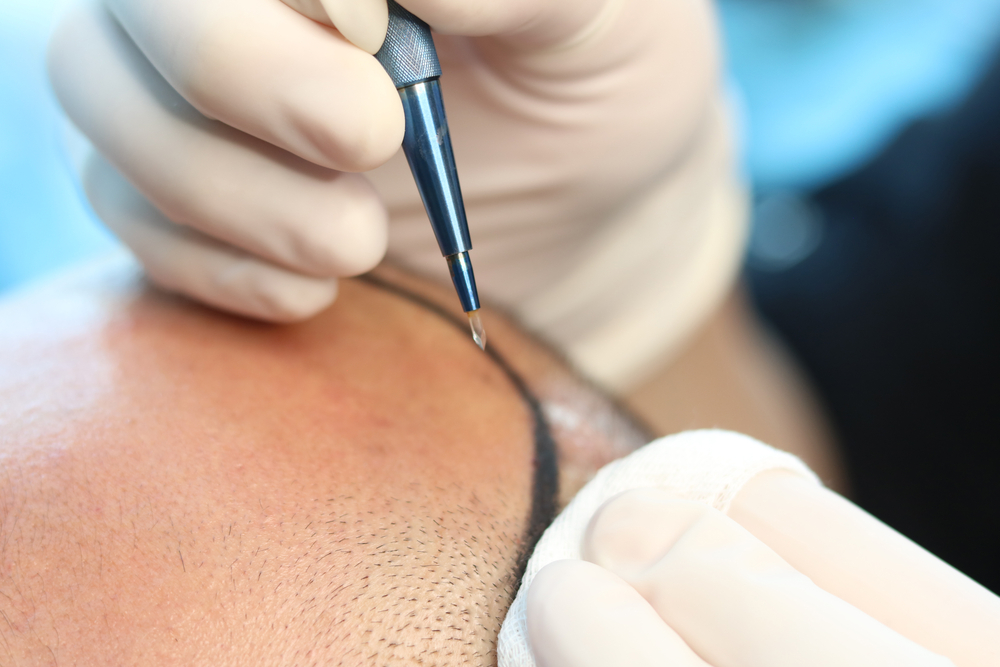
DHI beard transplantation works through immediate implantation after extraction. Surgeons use a specialized Choi implanter pen for graft placement. This pen creates recipient sites and implants grafts in one motion. The technique eliminates the need for pre-made incisions. Grafts spend less time outside the body. This reduces desiccation risk and improves survival rates. Surgeons load each graft into the hollow needle tip. They press the pen into the skin at the correct angle. The graft deposits as the surgeon withdraws the tool. DHI allows precise control over depth, direction, and density. Patients experience minimal bleeding because the tool creates tiny wounds. The procedure requires advanced training. Not all clinics offer true DHI services. Some advertise DHI but use modified FUE methods.
How Do FUE and DHI Compare for Beard Restoration?
FUE and DHI differ in implantation method, graft handling, and angle precision.
|
Feature |
FUE Beard Transplant |
DHI Beard Transplant |
|
Scarring |
Tiny dot scars |
Tiny dot scars |
|
Recovery Time |
Faster healing |
Faster healing |
|
Pain Level |
Lower discomfort |
Lower discomfort |
|
Hair Angle Control |
Good |
Excellent |
|
Graft Survival |
High |
Very high |
|
Procedure Popularity |
More common |
Growing rapidly |
|
Cost |
Standard |
Premium |
Surgeons recommend FUE for most beard cases because it remains versatile and widely available. Patients prefer the minimal scarring and quick recovery. DHI suits patients who want maximum graft survival and precise angle control. The Choi pen allows surgeons to adjust direction instantly during implantation.
What Advanced Technologies Improve Beard Transplants?
Advanced technologies improve precision through sapphire blades, micromotor extraction, robotic systems, and DHI implanter pens.
Advanced technologies improve precision and outcomes in beard transplantation. Sapphire blades create sharper recipient site incisions. These blades cause less tissue trauma than steel alternatives. Micromotor extraction systems speed up graft harvesting. Surgeons maintain consistent punch depth with motorized tools. Robotic FUE systems assist with follicle mapping. Artificial intelligence guides punch placement in the donor area. Direct Hair Implantation uses specialized pens for immediate graft placement. This reduces the time grafts spend outside the body. Chouhan and colleagues (2025) used the Zeus U-Graft system for long-hair extraction. This device addresses the acute angulation of beard hair. Tolgyesi and colleagues (1983) established foundational knowledge about beard and scalp hair differences. Their comparative research guides modern technique selection.
How Does the Beard Transplant Procedure Unfold Step by Step?
The beard transplant procedure unfolds across six distinct phases. Each phase requires careful execution.
What Happens During the Initial Consultation and Beard Design?
The initial consultation establishes the surgical plan through facial symmetry analysis and natural angle mapping.
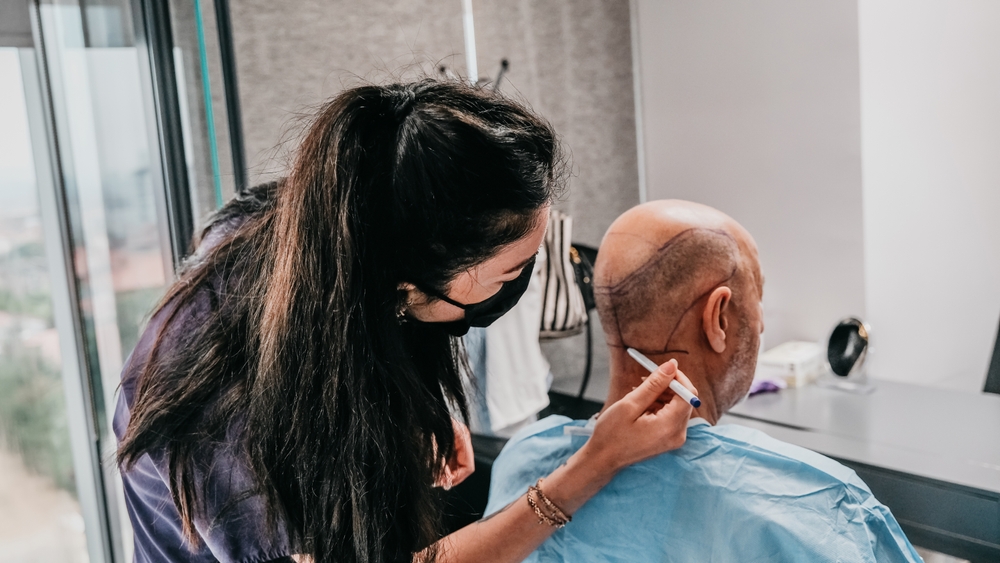
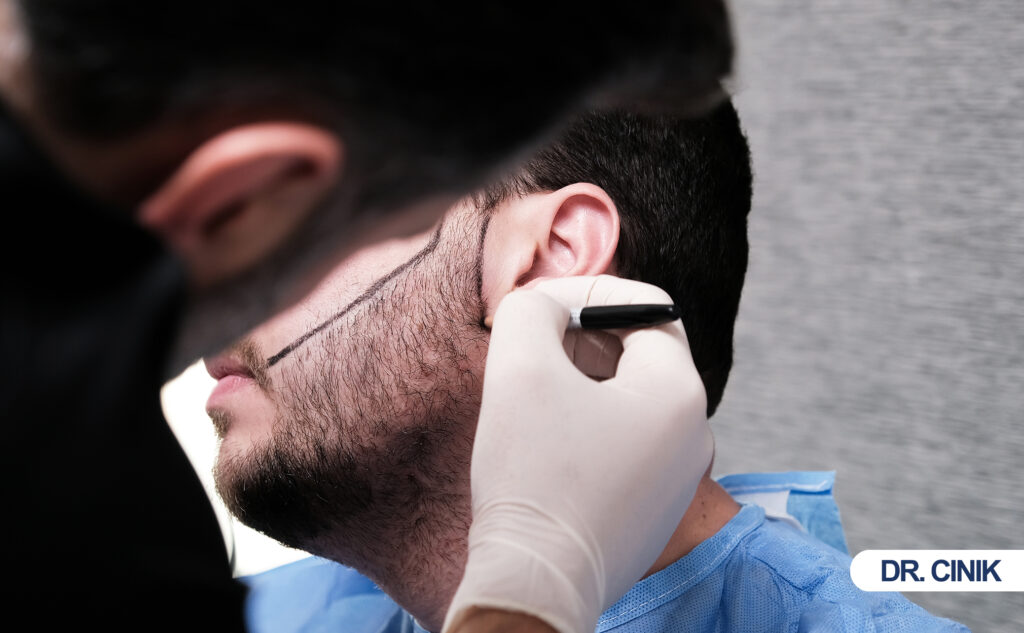
The initial consultation establishes the surgical plan. Surgeons analyze facial symmetry and bone structure. They measure existing beard density and growth patterns. Digital imaging helps preview potential outcomes. Doctors plan natural hair angles for each facial zone. The mustache requires downward-forward angles. The chin needs forward-pointing growth. Sideburns follow a backward-downward direction. Jawline hairs exit at acute angles near the skin surface. Surgeons mark recipient areas with surgical pens. Patients review these markings before anesthesia. Bared (2020) emphasizes that beard design demands artistic judgment. Surgeons must avoid over-density that creates a pluggy appearance. Natural beards show graduated density from center to edges.
How Do Surgeons Prepare the Donor Area?
Surgeons prepare the donor area by selecting the occipital scalp and applying local anesthesia.
Surgeons prepare the donor area by selecting the optimal zone. The occipital scalp provides the best grafts for facial transplantation. This region contains follicles resistant to dihydrotestosterone. Doctors shave a small section if using standard FUE. Long-hair FUE avoids shaving entirely. The team cleans the donor site with antiseptic solution. Local anesthesia numbs the area completely. Surgeons test sensation before beginning extraction. Healthy donor hair quality directly impacts beard results. Curly or coarse scalp hair creates texture differences on the face. Doctors discuss this frankly with patients before surgery.
How Does Graft Extraction Work?
Graft extraction works through precise mechanical harvesting and immediate placement into holding solution.
Graft extraction works through precise mechanical harvesting. Surgeons align the punch tool with each follicle’s angle. They score the skin around the graft. They then gently lift the follicle from surrounding tissue. Teams place extracted grafts into chilled holding solution. This solution maintains cellular metabolism. Grafts survive outside the body for limited hours. Cole and Reed (2012) studied optimal holding solutions and temperatures for follicle preservation. Their research supports the use of specialized biopreservation media. Surgeons typically extract between 500 and 3,000 grafts for beard cases. Full beard restoration requires the higher end of this range. Partial restoration needs fewer grafts. Extraction teams work methodically to avoid transection. Transection cuts the follicle and destroys its growth potential.
How Do Surgeons Create Recipient Sites?
Surgeons create recipient sites using micro-blades or needles with controlled depth, angle, and direction.
Surgeons create recipient sites using micro-blades or needles. They control the depth, angle, and direction of each incision. Proper angulation ensures natural beard growth patterns. Jawline hairs emerge at shallow angles near ten to fifteen degrees. Chin hairs point outward at forty-five degrees. Mustache hairs angle downward toward the lip. Doctors map these directions before making incisions. Recipient site density affects final appearance. Surgeons place grafts closer in the center. They space grafts farther apart at the edges. This creates natural feathering. Blood supply limits how densely surgeons can pack grafts. Over-packing risks poor survival and necrosis.
What Happens During the Implantation Phase?
The implantation phase places grafts into prepared sites using single-hair grafts for outlines and multi-hair grafts for density.
The implantation phase places grafts into prepared sites. Technicians use fine forceps to position each follicle. Single-hair grafts create the beard outline. Multi-hair grafts add central density. Surgeons place grafts at the exact depth for optimal survival. Too shallow placement exposes the graft. Too deep placement buries the follicle under scar tissue. Artistic shaping guides the overall pattern. Doctors follow natural beard contours. They respect the jawline curve and cheek boundaries. Density optimization prevents an artificial look. The procedure balances fullness with natural variation. Real beards show uneven density in certain areas. Surgeons replicate this variation for authenticity.
How Long Does the Surgery Take?
The surgery takes between four and eight hours depending on graft number and technique.
The surgery takes between four and eight hours. Duration depends on graft number and technique. A full beard using 2,500 grafts requires a full day. Smaller procedures like mustache restoration finish faster. Patients receive breaks during long sessions. Surgical teams work in shifts to maintain precision. Local anesthesia eliminates pain throughout. Patients listen to music or watch videos during the procedure. The medical team monitors vitals continuously.
What Does the Beard Transplant Recovery Timeline Look Like?
The recovery timeline spans eighteen months with distinct phases and specific healing characteristics.
What Occurs During the First 24 to 72 Hours?
Swelling, redness, and mild discomfort occur during the first twenty-four to seventy-two hours after surgery.
Swelling, redness, and mild discomfort occur during the first twenty-four to seventy-two hours. The forehead and periorbital tissues swell as fluid shifts downward. Tiny crusts form around each implanted graft. Patients should not touch or pick these crusts. Cold compresses reduce swelling on the forehead. Head elevation during sleep minimizes fluid accumulation. Gholamali, Sepideh, and Susan (2010) found that postural advice reduces facial edema significantly. Surgeons prescribe pain medication for discomfort. Most patients describe the sensation as mild tightness rather than sharp pain.
What Changes Happen in the First Week?
Scabbing progresses during the first week and patients begin gentle washing after day three.
Scabbing progresses during the first week. The crusts begin to loosen naturally. Patients can start gentle washing after day three. Surgeons provide specific cleansing instructions. Patients splash lukewarm water mixed with mild shampoo. They pat the face dry without rubbing. Activity restrictions apply during this week. Patients avoid strenuous exercise. Sweating increases infection risk and dislodges grafts. Sun exposure also threatens healing tissue. Most patients feel comfortable in public after five to seven days. The redness fades significantly by day seven.
What Is Shock Loss and Why Does It Happen?
Shock loss happens when transplanted hairs temporarily shed two to four weeks after surgery due to follicle trauma.
Shock loss happens when transplanted hairs fall out two to four weeks after surgery. This temporary shedding surprises many patients. The trauma of transplantation pushes follicles into the telogen resting phase. The hair shafts detach and shed. The follicles remain alive beneath the skin. New growth emerges from these same follicles after several months. Shock loss represents a normal part of the beard growth cycle. Patients must not panic when they see shedding. The follicles prepare for a new anagen phase. Mathew (2013) explains that cellular biopreservation considerations support graft survival during this transition. Proper handling before implantation reduces shock loss severity.
When Does Beard Growth Return?
Beard growth returns according to a predictable schedule from initial scabbing to final maturation.
Beard growth returns according to a predictable schedule. The table below outlines the timeline.
|
Time Period |
Expected Changes |
|
Week 1 |
Scabbing and redness dominate the area |
|
Weeks 2–4 |
Shock shedding removes transplanted shafts |
|
Months 3–4 |
Initial regrowth appears as fine vellus hair |
|
Months 6–9 |
Density increases and hairs thicken |
|
Months 12–18 |
Final mature results become visible |
Patients see the first new hairs around month three. These early hairs appear thin and soft. Texture and thickness improve over subsequent months. By month six, the beard shows meaningful coverage. The twelve-month mark reveals approximately eighty percent of final density. Full maturation requires up to eighteen months.
How Does Long-Term Healing Progress?
Long-term healing involves follicle maturation, texture adaptation, and final density outcomes over twelve to eighteen months.
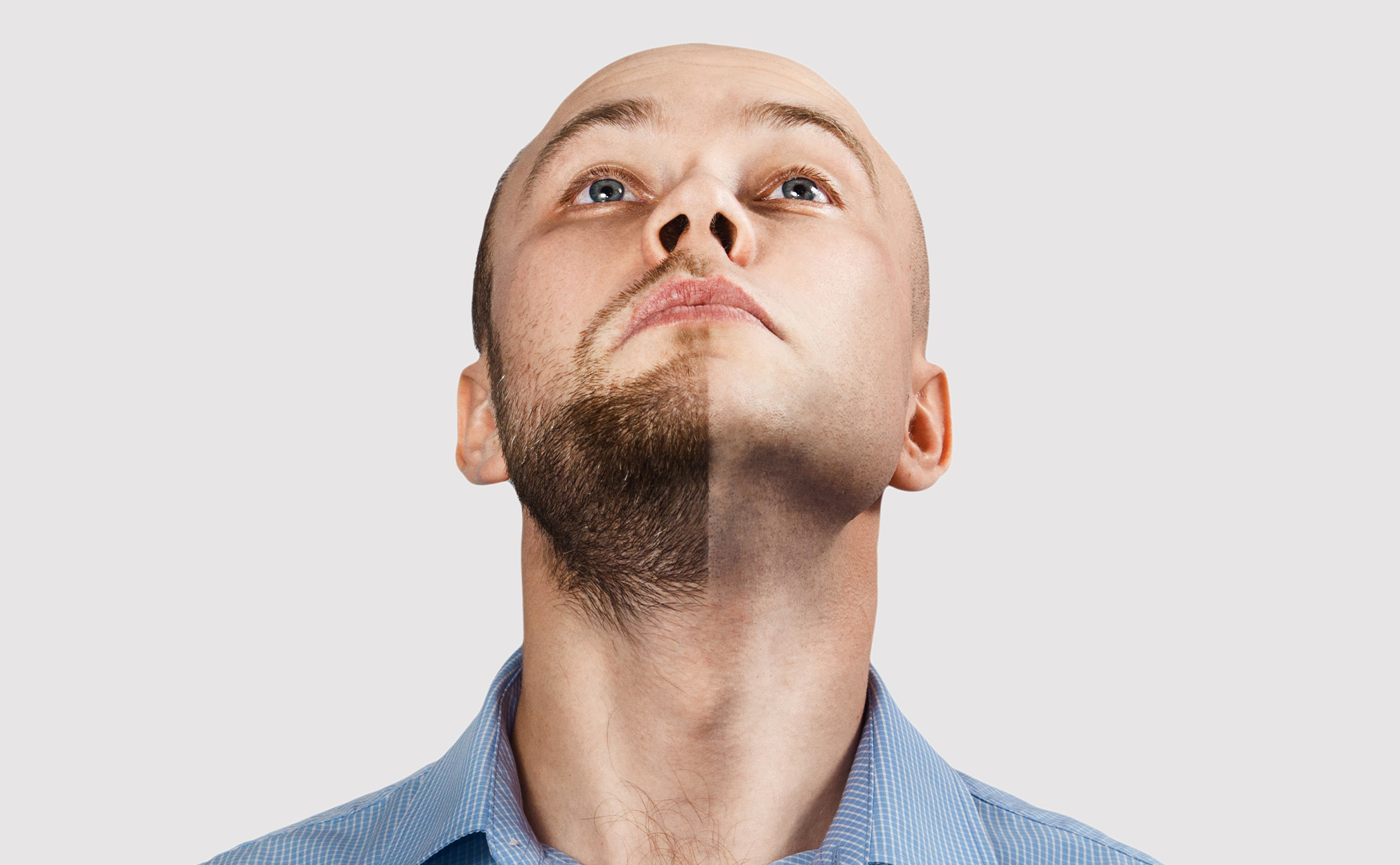
Long-term healing involves follicle maturation and texture adaptation. Transplanted scalp hair gradually adjusts to facial skin characteristics. The hair caliber remains similar to scalp hair. Some patients notice slight straightening over time. Final density outcomes depend on graft survival rates. Studies show survival rates between ninety and ninety-five percent in experienced hands. The donor area heals completely within three months. Tiny dot scars become invisible under normal hair length.
What Results Can Patients Expect From a Beard Transplant?
Patients can expect permanent, natural-looking facial hair that develops gradually over one year.
When Do Results First Become Visible?
Results first become visible around three months after surgery as fine hairs emerge.
Results first become visible around three months after surgery. Early growth starts slowly. Patients notice fine hairs emerging from the skin. These initial hairs lack full thickness. The growth accelerates between months four and six. By month six, patients achieve coverage that looks like a short beard. Full maturation continues through month twelve. Some patients require a second session for maximum density. Surgeons schedule touch-up procedures after evaluating the first result.
Do Beard Transplant Results Last Forever?
Beard transplant results last permanently because transplanted follicles retain their genetic resistance to hair loss.
Beard transplant results last permanently. The transplanted follicles retain their genetic resistance to dihydrotestosterone after relocation. This principle of donor dominance ensures lifelong growth. Patients can shave, trim, or style the beard without damaging results. The follicles behave like natural beard hairs in terms of growth cycles. They shed and regrow normally throughout life. No medication maintains these transplanted hairs. However, native facial hair may continue thinning if patients have ongoing hair loss conditions.
What Factors Create a Natural Appearance?
Three factors create a natural appearance: graft direction, hair caliber matching, and surgeon experience.
Three factors create a natural appearance. First, graft direction must match natural beard flow. Surgeons angle each hair precisely during implantation. Second, hair caliber matching helps blend transplanted and native hair. Single-hair grafts create soft edges. Multi-hair grafts build central bulk. Third, surgeon experience determines aesthetic quality. Bared (2020) states that facial hair transplantation requires understanding of ethnic variations. Different ethnic groups show distinct beard patterns, curl types, and density distributions. Experienced surgeons customize designs for each face.
What Should Patients Expect Before and After Surgery?
Patients should expect realistic density outcomes rather than perfection, with some men needing two sessions for complete coverage.
Patients should expect realistic density outcomes rather than perfection. A single session adds meaningful coverage. Some men achieve full beard density in one procedure. Others need two sessions for complete jawline coverage. Surgeons explain these possibilities during consultation. Before surgery, patients should photograph their face from multiple angles. After surgery, patients compare monthly progress photos. These comparisons reveal gradual improvement that daily mirror checks miss. Satisfaction rates remain high when patients understand the timeline.
What Risks and Side Effects Can Beard Transplants Cause?
Beard transplants cause temporary side effects in most patients, while serious complications remain rare.
What Temporary Side Effects Do Patients Commonly Experience?
Swelling, redness, scabbing, mild pain, and itching commonly affect patients during early recovery.
Swelling, redness, scabbing, mild pain, and itching commonly affect patients. Frontal edema peaks around day two or three. It resolves spontaneously within five to seven days. Periorbital swelling occurs in approximately three to five percent of cases. Ecchymosis may accompany swelling and persist for ten to fifteen days. Itching starts during the first week. Crust formation and epithelial regeneration trigger this sensation. Patients with seborrheic dermatitis experience more intense itching. Pruritus usually resolves within several weeks. Persistent itching requires evaluation for folliculitis or contact dermatitis.
What Complications Can Occur?
Infection, folliculitis, ingrown hairs, and poor graft survival can occur without proper technique and aftercare.
Infection, folliculitis, ingrown hairs, and poor graft survival can occur. Infection threatens patients who touch grafts with unwashed hands. Folliculitis presents as small pimples around hair shafts. Sterile folliculitis requires no antibiotics. It resolves with warm compresses. Ingrown hairs develop when curved follicles grow beneath the skin surface. Poor graft survival results from improper handling or desiccation. Kerure and Patwardhan (2018) document that buried grafts and overharvesting damage outcomes. Subdermal cysts form when grafts slip into deeper tissue layers. Keloid scars rarely develop in predisposed individuals.
What Aesthetic Risks Exist?
Unnatural hair angles, patchy density, donor overharvesting, and visible scarring create aesthetic risks.
Unnatural hair angles, patchy density, donor overharvesting, and visible scarring create aesthetic risks. Poor angle control makes hairs stick out awkwardly. Patchy density results from uneven graft distribution or poor survival. Overharvesting leaves the donor scalp thin and patchy. Surgeons should not exceed a one-to-four extraction ratio in any zone. Visible scarring affects patients who heal poorly or receive large punch sizes. Frontiers in Medicine (2026) reports that complication rates range from one to ten percent depending on technique and experience.
How Can Patients Minimize These Risks?
Patients minimize risks by choosing experienced surgeons and following aftercare instructions exactly.
Patients minimize risks by choosing experienced surgeons and following aftercare instructions. Board-certified specialists perform safer procedures. Patients should verify surgeon credentials independently. They should ask to see before-and-after photos of actual beard cases. Proper clinic selection includes checking accreditation and hygiene standards. Aftercare compliance protects grafts during the critical first two weeks. Patients must avoid smoking, alcohol, and strenuous activity. They should sleep with their head elevated. They must wash the area gently according to the provided schedule.
How Should Patients Care for Their Beard After Transplantation?
Aftercare determines graft survival and final appearance through modified daily routines.
What Sleeping Position Should Patients Use?
Patients should sleep with their head elevated at thirty to forty-five degrees to reduce swelling.
Patients should sleep with their head elevated at thirty to forty-five degrees. This position reduces swelling and prevents graft contact with pillows. Patients use travel pillows or wedge cushions. They should avoid sleeping on their stomach or side for seven days. Frontal pressure dislodges fresh grafts. Some patients sleep in a recliner chair during the first three nights. Elevation also minimizes postoperative edema around the eyes.
How Should Patients Wash Their Face?
Patients should wash their face gently starting on day three with lukewarm water and mild shampoo.
Patients should wash their face gently starting on day three. They splash lukewarm water mixed with mild shampoo. They avoid direct shower pressure on the beard area. Patting dry with a clean paper towel prevents fiber snagging. Patients should not rub or scrub the skin. Crusts fall off naturally between days seven and ten. Forcing crust removal pulls out grafts. Surgeons sometimes recommend saline sprays twice daily. These sprays hydrate the area and loosen crusts safely.
Which Activities Must Patients Avoid?
Patients must avoid exercise, smoking, alcohol, and sun exposure for specific periods after surgery.
Patients must avoid exercise, smoking, alcohol, and sun exposure for specific periods. Strenuous exercise increases blood pressure and bleeding risk. Patients should avoid gym visits for two weeks. Smoking narrows blood vessels and delays healing. Patients must stop nicotine use one week before and two weeks after surgery. Alcohol thins the blood and increases swelling. Patients avoid drinking for one week post-surgery. Sun exposure damages healing skin and darkens scars. Patients wear hats or use SPF thirty sunscreen after the first month.
When Can Patients Start Grooming Their New Beard?
Patients can start grooming after three to four weeks once grafts anchor firmly.
Patients can start grooming after the grafts anchor firmly. Shaving becomes safe after three to four weeks. Electric trimmers offer more control than razors initially. Moisturizing helps manage dryness during early growth. Patients should use fragrance-free lotions. Beard oils nourish the hair after month two. Patients avoid harsh chemicals or dyes for three months. Combing or brushing starts after month one. Gentle strokes prevent pulling on young follicles.
How Much Does a Beard Transplant Cost?
Beard transplant cost varies widely by country and clinic based on multiple factors.
What Is the Average Beard Transplant Cost Worldwide?
The average cost differs significantly across regions with Turkey offering the lowest prices and the US charging premium rates.
The average beard transplant cost differs significantly across regions. Turkey offers prices between 1,250 and 4,000 dollars. The United States charges between 6,000 and 10,000 dollars. The United Kingdom ranges from 5,000 to 12,000 dollars. Italy prices fall between 5,500 and 8,500 dollars. Mexico offers procedures from 3,000 to 5,500 dollars. Turkey performs approximately 40,000 beard transplant surgeries annually. The lower cost reflects favorable exchange rates and lower operating expenses. Haider and colleagues (2025) note that price variations correlate with resources, surgeon experience, and safety protocols.
Which Factors Affect the Total Price?
Graft number, clinic reputation, surgeon expertise, technique, and facility quality affect the total price.
Graft number, clinic reputation, surgeon expertise, and technique affect the total price. Larger beard areas require more grafts. Each additional graft increases the surgical time and cost. Renowned surgeons charge premium fees for their expertise. Advanced techniques like DHI or robotic FUE add to the base price. Facility accreditation and equipment quality influence overhead. All-inclusive packages in medical tourism destinations bundle hotel and transportation. Patients should request itemized quotes before booking.
Is a Beard Transplant Worth the Investment?
A beard transplant provides permanent value and often costs less than a decade of minoxidil or temporary solutions.
A beard transplant provides permanent value for suitable candidates. The one-time cost eliminates ongoing expenses for cosmetic fillers or temporary solutions. Patients gain confidence that affects personal and professional interactions. The procedure requires no repeat treatments for maintenance. When compared to a decade of minoxidil purchases, surgery often costs less long-term. Satisfaction rates remain high among properly selected patients. The investment pays dividends in self-esteem and reduced grooming anxiety.
Why Do Patients Choose Turkey for Beard Transplants?
Turkey attracts thousands of beard transplant patients yearly through medical tourism advantages.
What Makes Turkey Popular for Beard Restoration?
Medical tourism advantages, experienced surgeons, and competitive pricing make Turkey popular for beard restoration.
Medical tourism advantages, experienced surgeons, and competitive pricing make Turkey popular. Istanbul hosts hundreds of specialized hair restoration centers. Turkish surgeons perform high volumes of facial hair procedures. This repetition builds refined skills. Patients save sixty to seventy percent compared to US or UK prices. The favorable climate allows year-round travel. Many clinics offer modern facilities that meet international standards. However, Haider and colleagues (2025) warn that regulatory gaps create significant risks. Patients must research clinics carefully. They should verify that licensed physicians perform the actual surgery.
What Do Beard Transplant Packages in Turkey Include?
Beard transplant packages typically include hotel accommodation, airport transfers, and translation services.
Beard transplant packages typically include hotel accommodation, airport transfers, and translation services. Patients receive pickup upon arrival. Clinics book four or five-star hotels near the facility. English-speaking coordinators manage appointments. Some packages include preoperative blood tests and postoperative medications. Patients enjoy city tours during recovery days. The all-inclusive model simplifies logistics for international visitors. Patients should confirm exactly which services the quoted price covers.
How Can Patients Verify Safety and Quality?
Patients verify safety by checking accreditation, surgeon credentials, and independent reviews.
Patients verify safety by checking accreditation and surgeon credentials. The Joint Commission International accredits some Turkish hospitals. Patients should verify the specific surgeon who will perform extraction and implantation. They should avoid clinics where technicians conduct surgery unsupervised. The International Society of Hair Restoration Surgery provides member directories. Patients should read independent reviews from multiple sources. They should request video consultations before traveling. Haider and colleagues (2025) emphasize that patients should recognize high surgical volume does not automatically equal expertise.
What Alternatives Exist to Beard Transplant Surgery?
Several non-surgical alternatives exist for men who want fuller beards without surgery.
Does Minoxidil Grow Beard Hair?
Minoxidil stimulates beard growth in some men but requires continuous use to maintain results.
Minoxidil stimulates beard growth in some men. This topical vasodilator extends the anagen growth phase. Ingprasert and colleagues (2016) conducted a randomized controlled trial with forty-eight men. Participants applied three percent minoxidil twice daily for sixteen weeks. The minoxidil group showed statistically significant increases in hair count compared to placebo. Global photographic scores and patient self-assessments both improved. Side effects remained mild. However, minoxidil requires continuous use to maintain results. Stopping the treatment reverses gains within months. The medication works best for men with some existing vellus hair.
Do Beard Growth Supplements Work?
Beard growth supplements lack strong clinical evidence and do not override genetic follicle distribution.
Beard growth supplements lack strong clinical evidence. Biotin, zinc, and vitamin D support general hair health. Deficiencies in these nutrients can limit growth. However, supplements do not override genetic follicle distribution. Men with adequate diets see no benefit from additional vitamins. No supplement transforms a bare face into a full beard. Patients should test blood levels before buying expensive products.
Can Microneedling and PRP Help?
Microneedling and platelet-rich plasma help as adjunctive therapies alongside transplantation.
Microneedling and platelet-rich plasma help as adjunctive therapies. Microneedling creates tiny skin punctures. These micro-injuries trigger growth factor release. PRP concentrates the patient’s own platelets. Doctors inject this plasma into the beard area. Garg (2016) found that intraoperative PRP improves graft survival during FUE. Cervantes and colleagues (2018) reviewed PRP effectiveness for androgenetic alopecia. These therapies work best alongside transplantation rather than as standalone solutions. Patients seeking modest improvement might try microneedling with topical minoxidil.
What Cosmetic Solutions Hide Patchy Beards?
Beard fillers and scalp micropigmentation offer cosmetic camouflage for temporary improvement.
Beard fillers and scalp micropigmentation offer cosmetic camouflage. Beard fillers use keratin fibers that cling to existing hairs. These fibers create instant density that washes away. Scalp micropigmentation applies pigment dots to the skin. Technicians use this technique on the jawline to simulate stubble. SMP requires touch-ups every few years. These solutions suit men who want immediate results without surgery. They provide temporary improvement for special occasions.
What Do Patients Frequently Ask About Beard Transplants?
Patients frequently ask specific practical questions about pain, graft numbers, shaving, and recovery.
Does a Beard Transplant Hurt?
A beard transplant causes minimal pain during the procedure because local anesthesia numbs both areas.
A beard transplant causes minimal pain during the procedure. Local anesthesia numbs both donor and recipient areas. Patients feel pressure but not sharp pain. Postoperative discomfort resembles mild tightness. Most patients manage pain with over-the-counter medication. The forehead swelling feels uncomfortable for two days. This resolves quickly with elevation and cold compresses.
How Many Grafts Does a Full Beard Need?
A full beard typically needs between 2,000 and 3,000 grafts depending on facial size.
A full beard typically needs between 2,000 and 3,000 grafts. The mustache alone requires 300 to 600 grafts. The goatee needs 600 to 1,200 grafts. Sideburns require 200 to 400 grafts per side. Jawline density enhancement uses 800 to 1,500 grafts. Surgeons customize these numbers based on facial size and desired density. Patients with existing beard hair need fewer grafts for filling.
Can Patients Shave Transplanted Beard Hair?
Patients can shave transplanted beard hair after it anchors safely around three to four weeks post-surgery.
Patients can shave transplanted beard hair after it anchors. Shaving becomes safe around three to four weeks post-surgery. The blades do not damage the follicles beneath the skin. Transplanted hair grows back after shaving just like natural beard hair. Some patients prefer trimming with electric clippers initially. Razors provide closer shaves once healing completes.
Does Beard Transplantation Leave Scars?
FUE and DHI beard transplantation leave tiny dot scars in the donor area that become invisible under normal hair.
FUE and DHI beard transplantation leave tiny dot scars in the donor area. These scars measure less than one millimeter. They become invisible under hair longer than one centimeter. The facial recipient area shows no scarring. Patients should choose FUE or DHI if they wear short hairstyles. Proper punch selection minimizes scar visibility.
How Long Do Beard Transplant Results Last?
Beard transplant results last a lifetime because transplanted follicles maintain their genetic programming.
Beard transplant results last a lifetime. The transplanted follicles maintain their genetic programming. They continue growing for decades. No medication preserves these results because they need none. Patients enjoy permanent facial hair restoration. The natural aging process may eventually thin all body hair. This affects transplanted grafts minimally compared to native beard hair.
Can Surgeons Use Beard Hair as Donor Hair?
Surgeons can use beard hair as donor hair for scalp restoration but rarely use it for other beard areas.
Surgeons can use beard hair as donor hair for scalp restoration. This technique is called body hair transplantation. Beard hairs grow thicker than scalp hairs. They provide excellent coverage for vertex areas. Chouhan and colleagues (2025) demonstrated beard-to-mustache transfer using lower neck beard follicles. However, surgeons rarely use beard hair to restore other beard areas. They need scalp donor hair for most facial procedures.
What Success Rates Do Beard Transplants Achieve?
Beard transplants achieve success rates between ninety and ninety-five percent with proper surgeon skill and patient aftercare.
Beard transplants achieve success rates between ninety and ninety-five percent. Graft survival depends on surgeon skill and patient aftercare. Experienced teams handle grafts gently. They minimize time outside the body. Patients who follow washing and activity instructions protect their investment. Poor outcomes usually result from technician errors or patient noncompliance.
When Can Patients Return to Work After Surgery?
Patients can return to desk work after three to five days, while physical jobs require ten to fourteen days off.
Patients can return to desk work after three to five days. The redness and crusting remain visible during this period. Patients who work from home may resume immediately. Jobs requiring physical labor need ten to fourteen days off. Strenuous activity threatens graft survival. Patients should discuss their specific job demands with the surgeon before scheduling.
What Should Patients Remember About Beard Transplantation?
Patients should remember that beard transplantation offers permanent solutions through patience and realistic planning.
What Key Facts Should Every Patient Know?
Every patient should know that beard transplantation provides permanent restoration, requires expert surgeons, demands patience, and delivers high long-term satisfaction.
Every patient should know four key facts. First, beard transplantation provides permanent and natural facial hair restoration. The results last decades with proper care. Second, surgeon expertise directly determines aesthetic outcomes. Patients must research credentials and view case portfolios. Third, recovery demands patience. Shock loss and gradual growth test patience during months three through six. Realistic expectations prevent disappointment. Fourth, long-term satisfaction remains high among informed patients. Men report improved confidence and reduced self-consciousness. The combination of science and artistry makes modern beard transplantation a reliable option for facial hair restoration.
References
Avram, Marc R., et al. “Side-effects from follicular unit extraction in hair transplantation.” Journal of Cutaneous and Aesthetic Surgery, vol. 7, no. 3, 2014, pp. 177-79.
Bared, Anthony. “Beard hair transplantation.” Facial Plastic Surgery Clinics of North America, vol. 28, no. 2, 2020, pp. 237-41.
Bared, Anthony, and Jeffrey Epstein. “Gender-affirmation hair transplantation techniques.” Facial Plastic Surgery Clinics of North America, vol. 31, no. 3, 2023, pp. 375-80.
Cervantes, Jessica, et al. “Effectiveness of platelet-rich plasma for androgenetic alopecia: A review of the literature.” Skin Appendage Disorders, vol. 4, no. 1, 2018, pp. 1-11.
Chouhan, Kavish, et al. “Facial hair restoration using long hair follicular unit extraction: A case of beard-to-moustache transplantation.” Journal of Cutaneous and Aesthetic Surgery, 2025. doi:10.25259/JCAS_140_2024.
Cole, John P., and Wesley M. Reed. “The optimal holding solution and temperature for hair follicleA hair follicle is a small, tube-like structure embedded in the scalp that produces and grows individual strands of hair.... grafts.” Hair Transplant Forum International, vol. 22, 2012, pp. 17-21.
Epstein, Jeffrey, and Anthony Bared. “Ethnic considerations in hair restoration surgery.” Facial Plastic Surgery Clinics of North America, vol. 22, no. 4, 2014, pp. 427-37.
Frontiers in Medicine. “Complications in follicular unit excision hair transplantation.” Frontiers in Medicine, vol. 13, 2026, article 1750989.
Garg, Satish. “Outcome of intra-operative injected platelet-rich plasma therapy during follicular unit extraction hair transplant: A prospective randomised study in forty patients.” Journal of Cutaneous and Aesthetic Surgery, vol. 9, no. 3, 2016, pp. 157-64.
Gholamali, A., P. Sepideh, and E. Susan. “Hair transplantation: preventing post-operative oedema.” Journal of Cutaneous and Aesthetic Surgery, vol. 3, no. 2, 2010, pp. 87-89.
Haider, Syed Ali, et al. “The allures and the alarms of the hair transplant tourism industry.” Aesthetic Plastic Surgery, vol. 49, no. 17, 2025, pp. 4745-53.
Ingprasert, S., et al. “Efficacy and safety of minoxidil 3% lotion for beard enhancement: A randomized, double-masked, placebo-controlled study.” Journal of Dermatology, vol. 43, no. 8, 2016, pp. 968-69.
Kerure, A. S., and N. Patwardhan. “Complications in hair transplantation.” Journal of Cutaneous and Aesthetic Surgery, vol. 11, no. 4, 2018, pp. 182-89.
Marinelli, L., et al. “Efficacy of topical minoxidil in enhancing beard growth in a group of transgender assigned female at birth individuals on gender affirming hormone therapy.” Journal of Endocrinological Investigation, 2024. doi:10.1007/s40618-024-02373-8.
Mathew, A. J. “A review of cellular biopreservation considerations during hair transplantation.” Hair Transplant Forum International, vol. 23, 2013, pp. 1-11.
Rassman, Walter R., et al. “Follicular unit extraction: Minimally invasive surgery for hair transplantation.” Dermatologic Surgery, vol. 28, no. 8, 2002, pp. 720-28.
Tolgyesi, E., et al. “A comparative study of beard and scalp hair.” Journal of the Society of Cosmetic Chemists, vol. 34, 1983, pp. 361-82.
Uebel, Carlos O., et al. “The role of platelet plasma growth factors in male pattern baldness surgery.” Plastic and Reconstructive Surgery, vol. 118, no. 5, 2006, pp. 1458-66.