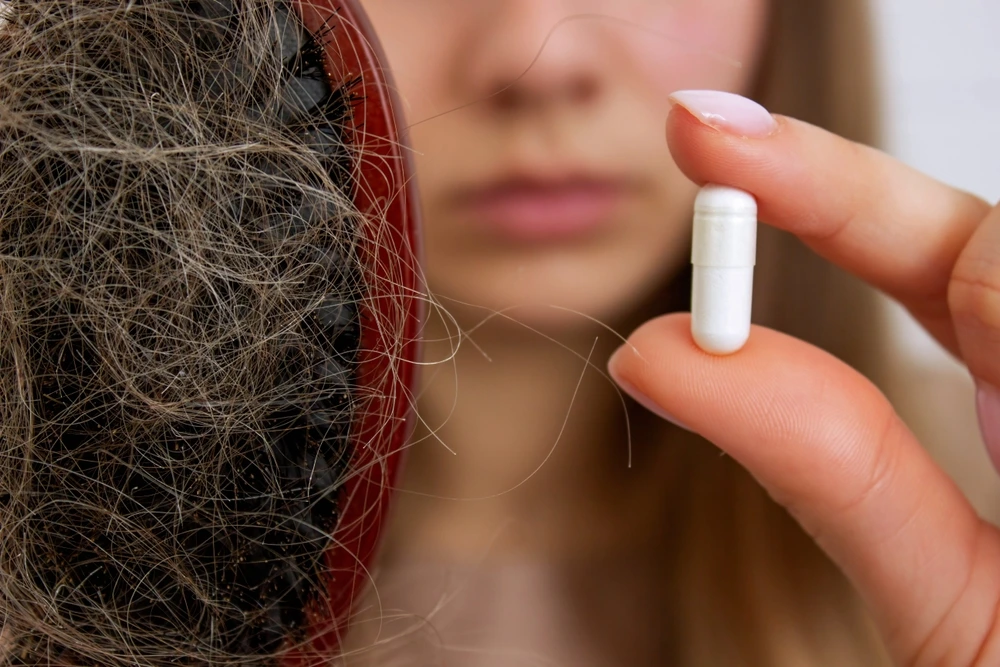
Several antidepressants trigger temporary hair loss through telogen effluvium. Bupropion carries the highest risk in population studies. Most patients regrow hair after adjusting medication or starting supportive treatment. Doctors prescribe antidepressants to millions of people worldwide. These medications balance brain chemicals and improve mood. However, some antidepressants cause an unexpected side effect. Patients notice increased hair shedding. This condition scares many people. Understanding the link between psychiatric medication and hair loss helps patients make informed decisions. Most cases reverse completely. Medical supervision remains essential throughout the process.
What Is Antidepressant-Induced Hair Loss?
Antidepressant-induced hair loss is a form of drug-related alopecia. Medications push hair follicles into the resting phase prematurely. This causes diffuse shedding across the scalp.
Doctors call this condition medication-related alopecia. It falls under the broader category of telogen effluvium. Telogen effluvium means excessive shedding. Hair follicles enter the shedding phase too early. Normally, hair grows in cycles. Most follicles stay in the growth phase for years. Antidepressants disrupt this balance. They signal follicles to stop growing. The follicles then rest and release hair shafts. This shedding appears two to three months after starting medication. Patients notice more hairs on pillows, in showers, and on brushes. The scalp rarely forms bald patches. Instead, hair thins evenly across the head. This diffuse pattern distinguishes telogen effluvium from pattern baldness. Researchers emphasize that this form of hair loss rarely scars the scalp. The follicles remain alive underneath the skin. This means hair can grow back once the trigger resolves (Pejcic and Paudel 2022).
How Does the Hair Growth Cycle Work?
Hair grows through three main phases. Anagen lasts years. Catagen lasts weeks. Telogen lasts months. Antidepressants disrupt this timing.
Human hair follows a predictable pattern. Doctors divide this pattern into three phases. The first phase is anagen. Anagen is the active growth phase. Scalp hair stays in anagen for two to six years. About eighty-five to ninety percent of follicles live in this phase at any time. The second phase is catagen. Catagen is the transition phase. It lasts only two to three weeks. The follicle shrinks during catagen. The hair shaft separates from the blood supply. The third phase is telogen. Telogen is the resting phase. It lasts about three months. The old hair sits in the follicle. A new hair begins forming underneath. After telogen ends, the old hair falls out. The new hair pushes through the scalp. This cycle repeats continuously across thousands of follicles. Normally, only ten to fifteen percent of follicles rest in telogen. Antidepressants throw off this ratio. They push more follicles into telogen at once. This synchronized shedding creates visible thinning.
What Is Telogen Effluvium and How Do Antidepressants Trigger It?
Telogen effluvium is a reactive hair loss condition. Antidepressants trigger it by altering neurochemical signals. The body reads these changes as stress.
Telogen effluvium is the medical name for excessive shedding. Many things trigger this condition. Fever, surgery, childbirth, and crash diets all cause it. Medications also trigger it. Antidepressants change serotonin, dopamine, and norepinephrine levels. These neurotransmitters affect more than mood. They influence blood flow, hormone release, and immune signals. Hair follicles sense these changes. The follicles interpret the shifts as a stress signal. They respond by entering telogen early. This is not true damage. The follicle simply pauses growth. Pejcic and Paudel (2022) reviewed seventy-one cases of SSRI-related hair loss. They found that most patients developed diffuse scalp shedding. The median onset time was eight point six weeks after starting medication. This timeline matches the biology of telogen effluvium. Hair that enters telogen today falls out roughly two to three months later.
Why Do Antidepressants Cause Hair Loss?
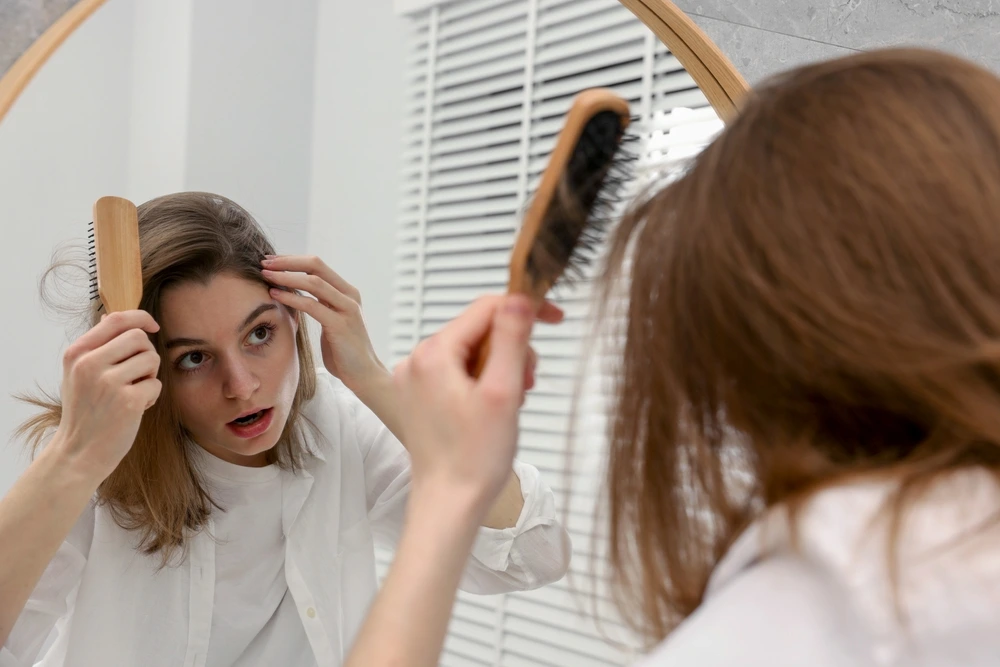
Antidepressants alter brain chemistry. These changes affect hair follicles through multiple pathways. Neurotransmitter shifts, hormonal changes, and nutritional factors all play roles.
Scientists do not fully understand every mechanism. However, research reveals several clear pathways. Antidepressants raise or lower key brain chemicals. These chemicals communicate with the rest of the body. Hair follicles contain receptors for serotonin, dopamine, and melatonin. When medications alter these signals, follicles react. Some follicles stop growing. Others enter the shedding phase early. The exact response varies by person. Genetics, dosage, and overall health influence the outcome. Women appear more susceptible than men. Hedenmalm et al. (2006) found that eighty-eight point nine percent of SSRI alopecia reports involved women. This suggests hormonal sensitivity plays a major role.
How Do Neurochemical Changes Affect Hair Follicles?
Serotonin and dopamine receptors sit in human skin and hair follicles. Antidepressants alter these receptors. This disrupts normal hair cycling.
Human skin produces serotonin. It also converts serotonin into melatonin. Slominski et al. (2005) proved that human skin contains complete serotonin and melatonin systems. Melatonin helps regulate hair growth. It supports the anagen phase. When SSRIs block serotonin reuptake, they alter this skin chemistry. The balance between growth and rest shifts. Some follicles interpret the change as a signal to rest. Dopamine also affects follicles directly. Langan et al. (2013) treated human hair follicles with dopamine in a laboratory. They found that dopamine pushed follicles into catagen. Catagen is the regression phase that leads to telogen. This means dopamine-active drugs can shorten the growth phase.
What Role Does Dopamine Play in Hair Shedding?
Dopamine accelerates follicle regression. Bupropion strongly affects dopamine. This explains its high association with hair loss.
Bupropion works differently from SSRIs. It blocks dopamine and norepinephrine reuptake. This increases dopamine activity in the brain. Etminan et al. (2018) analyzed over one million antidepressant users. They found that bupropion carried the highest hair loss risk. The hazard ratio was one point four six compared to fluoxetine. This means bupropion users faced forty-six percent higher risk. The number needed to harm was two hundred forty-two over two years. Dopamine receptors exist in human hair follicles. When dopamine levels rise, follicles receive a signal to regress. Foitzik et al. (2006) showed that prolactin also affects follicles. Prolactin promotes catagen development. Dopamine normally suppresses prolactin release from the pituitary. However, the direct follicular effects of dopamine appear independent of prolactin. Langan et al. (2013) demonstrated that dopamine induces catagen even in isolated follicles. This direct action explains why dopaminergic antidepressants cause shedding.
How Does Serotonin Disrupt Melatonin and Hair Cycling?
SSRIs alter serotonin levels. Skin converts serotonin to melatonin. This conversion supports hair growth. Disruption tips the balance toward shedding.
Melatonin is not just a sleep hormone. Human skin makes it. Hair follicles use it. Melatonin prolongs anagen. It delays catagen. It also acts as an antioxidant. SSRIs increase serotonin availability. This sounds helpful. However, the excess serotonin alters the melatonin pathway. The precise balance between growth and rest breaks down. Some follicles enter telogen early. Gautam (1999) noted that psychotropic drugs affect hair through multiple mechanisms. These include direct neurotransmitter effects and indirect stress responses. The serotonin-melatonin pathway offers one clear explanation. It connects brain chemistry to follicle behavior.
Which Antidepressants Are Most Likely to Cause Hair Loss?
Bupropion carries the highest risk. Sertraline and fluoxetine also cause cases. TCAs and MAOIs rarely trigger shedding. Risk varies by individual.
Not all antidepressants carry equal risk. Large studies and case reports reveal clear patterns. Some drugs appear repeatedly in alopecia literature. Others rarely appear. The risk depends on drug class, mechanism, and individual sensitivity. Etminan et al. (2018) provided the largest comparative study. They examined over one million new users. Bupropion topped the risk list. Paroxetine and fluoxetine showed the lowest risk. Sertraline fell in the middle. Pejcic and Paudel (2022) reviewed SSRI cases specifically. Fluoxetine accounted for thirty-eight percent of cases. Sertraline followed at twenty-eight point two percent. Citalopram caused fifteen point five percent. Escitalopram caused nine point nine percent. Fluvoxamine caused seven percent. Paroxetine caused only five point six percent. These numbers reflect reporting rates, not absolute risk. Still, they guide clinical choices.
Which SSRIs Carry the Highest Risk of Hair Loss?
Fluoxetine and sertraline appear most often in case reports. However, sertraline shows stronger statistical associations in some databases.
SSRIs are the most prescribed antidepressants. They generally cause hair loss rarely. Hedenmalm et al. (2006) analyzed Swedish and international databases. They found twenty-seven alopecia reports linked to SSRIs. Sertraline showed the strongest association. The reporting rate was twenty point one per million patient-years. Citalopram showed only four point five per million patient-years. Fluoxetine fell in between. Pejcic and Paudel (2022) found different rankings. In their review, fluoxetine caused the most cases. This discrepancy highlights individual variation. Some patients react to one SSRI but tolerate another. The mechanism may involve dopamine reuptake inhibition. Sertraline blocks dopamine reuptake more strongly than other SSRIs. This unique property may explain its higher risk in some studies.
Why Does Bupropion Show the Strongest Link to Alopecia?
Bupropion increases dopamine activity. Dopamine directly induces catagen. Population studies confirm the highest risk.
Bupropion belongs to the atypical antidepressant class. Doctors also prescribe it for smoking cessation. It blocks reuptake of dopamine and norepinephrine. It does not affect serotonin strongly. This different mechanism explains its different side effect profile. Bupropion causes less sexual dysfunction than SSRIs. However, it causes more hair loss. Etminan et al. (2018) confirmed this in a large American database. The hazard ratio for bupropion was one point four six. This means users face significantly higher risk than SSRI users. The FDA lists alopecia as an infrequent adverse event. This means it affects between one in one hundred and one in one thousand patients. The dopamine mechanism explains the connection. Langan et al. (2013) showed that dopamine pushes follicles out of anagen. Bupropion’s dopaminergic action aligns perfectly with this finding.
Do Tricyclic Antidepressants Cause Hair Loss?
TCAs rarely cause hair loss. Amitriptyline and imipramine appear in isolated case reports. The risk is extremely low.
Tricyclic antidepressants are older drugs. Doctors prescribe them less often now. They block serotonin and norepinephrine reuptake. They also have anticholinergic effects. Warnock et al. (1991) documented drug-related alopecia in TCA patients. They described cases linked to amitriptyline and imipramine. The shedding followed a telogen effluvium pattern. Modern pharmacovigilance data suggest severe hair loss occurs in roughly zero point zero one percent of TCA users. Mild cases likely go unreported. TCAs affect multiple receptors. Their sedative and metabolic effects may stress the body. This stress could trigger follicle regression in sensitive individuals. However, the overall risk remains very small.
Can MAOIs and Atypical Antidepressants Trigger Shedding?
MAOIs rarely trigger shedding. Mirtazapine and trazodone cause isolated cases. Vortioxetine shows minimal reports.
Monoamine oxidase inhibitors are the oldest antidepressant class. They block the enzyme that breaks down serotonin, norepinephrine, and dopamine. Phenelzine, tranylcypromine, and isocarboxazid belong to this group. Literature contains only scattered case reports. Atypical antidepressants include mirtazapine, trazodone, and vortioxetine. These drugs do not fit neatly into other classes. Mirtazapine blocks certain serotonin receptors. It also increases norepinephrine release. Trazodone blocks serotonin reuptake and acts as an antagonist at some receptors. Vortioxetine modulates multiple serotonin receptors directly. Case reports link mirtazapine to reversible alopecia. Trazodone appears in a few case studies. The overall evidence remains weak. These medications likely trigger shedding only in highly sensitive patients.
The table below compares antidepressant classes by hair loss risk. It uses data from large population studies and systematic reviews.
|
Antidepressant Class |
Examples |
Reported Hair Loss Frequency |
Type of Alopecia |
Reversibility |
|
SSRIs |
Fluoxetine, Sertraline, Paroxetine, Citalopram, Escitalopram |
Rare (0.1–1%) |
Telogen effluvium |
Usually reversible |
|
SNRIs |
Venlafaxine, Duloxetine, Desvenlafaxine |
Very rare |
Telogen effluvium |
Usually reversible |
|
Bupropion (NDRI) |
Wellbutrin, Zyban |
Infrequent (0.1–1%) |
Telogen effluvium |
Usually reversible |
|
TCAs |
Amitriptyline, Nortriptyline, Imipramine |
Extremely rare (<0.01%) |
Telogen effluvium |
Reversible |
|
MAOIs |
Phenelzine, Tranylcypromine |
Extremely rare |
Telogen effluvium |
Reversible |
|
Atypical |
Mirtazapine, Trazodone, Vortioxetine |
Very rare |
Telogen effluvium |
Reversible |
What Are the Symptoms of Antidepressant-Related Hair Loss?
Patients notice increased daily shedding. Hair thins diffusely across the scalp. Texture changes may occur. Body hair rarely falls out.
The first sign is usually more hair on the brush. Patients also notice clogged shower drains. Pillowcases collect more hairs. The shedding is diffuse. This means it spreads evenly. Patients do not develop round bald patches. The scalp remains healthy. No redness, scaling, or scarring appears. Some patients feel tenderness. Doctors call this trichodynia. It affects some people with telogen effluvium. Hair texture may change. Strands feel finer or weaker. Pejcic and Paudel (2022) found that alopecia affected the scalp in ninety-eight point six percent of SSRI cases. Eyebrows, eyelashes, and body hair rarely shed. Only a few case reports described these patterns.
When Does Hair Loss Start After Taking Antidepressants?
Shedding starts two to three months after beginning medication. This delay matches the telogen phase duration.
Drug-induced telogen effluvium follows a predictable timeline. The medication triggers follicles to enter telogen. This happens within days or weeks. However, the hair does not fall out immediately. The follicle holds the hair shaft during the resting phase. Telogen lasts roughly three months. After this period, the old hair releases. New hair pushes it out. Patients therefore notice shedding two to three months after starting the drug. Some cases appear faster. Pejcic and Paudel (2022) reported a median onset of eight point six weeks. Individual biology affects timing. Higher doses may speed the process. Pre-existing nutritional deficiencies may also accelerate shedding.
How Long Does Antidepressant Hair Loss Last?
Shedding continues while the trigger persists. Recovery begins three to six months after addressing the cause. Full density returns within twelve months.
The duration depends on several factors. If the patient continues the medication, shedding may persist. Some bodies adapt. The follicles reset their cycles. Shedding then slows spontaneously. If the patient switches or stops the drug, recovery begins. New hairs enter anagen. They grow about one centimeter per month. Visible improvement takes three to six months. Full density may take a year. Pejcic and Paudel (2022) found that stopping the causative SSRI led to recovery in sixty-three percent of cases. Some patients recovered in five days. Others needed six months. The variation depends on individual health. Nutrition, stress, and genetics all play roles. Rare cases show chronic shedding. Early intervention prevents this.
How Do Doctors Diagnose Hair Loss From Antidepressants?
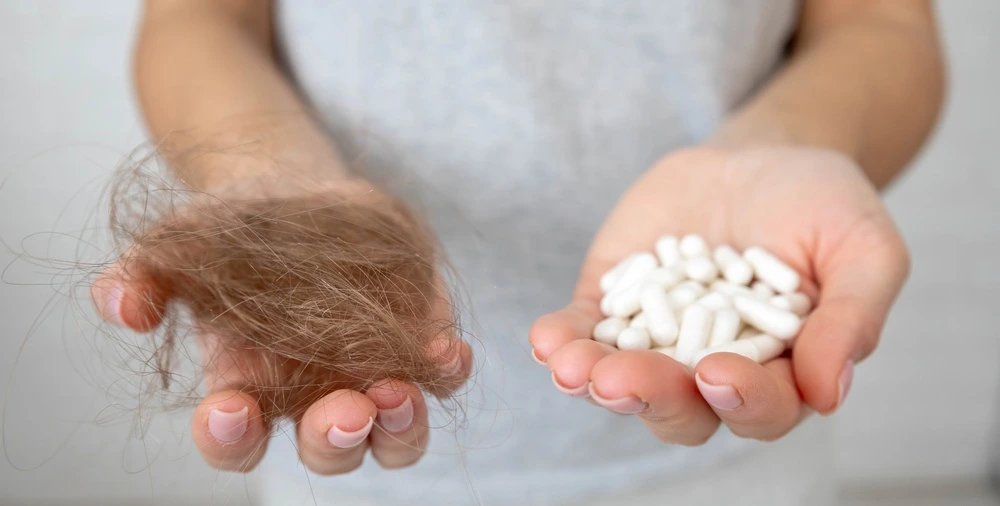
Doctors review medication history. They examine the scalp. They run blood tests. They rule out other causes.
Diagnosis requires a systematic approach. The doctor first takes a detailed history. They note when the antidepressant started. They compare this to when shedding began. A timeline gap of two to three months supports the diagnosis. The doctor then examines the scalp. They look for diffuse thinning. They check for scarring, inflammation, or patchy loss. A pull test helps confirm telogen effluvium. The doctor gently pulls a small bundle of hairs. They count how many release. In telogen effluvium, more hairs release than normal. Dermoscopy shows empty follicles without miniaturization. This distinguishes it from pattern baldness.
What Laboratory Tests Help Identify the Cause?
Doctors order blood tests. They check iron, ferritin, vitamin D, and thyroid function. These tests rule out nutritional and hormonal causes.
Blood tests exclude common mimics. The doctor checks ferritin and iron levels. Low ferritin causes telogen effluvium. The doctor checks vitamin D. Deficiency links to hair loss. The doctor checks thyroid function. Both high and low thyroid hormone cause shedding. The doctor may check hormone levels. Testosterone and prolactin abnormalities affect hair. These tests do not directly prove antidepressant causation. However, they identify contributing factors. Treating deficiencies improves recovery. Normal labs strengthen the case for drug-induced shedding.
How Can Doctors Differentiate Drug-Induced Loss From Other Conditions?
Pattern baldness causes gradual crown thinning. Alopecia areata causes patchy loss. Stress-related shedding lacks a drug trigger. Nutritional loss shows abnormal blood tests.
Several conditions mimic drug-induced telogen effluvium. Androgenetic alopecia is the most common. It causes gradual thinning at the crown and temples. It runs in families. It requires different treatment. Alopecia areata is an autoimmune disease. It causes smooth, round bald patches. It may affect eyebrows and beard. Stress-related telogen effluvium lacks a medication trigger. Major illness, surgery, or crash diets cause it. The timeline differs. Nutritional hair loss shows low iron, zinc, or protein on blood tests. The doctor compares all these factors. They look for the two-to-three-month drug timeline. They look for diffuse scalp involvement. They look for reversible, non-scarring patterns.
How Can You Stop Hair Loss From Antidepressants?
Patients should never stop medication abruptly. They should consult their doctor. Options include dose reduction, medication switching, and topical treatments.
Stopping antidepressants suddenly is dangerous. It causes withdrawal symptoms. It triggers mood relapse. It may even worsen hair loss through rebound stress. Patients must involve their doctor. The doctor assesses mental health stability. They then consider several strategies. Lowering the dose may reduce shedding. Switching to a lower-risk antidepressant may help. Adding hair-specific treatments supports recovery. Nutritional optimization helps. Gentle hair care reduces breakage. Most patients recover fully with proper management.
Why Should You Never Stop Antidepressants Abruptly?
Sudden discontinuation causes withdrawal. It risks mental health relapse. It may increase stress-related shedding.
Antidepressants alter brain chemistry. The brain adapts to their presence. Stopping suddenly shocks the system. Patients experience dizziness, nausea, anxiety, and electric shock sensations. Doctors call this discontinuation syndrome. It lasts days or weeks. Beyond physical symptoms, mental health suffers. Depression may return. Anxiety may spike. Suicidal thoughts may emerge. This stress further triggers telogen effluvium. The body releases cortisol. Cortisol pushes more follicles into resting. A patient who stops medication to save hair may actually lose more hair. Always taper under medical supervision.
Which Treatments Help Regrow Hair After Antidepressant Shedding?
Topical minoxidil, nutritional supplements, stress management, and gentle hair care all support regrowth.
Topical minoxidil is the most studied treatment. It shortens telogen. It prolongs anagen. It increases blood flow to follicles. Oka et al. (2024) tested five percent topical minoxidil on twelve telogen effluvium patients. Terminal hair count increased significantly by week four. By week twenty-four, eighty percent of subjects showed moderate or better improvement. All subjects reported decreased shedding. Patients tolerate minoxidil well. Some patients experience initial shedding. This is temporary. It reflects the transition from telogen to anagen.
Nutritional support matters. Biotin, zinc, iron, and vitamin D support hair growth. Protein intake provides building blocks for keratin. Patients should eat eggs, fish, lean meats, and legumes. Stress management helps. Sleep optimization lowers cortisol. Exercise improves circulation. Mindfulness reduces anxiety. Gentle hair care prevents breakage. Patients should avoid tight hairstyles. They should limit heat styling. They should use mild shampoos.
For chronic cases, doctors may prescribe oral minoxidil. Perera and Sinclair (2017) treated thirty-six women with chronic telogen effluvium. They used oral minoxidil at doses from zero point two five to two point five milligrams. Hair shedding scores improved significantly at six and twelve months. Mean reduction was one point seven at six months and two point five eight at twelve months. Side effects were mild. Some patients developed facial hypertrichosis. Blood pressure changes were minimal. Randolph and Tosti (2021) reviewed oral minoxidil safety. They confirmed efficacy across multiple hair loss types.
The table below summarizes treatment options.
|
Treatment |
Mechanism |
Evidence Level |
Timeline |
|
Topical Minoxidil 5% |
Prolongs anagen, shortens telogen |
Clinical trial (Oka et al. 2024) |
Improvement by 8–24 weeks |
|
Oral Minoxidil (low dose) |
Systemic follicle stimulation |
Retrospective study (Perera and Sinclair 2017) |
Reduction in shedding by 6 months |
|
Iron/Ferritin Supplementation |
Corrects deficiency-related shedding |
Clinical guidelines |
3–6 months |
|
Vitamin D Supplementation |
Supports follicle cycling |
Observational studies |
3–6 months |
|
Stress Management |
Lowers cortisol, reduces telogen shift |
Physiological studies |
Ongoing |
|
Gentle Hair Care |
Reduces mechanical breakage |
Dermatology consensus |
Immediate |
Can Hair Grow Back After Stopping Antidepressants?
Yes. Hair grows back in most cases. The follicles remain alive. Regrowth starts within months.
The good news is reassuring. Most antidepressant-related hair loss is temporary. The follicles do not die. They simply rest. Once the medication adjusts or stops, the cycle resumes. New hairs enter anagen. They grow normally. Pejcic and Paudel (2022) found that stopping the causative SSRI led to recovery in sixty-three percent of cases. Some patients recovered in five days. Others needed six months. The variation depends on individual health. Nutrition, stress, and genetics all play roles. Rare cases show chronic shedding. Early intervention prevents this.
What Factors Affect Hair Regrowth Timeline?
Age, nutrition, stress, and treatment adherence all affect speed. Younger patients with good diets recover faster.
Several factors influence recovery. Younger patients regrow hair faster. Their follicles cycle more actively. Patients with normal iron and ferritin levels recover quicker. Deficiencies prolong telogen. Patients who manage stress see better results. High cortisol blocks anagen entry. Patients who use minoxidil consistently improve earlier. Those who switch to lower-risk antidepressants under doctor guidance protect both mental health and hair. Patience remains essential. Hair grows slowly. Even perfect conditions require months for visible density.
How Can You Balance Mental Health and Hair Loss Risks?
Mental health takes priority. Doctors can adjust medications. Hair loss is reversible. Depression is not.
Patients face a difficult choice. They need antidepressants for mental stability. They fear losing hair. This fear itself causes stress. Stress worsens shedding. Doctors emphasize that untreated depression carries greater risks. Depression affects heart health, immunity, and lifespan. Hair loss is distressing. However, it is temporary and treatable. Shared decision-making helps. The patient and doctor discuss priorities. They select medications with lower hair loss risk. They plan monitoring. They arrange early intervention if shedding starts. This balanced approach protects both psychological and physical well-being.
What Prevention Strategies Reduce Antidepressant Hair Loss?
Early monitoring, good nutrition, stress reduction, and gentle hair care lower risk. Patients should track changes from day one.
Prevention starts before shedding appears. Patients should photograph their hair baseline. They should note normal daily shedding. Most people lose fifty to one hundred hairs daily. Patients should eat protein-rich foods. They should maintain iron and vitamin D levels. They should manage sleep and exercise. These habits strengthen follicles. Once antidepressant therapy starts, patients should watch for changes. Increased shedding at two to three months warrants discussion. Early dose adjustment prevents prolonged loss. Doctors may check labs at baseline. They can correct deficiencies before they combine with drug effects.
Which Antidepressant Causes the Most Hair Loss?
Bupropion causes the most hair loss according to large studies. Fluoxetine and sertraline follow in case reports.
Population data gives the clearest answer. Etminan et al. (2018) analyzed over one million users. Bupropion showed the highest hazard ratio. It outranked all SSRIs and SNRIs. Among SSRIs, sertraline and fluoxetine appear most often in case series. However, paroxetine shows the lowest population risk. Individual reactions vary. A patient may lose hair on sertraline but tolerate fluoxetine. Another may lose hair on bupropion but tolerate venlafaxine. No single drug guarantees safety or causes loss for everyone.
Is Antidepressant Hair Loss Permanent?
No. Antidepressant hair loss is almost always temporary. Permanent loss is extremely rare.
Telogen effluvium does not kill follicles. It pauses them. The follicle structure remains intact. Once the trigger resolves, anagen restarts. Pejcic and Paudel (2022) confirmed recovery in most patients after stopping the SSRI. Permanent loss would require scarring or follicle destruction. Antidepressants do not cause scarring alopecia. They do not trigger autoimmune attacks on follicles. Rare chronic cases may reflect persistent triggers. These include ongoing medication use, untreated thyroid disease, or continued nutritional deficiency. Addressing these factors restores growth.
How Long After Stopping Antidepressants Does Hair Grow Back?
Visible regrowth starts in three to six months. Full density returns by twelve months.
The timeline follows the hair cycle. Shedding stops when telogen ends. New anagen hairs emerge weeks later. They grow one centimeter per month. Patients see early fuzz at three months. Noticeable thickening appears at six months. Full density may take a year. Some patients see faster results. Perera and Sinclair (2017) noted improvement within three months in some oral minoxidil users. Oka et al. (2024) saw terminal hair increases by week four with topical minoxidil. These treatments accelerate natural recovery.
What Is the Best Treatment for Antidepressant-Induced Hair Loss?
Topical minoxidil offers the strongest evidence. Nutritional support and medical supervision complete the plan.
Doctors recommend a multi-pronged approach. First, do not stop antidepressants alone. Consult the prescribing doctor. Second, consider topical minoxidil. Oka et al. (2024) demonstrated significant hair count increases. Third, check and correct iron, ferritin, vitamin D, and thyroid levels. Fourth, reduce stress and optimize sleep. Fifth, practice gentle hair care. For chronic or severe cases, discuss oral minoxidil or medication switching. Perera and Sinclair (2017) showed oral minoxidil reduces shedding scores significantly. Randolph and Tosti (2021) confirmed its safety profile. This combined approach offers the best outcome.
Conclusion
Antidepressant-induced hair loss is real but reversible. Bupropion and some SSRIs carry higher risk. Medical supervision ensures safe recovery.
Antidepressants save lives. They restore mental health. They improve daily function. A small percentage of users experience hair shedding. This side effect is temporary. It reflects telogen effluvium. The follicles remain alive. Research clearly links bupropion to the highest risk. SSRIs cause rare but documented cases. TCAs and MAOIs pose minimal threat. Doctors can diagnose the condition through history, exam, and labs. They can treat it with minoxidil, nutrition, and medication adjustments. Patients should never abandon mental health treatment over hair concerns. With proper care, both mind and hair recover fully.
References
Craven, A.J., et al. “Prolactin delays hair regrowth in mice.” Journal of Endocrinology, vol. 191, no. 2, 2006, pp. 415-25.
Etminan, Mahyar, et al. “Risk of hair loss with different antidepressants: a comparative retrospective cohort study.” International Clinical Psychopharmacology, vol. 33, no. 1, 2018, pp. 44-48.
Foitzik, Kerstin, et al. “Human scalp hair follicles are both a target and a source of prolactin, which serves as an autocrine and/or paracrine promoter of apoptosis-driven hair follicleA hair follicle is a small, tube-like structure embedded in the scalp that produces and grows individual strands of hair.... regression.” American Journal of Pathology, vol. 168, no. 3, 2006, pp. 748-56.
Gautam, M. “Alopecia due to psychotropic medications.” Annals of Pharmacotherapy, vol. 33, 1999, pp. 631-37.
Hedenmalm, Karin, et al. “Alopecia associated with treatment with selective serotonin reuptake inhibitors (SSRIs).” Pharmacoepidemiology and Drug Safety, vol. 15, no. 10, 2006, pp. 719-25.
Langan, E.A., et al. “Dopamine is a novel, direct inducer of catagen in human scalp hair follicles in vitro.” British Journal of Dermatology, vol. 168, no. 3, 2013, pp. 520-25.
Oka, T., et al. “Use of 5% topical minoxidil application for telogen effluvium.” Journal of Dermatology, 2024.
Pejcic, A.V., and Paudel, V. “Alopecia associated with the use of selective serotonin reuptake inhibitors: Systematic review.” Psychiatry Research, vol. 313, 2022, pp. 114620.
Perera, Eshini, and Sinclair, Rodney Daniel. “Treatment of chronic telogen effluvium with oral minoxidil: A retrospective study.” F1000Research, vol. 6, 2017, p. 1650.
Randolph, M., and Tosti, A. “Oral minoxidil treatment for hair loss: A review of efficacy and safety.” Journal of the American Academy of Dermatology, vol. 84, no. 3, 2021, pp. 737-46.
Slominski, Andrzej, et al. “Serotoninergic and melatoninergic systems are fully expressed in human skin.” FASEB Journal, vol. 19, no. 3, 2005, pp. 448-50.
Warnock, J.K., et al. “Drug-related alopecia in patients treated with tricyclic antidepressants.” Journal of Nervous and Mental Disease, vol. 179, 1991, pp. 441-42.