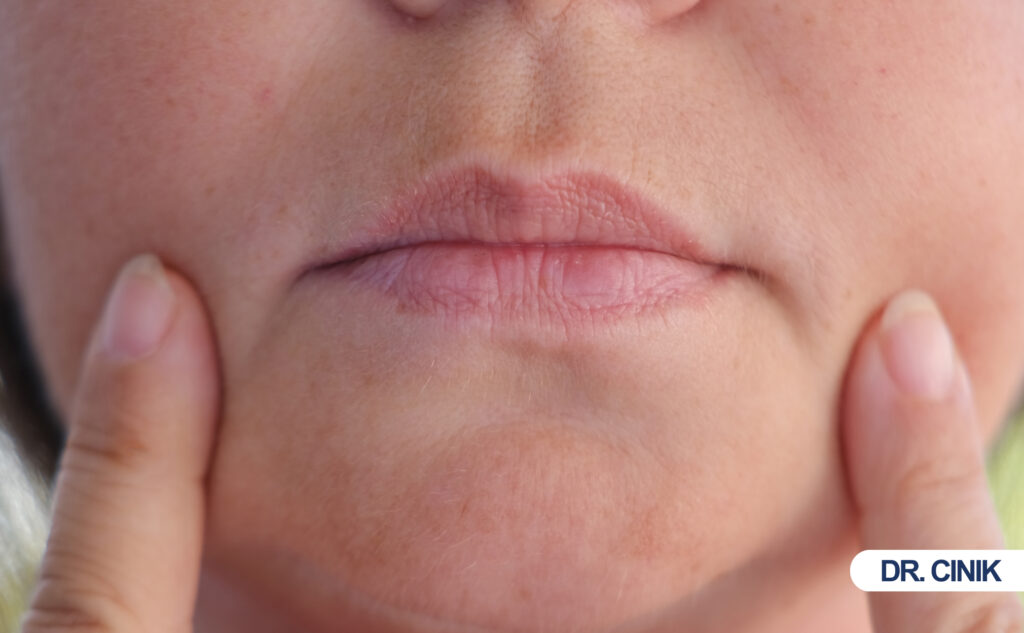
Sagging lip aesthetics describes the visible descent of lip tissue and the downward turn of mouth corners that accompany aging. This condition affects facial harmony, emotional expression, and self-confidence. Modern aesthetic medicine offers many solutions that restore youthful lip position without sacrificing natural movement.
What Is Sagging Lip Aesthetics and Why Does It Matter?
Sagging lip aesthetics refers to the downward displacement of the upper lip, lower lip, or oral commissures that creates a tired or sad appearance. This condition differs from simple lip thinning because it involves tissue descent rather than mere volume loss. El-Domyati et al. (2023) emphasize that age-related changes in facial soft tissue cause clinical signs such as lip atrophy, marionette lines, and an accentuated nasolabial fold. These changes reduce attractiveness and psychological well-being. Patients now seek minimally invasive lip rejuvenation procedures more than ever before. Functional problems also arise. Some patients struggle to apply lipstick evenly. Others notice saliva leakage in severe cases. Correct diagnosis separates true sagging from volume deficiency and guides treatment selection.
How Does Facial Anatomy Contribute to Lip Sagging?
The lips rely on a complex support system that ages over time. Understanding this anatomy helps clinicians plan effective rejuvenation.
What Structures Support the Lips?
The vermilion border defines the transition between skin and the red lip. The Cupid’s bow shapes the central upper lip. Philtrum columns run from the nose to the upper lip. Oral commissures form the corners of the mouth. The orbicularis oris muscle encircles the mouth and controls movement. These structures work together to maintain lip position and expression.
How Does Aging Change These Structures?
Bone resorption around the maxilla and mandible reduces skeletal support. Pessa et al. (2012) confirm that the maxilla retrudes with aging and that the maxillary angle decreases by about 10 degrees between young and old individuals. This bone loss alters the position of muscle attachments and ligaments. CollagenA structural protein found in the skin and other connective tissues, which is responsible for skin firmness and elasticity.... and elastinElastin A protein in connective tissue that allows tissues to resume their shape after stretching or contracting, contributing to skin... loss weaken the skin. Fat pad atrophy removes youthful padding. Skin laxityLaxity: Looseness or slackness in the skin or tissues, often referring to the loss of firmness and elasticity in aging... develops. Gravitational tissue descent pulls the lips downward. Sun et al. (2025) summarize current knowledge on human lip aging and confirm that these structural changes create the stigmata of perioral aging.
What Causes Lips to Sag Over Time?
Multiple factors drive lip ptosis. Some factors are unavoidable. Others are preventable.
Does Natural Aging Always Cause Lip Sagging?
Yes. Age-related tissue laxity progresses steadily. Decreased skin elasticity allows the lips to elongate. Progressive perioral volume loss removes support. Sleilati and Chalhoub (2024) quantify female upper lip lengthening with age and provide direct surface measurement data that guides lip lifting procedures.
Can Genetics Determine Lip Position?
Yes. Congenital lip asymmetry creates uneven support. Thin skeletal support offers less resistance to gravity. Some individuals inherit naturally downturned oral commissures.
Do Lifestyle Habits Accelerate Lip Sagging?
Yes. Smoking breaks down collagen and reduces blood flow. Excessive sun exposure damages elastin fibers. Rapid weight loss deflates facial fat pads. Poor skincare habits leave the perioral skin vulnerable.
Can Muscle Activity Pull the Mouth Corners Down?
Yes. Hyperactivity of the depressor anguli oris (DAO) muscle drags the corners downward. Repetitive facial expressions reinforce this muscular pull. Over time, the DAO overpowers the lifting muscles.
Do Previous Cosmetic Procedures Cause Lip Sagging?
Sometimes. Filler migration displaces volume improperly. Improper lip augmentation stretches the tissue. Scar tissue formation restricts movement. Complications from overfilling alter natural anatomy.
|
Cause Category |
Specific Factors |
Preventable? |
|
Natural aging |
Tissue laxity, collagen loss, elastin breakdown |
No |
|
Genetics |
Thin bone structure, congenital asymmetry, DAO dominance |
No |
|
Lifestyle |
Smoking, sun exposure, rapid weight loss, poor skincare |
Yes |
|
Muscle activity |
DAO hyperactivity, repetitive frowning |
Partially |
|
Previous procedures |
Filler migration, overfilling, scar tissue |
Yes |
What Are the Early and Advanced Signs of Lip Ptosis?
Recognizing the stage of lip sagging helps clinicians choose the right intervention.
What Are the Early Warning Signs?
Mild downturn at mouth corners appears first. Lip elongation stretches the vermilion. The Cupid’s bow flattens. Patients often notice these changes in photographs before they see them in the mirror.
What Happens When Sagging Advances?
Deep marionette lines form between the corners of the mouth and the chin. Lip asymmetry becomes obvious. The lips lose forward projection. The face takes on a sad or tired appearance even when the patient feels happy.
Can Lip Sagging Create Functional Problems?
Yes. Patients report difficulty applying lipstick evenly because the vermilion border blurs. Smile aesthetics change because the corners no longer turn upward. Severe cases may involve saliva leakage due to poor oral seal.
How Do Doctors Diagnose and Assess Sagging Lips?
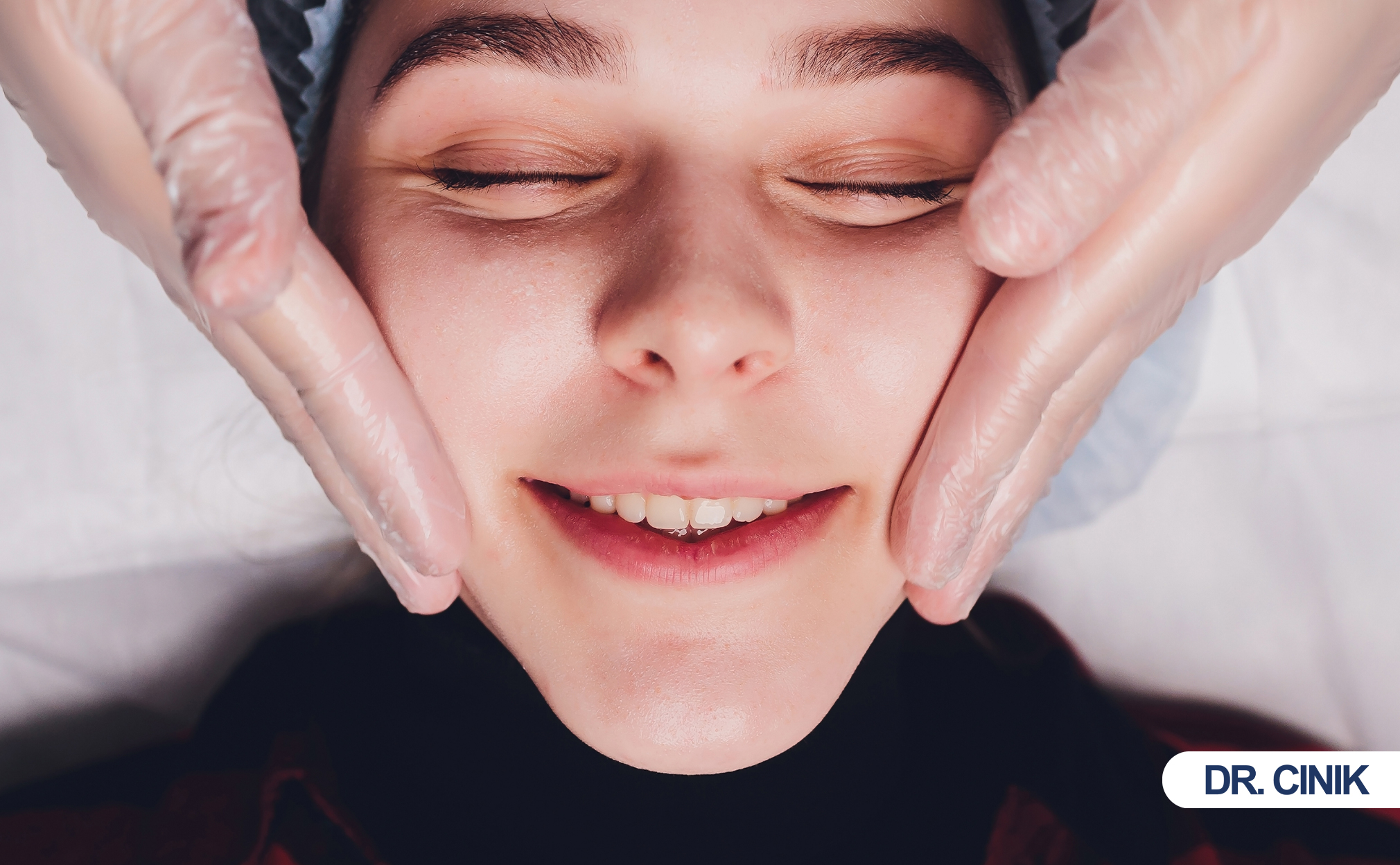
Proper assessment prevents overtreatment and ensures natural results.
What Measurements Do Clinicians Use?
Clinicians analyze lip-to-face proportions. They evaluate philtrum length. They study smile dynamics. They record oral commissure position. Komisarek et al. (2025) note that modern lip lift techniques require careful preoperative evaluation and evidence-informed perioperative care.
How Do Doctors Set Realistic Expectations?
Doctors discuss natural versus dramatic outcomes. They consider ethnic and gender variations. They plan age-appropriate rejuvenation strategies. Personalized treatment plans combine multiple techniques for optimal results. Individualized facial harmony matters more than following a template.
Can Hyaluronic Acid Fillers Correct Sagging Lips?
Yes. HA fillers restore structure and lift the perioral region without surgery.
How Do Fillers Improve Sagging Lips?
Fillers restore structural support. They lift the oral commissures. They enhance the vermilion border. El-Domyati et al. (2023) report that HA-based fillers improved lip volume in 73.5% of subjects at three weeks post-injection. Fillers also soften marionette lines. Díaz-Aguayo et al. (2024) provide specific recommendations for lip and perioral rejuvenation using Hylacross and Vycross HA-based fillers.
Where Do Injectors Place Filler for Lip Rejuvenation?
Injectors target the Cupid’s bow. They rebuild the philtral columns. They fill marionette lines. They place corner support points to elevate the commissures.
What Are the Advantages of HA Fillers?
HA fillers are minimally invasive. They produce immediate results. They offer reversible outcomes. Patients return to normal activities quickly.
What Risks Come With Lip Fillers?
Swelling and bruising are common. Asymmetry can occur. Vascular occlusion is rare but serious. Filler migration may happen with poor technique. El-Domyati et al. (2023) confirm that regional differences in filler longevity exist, and the lips show shorter duration than nasolabial foldsNasolabial folds: The deep creases running from each side of the nose to the corners of the mouth, commonly known....
|
Feature |
HA Lip Fillers |
|
Mechanism |
Volume replacement and structural support |
|
Best for |
Mild to moderate sagging, marionette lines, vermilion enhancement |
|
Duration |
6–12 months for lips |
|
Reversibility |
Yes, with hyaluronidase |
|
Downtime |
Minimal |
|
Key risks |
Swelling, bruising, asymmetry, vascular occlusion |
How Does Botox Lift Downturned Mouth Corners?
Botox relaxes the DAO muscle and allows the lifting muscles to dominate.
What Is the Mechanism of Action?
Botulinum toxin type A blocks nerve signals to the DAO. This muscle normally pulls the corners downward. When the DAO relaxes, the zygomaticus major and other lifting muscles elevate the commissures. Díaz-Aguayo et al. (2024) include DAO relaxation as part of a comprehensive perioral rejuvenation approach.
Who Is the Ideal Candidate for Botox Lip Rejuvenation?
Patients with mild oral commissure descent respond best. Dynamic muscular pull must dominate the problem. Static tissue excess requires a different approach.
How Long Do Botox Results Last Around the Mouth?
Results typically last three to four months. Repeated treatments maintain the effect.
Do Thread Lifts Work for Sagging Lip Aesthetics?
PDO threads offer temporary lifting for patients with mild laxity.
What Techniques Do Doctors Use?
Doctors insert polydioxanone threads beneath the skin. The threads create a mechanical lift. They also stimulate collagen production. Suh et al. (2015) report that 87% of patients considered PDO knotless thread lifting results satisfactory.
How Long Does the Lifting Effect Last?
The lifting effect lasts several months. The threads dissolve over six to eight months. Collagen stimulation may extend benefits.
What Are the Limitations?
Threads cannot replace surgery for severe ptosis. Bruising occurs in most patients. Swelling is common. Results are modest compared to surgical options. Aliyeva (2025) confirms that PDO threads provide mechanical lifting but cannot relax dynamic wrinkles, which is why combination with Botox often works better.
Can Energy-Based Treatments Tighten Perioral Skin?
Yes. These devices stimulate collagen without injections or incisions.
How Does Radiofrequency Help?
Radiofrequency devices heat the dermis and trigger collagen contraction. Bai et al. (2025) confirm that bipolar RF technology produces significant rejuvenation effects by thermally stimulating collagen within two weeks without causing thermal damage.
What About Ultrasound and Laser Treatments?
Ultrasound-based treatments target deeper tissue layers. Fractional laser therapy resurfaces the skin and improves texture. These modalities work best for fine lines and mild laxity.
Do Biostimulatory Injectables Help?
Yes. Calcium hydroxylapatite and poly-L-lactic acid stimulate collagen production. These injectables improve skin quality over time. They do not provide immediate volume.
|
Non-Surgical Modality |
Mechanism |
Best For |
Duration |
|
HA Fillers |
Volume and structure |
Mild to moderate sagging, marionette lines |
6–12 months |
|
Botox |
DAO muscle relaxation |
Dynamic downturned corners |
3–4 months |
|
PDO Threads |
Mechanical lift + collagen |
Mild laxity, early ptosis |
6–12 months |
|
Radiofrequency |
Thermal collagen stimulation |
Skin laxity, fine lines |
6–12 months |
|
Biostimulators |
Collagen induction |
Skin quality, gradual tightening |
12–24 months |
What Is Lip Lift Surgery and Who Needs It?
Lip lift surgery shortens the philtrum and restores youthful upper lip proportions.
How Does the Procedure Work?
The surgeon removes a strip of skin beneath the nose. This action shortens the philtrum and increases vermilion show. The result is a more youthful upper lip with better tooth display. Komisarek et al. (2025) report that subnasal bullhorn techniques reduce philtral length from 14.0 – 14.5 mm to 10.8 – 12.0 mm and increase vermilion height from 5.0 – 6.0 mm to 7.0 – 9.0 mm.
Who Is the Ideal Candidate?
Patients with a long upper lip and reduced tooth show qualify. Patients who have not achieved desired results with fillers also benefit. Those seeking permanent change choose surgery.
What Does Recovery Involve?
Swelling peaks in the first week. Scar maturation takes several months. Final results appear after three to six months. Patients must avoid strenuous activity during early healing.
Are There Different Types of Lip Lift Procedures?
Yes. Surgeons select techniques based on anatomy and goals.
What Is the Bullhorn Lip Lift?
The bullhorn lip lift places an incision at the nasal base in the shape of a bullhorn. The surgeon removes excess skin and lifts the central upper lip. This technique hides scars within the alar creases.
What Is the Corner Lip Lift?
The corner lip lift elevates drooping oral commissures directly. Small incisions at the mouth corners allow the surgeon to reposition the tissue.
What Is the Italian Lip Lift?
The Italian lip lift uses incisions beneath each nostril rather than across the entire nasal base. This approach suits patients who need central elevation only.
How Does the Gull-Wing Lip Lift Differ?
The gull-wing lip lift places the incision along the vermilion border. It directly increases vermilion show but leaves a more visible scar.
|
Lip Lift Type |
Incision Location |
Best For |
Scar Visibility |
|
Bullhorn |
Beneath nasal base |
General philtrum shortening |
Low, hidden in creases |
|
Corner |
At mouth corners |
Downturned commissures |
Minimal, lateral |
|
Italian |
Beneath each nostril |
Central upper lip elevation |
Very low |
|
Gull-Wing |
Along vermilion border |
Vermilion enhancement |
Higher, along lip edge |
How Does Corner of Mouth Lift Surgery Work?
This procedure targets the oral commissures specifically.
What Is the Surgical Technique?
The surgeon removes a small triangle of skin above each corner of the mouth. This release allows the commissure to rise into a neutral or slightly upturned position.
When Do Surgeons Recommend This Approach?
Surgeons recommend it when the corners turn downward severely. It also works well in combination with other procedures.
When Should Surgeons Combine Lip Procedures With Facelifts?
Sometimes lip sagging signals broader facial aging.
How Do Surgeons Integrate These Procedures?
When the midface and jowls sag simultaneously, isolated lip correction looks incomplete. A facelift or midface lift repositions the deeper tissues. The lip lift or fillers then refine the perioral area. Park et al. (2024) demonstrate that combining lower blepharoplasty with PDO thread mid-face lifting yields superior aesthetic outcomes and higher patient satisfaction than blepharoplasty alone.
What Combination Treatments Deliver the Best Results?
Combining modalities often produces the most natural outcomes.
Which Combinations Work Best?
Lip fillers plus Botox address both volume and muscle pull. Lip lift plus fillers refine surgical results. Skin tightening plus injectables improves texture and structure. Full perioral rejuvenation protocols customize these pairings for each patient. Wollina (2013) emphasizes that perioral rejuvenation requires restoration of attractiveness through minimally invasive procedures tailored to individual needs.
What Does Recovery Look Like After Lip Rejuvenation?
Recovery varies by treatment intensity.
What Happens After Non-Surgical Treatments?
Mild swelling and bruising resolve within days. Patients apply ice and avoid strenuous exercise briefly. Post-procedure care instructions are straightforward.
What Happens After Surgery?
Healing progresses week by week. The first week involves the most swelling. Sutures come out within a week. Scar management begins early. Activity restrictions last several weeks. Hayat et al. (2025) note that although lip lift surgery is generally well tolerated, patients must understand realistic scar outcomes to avoid dissatisfaction.
How Can Patients Heal Faster?
Patients must stop smoking. They must protect the area from sun exposure. They must stay hydrated and eat nutritious foods.
|
Recovery Phase |
Non-Surgical |
Surgical |
|
First 24–48 hours |
Mild swelling, possible bruising |
Significant swelling, limited mouth movement |
|
Week 1 |
Most swelling resolves |
Suture removal, peak swelling subsides |
|
Weeks 2–4 |
Final results visible |
Scar maturation begins, gradual shape refinement |
|
Months 3–6 |
Maintenance treatments planned |
Final results visible |
What Are the Real Risks and Complications of Lip Procedures?
All procedures carry risks. Understanding them improves safety.
What Side Effects Are Common?
Swelling, bruising, and tenderness are normal. These resolve quickly.
What Complications Are Serious but Rare?
Infection can occur. Vascular compromise threatens tissue survival. Tissue necrosis is an emergency. Unsatisfactory cosmetic outcomes require revision. Hayat et al. (2025) report that scar-related concerns top the list of patient dissatisfaction after lip lift surgery, affecting 60% of unhappy patients. Asymmetry and nasal distortion also appear.
How Do Patients Choose a Safe Practitioner?
Patients must select experienced injectors or surgeons. Anatomy knowledge prevents vascular accidents. Conservative technique avoids overcorrection.
Who Qualifies as an Ideal Candidate for Lip Rejuvenation?
Not everyone needs or wants the same treatment.
What Makes Someone a Good Candidate?
Healthy skin quality responds better. Realistic expectations prevent disappointment. Mild to moderate lip descent suits non-surgical options. Severe ptosis may need surgery.
Who Should Avoid Certain Procedures?
Patients with active infections must wait. Patients with severe medical conditions face higher risks. Patients with unrealistic cosmetic expectations will likely feel dissatisfied. Goin et al. (1980) found that patients with pre-existing depression were more likely to have intensified depressive reactions postoperatively, so psychological screening matters.
How Long Do Results From Lip Treatments Last?
Longevity varies by modality and individual factors.
How Long Do Lip Fillers Last?
HA fillers in the lips typically last six to twelve months. The high mobility of the lip area accelerates breakdown. El-Domyati et al. (2023) found that only 33% of lip-treated subjects maintained success at 18 months, compared to 91% for nasolabial folds.
How Long Does Botox Last Around the Mouth?
Botox lasts three to four months around the mouth. Repeated treatments may extend the interval slightly.
Is Lip Lift Surgery Permanent?
Yes. The tissue removal is permanent. However, natural aging continues. The remaining skin will still age.
What Factors Affect Treatment Duration?
Metabolism speed, smoking status, sun exposure, and muscle activity all influence longevity.
|
Treatment |
Average Longevity |
Key Influencing Factors |
|
HA Fillers |
6–12 months |
Lip mobility, metabolism, product choice |
|
Botox |
3–4 months |
Muscle strength, dose, individual response |
|
PDO Threads |
6–12 months |
Thread type, collagen response, aging speed |
|
Lip Lift Surgery |
Permanent structural change |
Continued natural aging, skin quality |
Can You Prevent Premature Lip Sagging?
Yes. Prevention strategies slow the aging process.
What Daily Skincare Habits Help?
Patients must apply SPF daily. They must moisturize the perioral area. They should use retinoids to stimulate collagen.
What Lifestyle Changes Preserve Lip Youthfulness?
Quitting smoking prevents collagen breakdown. Maintaining stable weight avoids fat pad fluctuations. Staying hydrated keeps skin plump.
How Can You Preserve Collagen?
Antioxidants in skincare fight free radicals. Professional treatments like microneedling boost collagen periodically. Good nutrition supports skin repair.
How Does Lip Rejuvenation Affect Confidence and Quality of Life?
Facial aesthetics strongly influence psychology.
Do Facial Expressions Affect Perceived Emotion?
Yes. A downturned mouth makes patients look sad or angry even when they feel neutral. This mismatch affects social interactions.
Can Lip Rejuvenation Improve Self-Confidence?
Yes. Meningaud et al. (2003) found that anxiety improved markedly after facial cosmetic surgery, which led to perceived improvement in quality of life. Papadopulos et al. (2007) reported that quality of life improved prospectively after aesthetic plastic surgery.
Do Patients Prefer Natural-Looking Results?
Yes. Modern trends favor subtle enhancement. Patients want to look refreshed, not different.
What Do Patients Ask Most About Sagging Lip Aesthetics?
These questions appear frequently in clinical practice.
What Causes Sagging Lips?
Aging, genetics, muscle pull, and lifestyle factors combine to cause sagging.
Can Fillers Fix Downturned Mouth Corners?
Yes. Strategic filler placement at the commissures and marionette lines elevates the corners.
Is Botox Effective for Lip Sagging?
Botox helps when the DAO muscle pulls the corners down. It does not correct skin excess.
What Is the Best Treatment for Lip Ptosis?
The best treatment depends on severity. Mild cases respond to fillers and Botox. Moderate cases may need threads or energy devices. Severe cases require surgery.
How Long Does a Lip Lift Last?
Lip lift surgery produces permanent structural change. The aging process continues, but the shortening remains.
Are Lip Lift Scars Visible?
Skilled surgeons hide scars at the nasal base. Most scars fade significantly within a year. Hayat et al. (2025) confirm that scar-related concerns dominate patient dissatisfaction, so preoperative counseling is essential.
Can Sagging Lips Be Corrected Naturally?
No non-surgical method can fully reverse severe sagging. However, skincare and muscle exercises may slow progression.
What Is the Recovery Time After Lip Lift Surgery?
Most patients resume social activities within two weeks. Final results take three to six months.
Which Treatment Gives the Most Natural Results?
Combination approaches produce the most natural results. Over-reliance on one modality creates distortion.
Is Sagging Lip Treatment Painful?
Non-surgical treatments cause mild discomfort. Surgical procedures require anesthesiaEnsuring Comfort During Hair Transplants Sedation is used in hair transplantation to help patients remain calm and comfortable throughout the... and involve postoperative soreness.
What Is the Future of Sagging Lip Aesthetics?
The field continues to evolve rapidly.
Will Minimally Invasive Options Improve?
Yes. New filler formulations last longer. Improved thread designs offer better lift. Energy devices become more precise.
Will Regenerative Medicine Play a Role?
Yes. Stem cell therapies and biostimulatory injectables may rebuild tissue rather than merely filling space. Personalized treatment algorithms will replace one-size-fits-all approaches.
References
Aliyeva, Aynur. “Synergistic Facial Rejuvenation with PDO Threads and Botulinum Toxin A for Aging Skin.” Case Reports in Plastic Surgery and Hand Surgery, vol. 12, 2025, pp. 2546528.
Bai, Yubing, et al. “Radiofrequency Improves Facial Fine Lines by Thermal Effect: Damage or Just Stimulation?” Journal of Cosmetic Dermatology, vol. 24, no. 1, Jan. 2025, pp. e16618.
Díaz-Aguayo, Iratxe, et al. “Aesthetic Management of Lips and Perioral Region with Hylacross® and Vycross® Hyaluronic-Acid Based Fillers: A Document of Recommendations.” Journal of Cosmetic Dermatology, vol. 23, no. 9, Sept. 2024, pp. 2843–2856.
El-Domyati, A., et al. “A Prospective Multicenter Clinical Trial Evaluating the Efficacy and Safety of a Hyaluronic Acid‐Based Filler with Tri‐Hyal Technology in the Treatment of Lips and the Perioral Area.” Journal of Cosmetic Dermatology, vol. 22, no. 5, 2023, pp. e13050.
Goin, M. K., et al. “A Prospective Psychological Study of 50 Female Face-Lift Patients.” Plastic and Reconstructive Surgery, vol. 65, no. 4, Apr. 1980, pp. 436–442.
Hayat, Jafar, et al. “Patient-Reported Dissatisfaction After Lip Lift: Insights From a Thematic Analysis of RealSelf Reviews.” Aesthetic Surgery Journal Open Forum, vol. 7, 2025, pp. ojaf129.
Komisarek, Oskar, et al. “The Bullhorn and Beyond: Evidence‐Based Review of Contemporary Lip Lift Techniques.” Aesthetic Surgery Journal, 2025, pp. ojaf075.
Meningaud, J. P., et al. “Depression, Anxiety and Quality of Life: Outcome 9 Months After Facial Cosmetic Surgery.” Journal of Cranio-Maxillofacial Surgery, vol. 31, no. 1, 2003, pp. 46–50.
Papadopulos, N. A., et al. “Quality of Life Following Aesthetic Plastic Surgery: A Prospective Study.” Journal of Plastic, Reconstructive & Aesthetic Surgery, vol. 60, no. 9, 2007, pp. 915–921.
Park, Jun Ho, et al. “Advanced Facial Rejuvenation: Synergistic Effects of Lower Blepharoplasty and Ultrasound Guided Mid-Face Lift Using Polydioxanone (PDO) Threads.” Aesthetic Plastic Surgery, vol. 48, no. 9, 2024, pp. 1706–1714.
Pessa, Joel E., et al. “Changes in the Facial Skeleton With Aging.” Plastic and Reconstructive Surgery, vol. 129, no. 5, May 2012, pp. 780e–787e.
Sleilati, F., and R. Chalhoub. “Quantifying Female Upper Lip Lengthening With Age by Direct Surface Measurement: A Guide for the Lip Lifting Procedure.” Journal of Plastic, Reconstructive & Aesthetic Surgery, vol. 93, 2024, pp. 55–57.
Suh, D. H., et al. “Outcomes of Polydioxanone Knotless Thread Lifting for Facial Rejuvenation.” Dermatologic Surgery, vol. 41, no. 6, June 2015, pp. 720–725.
Sun, F., et al. “Aging of the Human Lip: Current Knowledge and Clinical Implications.” Journal of Cosmetic Dermatology, vol. 24, no. 8, 2025, pp. e70310.
Wollina, U. “Perioral Rejuvenation: Restoration of Attractiveness in Aging Females by Minimally Invasive Procedures.” Clinical Interventions in Aging, vol. 8, 2013, pp. 1149–1156.