Why Turkey Is a Top Destination for DHI Hair Transplant
Millions of people around the world lose hair every year. Hair loss affects self-confidence, social life, and mental health. Many patients search for safe, effective, and affordable solutions. Turkey has emerged as the global leader in hair restoration. The country now performs more hair transplant procedures than any other nation. Istanbul alone hosts hundreds of specialized clinics. Patients from Europe, the Middle East, North America, and Asia travel to Turkey for Direct Hair Implantation. This guide explains why Turkey stands at the forefront of DHI hair transplant surgery. You will learn about the science behind DHI, the advantages of choosing Turkey, the recovery process, and how to select the right clinic.
What Is DHI Hair Transplant?
Direct Hair Implantation represents an advanced form of hair restoration surgery. Surgeons extract individual follicular units from the donor area. They then implant these grafts directly into the recipient zone. DHI eliminates the need to create pre-made channels. The Choi Implanter Pen performs both incision and placement in one step. This technique reduces graft handling and shortens the time follicles spend outside the body. DHI builds upon the foundations of Follicular Unit Extraction. It adds precision control over angle, depth, and direction. Patients seeking natural hairline design often prefer DHI for its accuracy.
How Does Direct Hair Implantation Differ from Conventional Methods?
Traditional FUE requires three distinct steps. First, the surgeon extracts grafts. Second, the team creates recipient channels. Third, they place grafts into those channels. DHI compresses these steps. The Choi Implanter Pen opens the skin and inserts the graft simultaneously. This approach reduces mechanical trauma. It also limits the risk of graft dehydration. Research shows that graft survival depends heavily on out-of-body time (Wang et al. 2024). DHI addresses this concern directly. The technique demands specialized training. Not every surgeon masters the Choi pen. Clinics in Turkey have invested heavily in this expertise.
What Role Does the Choi Implanter Pen Play?
The Choi Implanter Pen is a cylindrical device with a hollow needle. A technician loads a single follicular unit into the needle. The surgeon places the needle at the desired angle. A plunger then pushes the graft into the scalp. The pen allows the surgeon to control depth within fractions of a millimeter. This precision matters especially at the hairline. Natural hair grows at specific angles. The Choi pen replicates these angles accurately. Korean surgeons developed this tool in the 1990s (Choi and Kim 1996). Turkish clinics adopted and refined the technology over the past two decades. Today, Istanbul surgeons perform thousands of DHI procedures using advanced implanter pens.
How Does the DHI Procedure Work?
The DHI process follows a clear sequence. Each stage requires skill and attention.
Consultation: The surgeon examines the patient. They assess hair loss pattern, donor density, and scalp elasticity. Digital tools may map the scalp. The team discusses goals and sets realistic expectations.
Donor Area Preparation: The medical team trims the donor zone. They usually select the back or sides of the head. Local anesthesia numbs the area. The surgeon then extracts follicles one by one.
Individual Graft Extraction: A micro-punch tool removes each follicular unit. The punch measures between 0.7 and 1.0 millimeters. The team places grafts in a preservation solution. This solution maintains temperature and hydration.
Direct Implantation: The surgeon loads each graft into the Choi Implanter Pen. They insert the pen into the recipient area. The plunger releases the follicle. The team repeats this process hundreds or thousands of times.
Hairline Creation: The frontal hairline demands the most precision. The surgeon follows natural patterns. They angle grafts forward and downward. This mimics native hair growth.
What Are the Main Advantages of DHI?
DHI offers several clinical benefits. These advantages attract patients to specialized clinics.
High Implantation Precision: The Choi pen gives surgeons exact control. They determine the depth, angle, and direction of every graft. This precision produces natural-looking results.
Reduced Graft Handling: Technicians touch each graft fewer times. Less handling means less trauma. Follicles remain intact and viable.
Dense Implantation: DHI allows closer spacing between grafts. Surgeons can pack follicles more tightly than with traditional FUE. This density benefits patients with limited donor supply.
Natural Growth Direction: The surgeon controls the exit angle of each hair. This creates a hairline that moves and flows like natural hair.
Minimal Tissue Trauma: The implantation wound is smaller. Healing occurs faster. Scarring is virtually invisible.
Why Turkey Is a Top Destination for DHI Hair Transplant?
Turkey has built a global reputation in hair restoration. Several factors explain this dominance. The country combines medical skill, modern infrastructure, competitive pricing, and patient-centered services. International patients recognize these strengths. They choose Turkey for Direct Hair Implantation in record numbers.
Why Do Highly Experienced Hair Restoration Specialists Matter?
Turkish surgeons perform an extraordinary volume of procedures. The country handles between 1.1 and 1.5 million hair transplants annually (Haider et al. 2025). This volume builds unmatched experience. A surgeon in Istanbul may complete more procedures in one month than a European colleague completes in a year. High annual procedure volume sharpens skills. It also drives continuous technique refinement. Turkish surgical teams specialize exclusively in hair restoration. They do not divide attention among multiple cosmetic fields. This focus produces superior outcomes.
How Does Advanced Medical Infrastructure Support Quality?
Turkish clinics invest in state-of-the-art equipment. Modern surgical facilities meet international standards. Many centers hold JCI accreditation. Digital planning technologies help surgeons map each procedure. Three-dimensional imaging tools analyze donor density. International patient departments coordinate travel, accommodation, and language support. The government supports this infrastructure through health tourism initiatives. Turkey now hosts 46 JCI-accredited facilities. Twenty-nine of these operate in Istanbul.
What Explains Turkey's Global Reputation in Hair Restoration?
International recognition did not appear overnight. Turkish surgeons have performed hair transplants for over two decades. They refined FUE techniques before adopting DHI. Word of mouth spread through patient communities. Social media amplified success stories. Review platforms documented thousands of positive outcomes. The consistency of patient demand proves the quality. Turkey now attracts roughly 60 to 70 percent of global hair transplant volume. No other country matches this scale.
How Does the Medical Tourism Ecosystem Benefit Patients?
Turkey offers more than surgery. The medical tourism ecosystem handles every detail. Airport transfers greet patients at arrival. Hotels provide comfortable recovery spaces. Multilingual coordinators bridge language gaps. Comprehensive treatment packages bundle surgery, medication, accommodation, and transport. Patients pay one price and receive full service. This convenience reduces stress. It also eliminates hidden costs. The Turkish government actively promotes health tourism through agencies like USHAS. These agencies certify clinics and protect patient rights.
Why Is Istanbul Considered the Global Capital of Hair Transplants?
Istanbul stands at the center of Turkey's hair restoration industry. The city offers unique advantages that no other location matches.
What Is the Concentration of Specialized Clinics in Istanbul?
Istanbul hosts more than 650 hair transplant clinics. Over 360 hold Ministry of Health certification. This concentration creates competition. Competition drives quality upward. Patients can choose among many providers. They compare techniques, prices, and reviews. The density of clinics also attracts the best talent. Surgeons want to work where demand is highest.
How Does International Accessibility Help Patients?
Istanbul Airport serves more destinations than any other airport in the world. Turkish Airlines operates an extensive route network. Patients from London, New York, Paris, Dubai, and Sydney find direct flights. The city sits at the crossroads of Europe and Asia. Travel time is short from most major cities. Visa requirements are minimal for many nationalities. This accessibility makes Istanbul the easiest destination for international hair transplant patients.
What Extensive Clinical Experience Exists in Istanbul?
Istanbul clinics perform 65 to 75 percent of Turkey's total hair transplant volume. This translates to roughly 715,000 to 1.1 million procedures per year. Such volume creates deep expertise. Surgical teams encounter every hair type, every loss pattern, and every complication. They learn from each case. This experience benefits patients directly.
What Advanced Hair Restoration Technologies Are Available?
Istanbul clinics adopt new technologies quickly. They use the latest Choi Implanter Pens. They employ digital microscopes for graft dissection. Some centers use robotic assistance for extraction. Sapphire blades enhance FUE procedures. DHI techniques continue to evolve in Istanbul. Patients access cutting-edge tools without paying Western prices.
How Does DHI Compare with Traditional FUE?
Patients often wonder which technique suits them best. Understanding the similarities and differences helps with this decision.
What Similarities Exist Between DHI and FUE?
Both techniques extract individual follicular units. Both use micro-punch tools. Both leave minimal scarring. Both produce natural results when performed well. Both require local anesthesia. Both allow patients to return home the same day. Both techniques transplant permanent hair from the donor area to the recipient zone.
What Are the Key Differences?
The main difference lies in implantation. FUE creates channels first. The team then places grafts into those channels. DHI implants grafts directly without pre-made channels. This changes several outcomes.
Factor | DHI | FUE |
Implantation Method | Choi Implanter Pen | Pre-opened channels |
Graft Handling | Minimal | Moderate |
Precision Control | Very high | High |
Density Potential | Superior | High |
Grafts Per Session | 1,500–2,500 | 3,000–4,500+ |
Procedure Duration | 6–9 hours | 4–8 hours |
Shaving Requirement | Partial or none | Usually full donor shave |
Recovery Time | 5–7 days | 7–10 days |
Cost in Turkey | €2,500–€6,000 | €1,800–€4,500 |
How Do Implantation Techniques Differ?
FUE surgeons use blades or needles to create recipient sites. They then insert grafts with forceps. DHI surgeons load each graft into the Choi pen. The pen creates the incision and places the graft in one motion. This simultaneous action reduces steps. It also reduces the chance of graft misplacement.
How Do Healing Processes Compare?
Both techniques heal quickly. DHI may heal slightly faster. The implantation wound is smaller. There is no empty channel waiting for a graft. The scalp begins healing immediately. Most DHI patients resume normal activities within five to seven days. FUE patients typically need seven to ten days.
How Does Density Achievement Differ?
DHI allows tighter packing. Surgeons can place grafts closer together. This benefits patients who need maximum density in a small area. FUE covers larger areas more efficiently. Patients with extensive baldness may need FUE for adequate coverage.
How Does Procedure Duration Compare?
DHI takes longer. Each graft requires individual loading and placement. A session may last six to nine hours. FUE moves faster because technicians can place grafts into pre-made channels more quickly. A large FUE session may finish in four to eight hours.
Which Candidate Profiles Suit Each Technique?
DHI suits patients who need hairline refinement. It works well for localized thinning. It benefits patients who want high density in a specific zone. It also suits patients who prefer partial or no shaving. FUE suits patients with large bald areas. It works for advanced hair loss. It handles higher graft numbers per session.
Which Technique Produces More Natural Results?
Both techniques produce natural results in skilled hands. DHI offers more control over angle and direction. This advantage matters most at the hairline. The frontal zone requires precise angling. DHI excels here. For crown work or large coverage areas, FUE delivers equally natural outcomes.
What Makes DHI Hair Transplant Different?
Several technical features set DHI apart from other methods. Understanding these features helps patients appreciate the technique.
How Does Choi Implanter Pen Technology Improve Outcomes?
The Choi pen is not just a tool. It is a precision instrument. The hollow needle measures less than one millimeter in diameter. The surgeon controls depth, angle, and direction with each insertion. This level of control is impossible with forceps and pre-made channels. The pen also reduces the time between extraction and implantation. Grafts move from donor to recipient within minutes.
What Is Simultaneous Channel Creation and Implantation?
In traditional methods, the surgeon creates all channels first. Then the team places grafts. This two-step process leaves channels open. Blood and fluid can fill them. Grafts may not seat properly. DHI eliminates this gap. The channel opens and closes around the graft immediately. The follicle anchors in fresh tissue. Blood supply begins establishing right away.
How Does Reduced Time Outside the Body Help Grafts?
Hair follicles are living tissue. They need oxygen and nutrients. When outside the body, they begin to deteriorate. Research confirms that longer out-of-body time reduces survival rates (Wang et al. 2024). DHI minimizes this exposure. Grafts move from extraction to implantation quickly. Some clinics report survival rates of 90 to 97 percent with DHI. This exceeds the 85 to 95 percent range typical of standard FUE.
How Does DHI Improve Follicle Protection?
Every touch risks damage. Forceps can crush follicles. Air exposure can dry them out. Temperature changes can shock them. DHI reduces these risks. The graft sits in the Choi pen needle. It never touches forceps. It spends seconds outside the body. The preservation solution keeps it cool and hydrated. These protections add up across thousands of grafts.
How Does DHI Give Greater Control of Hair Angle and Direction?
Natural hair does not grow straight up. It angles forward, backward, or sideways. It swirls at the crown. DHI allows the surgeon to match these patterns exactly. They rotate the Choi pen to any angle. They control depth to match scalp thickness. This artistry creates a result that looks like original hair.
Who Is an Ideal Candidate for DHI Hair Transplant?
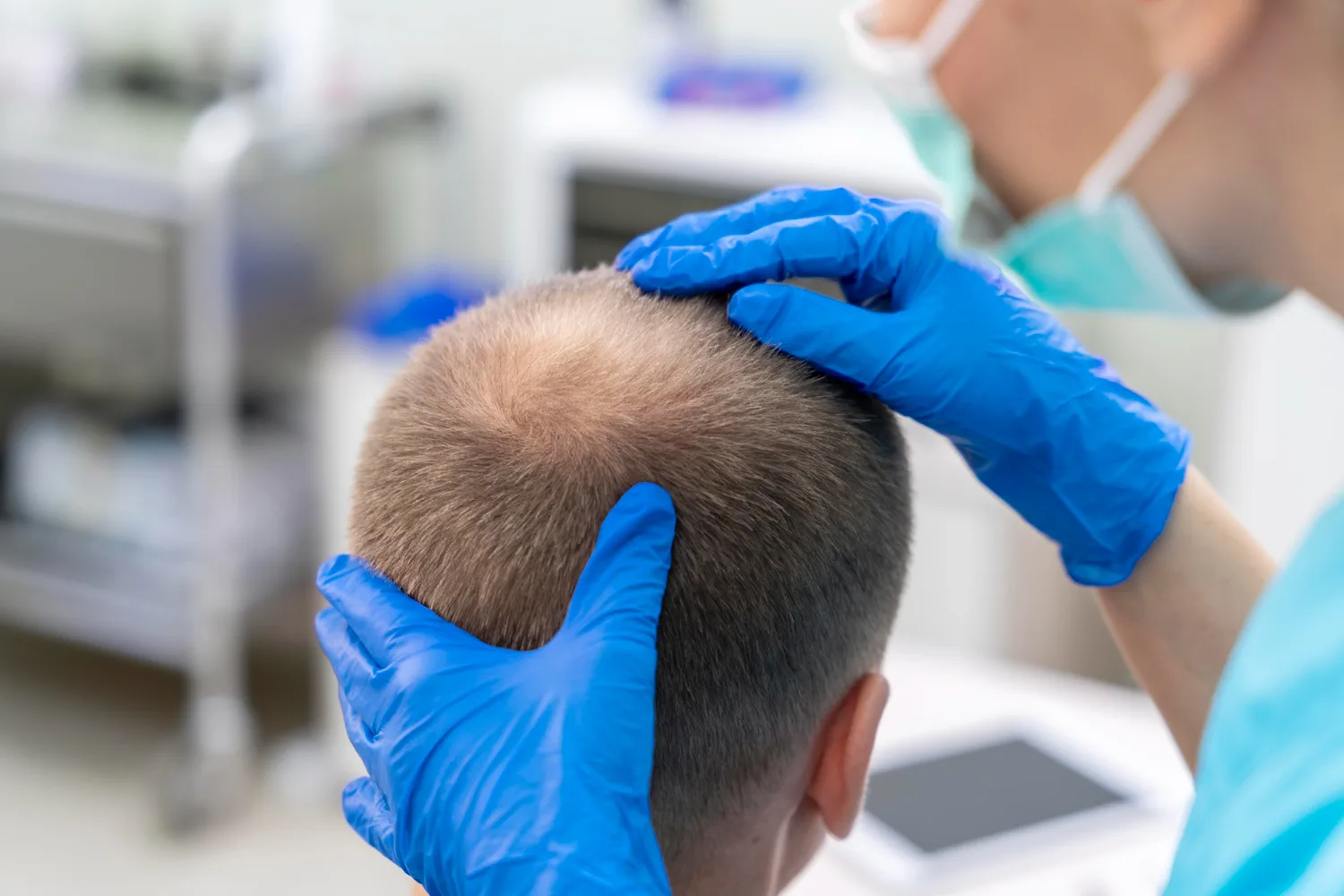
Not every patient needs DHI. The technique suits specific profiles. A qualified surgeon determines candidacy during consultation.
Why Do Men with Androgenetic Alopecia Choose DHI?
Male pattern baldness affects most men by age fifty. Androgenetic alopecia progresses in predictable patterns. Men with thinning at the crown or receding hairlines benefit from DHI. The technique restores density at the hairline. It also fills in vertex thinning. Medical therapy may accompany surgery. Finasteride and minoxidil help preserve native hair (Adil and Godwin 2017).
How Does DHI Help Women with Localized Hair Loss?
Women experience hair loss differently. They usually retain their hairline. Thinning occurs diffusely across the top. DHI suits women with localized patches. It also helps women with receding temples. The technique allows precise placement without shaving large areas. This discretion appeals to many female patients.
Why Do Patients Seeking Hairline Restoration Prefer DHI?
The hairline frames the face. It determines how young or old a person looks. DHI creates soft, irregular hairlines. The surgeon places single-hair grafts at the front. They angle them forward and downward. Behind this line, they add two- and three-hair grafts. This layering mimics natural density progression.
What Makes a Strong Donor Area Important?
DHI, like all transplants, moves hair from one place to another. The donor area must supply enough follicles. Surgeons assess density, thickness, and stability. A strong donor area contains many follicles per square centimeter. The hair should resist the effects of DHT. The back and sides of the head usually provide the best donor material.
When Do Cases Require High-Density Implantation?
Some patients need maximum density in a small zone. This need arises at the frontal hairline. It also occurs when covering scars. DHI packs grafts tightly. It achieves higher density per square centimeter than FUE. Patients with limited donor supply especially value this efficiency.
When May DHI Not Be Appropriate?
DHI is not ideal for every case. Patients needing more than 2,500 grafts may require FUE. Large sessions take too long with DHI. Patients with very curly hair may face challenges. The Choi pen works best with straight or wavy hair. Patients with active scalp infections must wait until healing completes. Those with unrealistic expectations need counseling before any procedure.
What Are the Clinical Benefits of Choosing Turkey for DHI?
Turkey offers specific advantages for DHI patients. These benefits extend beyond low prices.
How Does High Surgical Volume Improve Experience?
Practice makes perfect. Turkish surgeons perform more DHI procedures than surgeons in any other country. This repetition builds muscle memory. It refines judgment. It speeds up decision-making. High volume also means clinics encounter diverse hair types. They learn to adapt techniques for African, Asian, European, and Middle Eastern hair.
What Does Personalized Treatment Planning Involve?
Top clinics do not use one-size-fits-all approaches. They analyze each patient's unique features. They measure donor density. They assess hair caliber and curl. They design hairlines that match facial proportions. Digital simulations show expected results. This personalization improves satisfaction.
How Does Turkey Offer Competitive Pricing Without Compromising Quality?
Turkish clinics charge 50 to 70 percent less than Western clinics. A DHI procedure in the United Kingdom costs £5,000 to £15,000. In Turkey, the same procedure costs £1,500 to £3,500. This difference reflects lower operational costs. Rent, staff salaries, and insurance cost less in Turkey. Government subsidies support health tourism. High treatment volume creates economies of scale. The mature medical tourism infrastructure spreads costs across many patients.
What Do Comprehensive Aftercare Programs Include?
Quality clinics provide detailed aftercare. They give written instructions. They schedule follow-up calls. They offer medications for pain and swelling. They provide special shampoos and lotions. Some clinics include PRP therapy to boost growth. Regular check-ups track progress. This support continues for twelve months.
How Do Modern Sterilization Standards Protect Patients?
Accredited clinics follow strict protocols. They sterilize all instruments. They use disposable needles and punches. They maintain clean operating environments. These standards prevent infection. They also prevent cross-contamination. JCI-accredited facilities undergo regular audits.
How Does International Patient Coordination Work?
Dedicated coordinators speak multiple languages. They arrange airport pickup. They book hotel rooms. They schedule surgery and follow-up appointments. They translate medical documents. They remain available via WhatsApp or email. This coordination removes barriers for foreign patients.
What Happens Before the Procedure?
Preparation determines success. Patients who follow preoperative instructions achieve better outcomes.
What Is an Online Medical Assessment?
Most clinics begin with remote consultation. Patients submit photos of their scalp. They complete a medical history form. The surgeon reviews this information. They estimate graft needs. They quote prices. This assessment saves travel for unsuitable candidates.
What Does Hair Analysis Involve?
In-person analysis examines hair quality. The surgeon checks thickness, curl, and color. They measure the degree of miniaturization. They identify areas of active loss. This analysis guides the surgical plan.
How Do Surgeons Evaluate the Donor Area?
The donor area supplies all grafts. The surgeon measures density per square centimeter. They test scalp laxity. They mark safe extraction zones. They calculate how many grafts they can harvest without thinning the donor.
How Is Hairline Design Created?
The surgeon draws the proposed hairline. They consider facial symmetry, age, and patient preference. They use rulers and templates. They show the design in a mirror. The patient approves before surgery begins.
What Laboratory Tests Are Needed?
Clinics require blood tests. These tests check clotting ability. They screen for infections. They assess overall health. Patients with bleeding disorders may need special precautions.
What Preoperative Instructions Should Patients Follow?
Patients must stop blood-thinning medications one week before surgery. They should avoid alcohol for three days. They must stop smoking at least two weeks prior. Smoking reduces blood flow and impairs healing (Wang et al. 2024). Patients should wash their hair the morning of surgery. They must arrange transportation home after the procedure.
What Should Patients Expect During DHI Hair Transplant?
Understanding the surgical experience reduces anxiety. Patients who know what to expect feel more comfortable.
How Does Local Anesthesia Work?
The surgeon injects local anesthetic into the donor and recipient areas. Numbing takes effect within minutes. Patients feel pressure but no pain. Some clinics offer sedation for anxious patients. The patient remains awake throughout.
How Does Follicular Unit Extraction Work?
The surgeon uses a micro-punch to score the skin around each follicle. They gently lift the graft with forceps. An assistant places it in preservation solution. This process continues until the team harvests enough grafts.
How Is Graft Preservation Maintained?
Grafts sit in a chilled solution. This solution mimics the body's natural fluids. It prevents drying. It supplies nutrients. Technicians monitor temperature constantly. They prepare grafts for implantation quickly.
How Does Direct Implantation Proceed?
The surgeon loads each graft into the Choi pen. They insert the pen into the recipient area. The plunger releases the follicle. They repeat this action for every graft. The process requires patience and focus.
What Is the Typical Procedure Timeline?
A DHI session lasts six to nine hours. The team takes breaks for meals and rest. Patients can watch movies or listen to music. Some clinics provide entertainment systems. The long duration reflects the precision required.
How Is Patient Comfort Ensured?
Clinics provide comfortable chairs. They offer blankets and pillows. They serve meals and beverages. Staff check on patients regularly. Pain medication is available if needed. Most patients describe the experience as tiring but not painful.
What Is the Recovery Timeline After DHI Hair Transplant?
Recovery follows a predictable pattern. Knowing this timeline helps patients stay calm.
What Happens in the First 24 Hours?
The scalp feels tight and numb. Small crusts form around each graft. Patients must sleep with their head elevated. This position reduces swelling. They must avoid touching the transplanted area.
What Occurs During the First Week?
Swelling may appear on the forehead. It peaks around day three. It resolves by day five. Patients can wash their hair gently after day two. They must follow specific washing instructions. Most people return to desk work by day three or four.
What Changes Happen in the First Month?
The transplanted hairs enter a resting phase. They begin to shed. This shedding is normal. It is called shock loss. The follicles remain alive beneath the skin. New growth will follow. The donor area heals completely.
What Is the Shock Loss Phase?
Shock loss affects 70 to 80 percent of transplanted hairs. It occurs between weeks two and six. Patients often panic. They think the procedure failed. This reaction is unnecessary. The follicles are simply resetting. They will produce new hair in three to five months.
What Growth Appears at Three to Six Months?
Fine new hairs emerge. They may look thin or wispy at first. They grow approximately one centimeter per month. Density looks patchy. Some areas grow faster than others. This unevenness is temporary.
When Do Final Results Appear After Twelve Months?
By month nine, most grafts have grown. By month twelve, the hair reaches full thickness. The texture matches native hair. The patient can cut, style, and color the hair normally. This is the time to judge the final result.
What Results Can Patients Expect?
Realistic expectations lead to satisfaction. Patients should understand what DHI can and cannot achieve.
How Natural Will the Hairline Appear?
A well-executed DHI hairline looks completely natural. The irregular placement prevents a "pluggy" appearance. The forward angle mimics youthful hair. The density increases gradually from front to back.
What Hair Density Is Achievable?
Density depends on donor supply and recipient area size. Most patients achieve 30 to 40 follicles per square centimeter in the transplanted zone. This density looks full when styled. It may not match the density of teenage hair. But it restores a normal appearance.
How Long Does Hair Growth Last?
Transplanted hair comes from DHT-resistant follicles. These follicles retain their genetic properties. They continue growing for a lifetime. They do not fall out like the original hair did. However, native hair may continue thinning. Patients may need medical therapy to preserve it.
What Factors Affect Final Outcomes?
Several variables influence results. Surgeon skill matters most. Graft handling affects survival. Patient health plays a role. Smoking, poor diet, and stress can reduce growth. Post-operative care compliance is essential. Patients who follow instructions achieve better outcomes.
How Much Does DHI Hair Transplant Cost in Turkey?
Cost is a major factor in medical tourism. Turkey offers exceptional value.
What Factors Affect Pricing?
Several elements determine the final price.
Number of Grafts: More grafts mean higher cost. A 2,000-graft session costs less than a 3,500-graft session.
Clinic Reputation: Established clinics with strong track records charge more. Newer clinics may offer lower prices to attract patients.
Surgeon Experience: Senior surgeons with decades of experience command premium fees. Junior surgeons or technicians may perform procedures at lower cost.
Technology Used: Advanced Choi pens and digital planning tools add value. Clinics investing in these technologies reflect that investment in pricing.
Included Services: All-inclusive packages cost more upfront but save money overall. They cover accommodation, transfers, and medications.
What Is Usually Included in Treatment Packages?
Most Turkish clinics offer comprehensive packages.
Service | Typically Included |
Consultation | Yes |
Surgery | Yes |
Local Anesthesia | Yes |
Medications | Yes |
Accommodation (2-3 nights) | Yes |
Airport Transfers | Yes |
Interpreter Services | Yes |
Post-Operative Kit | Yes |
Follow-Up Consultations | Yes |
Why Does Turkey Offer Better Value?
Three factors explain Turkey's cost advantage. First, lower operational costs reduce overhead. Second, high treatment volume spreads fixed costs. Third, government support for medical tourism keeps prices competitive. Patients receive JCI-standard care at a fraction of Western prices.
How Should You Choose the Right DHI Hair Transplant Clinic in Turkey?
Selecting the right clinic is the most important decision. Safety and quality should guide this choice.
Why Should You Verify Surgeon Qualifications?
The surgeon should hold a medical degree. They should specialize in dermatology or plastic surgery. They should have specific training in hair restoration. Membership in organizations like the ISHRS indicates commitment to the field.
How Do You Evaluate Clinical Experience?
Ask how many DHI procedures the surgeon has performed. Request to see before-and-after photos. Look for cases similar to yours. Check how long the clinic has operated. New clinics may lack the systems to handle complications.
Why Review Before-and-After Cases?
Photos show real results. Look for consistency. Good clinics produce natural results across many patients. Be wary of clinics showing only a few perfect cases. Ask for photos of patients with similar hair loss patterns.
How Important Is Facility Accreditation?
Accreditation proves that independent bodies have inspected the clinic. JCI accreditation is the gold standard. Ministry of Health certification is essential. Unaccredited clinics may cut corners.
What Should You Know About Surgical Team Responsibilities?
Clarify who does what. Will the surgeon perform extraction and implantation? Will technicians assist? How many technicians will participate? The surgeon should lead the critical steps. High-volume "hair mills" often delegate surgery to unqualified staff.
How Should Follow-Up Care Work?
The clinic should provide clear aftercare instructions. They should schedule follow-up appointments. They should remain available for questions. Good clinics track results for twelve months. They address concerns promptly.
How Can You Spot Unrealistic Marketing Claims?
Be skeptical of guarantees. No ethical surgeon promises 100 percent density. Be wary of "unlimited grafts" offers. Quality has limits. Be cautious of prices that seem too low. Extremely cheap clinics may compromise safety. Trust clinics that set realistic expectations.
What Risks Should International Patients Consider?
All surgery carries risk. International patients face additional considerations.
Why Is Proper Consultation Essential?
Remote consultation cannot replace in-person examination. Patients should arrive one day early for final assessment. The surgeon must confirm candidacy. They must adjust the plan based on live examination.
How Do You Choose Licensed Medical Facilities?
Verify licenses before booking. Check the Health Turkiye portal. Look for Ministry of Health certificates. Avoid unlicensed operators. They operate outside regulatory oversight.
What Are "Hair Mill" Clinics?
Hair mills prioritize volume over quality. They schedule multiple patients per day. Technicians perform most of the work. The surgeon may only make brief appearances. These clinics often produce poor results. They may also create safety risks. Research thoroughly to avoid them.
Why Must Expectations Stay Realistic?
Hair transplantation restores hair. It does not create the hair density of a teenager. It does not stop future hair loss. Patients need ongoing maintenance. Understanding these limits prevents disappointment.
How Important Is Long-Term Follow-Up?
Hair grows for twelve months. Problems may appear late. The clinic should monitor progress. Patients should send photos at three, six, and twelve months. This tracking catches issues early.
Frequently Asked Questions About DHI Hair Transplant in Turkey
Is DHI Better Than Standard FUE?
Neither technique is universally superior. DHI offers more precision for hairline work. It reduces graft handling. It allows higher density in small areas. FUE handles larger graft numbers more efficiently. It covers bigger bald areas. The best technique depends on individual needs. A qualified surgeon recommends the right approach after examination.
Is the Procedure Painful?
Patients feel minimal pain. Local anesthesia numbs the scalp completely. Some pressure and tugging sensations occur. Post-operative soreness feels like mild sunburn. Pain medication manages any discomfort. Most patients rate pain as low.
How Long Does Surgery Take?
A typical DHI session lasts six to nine hours. The duration depends on graft number. The surgeon's speed and team size also matter. Patients should plan for a full day.
How Many Grafts Can Be Implanted?
DHI typically implants 1,500 to 2,500 grafts per session. Some experienced teams reach 3,000. Higher numbers require longer sessions. Patients needing more grafts may need multiple sessions or FUE.
When Will Hair Start Growing?
New hair appears around month three. It starts fine and thin. It thickens over time. Noticeable density builds by month six. Full results appear at twelve months.
How Long Should International Patients Stay in Turkey?
Most patients stay three to four days. Day one covers consultation and surgery. Day two includes a follow-up wash. Day three allows rest before flying. Some clinics recommend five days for extra monitoring.
Are DHI Results Permanent?
Yes. Transplanted hair comes from DHT-resistant follicles. These follicles maintain their resistance after relocation. They grow permanently. However, native hair may continue thinning. Medical therapy helps preserve it.
Can Women Undergo DHI Hair Transplant?
Yes. Women with localized thinning, receding hairlines, or traction alopecia can benefit. DHI allows precise placement. It also permits partial shaving. This discretion appeals to many female patients.
Is One Session Enough?
One session suffices for many patients. Those with early to moderate hair loss achieve good coverage. Patients with advanced baldness may need two sessions. The surgeon advises during consultation.
Conclusion
Turkey continues to lead global DHI hair transplantation for clear reasons. The country combines surgical expertise, advanced technology, patient-focused care, and exceptional value. Istanbul serves as the operational heart of this industry. Thousands of international patients travel there each month. They return home with restored confidence and natural results.
Choosing a clinic requires careful research. Price should not be the only factor. Safety, transparency, and individualized treatment planning matter more. Patients should verify surgeon qualifications. They should check facility accreditation. They should review real case results. They should avoid high-volume hair mills.
DHI hair transplant offers a proven path to hair restoration. The Choi Implanter Pen delivers precision that few other techniques match. When performed by experienced surgeons in accredited facilities, DHI produces natural, dense, and permanent results. Turkey provides the ideal environment for this procedure. The combination of skill, infrastructure, and affordability remains unmatched anywhere in the world.
References
Adil, Areej, and Marshall Godwin. "The Effectiveness of Treatments for Androgenetic Alopecia: A Systematic Review and Meta-Analysis." Journal of the American Academy of Dermatology, vol. 77, no. 1, 2017, pp. 136-141.
Alves, Ruben, and Ramon Grimalt. "Platelet-Rich Plasma in Combination with 5% Minoxidil Topical Solution and 1 mg Oral Finasteride for the Treatment of Androgenetic Alopecia: A Randomized Placebo-Controlled, Double-Blind, Half-Head Study." Dermatologic Surgery, vol. 44, no. 1, 2018, pp. 126-130.
Choi, Jung Chul, and Jung Chul Kim. "The Choi Hair Transplanter." Hair Replacement Surgical and Medical, edited by Dowling B. Stough and Robert Haber, Mosby, 1996, pp. 125-127.
Chouhan, Kuldeep, et al. "Approach to Hair Transplantation in Advanced Grade Baldness by Follicular Unit Extraction: A Retrospective Analysis of 820 Cases." Journal of Cutaneous and Aesthetic Surgery, vol. 12, no. 4, 2019, pp. 215-222.
Dhurat, Rachita, et al. "A Randomized Evaluator Blinded Study of Effect of Microneedling in Androgenetic Alopecia: A Pilot Study." International Journal of Trichology, vol. 5, no. 1, 2013, pp. 6-11.
Haider, Syed Ali, et al. "The Allures and the Alarms of the Hair Transplant Tourism Industry." Aesthetic Plastic Surgery, vol. 49, no. 17, 2025, pp. 4745-4753.
Jimenez, Francisco, et al. "Hair Transplantation: Basic Overview." Journal of the American Academy of Dermatology, vol. 85, no. 4, 2021, pp. 803-814.
Olsen, Elise A., et al. "A Randomized Clinical Trial of 5% Topical Minoxidil versus 2% Topical Minoxidil and Placebo in the Treatment of Androgenetic Alopecia in Men." Journal of the American Academy of Dermatology, vol. 47, no. 3, 2002, pp. 377-385.
Wang, F., et al. "Using the Follicular Unit Extraction Technique in Treatment of Male Androgenetic Alopecia." BMC Surgery, vol. 24, 2024, p. 11566358.