Turkey leads the world in FUE hair transplant procedures. Thousands of patients travel here every year for natural, permanent hair restoration. This guide covers everything you need to know about getting an FUE hair transplant in Turkey, from candidacy to recovery.
What Is an FUE Hair Transplant?
FUE stands for Follicular Unit Extraction. Surgeons use this technique to move individual hair follicles from one area to another.
Follicular Unit Extraction means removing hair follicles one by one. Surgeons take these follicles from a donor area and place them where hair has thinned or disappeared. Bernstein and Rassman introduced this minimally invasive approach in 2005, and it changed hair restoration surgery forever (Bernstein and Rassman 309).
This method differs from older techniques. Older methods removed a strip of scalp. FUE removes only tiny individual units. Each unit contains one to four hairs. Surgeons call these units "follicular units." They represent the natural way hair grows on your scalp.
How Does FUE Work?
FUE works in three main stages. First, the surgeon extracts follicles. Second, the surgeon creates recipient channels. Third, the surgeon implants the grafts.
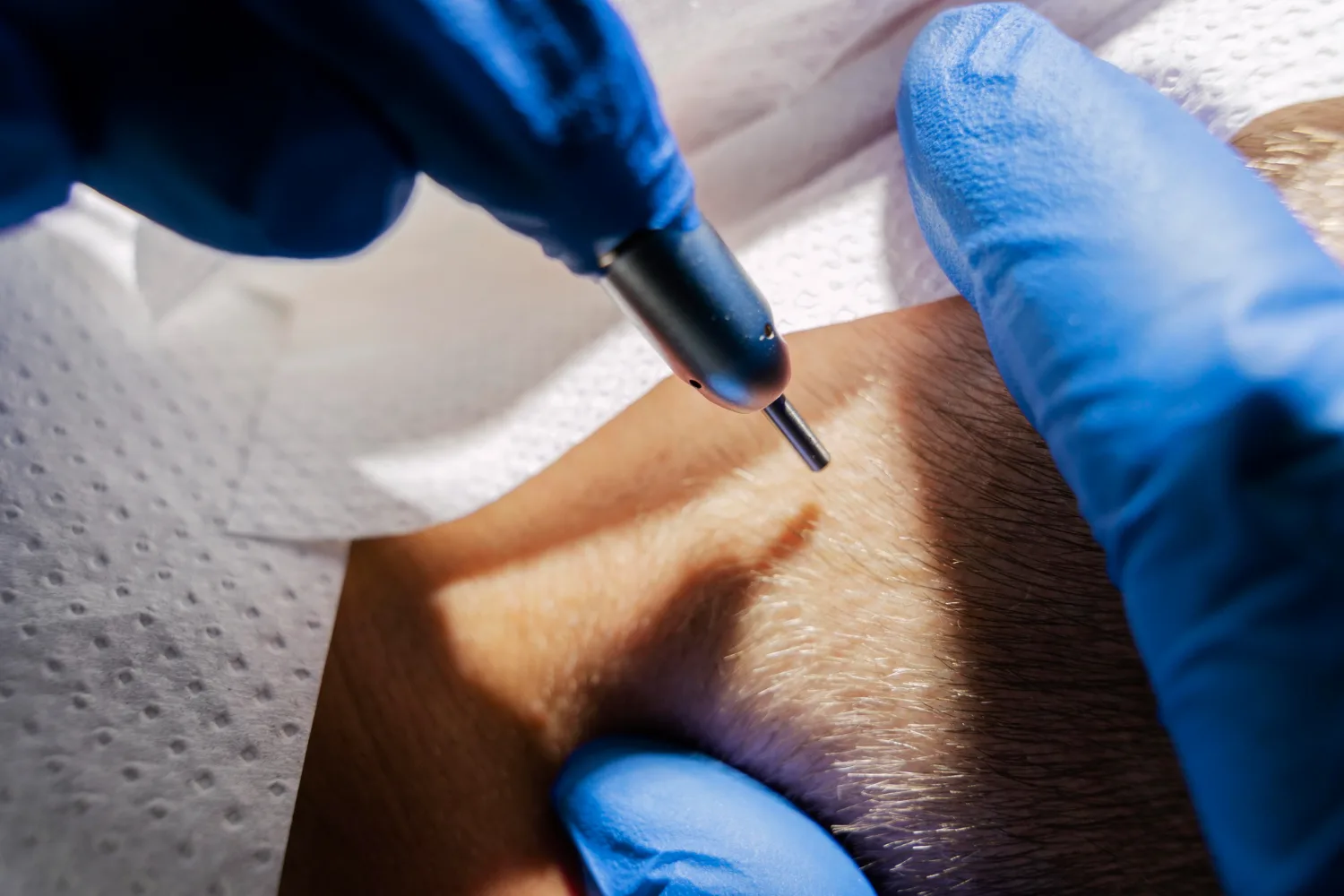
During extraction, the surgeon uses a small punch tool. This tool measures between 0.7 and 1.0 millimeters in diameter. The surgeon places the punch around each follicle. Then the surgeon gently removes the follicle from the scalp. The team keeps these grafts in a special solution. This solution preserves the grafts until implantation.
Next, the surgeon creates tiny openings in the bald area. These openings receive the grafts. Finally, the surgeon places each graft into its new position. The surgeon angles each graft carefully. This angle matches your natural hair growth pattern.
How Does FUE Differ from FUT?
FUE leaves no linear scar. FUT removes a strip of skin from the back of your head. This strip leaves a long scar. FUE takes individual follicles instead. You can wear your hair short after FUE. Nobody sees scars.
FUE heals faster than FUT. Patients return to normal activities sooner. The procedure causes less pain. You need fewer pain medications. FUE also suits people with tight scalps. FUT sometimes fails in these cases.
Orentreich pioneered hair transplantation in 1959, but FUE represents the biggest leap forward since then (Orentreich 463). Modern patients prefer FUE because it looks natural and heals quickly.
How Has FUE Technology Evolved?
Standard FUE started the revolution. Surgeons used manual punches and simple tools. Then Sapphire FUE arrived. This technique uses blades made from sapphire crystal. These blades create sharper, cleaner channels. Patients heal faster with Sapphire FUE.
Micro FUE came next. This technique uses even smaller punches. Some punches measure 0.6 millimeters. Smaller punches leave tinier scars. Hybrid approaches now combine FUE with DHI methods. Surgeons extract with FUE tools and implant with DHI pens. These advances give patients more options than ever.
Why Should You Choose Turkey for an FUE Hair Transplant?
Turkey offers world-class hair restoration at affordable prices. Patients from Europe, Asia, the Middle East, and the Americas come here every year.
Why Does Turkey Have an International Reputation?
Turkey built its reputation over decades. Turkish surgeons performed millions of hair transplants. Word spread through patient reviews and online forums. Today, Turkey ranks among the top three destinations for hair transplant in Turkey. International media regularly feature Turkish clinics. Patients share their FUE before and after photos on social media. This visibility attracts more patients every year.
Why Do Experienced Surgeons Choose Turkey?
Turkey attracts talented surgeons. These doctors perform hundreds of procedures annually. High volume means more practice. More practice means better skills. Many Turkish surgeons train internationally. They attend conferences in Europe and America. Then they bring advanced techniques home. Some surgeons have performed over 10,000 procedures. This experience matters enormously in hair restoration surgery.
Why Does High Procedure Volume Matter?
High volume creates expertise. Surgeons see every type of hair loss. They handle curly hair, straight hair, fine hair, and coarse hair. They treat different ethnicities. They manage complications. This breadth of experience improves outcomes. A surgeon who performs ten transplants weekly learns faster than one who performs ten monthly.
What Modern Facilities Does Turkey Offer?
Turkish clinics invest in modern equipment. They use the latest micromotors. They install high-definition microscopes. They maintain sterile operating rooms. Many clinics meet international accreditation standards. Some facilities rival hospitals in London or New York. Patients receive care in comfortable, clean environments.
Why Is Turkey More Affordable?
Turkey offers lower costs for several reasons. The cost of living sits below Western Europe. Salaries for medical staff cost less. Rent and utilities cost less. These savings pass to patients. A hair transplant clinic Turkey can charge less while maintaining quality. You get the same surgeon skill and modern equipment for a fraction of the price.
What Do All-Inclusive Packages Include?
Most clinics offer packages. These packages include the surgery, hotel, airport transfers, and medications. Some include PRP treatments. Others include shampoo and special pillows. You pay one price. You avoid surprise costs. This convenience appeals to international patients. You focus on healing, not logistics.
How Strong Is the Medical Tourism Infrastructure?
Turkey supports medical tourism at the national level. Istanbul Airport serves hundreds of international destinations. Hotels cater to recovering patients. Restaurants offer healthy options. The government promotes medical tourism actively. This infrastructure makes your journey smooth from arrival to departure.
Who Makes a Good Candidate for FUE Hair Transplant?
Not everyone qualifies for FUE. Surgeons evaluate several factors before approving surgery.
Can Men with Pattern Baldness Get FUE?
Yes, men with male pattern baldness make ideal candidates. This condition affects most men eventually. Genetics and hormones cause it. FUE restores hairlines and fills crowns. Men with stable donor areas see the best results. The surgeon examines your donor area first. Good donor density means more grafts available.
Can Women Get FUE?
Yes, women can undergo FUE. Female hair loss differs from male patterns. Women often thin across the entire scalp. Surgeons must evaluate donor reserves carefully. Women with localized thinning respond best. Those with diffuse thinning may need medical therapy first. Avram and Rogers confirmed that women achieve excellent results when surgeons select cases properly (Avram and Rogers 1705).
Can FUE Restore Beards and Eyebrows?
Yes, FUE works for facial hair too. Men with patchy beards benefit greatly. Surgeons extract chest or scalp hair. They implant these hairs into the beard area. Eyebrow restoration requires extreme precision. Each hair must angle perfectly. Results look completely natural.
Can FUE Reconstruct Hairlines?
Yes, hairline design represents one of FUE's greatest strengths. Surgeons create natural, age-appropriate hairlines. They follow your facial proportions. They consider your ethnicity. They avoid straight, artificial lines. A good hairline frames your face. It takes years off your appearance.
Can FUE Camouflage Scars?
Yes, surgeons use FUE to hide scars. Previous surgeries, accidents, or burns leave bald patches. FUE implants hair directly into scar tissue. The hair grows through the scar. This camouflage improves confidence significantly. Scar tissue has poorer blood supply, so surgeons plan carefully.
How Do Surgeons Assess Donor Areas?
Surgeons examine your donor area thoroughly. They check hair density. They measure hair caliber. They evaluate scalp laxity. They look for miniaturization. Strong, thick donor hair produces the best results. Pathomvanich emphasized that careful donor assessment prevents overharvesting and ensures long-term success (Pathomvanich 345).
What Medical Conditions Affect Eligibility?
Some conditions disqualify patients. Uncontrolled diabetes increases infection risk. Blood clotting disorders cause bleeding problems. Active scalp infections must clear first. Autoimmune diseases need evaluation. Surgeons review your full medical history. They may request blood tests. Honesty about your health protects you.
Does Age Matter for FUE?
Age matters, but no strict cutoff exists. Most surgeons prefer patients over 25. By this age, hair loss patterns stabilize. Younger patients may lose more hair later. Surgeons must plan for future loss. Older patients can still benefit. One patient in his seventies achieved excellent results. The key lies in donor quality, not age alone.
What Expectations Should Patients Have?
Realistic expectations separate happy patients from disappointed ones. FUE restores hair. It does not create the density of your teenage years. It does not stop future hair loss. You may need medical therapy to maintain non-transplanted hair. Good surgeons explain these limits clearly. They show you realistic hair transplant results.
What Conditions Can FUE Treat?
FUE treats many types of hair loss. Surgeons use it for androgenetic alopecia. This genetic condition causes most balding. FUE also helps traction alopecia. Tight hairstyles pull hair out. FUE restores these damaged areas.
Stable alopecia areata sometimes responds to FUE. Selected patients with limited patches see improvement. Hairline recession responds excellently. Crown thinning improves with enough grafts. Surgeons correct previous transplants. They add density to old work. Facial hair restoration includes beards, mustaches, and eyebrows.
What Happens During an FUE Hair Transplant Step-by-Step?
Understanding the process reduces anxiety. Here is what you experience.
What Happens at the Initial Consultation?
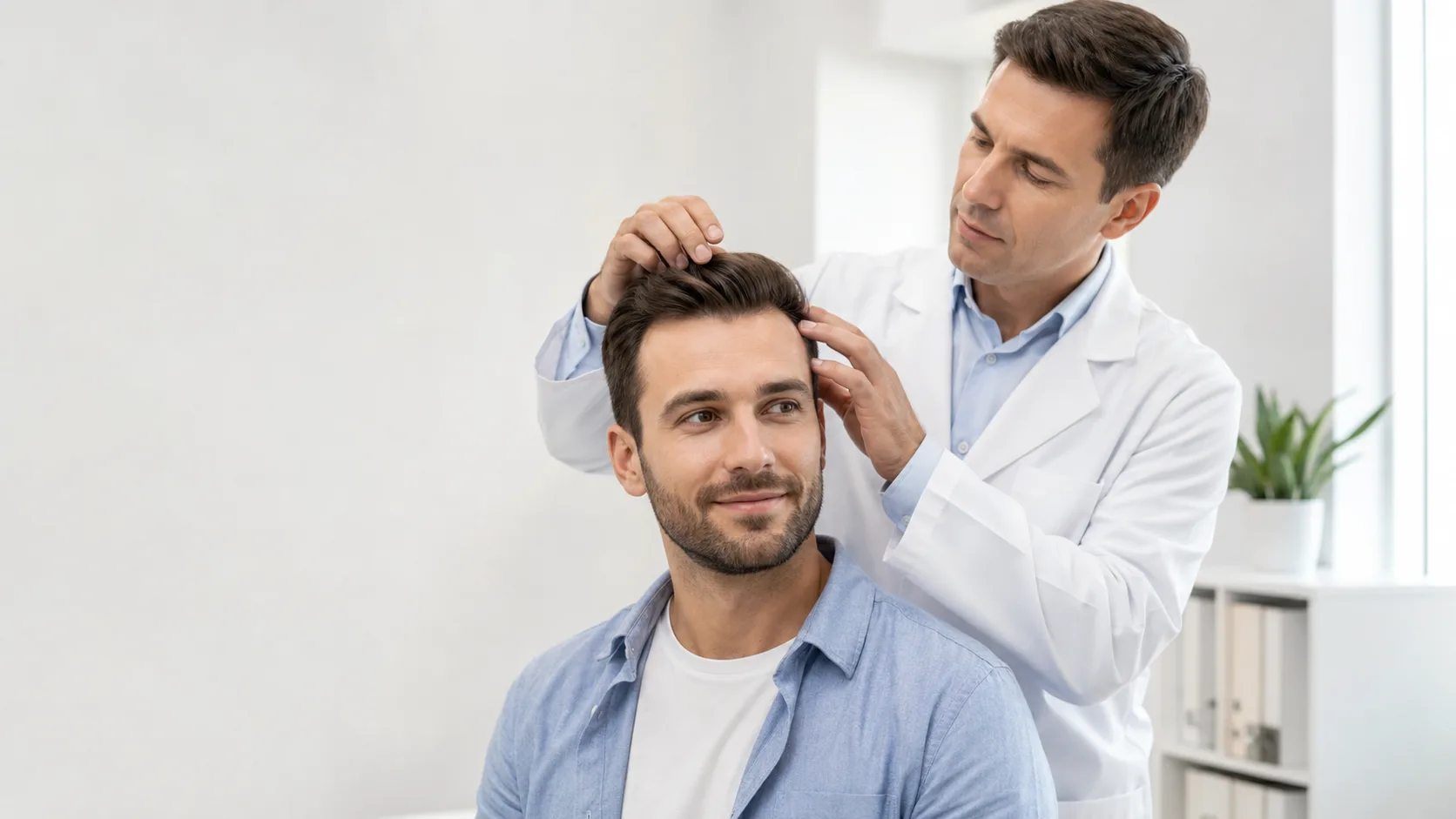
The surgeon meets you. You discuss your goals. The surgeon examines your scalp. You review your medical history. The surgeon explains realistic outcomes. You ask questions. The team takes photos. These photos document your baseline. This consultation builds trust between you and your surgeon.
How Do Surgeons Analyze Hair?
Surgeons use trichoscopy. This digital analysis magnifies your scalp. It shows hair density, caliber, and miniaturization. Some clinics use computerized systems. These systems calculate exact graft numbers. This analysis takes minutes. It provides objective data for planning.
How Do Surgeons Design Hairlines?
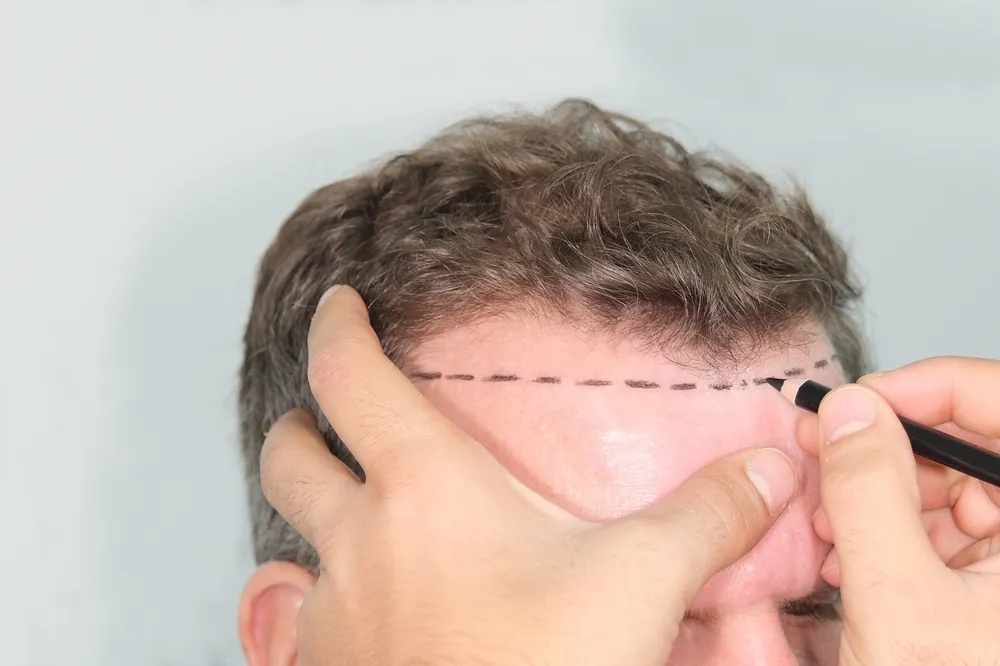
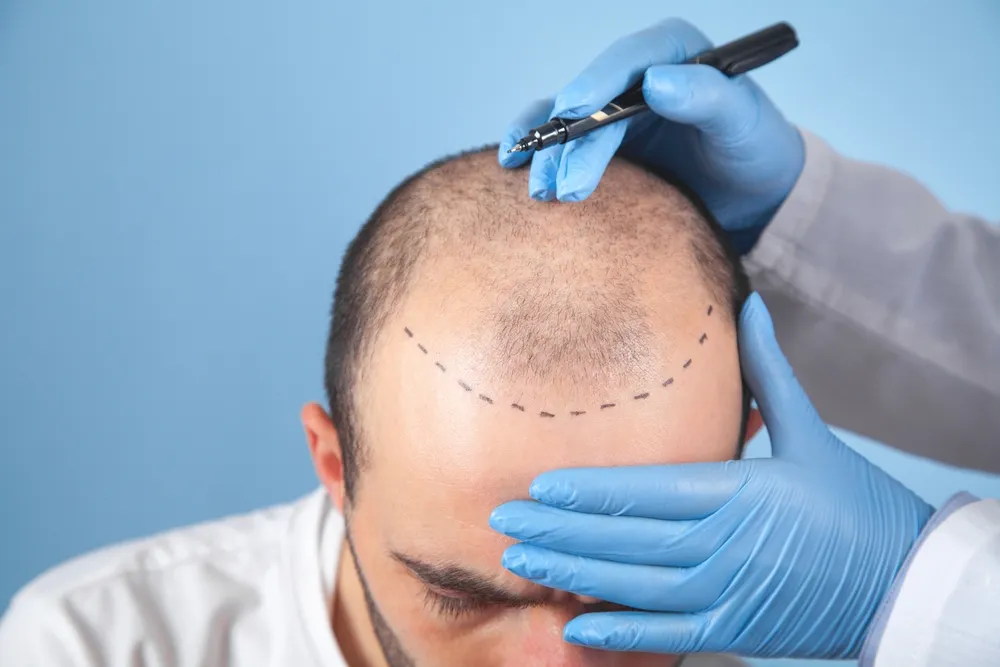
Hairline design requires artistry and science. The surgeon measures your face. He considers your age and ethnicity. He marks the proposed hairline. You see it in a mirror. You approve it together. A good hairline follows natural irregularities. It avoids perfect symmetry. Nature never creates perfectly straight lines.
How Do Surgeons Prepare Donor Areas?
The surgeon shaves your donor area. Some clinics offer unshaven FUE. This option costs more and takes longer. Most patients prefer the shaved approach. The team cleans the area with antiseptic. They inject local anesthesia. You feel no pain during extraction.
How Does Local Anesthesia Work?
The surgeon injects numbing medication into your scalp. You feel tiny pinches. Then the area goes numb. You stay awake throughout. You can watch movies or listen to music. Some clinics offer sedation. Sedation helps anxious patients relax. You feel no pain during the FUE procedure.
The surgeon uses a micromotor or manual punch. The tool rotates around each follicle. It cuts the surrounding tissue. The surgeon gently pulls the follicle free. An assistant collects the graft. The team sorts grafts by hair count. They place single-hair grafts for the hairline. They use multi-hair grafts for density behind it.
How Do Teams Preserve Grafts?
Grafts stay alive outside your body for hours. Teams place them in a cold storage solution. Some solutions contain nutrients. Temperature control matters. Teams avoid desiccation. They handle grafts with delicate forceps. Proper preservation ensures high graft survival rates.
How Do Surgeons Create Recipient Channels?
The surgeon makes tiny slits in your scalp. These slits receive the grafts. The surgeon controls depth, angle, and direction. Each channel matches surrounding hair. This step determines your final look. Cole noted that channel density directly affects visual fullness (Cole 697).
How Do Surgeons Implant Grafts?
The team places each graft into its channel. They use fine forceps or implanters. They avoid crushing the graft. They ensure proper depth. Too shallow exposes the graft. Too deep creates pitting. Experienced teams work quickly but carefully.
What Happens at Final Evaluation?
The surgeon reviews the placement. He checks density and symmetry. The team counts grafts. They clean your scalp. They apply a bandage if needed. You receive aftercare instructions. Then you return to your hotel. The procedure ends.
What Technologies Do Modern FUE Clinics Use?
Technology improves results constantly. Turkish clinics adopt innovations quickly.
Micromotors spin the punch rapidly. They reduce extraction time. They minimize tissue trauma. Surgeons control speed precisely. Different speeds suit different hair types. Micromotors extract thousands of grafts efficiently. Harris developed early motorized systems that paved the way for today's tools (Harris 195).
When Do Surgeons Use Manual Punches?
Some surgeons prefer manual extraction. Manual punches give more control. They suit delicate cases. Curly hair sometimes responds better to manual tools. The surgeon feels the tissue resistance. This tactile feedback prevents damage. Manual extraction takes longer but produces excellent graft quality.
How Do Sapphire Blades Help?
Sapphire blades come from synthetic sapphire crystal. They stay sharper than steel. They create smaller, cleaner channels. Less tissue trauma means faster healing. Less scabbing occurs. Zontos and colleagues demonstrated that sapphire blades reduce postoperative inflammation compared to traditional steel (Zontos et al. 151).
Why Do Surgeons Use Magnification?
Surgeons wear surgical loupes or use microscopes. Magnification reveals follicle details. Surgeons see the exact angle of each hair. They avoid transecting follicles. Transection kills the graft. Good magnification reduces this waste.
How Does Digital Hairline Planning Work?
Some clinics use digital planning software. They overlay proposed hairlines on your photos. They calculate graft distribution. They simulate density outcomes. This technology aids communication. You see possibilities before surgery begins.
How Does PRP Support Healing?
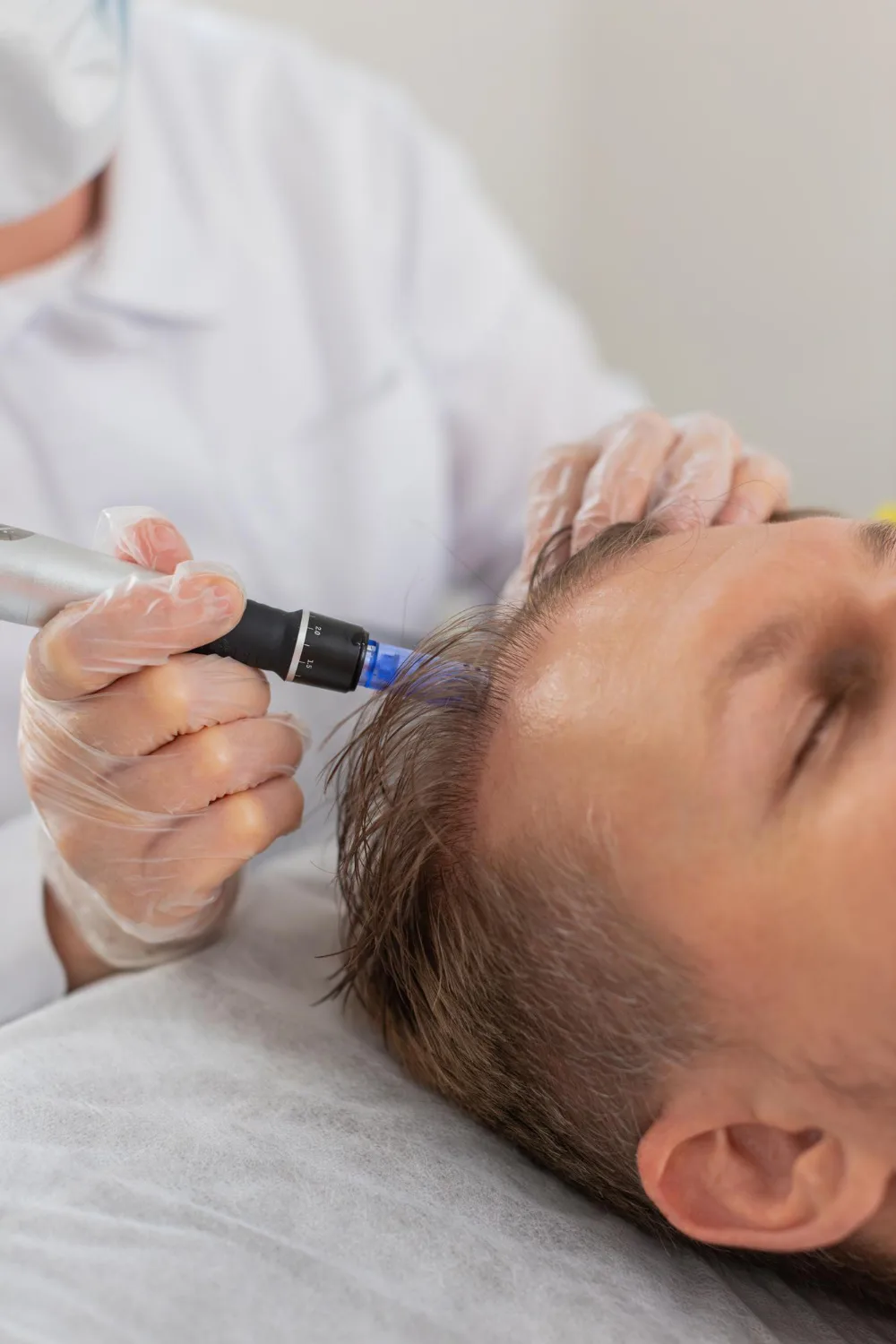
PRP means Platelet-Rich Plasma. The team draws your blood. They spin it in a centrifuge. This concentrates platelets. They inject this plasma into your scalp. Platelets release growth factors. These factors speed healing. They may improve graft survival. Moi confirmed that PRP enhances follicular regeneration in clinical settings (Moi 107).
When Do Clinics Use Regenerative Therapies?
Some clinics offer stem cell therapy or exosomes. These treatments remain experimental. They may help healing. They may improve growth. Research continues in this area. Gho and colleagues explored hair follicle regeneration through stem cell applications, showing promising laboratory results (Gho et al. 1183).
How Long Does an FUE Hair Transplant Take?
Most procedures take one day. Complex cases may need two days.
How Does Graft Number Affect Duration?
More grafts mean more time. A 1,000-graft case takes three to four hours. A 4,000-graft case takes seven to nine hours. The surgeon must maintain precision throughout. Fatigue affects quality. Teams take breaks. They eat and rest. This pacing protects your results.
How Long Does One Session Last?
Typical sessions last four to eight hours. You receive breaks. You stretch your legs. You use the restroom. The clinic serves meals. Long sessions require patience. Bring entertainment. Download movies or podcasts.
Can You Complete FUE in One Day?
Yes, most cases finish in one day. Mega-sessions with 5,000+ grafts may split across two days. This split protects graft viability. It also reduces surgeon fatigue. Your coordinator explains the schedule beforehand.
How Many Grafts Will You Need?
Graft needs vary by person. The following table shows typical ranges:
|
Hair Loss Area
|
Estimated Grafts
|
|
Hairline
|
1,000–1,800
|
|
Frontal Zone
|
1,500–2,500
|
|
Mid-scalp
|
2,000–3,000
|
|
Crown
|
1,500–3,000
|
|
Extensive Hair Loss
|
4,000–6,000+
|
Your surgeon calculates exact needs during consultation. Donor supply limits maximum grafts. Surgeons must preserve donor hair for future needs. Younger patients especially need conservative planning.
What Does Recovery Look Like After FUE?
Recovery follows a predictable timeline. Patience brings rewards.
What Happens in the First 24 Hours?
You rest in your hotel. The clinic provides a neck pillow. You avoid touching the grafts. Some clear fluid oozes from the donor area. This oozing stops quickly. You take prescribed antibiotics and anti-inflammatories. Pain remains minimal. Most patients describe tightness, not pain.
What Should You Expect in the First Week?
Scabs form around grafts. You wash gently starting day two or three. The clinic shows you the technique. You use a special shampoo. You pour water carefully. You avoid rubbing. Redness fades gradually. Most patients feel comfortable by day five.
Tiny scabs form around each graft. These scabs protect the follicle. They fall off naturally within ten days. Do not pick them. Picking dislodges grafts. Let them shed on their own. Proper washing speeds this process.
What Is Shock Loss?
Shock loss means transplanted hairs fall out. This happens around weeks two to four. It surprises many patients. But the follicle remains alive. New hair grows from that follicle. Shock loss is normal. It does not mean failure. Jimenez and Ruifernandez studied follicle growth cycles extensively, confirming this shedding phase as part of normal regeneration (Jimenez and Ruifernandez 965).
What Changes at One Month?
Scabs have gone. Redness fades. The donor area looks normal. Transplanted hairs have shed. The scalp looks similar to pre-surgery. This stage tests patience. Trust the process.
What Changes at Three Months?
New hairs emerge. They look thin and wispy. They grow slowly. Some follicles activate before others. You see patchy growth. This patchiness normalizes over time. Early growth brings excitement.
What Changes at Six Months?
You see real density now. Hairs thicken. They gain pigment. The hairline looks defined. You style your hair normally. Most people notice the improvement. Your confidence grows.
What Changes at Nine Months?
Density increases further. Hairs continue to mature. They become coarser. The result looks increasingly natural. You forget about the transplant. The hair simply looks like yours.
What Changes at Twelve Months?
You see the final result. Hair reaches full thickness. The hair transplant recovery timeline completes. You evaluate density, coverage, and naturalness. Most patients feel thrilled at this stage.
How Does Hair Grow Long-Term?
Transplanted hair grows permanently. It comes from the donor area. Donor hair resists balding hormones. It keeps growing for decades. You may need future transplants for areas not treated. You may use medications to protect remaining hair.
What Aftercare Steps Must You Follow?
Aftercare protects your investment. Follow instructions exactly.
How Should You Wash Your Hair?
You start washing on day two or three. Use the clinic's recommended shampoo. Pour water gently from a cup. Do not shower directly on your scalp. Pat dry with a paper towel. Do not rub. Repeat twice daily. This routine prevents infection and removes scabs.
What Sleeping Position Works Best?
Sleep on your back. Use a travel pillow. This position prevents graft contact with pillows. It reduces swelling. Keep your head elevated. Use two pillows. Elevation minimizes facial swelling.
When Can You Exercise Again?
Avoid exercise for two weeks. Sweating increases infection risk. Blood pressure rises during exertion. This rise can dislodge grafts. Walking is fine. Light cardio starts after ten days. Heavy lifting waits three weeks.
Why Should You Avoid Smoking and Alcohol?
Smoking constricts blood vessels. Reduced blood flow starves grafts. Alcohol thins blood. Thin blood increases bleeding. Stop smoking two weeks before surgery. Avoid alcohol one week before and one week after. These habits seriously affect graft survival.
How Does Sun Exposure Affect Healing?
Sun damages healing skin. UV rays darken scars. They slow healing. Wear a loose hat after two weeks. Avoid direct sun for one month. Use sunscreen on the donor area after healing completes.
When Can You Swim or Use Saunas?
Avoid swimming for one month. Pool chemicals irritate grafts. Ocean salt stings. Saunas and steam rooms wait four weeks. Heat and sweat create infection risks. Follow these rules strictly.
What Medications Do You Need?
Clinics prescribe antibiotics. They prevent infection. They prescribe anti-inflammatories. These reduce swelling. Some prescribe minoxidil. This stimulates growth. Others prescribe finasteride. This blocks hair loss hormones. Take medications exactly as directed.
Why Do Follow-Up Visits Matter?
Your surgeon checks healing. He removes any remaining crusts. He evaluates growth. He addresses concerns. These visits catch problems early. Attend all scheduled appointments. Even if you feel fine, the surgeon sees things you cannot.
What Results Can Patients Expect?
Results vary by individual. Good candidates see excellent outcomes.
How Dense Will Your Hair Become?
Density depends on graft number and hair caliber. Thick hair looks denser than fine hair. Surgeons place 30 to 45 grafts per square centimeter. This density creates natural fullness. It does not match your original teenage density. But it looks completely natural.
How Natural Will Your Hairline Look?
A skilled surgeon creates an undetectable hairline. He mimics natural irregularities. He varies graft direction. He uses single-hair grafts at the front. These fine hairs create a soft, feathered edge. Nobody guesses you had surgery. Limmer established early density principles that modern surgeons still follow (Limmer 133).
Are FUE Results Permanent?
Yes, FUE offers permanent hair restoration. The transplanted follicles resist DHT. DHT is the hormone that causes balding. Donor hair keeps this resistance after moving. It grows forever. However, your original hair may continue thinning. You need maintenance therapy for non-transplanted areas.
What Factors Affect Success?
Donor quality matters most. Surgeon skill matters enormously. Aftercare compliance protects results. Genetics influence future loss. Medical therapy supports long-term density. Smoking and poor health reduce success. Choose your surgeon carefully. Follow all instructions.
What Advantages Does FUE Offer?
FUE provides many benefits. Minimal scarring tops the list. You see only tiny dots. These dots hide under short hair. Recovery takes days, not weeks. Results look natural. Hair grows permanently. You can wear any hairstyle. Graft survival rates exceed 90 percent. Surgeons harvest from various donor areas. These advantages make FUE the most popular hair restoration surgery worldwide.
What Risks and Side Effects Can Occur?
Every surgery carries risks. FUE risks remain low but real.
How Long Does Swelling Last?
Swelling peaks at day three. It affects the forehead and around the eyes. It looks dramatic but causes no harm. It resolves within five to seven days. Cold compresses help. Elevation speeds resolution.
Why Does Redness Appear?
Redness indicates healing blood vessels. It fades within two weeks. Some patients see redness for a month. This extended redness causes no problems. It simply shows active healing.
Why Does Itching Happen?
Itching means healing. Nerve endings regenerate. This process creates itchiness. Do not scratch. Scratching dislodges grafts. It introduces infection. Pat gently around the area. Moisturizing spray helps.
What Causes Shock Loss?
Shock loss occurs when trauma disturbs surrounding hairs. Existing weak hairs fall out. This loss is usually temporary. They regrow within months. Existing strong hairs rarely shock.
How Can Infection Occur?
Infection happens rarely. Poor hygiene causes it. Touching grafts with dirty hands causes it. Swimming too early causes it. Antibiotics prevent most infections. Report excessive pain, pus, or fever immediately.
What Is Folliculitis?
Folliculitis means inflamed hair follicles. Small pimples appear. They contain pus. They usually resolve with warm compresses. Severe cases need antibiotics. This condition affects a small percentage of patients.
What Is Overharvesting?
Overharvesting means taking too many grafts from the donor area. The area looks thin or patchy. Good surgeons leave enough donor hair. They calculate safe extraction limits. Devroye warned that aggressive extraction damages donor reserves permanently (Devroye 121).
How Can Poor Hairline Design Hurt Results?
A bad hairline looks unnatural. It sits too low. It looks too straight. It ignores facial proportions. These mistakes require correction surgery. Choose a surgeon with strong artistic sense. Review his before-and-after gallery carefully.
How Can You Minimize All Risks?
Choose an experienced surgeon. Follow aftercare exactly. Avoid smoking. Keep the scalp clean. Attend follow-ups. Ask questions when unsure. These simple steps prevent nearly all complications.
How Does FUE Compare to DHI?
Both techniques extract follicles individually. They differ in implantation:
|
Feature
|
FUE
|
DHI
|
|
Extraction Method
|
Micromotor or manual punch
|
Micromotor or manual punch
|
|
Implantation Tool
|
Forceps or standard implanter
|
Choi Pen
|
|
Recipient Channels
|
Created before implantation
|
Created simultaneously with implantation
|
|
Density Potential
|
High
|
Very High
|
|
Suitable Cases
|
Most patients
|
Selected patients with adequate donor
|
|
Cost
|
Lower
|
Higher
|
|
Healing Time
|
Standard
|
Similar
|
FUE suits most patients. DHI works well for specific cases. Hwang's comparative research showed both methods achieve comparable survival rates when surgeons apply them correctly (Hwang 445). Your surgeon recommends the best approach for your situation.
How Does FUE Compare to Sapphire FUE?
Sapphire FUE uses sapphire crystal blades instead of steel. This difference matters significantly.
Standard steel blades work well. They create recipient channels effectively. Sapphire blades offer advantages. They stay sharper longer. They create smaller incisions. Less tissue trauma occurs. Patients heal faster. Scabbing reduces. Redness fades sooner.
Sapphire FUE suits patients who want minimal downtime. It costs slightly more. Not every patient needs it. Your surgeon decides based on your scalp characteristics and goals.
How Much Does FUE Hair Transplant Cost in Turkey?
Turkey offers the best hair transplant cost Turkey ratios globally.
What Factors Affect the Cost?
Several factors determine price. Graft number matters most. More grafts cost more. Surgeon experience affects price. Top surgeons charge premium rates. Clinic reputation plays a role. Famous clinics cost more. Technique selection matters. Sapphire FUE and DHI cost more than standard FUE. Hotel quality affects package prices. Transfer services add value. Aftercare inclusion matters too.
What Are the Average Price Ranges?
Standard FUE costs between $1,500 and $3,500 for 2,000 to 4,000 grafts. Sapphire FUE ranges from $2,000 to $4,500. DHI ranges from $2,500 to $5,000. These prices include packages. You pay one fee for surgery, hotel, and transfers.
How Do Turkey Prices Compare to UK Prices?
UK clinics charge £3,000 to £10,000 for similar procedures. Turkey charges one-third to one-half of UK prices. You save thousands of pounds. Many British patients fly to Turkey specifically for these savings.
How Do Turkey Prices Compare to USA Prices?
American clinics charge $8,000 to $20,000. Turkey charges 80 to 90 percent less. Even with flight costs, you save enormous amounts. Patients from California, New York, and Texas travel regularly.
How Do Turkey Prices Compare to Canada Prices?
Canadian prices range from CAD $6,000 to $15,000. Turkey offers 70 to 80 percent savings. Canadian patients increasingly choose Turkey for affordability and quality.
Is the Lowest Price Always the Best?
No. Extremely low prices raise red flags. Some clinics cut corners. They use inexperienced technicians. They operate in unsafe conditions. They overharvest donors. Quality matters more than price. Choose a clinic with verified reviews, proper accreditation, and transparent pricing. Your hair deserves investment.
How Can You Choose the Best FUE Clinic in Turkey?
Research protects you from bad outcomes. Evaluate clinics carefully.
What Qualifications Should Surgeons Have?
Your surgeon should hold medical board certification. He should specialize in hair restoration. He should perform the extraction and implantation personally. Some clinics let technicians do everything. Avoid these clinics. The surgeon should have five-plus years of focused experience. He should show you his credentials.
Why Does Accreditation Matter?
Accredited clinics meet international standards. Look for JCI accreditation. Look for ISO certification. These organizations inspect facilities regularly. They verify sterilization protocols. They check emergency equipment. Accreditation separates professional clinics from amateur operations.
How Can You Evaluate Before-and-After Photos?
Study photos critically. Look for consistent lighting and angles. Look for natural hairlines. Look for patients with similar hair loss to yours. Ask how many months post-op each photo shows. Ask if the patient used additional treatments. Good clinics provide detailed case histories.
Why Should You Read Patient Reviews?
Reviews reveal real experiences. Check Google reviews. Check Trustpilot. Check independent forums. Look for patterns. Do patients praise communication? Do they complain about hidden costs? Do they mention postoperative support? Reviews expose problems marketing hides.
What Hygiene Standards Should You Look For?
The clinic should sparkle. Operating rooms should look like hospitals. Staff should wear proper scrubs. Instruments should come from sealed packages. The clinic should display sterilization certificates. Do not compromise on hygiene. Infection destroys results.
Why Does Transparent Pricing Matter?
Good clinics list prices clearly. They explain what each package includes. They warn about extra costs. They do not pressure you to upgrade. They offer written quotes. Transparency builds trust.
How Important Is Communication?
You need clear communication. The clinic should speak your language. They should answer emails promptly. They should explain medical terms simply. They should address your concerns patiently. Poor communication leads to misunderstandings and disappointment.
What Postoperative Care Should You Expect?
The clinic should provide 24/7 support after surgery. They should answer emergency calls. They should schedule follow-ups. They should provide detailed written instructions. They should remain available for months. Good care continues long after you return home.
What Should International Patients Know Before Traveling?
Planning makes your trip smooth. Prepare thoroughly.
What Should You Prepare Before Traveling?
Book your consultation online first. Send photos. Receive a treatment plan. Arrange time off work. Pack loose button-up shirts. T-shirts pull over your head and disturb grafts. Bring entertainment for surgery day. Download movies and music.
What Medical Documents Do You Need?
Bring your passport. Bring medical records. Bring a list of current medications. Bring allergy information. Some clinics require blood tests. Complete these before travel. Bring results with you.
How Should You Book Flights?
Book flights arriving one day before surgery. This arrival prevents jet lag issues. Depart three to four days after surgery. This stay allows initial follow-up. Choose morning arrivals. You can rest the same day.
What Hotel Options Exist?
Most packages include hotels. Clinics partner with nearby hotels. These hotels cater to medical tourists. They offer comfortable beds. They provide healthy breakfast. Some offer room service. You recover in comfort.
How Do Airport Transfers Work?
The clinic meets you at the airport. A driver holds a sign with your name. He takes you directly to the hotel or clinic. This service eliminates taxi confusion. You feel welcomed immediately.
Do You Need Interpreter Services?
Most top clinics employ English-speaking coordinators. Some offer French, German, Arabic, or Spanish speakers. Confirm language support before booking. Clear communication prevents anxiety.
How Long Should You Stay?
Stay at least three days. Day one covers consultation and surgery. Day two covers rest and first washing. Day three covers final check and departure. Some patients stay five days for extra follow-up.
What Happens When You Return Home?
You continue aftercare independently. The clinic stays available by email and phone. You send progress photos. They advise you remotely. Most healing happens at home. You return to normal life within two weeks.
What Do Patients Frequently Ask About FUE?
Here are answers to common questions:
Is FUE hair transplant permanent? Yes. Transplanted hair resists balding hormones. It grows permanently.
Is FUE painful?
No. Local anesthesia numbs the scalp. You feel pressure, not pain. Postoperative discomfort remains mild.
How many grafts can be transplanted in one session?
Surgeons transplant up to 4,000 to 5,000 grafts in one day. Larger cases split across two days.
Does transplanted hair fall out?
The shafts fall out during shock loss. The follicles stay alive. New hair grows within months.
Can women have FUE?
Yes. Women with suitable donor hair and localized thinning benefit greatly.
Can I wear a hat afterward?
Wait two weeks. Then wear loose, clean hats. Avoid tight caps that rub grafts.
How long before I return to work?
Desk jobs allow return in five to seven days. Physical jobs need two weeks.
Is shaving necessary?
The donor area requires shaving. Some clinics offer unshaven FUE for the recipient area at extra cost.
Will I have scars?
FUE leaves tiny dot scars. These fade over time. They hide under short hair.
How natural are FUE results?
Highly natural. Skilled surgeons match your original hair direction and density.
What is the success rate?
Graft survival exceeds 90 percent in experienced hands. Most patients see satisfying results.
Can FUE be repeated?
Yes. If donor reserves allow, you can have multiple procedures.
Can gray hair be transplanted?
Yes. Gray hair transplants successfully. Color does not affect viability.
Does age matter?
Age matters less than donor quality and health. Patients from 25 to 75 can benefit.
Is Turkey safe for hair transplantation?
Yes. Turkey maintains high medical standards. Choose accredited clinics for maximum safety.
What Myths Surround FUE Hair Transplants?
Many myths confuse patients. Let's clear them up.
Myth: Hair transplants provide instant results. Truth: Results take twelve months. Patience brings rewards.
Myth: FUE works for everyone. Truth: You need adequate donor hair. Some patients lack sufficient reserves.
Myth: Hair transplants stop future hair loss. Truth: Transplants restore lost hair. They do not stop ongoing loss. You need maintenance therapy.
Myth: Every clinic offers the same quality. Truth: Quality varies enormously. Research separates excellent clinics from mediocre ones.
Myth: More grafts always mean better results. Truth: Strategic placement matters more than raw numbers. A well-planned 2,500-graft case beats a poorly planned 4,000-graft case.
What Scientific Factors Drive Long-Term Success?
Science underlies every successful transplant. Understanding these factors helps you choose wisely.
How Does Donor Hair Quality Matter?
Strong, thick donor hair produces better coverage. Fine donor hair requires more grafts for the same visual effect. Surgeons evaluate donor caliber carefully. They test hair strength. Good donor hair predicts excellent outcomes.
Why Does Surgeon Experience Matter?
Experienced surgeons make better decisions. They choose correct punch sizes. They avoid transection. They place grafts at perfect angles. They manage complications. Rassman and colleagues emphasized that surgeon skill directly determines graft survival and aesthetic outcomes (Rassman et al. 720). Experience takes years to develop. You cannot fake it.
How Do Hair Characteristics Affect Results?
Curly hair creates visual density with fewer grafts. Straight hair requires more grafts for the same look. Dark hair on light skin shows more contrast. This contrast requires careful placement. Gray hair blends easily. Each characteristic requires customized planning.
Why Does Recipient Blood Supply Matter?
Grafts need blood to survive. Bald scalp sometimes has reduced blood flow. Surgeons must not place grafts too densely. Overcrowding starves follicles. Proper spacing ensures each graft receives adequate nutrition.
How Does Postoperative Care Affect Growth?
Your actions after surgery matter enormously. Proper washing prevents infection. Avoiding trauma protects grafts. Taking medications supports healing. Good nutrition feeds follicles. Compliance with instructions maximizes your investment.
How Do Genetics Play a Role?
Your genes determine hair loss patterns. They also determine donor hair characteristics. Some men keep thick donor hair into old age. Others thin everywhere. Surgeons cannot change your genetics. They must work with what nature provided.
Can Medical Therapy Support Results?
Yes. Minoxidil stimulates existing hair. Finasteride blocks DHT. These medications protect non-transplanted hair. They may improve transplanted hair growth. Your surgeon may recommend starting them before surgery. Parsley and Perez-Meza noted that combined medical and surgical approaches yield superior long-term outcomes (Parsley and Perez-Meza 131).
What Should You Remember About FUE in Turkey?
FUE remains the gold standard for hair restoration. Turkey offers the ideal combination of expertise, technology, and value. Experienced surgeons perform thousands of procedures annually. Modern clinics use sapphire blades, micromotors, and digital planning. All-inclusive packages simplify your journey.
Choose your clinic carefully. Verify surgeon qualifications. Review before-and-after photos. Read independent reviews. Follow aftercare instructions exactly. Set realistic expectations. FUE restores hair permanently. It rebuilds confidence. It changes lives.
Your hair transplant results depend on three factors: surgeon skill, your biology, and your commitment to aftercare. Control what you can. Choose wisely. Prepare thoroughly. Heal patiently. The results reward your effort for decades.
References
Avram, Marc R., and Nicole Rogers. "Contemporary Hair Transplantation." Dermatologic Surgery, vol. 35, no. 11, 2009, pp. 1705-1719.
Bernstein, Robert M., and William R. Rassman. "Follicular Unit Extraction: Minimally Invasive Surgery for Hair Transplantation." Dermatologic Surgery, vol. 31, no. 3, 2005, pp. 309-315.
Cole, John P. "The Density Issue in Hair Transplantation." Dermatologic Surgery, vol. 30, no. 5, 2004, pp. 697-702.
Devroye, Jean. "FUE Punch Size and Its Impact on Graft Quality." Hair Transplant Forum International, vol. 22, no. 4, 2012, pp. 121-124.
Gho, Coen G., et al. "Hair Follicle Regeneration: A Review of Current Research and Clinical Applications." Dermatologic Surgery, vol. 39, no. 8, 2013, pp. 1183-1189.
Harris, James A. "The SAFE System: A New Method for Extraction of Follicular Units." Facial Plastic Surgery Clinics of North America, vol. 14, no. 2, 2006, pp. 195-200.
Hwang, Seong-Taek. "FUE vs FUT: A Comparative Study of Graft Survival and Patient Satisfaction." Annals of Dermatology, vol. 24, no. 4, 2012, pp. 445-449.
Jimenez, Francisco, and Juan M. Ruifernandez. "Growth of Hair Follicles in Vitro: Implications for Hair Restoration." British Journal of Dermatology, vol. 145, no. 6, 2001, pp. 965-971.
Limmer, Bob L. "The Density Concept in Hair Transplantation." Dermatologic Surgery, vol. 20, no. 2, 1994, pp. 133-136.
Moi, Chiranjiv M. "Platelet-Rich Plasma in Hair Restoration: Current Evidence and Clinical Applications." Journal of Cutaneous and Aesthetic Surgery, vol. 8, no. 2, 2015, pp. 107-110.
Orentreich, Norman. "Autografts in Alopecias and Other Selected Dermatological Conditions." Annals of the New York Academy of Sciences, vol. 83, 1959, pp. 463-479.
Parsley, William M., and David Perez-Meza. "Hair Transplant Techniques: Current Concepts and Future Directions." Facial Plastic Surgery, vol. 19, no. 2, 2003, pp. 131-139.
Pathomvanich, Damkerng. "Donor Harvesting: A New Approach to Minimizing Scarring in Hair Transplantation." Dermatologic Surgery, vol. 26, no. 4, 2000, pp. 345-348.
Rassman, William R., et al. "Follicular Unit Extraction: Minimally Invasive Surgery for Hair Transplantation." Dermatologic Surgery, vol. 28, no. 8, 2002, pp. 720-728.
Zontos, George, et al. "Sapphire Blade Technique in Hair Transplantation: Advantages and Clinical Outcomes." Journal of Cutaneous and Aesthetic Surgery, vol. 8, no. 3, 2015, pp. 151-155.